Warehouse Security Systems South Carolina: Complete Guide
August 4, 2026
Choosing a GPS Alert Device for Seniors
August 6, 2026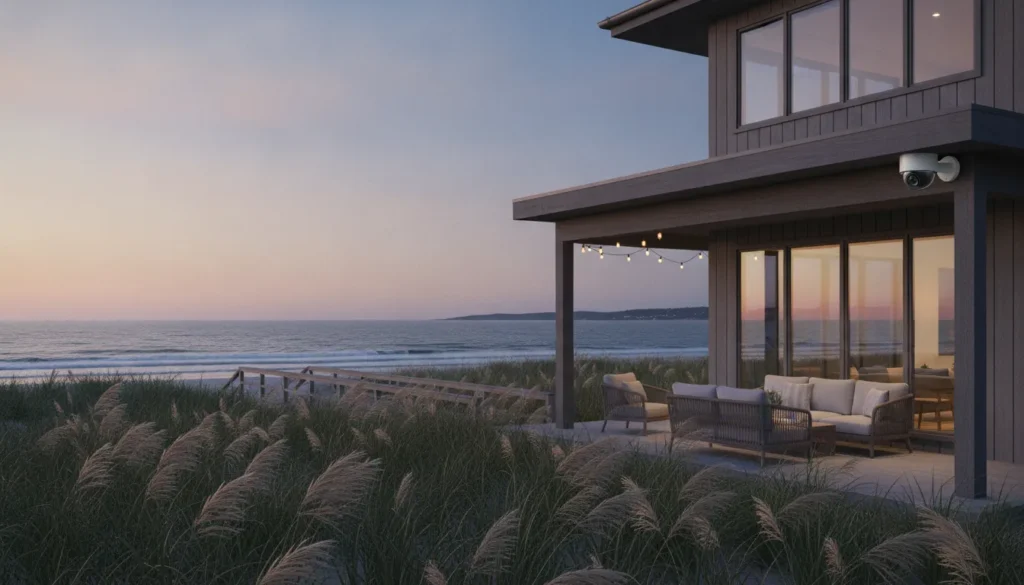
A second home can sit empty for weeks while weather, water, access, and security concerns continue around it. A dependable system should do more than sound an alarm. It should help you see what is happening, receive timely alerts, and respond when you are in Greenville, at the coast, or far from South Carolina.
The right vacation home security system South Carolina homeowners choose combines professional installation, remote app access, dual-path monitoring through cellular and internet connections, smart locks, cameras, and environmental sensors. For seasonal owners, a no-long-term-contract provider can also offer reliable protection without locking the property into an inflexible arrangement.
ADP Security Systems brings more than 30 years of family-owned experience to South Carolina properties, with local accountability and factory-trained technicians. The best plan starts by matching the system to the property’s location, how often it is occupied, and the risks that matter most when no one is there.
Why a Vacation Property in South Carolina Needs Its Own Security Plan
A vacation property is not protected by simply copying the security setup from your primary residence. Second homes may sit vacant for weeks or months, leaving no one to notice an unlocked door, failed internet connection, water leak, or unusual activity. The FBI reported more than 880,000 burglaries in the United States in 2023, and unoccupied properties are prime targets, according to research summarized by SafeHome. Review the cited FBI burglary context when evaluating the risks of leaving a property unattended.
South Carolina adds distance to the challenge. Owners may be hours away from a coastal property near Charleston or Myrtle Beach, or from a mountain retreat in the Upstate. A plan should therefore account for remote visibility, dependable alerts, and environmental conditions such as humidity and coastal weather. Research on smart home security devices also supports using cameras, alarms, locks, and doorbells to reduce the risks associated with extended absences (NSF-backed research).
For seasonal owners, a locally owned provider with no long-term contract can be a practical fit. ADP Security Systems has served South Carolina families for more than 30 years. Helping owners build protection around how often they use the property, who needs access, and how quickly someone can respond when they are away.
Remote Monitoring You Can Trust From Anywhere
A remote property needs more than an alarm that sounds after a problem starts. The system should give you useful information quickly, whether you are at your primary home in Greenville, visiting family in another state, or traveling outside South Carolina. Smart security devices can help vacation-property owners monitor a home remotely and reduce the risks associated with extended absences. Research on smart home security devices identifies cameras, alarms, locks, and doorbells as important tools for protecting an unoccupied property.
Use app access and alerts to stay informed
A mobile app should connect you with the parts of your system that matter most. When a door opens, motion is detected, or another monitored event occurs, a real-time smartphone alert can tell you what happened while there is still time to respond. Real-time alerts delivered through smartphone apps are especially important at remote properties, where an owner may not be nearby to hear a siren or check a window. Owners who want a deeper look at these features can review our guide to remote home security control, which covers the app-based tools that make monitoring from another state practical.
Good remote access also lets you check the property on your own schedule. An owner in another state can review system activity, confirm that the home is secured, and decide whether to contact a neighbor, property manager, or emergency service. This is more practical than relying on occasional drive-bys. Particularly when the home sits along the coast or in a mountain area and remains vacant for weeks or months.
Keep monitoring active when the internet fails
Internet access should not be the only communication path. South Carolina vacation properties can experience service interruptions, and remote coastal or mountain locations may have fewer connectivity options. A cellular backup connection, or a dual-path system that can switch between internet and cellular communication, helps keep security active during an internet outage. The system can continue transmitting monitored events instead of becoming unavailable at the moment you need it most. A residential security system with dual-path communication gives South Carolina owners this redundancy for remote properties.
Cloud-based platforms add another layer of convenience by supporting constant connectivity, remote updates, and monitoring from anywhere in the world. Before choosing equipment, ask how the system communicates during an outage, which alerts reach your phone. And whether professional monitoring remains available when the primary internet connection is down. Those answers matter as much as camera resolution when no one is living at the property full time.
What a Complete South Carolina Vacation Security System Includes
A strong setup combines detection, controlled access, and protection against the conditions that can affect an unoccupied property. The right mix depends on the home’s layout, entry points, surrounding vegetation, and whether it is used privately or rented to guests.
Cameras and video analytics
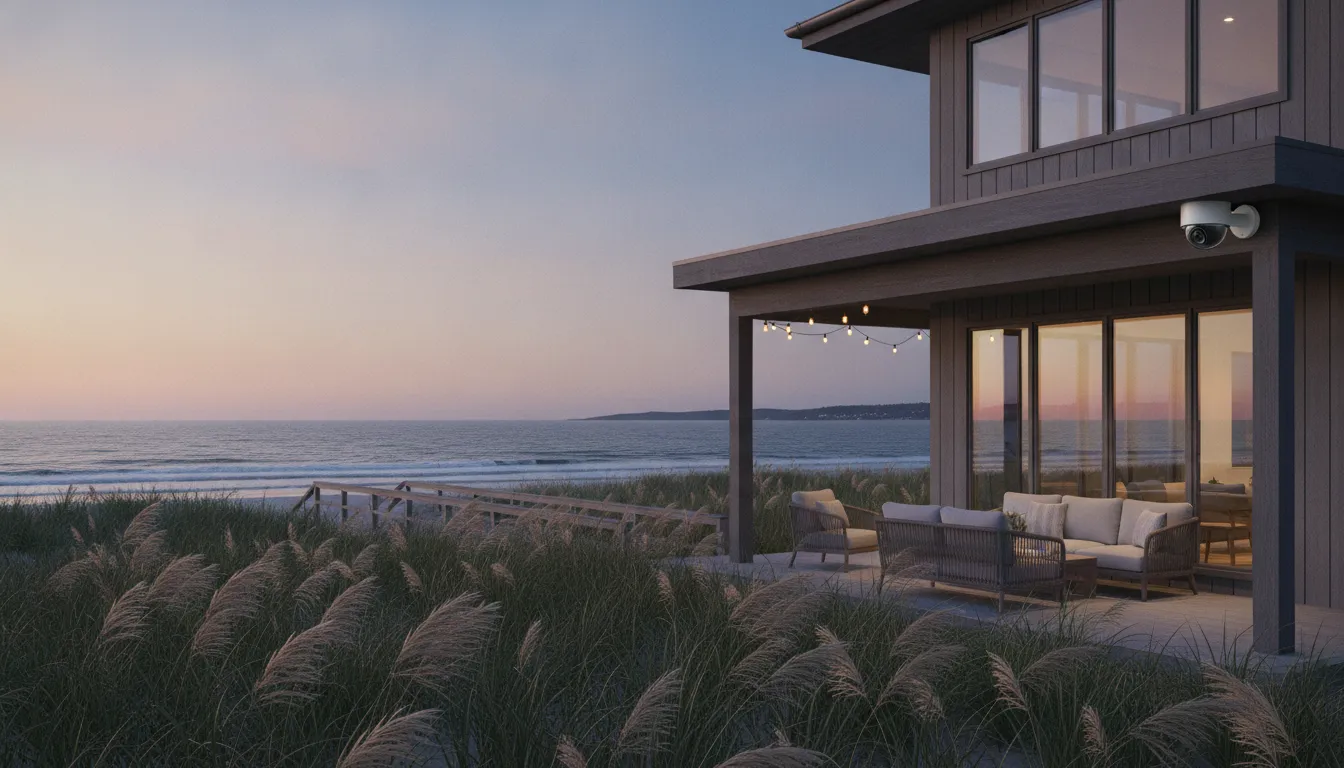
Exterior cameras can provide visibility around driveways, porches, pool areas, and other approaches to the home. Advanced video analytics can distinguish local wildlife from genuine human intruders, which is especially useful for secluded vacation properties where deer or other animals may trigger activity. AI-enabled monitoring can help make alerts more meaningful, rather than treating every movement as the same event. Owners comparing setups can start with our overview of security camera options for remote property surveillance.
Place a smart doorbell camera at the main entry. It gives owners an immediate view of visitors, deliveries, and activity at the primary access point, even when they are away. A broader residential security system can connect that view with alarms and mobile notifications.
Motion and glass-break sensors
Cameras show what happened, while motion and glass-break sensors provide another layer of detection. Motion sensors can watch interior rooms, hallways, and access paths after the property is empty. Glass-break sensors are useful near large windows and sliding doors, where an intruder may attempt entry without opening a monitored door. Professional placement helps match coverage to the home’s floor plan and reduces avoidable gaps.
Smart locks with tracked guest codes
Smart locks replace the uncertainty of copied keys with controlled, temporary access. Owners can issue a guest or contractor a code, set the appropriate access window, and review when the door was unlocked and by whom. That tracked access is particularly useful for vacation rentals, where guest management and security monitoring need to work together. Smart lock integration can streamline rental operations while improving oversight, according to research on vacation rental management systems: smart lock integration research.
Environmental sensors for humidity and leaks
Security should also account for South Carolina’s high humidity and coastal weather. Smart thermostats can help monitor indoor conditions and reduce the risk of humidity-related mold growth. Add water-leak or flood sensors near water heaters, sinks, appliances, and other vulnerable areas so an issue can be identified before a vacant home sustains extensive damage. Outdoor equipment should be weather-resistant, particularly in humid areas. Together, these devices make the system useful for more than intrusion alerts: they help owners watch the property’s condition between visits.
Environmental Sensors: Protecting a Vacant Home From Humidity, Leaks, and Freeze Damage
South Carolina vacation properties face risks that do not wait for an intruder. A home can remain secure at the doors and windows while humidity, plumbing failures, or freezing temperatures cause expensive damage inside. Environmental sensors extend your security plan beyond intrusion detection, giving you earlier awareness when the property is vacant.
Monitor humidity before it becomes a mold problem
High humidity is a practical concern in South Carolina, especially when a second home is closed up for weeks or months. A smart thermostat can monitor indoor conditions and help prevent humidity-related mold growth, according to ADP Security Systems’ customer guidance. With the right settings and alerts, you can identify an indoor climate problem before you arrive to find damaged finishes, musty odors, or compromised belongings.
Connect these controls to home automation systems for remote monitoring so temperature and humidity information is available alongside your security alerts. A local technician can also help determine where sensors will provide useful readings, such as near HVAC equipment, in a basement, or around vulnerable storage areas.
Catch leaks and freeze conditions early
Water leak and flood sensors can alert you when a supply line, water heater, washing machine, or appliance begins releasing water. Place them near likely sources and in low points where water will collect first. Freeze sensors add another layer of protection by warning when indoor temperatures approach a level that could threaten pipes. These alerts give you time to contact a neighbor, property manager, or plumber before a small issue becomes structural damage.
Choose equipment for the local environment
Outdoor monitoring equipment must be weather-resistant. South Carolina vacation home security planning should account for both high humidity and coastal weather conditions, not simply the location of cameras or motion detectors. Fitting equipment to the environment helps reduce avoidable failures and supports dependable coverage when you are away. Include environmental sensors in the system test before every extended departure, then confirm that alerts reach the people responsible for the property.
Smart Locks and Automation for Frequent Visitors and Rentals
Managing keys becomes difficult when a South Carolina vacation home has rotating guests, cleaners, caretakers, or family members. Smart locks replace that handoff with controlled access that can be changed without visiting the property. They are especially useful for rental owners who need a consistent process between stays.
Issue access without handing out permanent keys
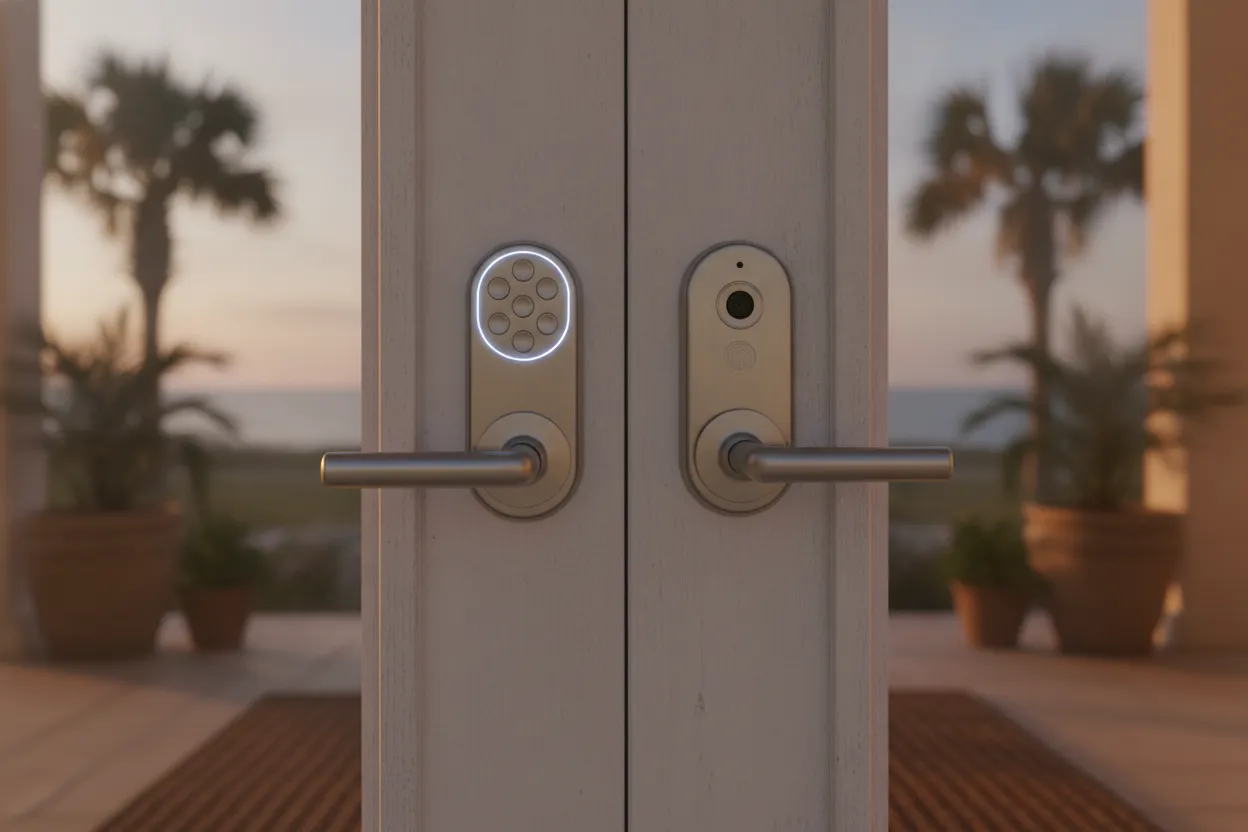
Smart locks can replace traditional key management by allowing an owner or property manager to create temporary guest access codes. Each code can be assigned to a specific visitor and limited to the dates or times when access is needed. The system can also track and log when, and by whom, the door was unlocked. That record creates useful accountability when several people may enter the home during an extended absence. Research on smart locks in vacation rental management also supports their role in streamlining guest management and improving property security monitoring.
Use separate credentials for renters, maintenance workers, and trusted caretakers rather than sharing one code. Remove or update each code when the visit ends. Pairing this approach with home automation systems for remote monitoring can make access control part of a broader property routine instead of an isolated device.
Make an empty home look occupied
Automated lighting can turn on selected lights intermittently while the property is vacant, creating the appearance that someone is home. Varying the schedule is more convincing than leaving one light on continuously, particularly when the routine reflects normal evening activity. Lighting automation should support, not replace, door sensors, cameras, and professional monitoring.
Keep smart access grounded in physical protection
Connected convenience works best when it is built on sturdy traditional hardware. A strong deadbolt, reinforced door, and properly maintained frame provide the physical resistance that smart controls cannot create on their own. Combining dependable hardware with smart monitoring creates a stronger defense than relying on either layer alone. This layered approach gives owners practical control over visitors while preserving the basic strength of the entry point.
For frequent visitors and rental guests, the goal is simple: grant the right person access for the right period. Maintain a record of entry, and use automation to reduce the visual signs of vacancy.
Layers of Physical Security That Work With Your System
Connected security equipment is strongest when it supports sound physical protection. A camera can show what happened, and a sensor can alert you to an opening, but durable doors. Reinforced frames, secured glass, and visible landscaping can make unauthorized entry more difficult in the first place. This layered approach is especially useful when a South Carolina vacation property may be empty for weeks or months.
Hardening Doors and Windows Before You Leave
Start with the exterior doors. Solid-core or steel doors provide a stronger baseline than lightweight hollow-core construction. Reinforce the doorjamb with high-security strike plates fastened with screws at least 3 inches long. These recommendations come from a residential security survey published by the University of Wisconsin-Oshkosh Police Department, which also addresses sliding-door protection.
Sliding glass doors need a second barrier because the primary latch may not be enough on its own. Install a secondary locking bar, sometimes called a Charlie Bar, or pin the track so the panel cannot be opened from outside. Check the door every time you prepare to leave, including the less obvious entrances to a porch, garage, or rear room. A complete security plan should account for every access point, not only the front door.
Landscaping can improve both prevention and visibility. Trim shrubs near windows so they do not create hiding places or block camera views. Clear sightlines allow neighbors, passersby, and exterior cameras to notice unusual activity sooner. Keep trees and dense plantings managed around gates, side yards, and other approaches to the home.
Secure the Garage and Confirm Sensor Placement
If the garage door uses an overhead track, disconnect the track from inside the garage when the property will be unoccupied for an extended period. The step helps prevent the door from being opened with a remote electronic device. Keep the interior release and access path secure, then confirm that the garage entry door is locked before you leave.
Professional installation adds another layer of confidence. A technician can position motion and glass-break sensors according to the home’s layout, room geometry, and likely entry paths, rather than placing them wherever installation is easiest. Review professional home security installation for vacation homes to compare that approach with DIY placement. After installation, test each sensor and physical lock before departing so your connected system and the property itself work as one defense.
How to Choose a Vacation Home Security System in South Carolina
Choosing protection for a seasonal property means looking beyond the equipment list. Compare how the system communicates, how easily you can manage it from a distance. And how well it will keep working when the home is empty for weeks or months.
Compare monitoring and remote access
Start with the communication path. An internet-only system may stop reporting during an outage, so ask whether cellular backup or dual-path connectivity keeps security active when the property loses internet service. This added resilience is especially important for remote South Carolina homes. A reliable smartphone app should also provide real-time alerts, arm and disarm controls, camera access, and clear notifications when a sensor or communication path needs attention.
| Communication option. | Keeps working during internet outage. | Best fit for. |
|---|---|---|
| Internet-only. | No. | Properties with highly reliable connections and short vacancy gaps. |
| Cellular backup. | Yes, via cellular network. | Remote coastal and mountain homes where internet outages are common. |
| Dual-path (internet + cellular). | Yes, switches automatically. | Vacation properties that sit empty for weeks, where redundancy matters most. |
Ask how monitoring works after an alarm, including who receives the signal and how the response process is handled. Contract terms matter, too. A provider that does not require a long-term contract gives vacation-home owners more flexibility if they sell the property, change its use, or only need seasonal coverage.
Check equipment for South Carolina conditions
Outdoor cameras, door contacts, and other exterior devices should be rated for local conditions, including high humidity and coastal weather. Weather-resistant equipment is not a cosmetic upgrade. It helps protect the reliability of the devices exposed to moisture over time. A home security survey can also reveal entry-point weaknesses that are easy to miss when an owner evaluates the property alone. Professional home security systems should be designed around the home’s actual layout, not a generic package.
Decide between professional and DIY installation
DIY installation can suit a simple property when the owner is comfortable positioning and testing every device. Professional installation may be the better choice for a larger home, detached structures, multiple doors, or a property that is difficult to revisit. Compare both approaches in our guide to professional vs DIY security installation, then confirm that sensors cover every practical entry route and that the app is configured before you leave.
Use this pre-departure checklist
- Confirm internet, cellular backup, app alerts, and professional monitoring are active.
- Test doors, windows, motion sensors, cameras, smoke or environmental sensors, and panic features.
- Verify camera views, notification recipients, user permissions, and battery or power status.
- Check that outdoor equipment is weather-resistant and unobstructed.
- Run the alarm test routine before an extended absence, since regular testing helps ensure every sensor is operational.
A short security survey and a full system test can prevent a small installation oversight from becoming a major problem after you drive away.
Frequently Asked Questions
How can I monitor my South Carolina vacation property from another state?
A connected security system can send real-time alerts to your phone, provide remote video access, and let you manage alarms from nearly anywhere. Professional monitoring adds another response path when you cannot check the property yourself. Cellular or dual-path backup is especially useful if the internet connection goes offline.
Do vacation home security systems help with property maintenance?
Yes. Environmental sensors can alert you to water leaks, flooding, unusually low temperatures, or other conditions before a small issue becomes major damage. Smart thermostats can also help manage indoor temperature and humidity while the home is vacant, which is useful in South Carolina’s humid climate.
Is home automation useful for vacation property security?
It can support security and simplify property care. Automated lighting can create the appearance of occupancy, while smart thermostats help maintain a stable indoor environment. You can also use smart locks to issue temporary access codes for guests, cleaners, or maintenance professionals without sharing a permanent key.
What should I look for in a security system for a vacation home?
Prioritize remote app control, professional monitoring, cellular or dual-path backup, video coverage at primary entrances, environmental sensors, and smart-lock compatibility. For coastal properties, ask whether exterior equipment is appropriate for local weather and humidity. A professional assessment can help match each layer to the home’s layout and vacancy schedule.
Are there laws restricting home alarm systems in South Carolina?
South Carolina does not have a general statewide prohibition on installing a residential alarm system. Before installation, confirm any local alarm-registration, permitting, or false-alarm requirements that may apply in the property’s city or county.
Will a monitored system help if the property is a rental?
Yes. Monitored systems with smart locks and remote access work well for vacation rentals because owners can issue temporary guest codes. Receive entry logs, and respond to alarms between bookings. Discuss the rental setup with your provider so monitoring, guest access, and notification rules match how often the property changes hands.
Ready to Secure Your South Carolina Vacation Home?
A tailored security assessment can help you match monitoring, cameras, access control, and environmental protection to how your property is used. Request a free security assessment for your South Carolina vacation property and we will help you take the next step toward more informed protection while you are away.