AI Video Analytics for Retail Security: SC Store Owner Guide
July 2, 2026

Commercial Security Camera Systems: What Businesses Need in 2026
July 6, 2026The global market for smart home technology recently beat $150 billion in yearly sales. In Greenville, more families use these systems to link their lights, locks, and cameras into one simple app.
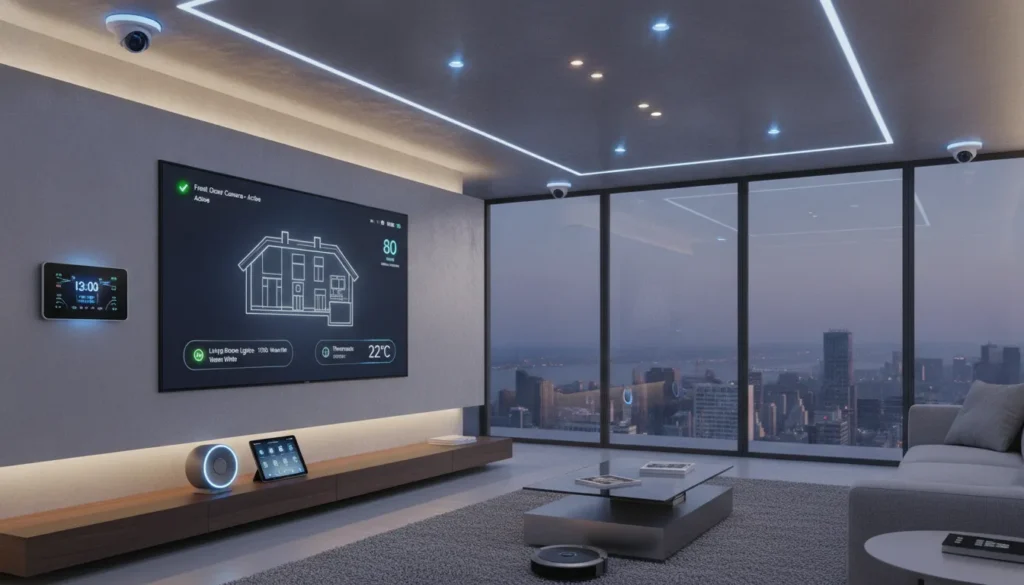
Home automation systems are networks of devices that use sensors and controls to manage your house. These systems let you link smart lights, thermostats, locks, and security cameras into one simple smart home app on your phone. The Office of Scientific and Technical Information states that this smart tech gives you live data and helpful actions to make life better. By using a main hub, these systems help you do daily tasks like locking doors at night or dimming lights when a room is empty. This level of control helps you cut energy waste and makes your home safer. Whether you want to check your cameras from work or change the heat from bed, these systems make your house react to your needs.
Getting started with this technology might feel complex, but the basics are easy to learn once you see how the parts work together. In the first section below, we define what a home automation system is, explore its core components, and show how it can simplify your daily life.
What Is a Home Automation System?
A home automation system is a network of tools that lets you control your home from one place. These systems use sensors and wireless signals to give you data and help you take action. Modern integrated home security often serves as the brain of this setup. It links devices like lights, locks, and thermostats so they can work together without your help.
How these systems work
Most home automation systems rely on three main parts. First, sensors track things like motion or heat. Second, a hub acts as the main base where you send commands. Third, the devices talk to each other through a wireless signal. According to the Department of Energy, these smart products use sensors to give users info and advice. This setup lets your home respond to your needs in real time.
In the past, people used simple timers for lights. Now, we have smart control for the whole house. You can manage every part of your home through a smart home app on your phone. This shift has led to big growth in the market. Global sales for smart home tech were expected to hit $150 billion by 2024. This shows how many people now use these tools to keep their homes safe.
The move to smart control
Modern systems go beyond just turning a switch on or off. They offer a full experience that makes life easier. A pro system provides whole-home intelligent control to make your daily life simple. For example, your home can dim the lights and lock the doors as soon as you turn on your alarm. This level of care ensures your home works for you at all times.
Home automation is no longer just for a few people. It is a smart way to save time and power. As the tech grows, more devices will link to each other. This creates a space where your home learns your ways. It can then adjust the heat or cooling to match your day. This saves you money and keeps you cozy without any extra work.
Key Devices That Make Up a Smart Home
Most home automation systems use a group of key tools to make life easier. These devices work together to keep you safe and save you money. While you can start small with just one or two items, a full setup usually includes tools for energy, security, and control. When these devices connect, they turn a normal house into a smart home that responds to your needs.
Smart thermostats and lighting
Smart thermostats are some of the most helpful tools for saving energy. Since heating and cooling use more power than any other part of the home, these devices are a smart choice. According to Energy Star, modern thermostats can adjust the heat levels on their own based on when you are home or away. This helps you avoid wasting heat or air when no one is in the room.
Smart lighting also adds a new level of control to your house. You can set schedules for your lights or turn them off from your phone while you are out. This means you will never have to worry about leaving the porch light on all day. These tools help you manage your home’s power use with just a few taps on a screen.
Smart locks and security cameras
An expert smart lock installation is a top way to upgrade your home security. These locks allow you to open your door without a key. You can give out digital codes to friends or check the status of your door from work. This adds peace of mind because you can see if your home is locked at any time.
Security cameras and smart plugs also add to your home’s safety and comfort. Cameras give you a real-time view of your home through a smart app. You can see who is at the door or keep an eye on your pets. Smart plugs let you turn regular lamps or fans into smart tools. This lets you control almost any small device in your house from one spot.
Sensors and the control panel
To keep everything running well, you need a strong brain for your home. We use the 2GIG GC3 panel with a seven-inch touchscreen to act as the hub. This panel uses Z-Wave Plus technology to speak with all your smart tools. It creates an integrated home security system that links your lights, locks, and alarms into one easy hub.
Sensors are the final piece of the puzzle. Room sensors can tell when someone enters a room and can turn on the lights or the heat. When the room is empty, they can turn things off to save power. These small sensors work with your main panel to make sure your home is always running at its best. They provide the data your home needs to stay safe and work well day and night.
How Home Automation Systems Work
Modern home automation systems work by linking your devices into one network. This lets hardware from different brands talk to each other and follow your rules. These systems use sensors, controls, and communication tools to give you data and manage home tasks. For most people, this starts with a mobile app that lets you check on your house from anywhere.
The role of communication protocols
For devices to work together, they must speak the same language. These languages are called communication protocols. ADP Security Systems uses the Z-Wave Plus platform. This is a safe and low-power way for locks, lights, and sensors to connect. Using a standard like Z-Wave ensures that your devices stay linked without slowing down your home Wi-Fi network.
Newer standards are also changing how we build smart homes. The Matter integration standard now makes many systems more versatile. It works with over a thousand integrations, which helps different types of hardware talk to one another. This cross-platform support means you can often mix and match devices from many makers while keeping a steady connection.
How smart hubs manage your home
The hub is the brain of your home automation system. It gets signals from your sensors and sends commands to your devices. Some systems use the 2GIG GC3 panel with a touch screen as the main hub. Other setups might run on multi-purpose hardware like smart speakers or streaming boxes. This central hub acts as a single interface that can manage thousands of different device integrations at once.
When you set a schedule or a rule, the hub makes it happen. For example, a sensor might find that a room is empty. It then tells the hub, which sends a signal to turn off the lights. This constant loop of sensing and acting helps you save time and energy. You can learn more about managing these features in our smart home app guide.
Sensors and controls working together
Sensors are the eyes and ears of your smart home. They track things like motion, door openings, and room temperature. Controls are the parts that take action, such as a smart lock or a thermostat. When these parts work together, they can provide real-time information and recommended actions to the user. This automation reduces the need for manual checks and keeps your home running well at all times.
This integrated approach is the base of any reliable home automation system. By joining local hardware with cloud-based apps, you get a system that is both strong and easy to use. In the next section, we will look at the specific parts that make up these systems.
Top Benefits of Home Automation for Homeowners
Modern home automation systems do more than just add high-tech tools to your house. These setups help you save money, stay safe, and enjoy more free time. By linking devices like lights and locks into one network, you can manage your whole home with one touch. This level of control changes how you live and makes your daily life much smoother.
Lower utility bills
One of the biggest pluses of a smart home is how it cuts energy waste. Heating and cooling use more power than any other machine in most houses. A smart thermostat can save energy by learning your habits and adjusting the heat when you leave. Some systems even use sensors to find out if a room is empty. If no one is there, the system turns off the lights or shifts the air flow to save power.
You can also set up smart schedules for your whole house. This makes your energy use simple by making sure devices only run when they are needed. For example, your water heater or pool pump can run during off-peak hours to lower costs. These small changes add up to big savings on your monthly bills without you having to think about them.
Stronger home safety
Safety is a top goal for most families in the South. Professional home automation systems offer great peace of mind by linking your locks and lights to your alarm. You can use an integrated home security setup to lock all doors from your bed at night. If an alarm goes off, the system can turn on all the lights to scare away intruders and help you see.
Backup features are another key for safety. Modern setups use dual-path monitoring, which means they talk to a central station through both the web and cell signals. This ensures your home stays protected even if your web link goes down. You can also get alerts on your phone the moment a door opens or if a sensor finds a water leak in your kitchen.
Easy remote management
Control hubs make it easy for anyone to use smart tech. You do not need to be a tech expert to manage your home. Simple screens like the 2GIG GC3 panel let you view your whole system in one place. You can check if you left the garage door open or turn on the porch light while you are still at work. This ease takes the stress out of managing a busy house.
These systems also help you stay ahead of home repairs. Smart tech can send you a quick text if your AC unit starts to work poorly. By catching these issues early, you can fix them before they turn into a big, costly mess. Having a pro set up your system ensures everything works right from day one, giving you total control over your house.
Popular Smart Home Platforms Compared
Choosing the right hub is a key part of setting up reliable home automation systems. These platforms act as the brain of your house. They let you control lights, locks, and heat from one place. Some systems are simple to set up by yourself. Others need a professional team to build a custom plan for your home.
Consumer tech ecosystems
Most people start with a big tech name like Amazon Alexa, Google Home, or Apple HomeKit. These choices offer a quick start. Many homeowners already have the gear they need. For example, Apple users can use an Apple TV 4K or HomePod as a hub. These systems are easy to use. But they may not work with every device you buy. To fix this, look for the Matter badge on new products. Matter is a standard that helps thousands of different devices talk to each other across various brands.
If you want to manage your house through a smart home app, these big names are reliable. They work well for basic tasks. You can set a timer or turn off a light with your voice. But for complex setups, you might find their rules a bit limited. They focus on being fast and simple for the average user.
Advanced and professional hubs
For those who want total control, Home Assistant is a top choice. It works with over a thousand different tools. It does not force you to use one specific brand. It is great for tech fans who like to build their own custom rules. On the other hand, brands like Control4 offer whole home intelligent control through professional installation. These pro systems handle everything from high-end sound to complex security for your entire property.
At ADP Security Systems, we focus on making these systems work for you without the stress. We use Z-Wave Plus tech to link your integrated home security with your smart devices. This ensures your locks, lights, and heat all work together as one unit. Using a pro setup can also help you save power. According to Energy Star, heating and cooling use the most energy in a home. This makes a smart system that manages your air the best way to save.
| Platform. | Best For. | Key Benefit. | Setup Type. |
|---|---|---|---|
| Home Assistant. | Tech Fans. | 1,000+ integrations. | DIY / Advanced. |
| Apple HomeKit. | iPhone Users. | Runs on Apple TV. | Plug-and-play. |
| Amazon Alexa. | Voice Control. | Broad device support. | Plug-and-play. |
| Google Home. | Google Users. | Simple setup. | Plug-and-play. |
| Control4. | Whole-Home. | Professional support. | Pro Install. |
While many of these hubs offer a great DIY start, a fully linked home often works best when it is professionally set up. This avoids common bugs and ensures your data stays safe. In the next part, we will look at how to choose the right gear for your floor plan and daily habits.
DIY Setup vs Professional Home Automation Installation
Choosing the right path for your smart home depends on your goals and skill. Many owners start with a DIY path using simple tools. Options like Amazon Alexa or Google Home offer a quick way to link a few devices. For those who want more power, the Home Assistant Green hub costs about $159 and helps people manage their own systems. While DIY is cheap at first, it often leads to a mix of apps that do not work well together.
Benefits of professional systems
Professional setup offers one smooth way to run the whole house. Instead of using five apps, a pro system like Control4 links all parts to one screen. This plan ensures that your wireless smart home alarm system works in sync with your lights and locks. Experts handle the wires and the setup, so you do not have to spend hours on fixes. These systems also use tech like Z-Wave Plus to keep your devices linked over long distances.
Steps for choosing your installation path
- Check your needs. Decide if you want to run one room or the whole house. Full systems often need a local pro to set up the network.
- Pick your gear. DIY fans might choose a basic hub. A pro setup uses high-end tools like the 2GIG GC3 panel with a large touch screen.
- Look at savings. Smart thermostats are the best way to save energy because heating and cooling use the most power.
- Read the deal. Many big firms lock you into long deals. ADP Security Systems offers pro setup with no long-term contracts and no credit checks.
- Test the links. Make sure your lights, locks, and sensors work as one. Pro teams check every part before they finish the job.
Why local experts help
A local team provides a level of care that DIY kits cannot match. We focus on stable links and dual-path monitoring to keep your home safe. This means your system stays online through both cell and web paths. In Greenville, having a team you can call directly makes a big change. You get free activation and a system that is ready to grow as your needs change.
Integrating Home Automation With Your Security System
Linking your safety tools with home automation systems makes your house more secure and simpler to manage. This link lets all your devices talk to each other so they can work as one unit. You can lock your doors, check your cameras, and turn off your lights from a single place. Expert setup gives you the peace of mind that comes from knowing your whole home is safe and smart.
Using smart locks and cameras
Smart locks and cameras are the first line of defense for your home. When you use smart lock installation services, you can lock or unlock your doors from anywhere. This means you no longer have to worry if you left the front door open when you drove away. You can also give digital keys to guests or workers so you do not have to hide a physical key under a mat.
Security cameras add another layer of safety to your system. Linked cameras let you see live video on your phone or tablet at any time. Linked home security setups can even trigger your cameras to record when a door opens or a motion sensor trips. This keeps you in the loop about what is going on at your house while you are at work or on a trip.
Control your home with one panel
A good smart home uses a central hub to manage every device. We use the 2GIG GC3 panel, which has a large touch screen for easy use. This brain for your house connects to your lights, locks, and thermostats using Z-Wave Plus tech. One hub means you do not need many other apps just to check on your home.
You can also use a smart home app to control your system from your phone. This app lets you set schedules for your lights or change the heat before you get home. According to Energy Star, adding smart security to your home can even be part of a full energy control plan. This helps you save money on your power bill while keeping your family safe.
Two paths for a safer connection
Backups are key, so we use dual-path watching to keep your home connected to our help center. This system uses both your home internet and a cellular link at the same time. If your internet goes down or a wire is cut, the cellular path still sends the alarm signal. This makes your system much harder for an intruder to disable.
Expert automation helps you feel calm because your system is always watched. You get the best of both worlds when you link your home automation systems with a pro security plan. This setup makes sure your lights turn on if an alarm goes off, which can scare away a prowler. It also makes your daily life simpler by handling small tasks like locking up at night for you.
Frequently Asked Questions
Can I get a professional smart home system without a contract?
Yes, you can find top smart home services that do not force you to sign a long-term deal. Many local firms like ADP Security Systems offer pro setup and monitoring with no long-term contracts. This gives you the choice to change your service as your life shifts. You get a firm, safe system that keeps your home smart without being tied to a multi-year plan.
How can I make my home automation system more secure?
To keep your smart home safe, you should use a system with dual-path check tools. This setup uses both your web link and a phone signal to send alerts to a home base. According to Control4, pro systems focus on safety by using firm links that are harder to hack than basic DIY tools. Using strong passwords and a safe hub also helps protect your data from outside risks.
What are the common communication protocols for home automation?
Most systems use Z-Wave, Zigbee, or Matter to help devices talk to each other. These tools use low power and stay off your main Wi-Fi so they do not slow down your web speed. According to ZDNet, these links help thousands of tools work together in one network. Choosing the right protocol ensures your locks and lights stay connected at all times.
Do professional smart home installs require a credit check?
Not all pro installers need you to have a high credit score to start your service. Some local firms offer smart home setups with no credit checks, making it easier for many people to get the tools they need. This path lets you focus on building a safe and smart house without the stress of a bank check. You can get pro gear like the 2GIG GC3 panel and Z-Wave Plus tech with a simple sign up.
Ready to build your own smart home automation system?
Leaving your home without a smart system leaves your family at risk of break-ins and makes you pay more for your energy bills every month. If you start your work today, our local team can have a fully set up Z-Wave Plus system ready for you by the end of the week. An expert plan helps you avoid the high costs of simple setup mistakes so you can enjoy a safer and smarter home right away without the stress.
Ready to schedule? Call (864) 246-1006 to schedule a free consultation for smart home integration. Our local team will help you pick the right tools for your space and budget today to keep you safe.