Business Video Surveillance: A Complete Installation Guide
August 18, 2026
Commercial Building Evacuation Guide for Safer Exits
August 20, 2026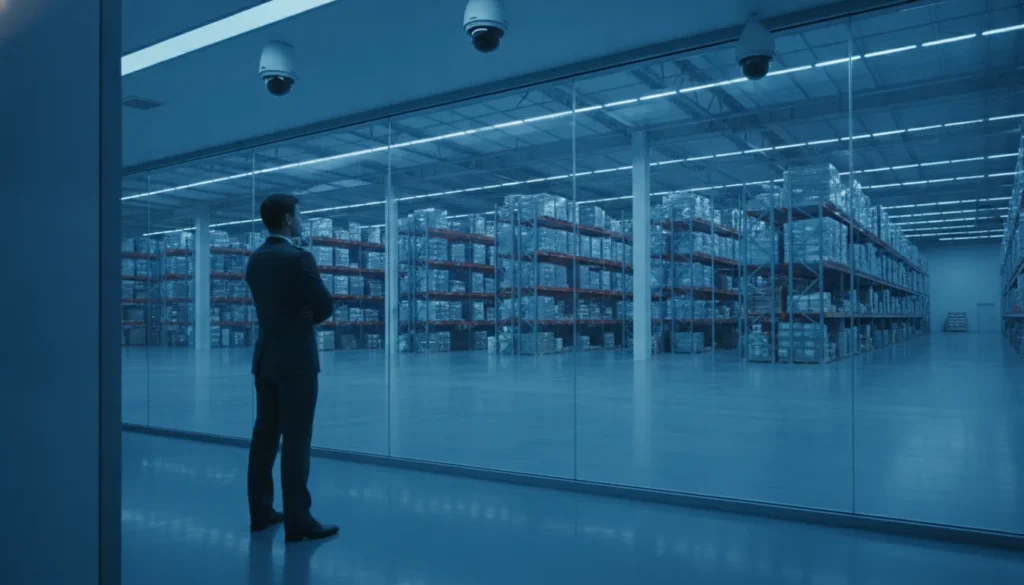
Security cameras can record an incident, but reviewing hours of footage after the fact is a slow way to protect a busy commercial property. Intelligent video systems help teams focus on what deserves attention while events are unfolding. So a small security team or a single facility manager does not have to watch every monitor all day.
AI video analytics applies computer vision and machine learning to live camera feeds, helping detect and classify people, vehicles, objects, and behaviors instead of relying only on passive recording. Depending on the configuration, it can support license plate recognition, intrusion and loitering alerts, anomaly detection, and retail activity insights, then notify the right people the moment a defined event occurs.
For business owners and facility managers across retail, warehousing, office, and industrial settings, the value is not technology for its own sake. It is clearer awareness, faster investigation, fewer false alarms, and security rules tailored to the property. Understanding how these capabilities work is the first step toward deciding where they can strengthen an existing surveillance plan. And where a qualified local integrator can make the difference between a system that records and one that actually protects.
Schedule a security consultation with ADP Security Systems.
What Is AI Video Analytics?
AI video analytics is software that helps security cameras understand what they see. Instead of simply recording a live feed for someone to review later, the system analyzes video as events happen. It can detect objects, classify what they are, track their movement, and identify activity that matches a defined security rule.
At the center of this process is computer vision, a field of technology that enables software to interpret images and video. Machine learning then helps the system recognize patterns in those images. For example, an analytics platform may distinguish between a person, a vehicle, and an animal, then follow the person as they move through a monitored area. The system can send an alert when that activity meets a rule, such as crossing a virtual boundary or entering a restricted zone.
This makes AI video analytics different from basic motion detection. A motion sensor may react whenever pixels change, including movement caused by weather, shadows, or wildlife. Analytics can add context by classifying what triggered the event. That additional context can help reduce unnecessary alarms and give security personnel a clearer starting point for response. Modern systems support real-time object detection, tracking, and monitoring rather than treating every movement as the same type of event. Research on real-time object detection and tracking documents this broader approach to surveillance.
How AI Interprets a Camera Feed
When a camera sends video to an analytics platform, the software examines the changing scene and separates relevant foreground objects from the background. It can then apply classifications and rules to the activity it observes. Depending on the system and its configuration, those rules may identify a person or vehicle, track movement, detect an intrusion, or flag unusual behavior. Deep learning is now a major technical approach for automatic anomaly detection in video surveillance, including efforts to recognize activity that falls outside expected patterns. Academic research on video anomaly detection describes this use of deep learning in surveillance.
The goal is not to replace sound security procedures or human judgment. It is to help operators focus attention on events that deserve review. A well-designed system is configured around the property, operating hours, vulnerable areas, and response plan of the business. Those details determine which alerts are useful and which would create noise.
What It Means for a Business
For a business owner or facility manager, the practical value is actionable awareness. AI video analytics can help identify a developing security event sooner, support investigations with searchable event information, and provide a clearer view across a large or busy property. The same platform may also support operational questions, such as how people or vehicles move through a site. When those uses are appropriate for the business and configured responsibly.
ADP Security Systems designs, installs, and maintains integrated electronic security for commercial businesses throughout Greater Philadelphia. As a local security integrator, ADP can help align video analytics with the property’s existing cameras. Security priorities, and response procedures, rather than treating the software as a one-size-fits-all add-on.
How AI Video Analytics Work
AI video analytics begins with the cameras already watching a property. Instead of treating every frame as footage that must be reviewed later, the system sends that video to analytics software for continuous processing. The software uses computer vision to interpret what appears in the scene, helping distinguish meaningful activity from ordinary movement and background conditions.
From camera feed to recognizable objects
The first step is to separate foreground objects from the background. A person walking through a parking area, a vehicle approaching a gate, or an item left near a restricted entrance becomes an object the system can examine. The platform then tracks how that object moves through the camera’s field of view. Modern surveillance research describes real-time object detection and tracking as core functions that extend beyond simple motion detection in this related study.
Next, deep-learning models classify what the software is seeing. Depending on the system and its configuration, that may include people, vehicles, license plates, or activity such as loitering, line crossing, intrusion, and camera tampering. These capabilities are distinct from a basic motion alert, which may respond to a tree branch, changing light, or an animal. The goal is to give security personnel a more useful description of the event, not merely a notification that pixels changed.
How the software learns what matters
AI models are trained with labeled data so they can associate visual patterns with specific objects or events. In practice, the software must be configured around the threats, locations, and operating rules that matter to a particular business. A loading dock may need a line-crossing rule after hours, while a gated facility may prioritize vehicle identification. Training and configuration are related but different: the model provides recognition capability, and the security design determines how that capability is applied.
Computer vision can also support objective analysis of activity in commercial and industrial environments. Automated video processing has been used to measure worker activity and inform decisions about station coverage and task performance, as documented by the Centers for Disease Control and Prevention. That does not mean every camera should be used for employee monitoring. It means the same visual data can be structured to answer a defined operational question when the use is appropriate, transparent, and aligned with company policy.
Turning detections into alerts
After an object is detected and classified, the platform compares its behavior with rules set by the security team. If a person enters a restricted zone, a vehicle crosses a virtual boundary. Or activity continues in an area where loitering is not expected, the system can trigger an alert. Platforms commonly use these event rules for intrusion detection, line crossing, object counting, license plate recognition, and tamper alerts, as described by one major analytics platform.
AI video analytics can often be added to existing cameras connected to a video management system, or VMS, rather than requiring an immediate replacement of every camera. An experienced integrator can review camera placement, image quality, network capacity, and current VMS compatibility before recommending where analytics will add the most value. The result is a focused security workflow: cameras collect the video, computer vision interprets it, rules identify priority events, and people decide how to respond.
What Can AI Video Analytics Detect?
AI video analytics can turn a camera feed into a source of timely, actionable information. Instead of treating every movement as equal, the system can identify people, vehicles, and other objects. Follow their movement, and compare what it sees with rules established for the site. Common capabilities include people and object detection, line crossing, loitering detection, intrusion detection, and camera-tampering alerts. These tools help security teams focus on events that deserve attention rather than reviewing hours of routine footage.
People, vehicles, and license plates
Object detection can distinguish people from vehicles and other motion in a scene. Tracking adds context by showing where an object came from, where it is going, and whether it remains in a defined area. That distinction matters at a loading dock, parking lot, lobby, or restricted doorway, where a basic motion alert may provide too little information to guide a response.
License plate recognition, often called LPR, uses cameras and software to identify vehicle plates. Commercial systems commonly use LPR for automated vehicle identification at gated entries, access-control points, and parking areas. A business may use it to support approved-vehicle access, investigate a time-specific event. Or maintain a clearer record of traffic moving through a property, with proper configuration, signage, and access controls built into the design.
Movement across boundaries and restricted areas
Line-crossing analytics alert personnel when a person or vehicle crosses a virtual boundary drawn in the camera view. Intrusion detection applies a similar idea to a defined zone, such as a fenced perimeter, roof access point, equipment yard, or after-hours interior space. Perimeter intrusion detection by video surveillance is an established security application for protecting facility boundaries, particularly when cameras are positioned to cover likely approach routes and entry points.
Loitering detection can identify when a person or vehicle remains in an area longer than the configured threshold. This can be useful around employee-only doors, storefronts after closing, cash-handling areas, or a perimeter where lingering may warrant a closer look. The alert is a prompt for human assessment, not proof that a crime has occurred.
Tampering and unusual behavior
Analytics can also monitor the camera itself. Tampering alerts may flag a blocked lens, a changed camera angle, or another condition that compromises visibility. This helps teams respond to a security weakness before an incident is missed.
Anomaly detection extends coverage beyond fixed rules by looking for behavior that differs from what the system has been trained or configured to recognize. Research on video surveillance describes systems designed to detect abnormal human behavior, which can help surface unusual activity that does not match a simple line-crossing or intrusion rule. In retail settings, object counting and dwell-time measurement can show traffic patterns, inform staffing decisions, and flag suspicious loitering. The most useful deployment combines these signals with clear procedures, appropriate camera placement, and trained personnel who can verify alerts in context.
How AI Video Analytics Differ From Standard Video Surveillance
Traditional CCTV is valuable because it creates a visual record of activity. However, a camera generally does not understand what it sees. It records continuously, and a person must review the footage after an incident or watch multiple screens to notice a developing event. Basic motion sensors can make that review harder by triggering on environmental movement, weather, or animals.
| Comparison area | Standard Video Surveillance | AI Video Analytics |
|---|---|---|
| Purpose | Records footage for live viewing and later investigation. | Detects, classifies, and tracks objects or behaviors in a live camera feed. |
| Response | Usually depends on an operator noticing an event and deciding what to do. | Generates a real-time alert when a defined rule or event is detected. |
| False alarms | Motion-based triggers may react to ambient movement, weather, or animals. | Classifies the activity so the system can distinguish a relevant event from background motion. |
| Insight | Provides recorded images that require human interpretation. | Turns video into event information, such as a line crossing, intrusion, object count, or license plate. |
| Training needed | Staff learn camera locations, monitoring procedures, and review workflows. | Operators define the threats, zones, and rules that the analytics should recognize and alert on. |
The difference is not that standard surveillance lacks cameras or recording quality. The difference is where interpretation happens. With conventional CCTV, the camera captures evidence and the operator supplies the meaning. With AI video analytics, software processes the video, separates foreground objects from the background, classifies what is present, and triggers an alert when the configured conditions are met. Research on modern surveillance frameworks describes real-time object detection and tracking as a move beyond simple motion detection: the academic study on real-time security surveillance provides additional technical context.
This distinction can shorten the path from an event to a response. A security team may receive an alert for a person entering a restricted area, rather than discover the activity hours later during a manual search. Analytics can also make recorded footage easier to investigate by organizing events around recognized objects or behaviors.
AI analytics are not a substitute for sensible camera placement, clear procedures, or human judgment. They are a layer that helps people focus attention where it matters. Rules should be tuned to the site, since a vehicle in a loading area may be normal during business hours but worth investigating overnight.
Where Businesses Use AI Video Analytics
AI video analytics can turn cameras into an active layer of business security. Instead of asking a team member to watch every screen, the system applies defined rules to live video and surfaces events that deserve attention. That makes the technology useful in settings where people, vehicles, inventory, and access points are constantly moving.
Retail shrinkage and loss prevention
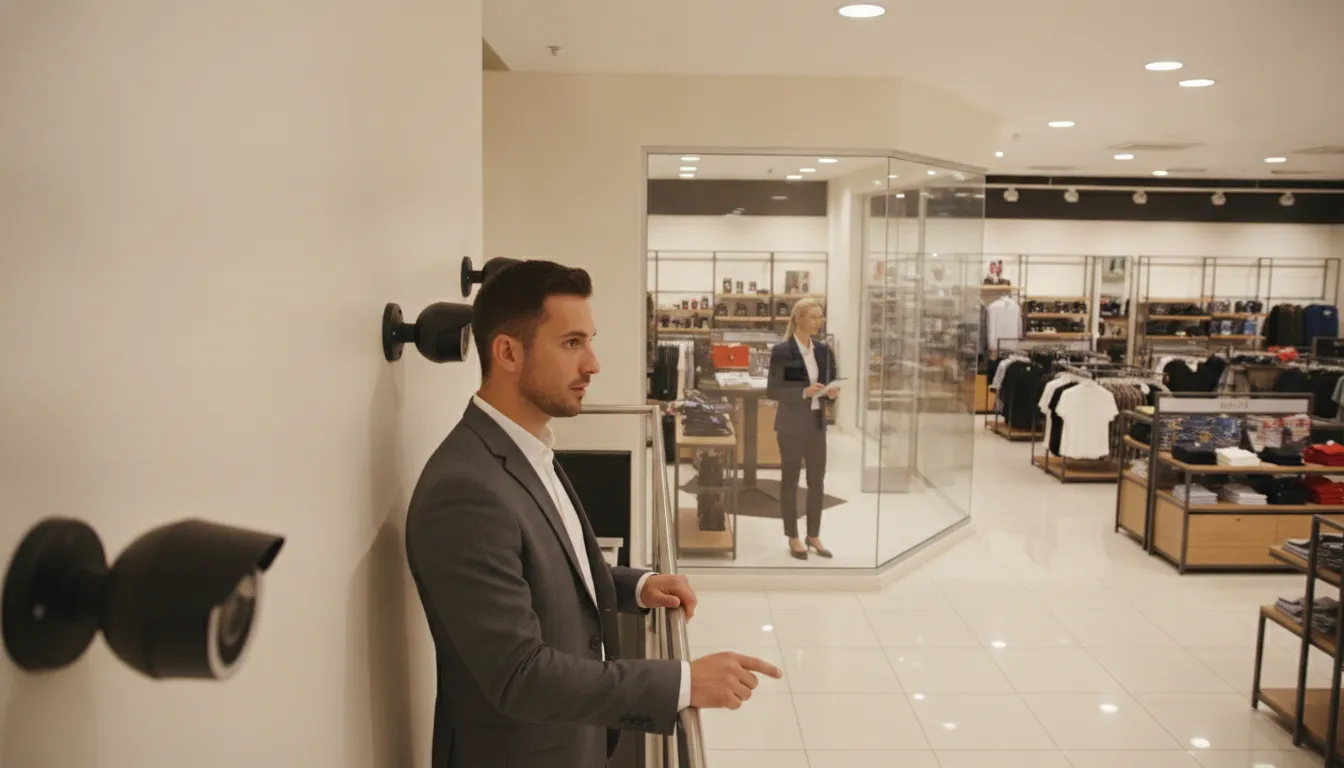
Retailers use analytics to address theft, fraud, and process gaps across sales floors, stockrooms, and checkout areas. The National Retail Federation has described annual retail shrink as a nearly $100 billion problem, making loss prevention a major application for intelligent video. AI cameras can connect video events with point-of-sale activity, helping teams investigate a transaction alongside the relevant footage rather than searching through hours of recordings. See our guide to AI security cameras for restaurants for an example of how these tools can support food-service environments.
Depending on the system and the rules configured, a business may review unusual activity near merchandise. Repeated movement through a restricted area, or a mismatch between what happens at a register and what the camera observes. Retail analytics can also provide object counts and dwell-time measurements. Those insights help managers understand traffic patterns and staffing needs, while loitering alerts bring attention to behavior that warrants a closer look. Analytics support investigation and response; they do not replace sound policies, trained personnel, or appropriate privacy practices.
Warehouses and large commercial facilities
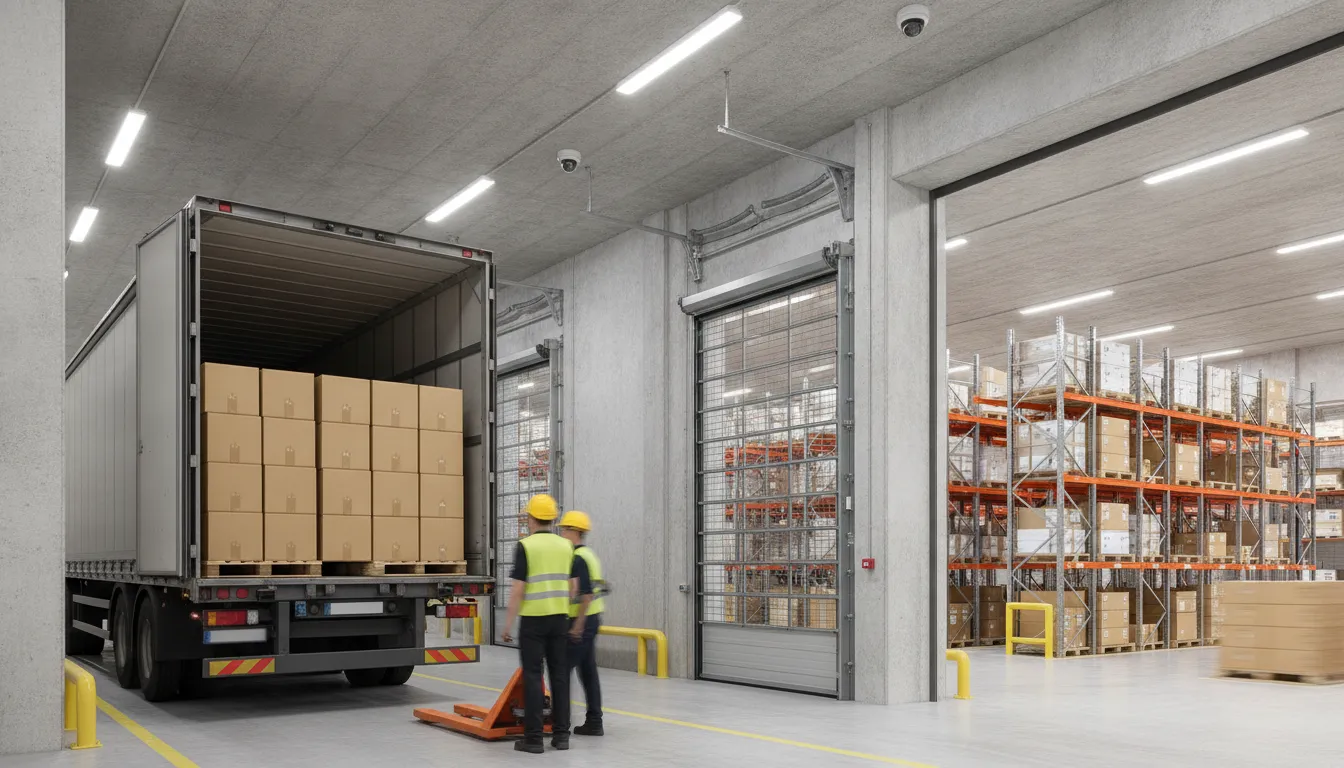
Warehouses, distribution centers, manufacturing sites, and other large facilities often have broad perimeters, loading docks, and employee entrances that cannot be watched continuously. Analytics can monitor these zones for line crossings, intrusions, loitering, or camera tampering and notify an operator when a configured condition occurs. Research and commercial applications also recognize video-based perimeter intrusion detection as an established way to protect facility boundaries.
In a warehouse, that might mean distinguishing a person entering a dock after hours from ordinary movement in an adjacent area. At a commercial building, it could help focus attention on a service entrance or parking area. Businesses considering commercial video analytics for trespassing prevention can use these rules to extend coverage beyond the main building and support a more consistent response across the property.
Gated access and parking management
License plate recognition, or LPR, is widely used to automate vehicle identification for gated entry, access control, and parking management. A camera can capture a plate at an entrance and compare it with the access rules established for that site. This can help operators identify authorized vehicles, investigate unfamiliar arrivals, and maintain a clearer record of vehicle activity without relying solely on manual checks.
The right deployment depends on the property layout, lighting, retention requirements, and the business’s policies for collecting and using vehicle data. ADP Security Systems can design integrated electronic security around the facility’s actual risks, combining cameras, access control, and monitoring rather than treating each system as an isolated tool.
AI Video Analytics for Business Security: The Benefits
Security cameras are most valuable when they help people make better decisions, not simply create hours of footage to review later. AI video analytics adds an active layer to a camera system by recognizing relevant activity, applying rules, and bringing important events to an operator’s attention. That can turn video from a passive record into a practical security and operations resource.
Fewer missed events and more consistent oversight
Even experienced staff can miss activity when they monitor multiple screens, respond to other priorities, or review footage after an incident. Properly configured analytics serve as an additional expert eye, identifying patterns a human operator might overlook. Mayo Clinic describes a similar benefit in AI-assisted visual review, comparing the technology to having another expert looking over an operator’s shoulder: Mayo Clinic’s discussion of AI and accuracy.
Rules can be designed around the events that matter to a specific site. Such as movement across a restricted boundary, activity in a closed area, or an object remaining where it should not. That consistency reduces reliance on chance observation and creates a clearer process for escalation.
Objective information for security and operations
Video analytics can also produce objective information instead of leaving managers to rely only on impressions. Automated video processing has been studied as a way to measure worker activity and task performance in commercial settings, as documented by the Centers for Disease Control and Prevention. In practice, the value is not collecting data for its own sake. It is using clearly defined measurements to identify recurring bottlenecks, evaluate coverage, and make informed decisions about staffing or process changes.
This operational view can improve efficiency while keeping security central. For example, activity patterns may show where additional camera coverage is needed, when a loading area is busiest, or which parts of a facility deserve closer review.
Faster awareness, response, and recovery
Real-time analytics help operators understand what is happening across a site as events unfold. NIST research describes video analytics applications for real-time situation awareness, as well as abnormality detection and alerting. Instead of waiting for a scheduled review, authorized personnel can receive a notification when a configured condition occurs, verify the event, and follow the site’s response plan. Faster awareness may help limit the duration of an intrusion, unsafe activity, or other disruption.
That same visibility supports post-incident recovery. Searchable event information helps teams reconstruct what happened, coordinate with responders, and document decisions more efficiently than manually scanning every camera feed.
Protection for assets and the business
By drawing attention to relevant activity and creating a more consistent record, analytics can help protect inventory, equipment, vehicles, facilities, and restricted areas. This supports the broader business goals of protecting assets, reducing liability, and improving operational efficiency. The strongest results come from matching detection rules, alert recipients, retention practices, and response procedures to the actual risks at the property.
Security tailored to the site
No two businesses need the same analytics configuration. A warehouse may prioritize perimeter activity and loading-dock events. A retailer may need people counting or unusual dwell-time monitoring. An office, school, or multifamily property may focus on access points and after-hours activity. ADP Security Systems emphasizes customized integration so analytics can be tailored to needs such as perimeter protection or retail foot-traffic monitoring. That customization makes the system more useful than a one-size-fits-all alert package, with room to adjust rules as the business changes.
How to Choose an AI Video Analytics System
The right platform should fit the way your business already operates, not force you into an expensive technology reset. Begin by defining the events you need to identify, the people who will respond, and the cameras and software currently supporting your site. A thoughtful evaluation can turn video from a passive record into a practical security and operations tool.
Start with your existing cameras and VMS
Ask whether the analytics platform can work with your current cameras and video management system, or VMS. In many cases, analytics can be added to individual cameras connected to a compatible VMS, which may help you avoid a rip-and-replace upgrade. Camera models, resolution, storage, network capacity, and VMS compatibility can affect which analytics are available and how reliably they perform. So the integration should be verified early in the process.
Review the proposed system camera by camera. Confirm which views are suitable for entrance monitoring, perimeter protection, vehicle identification, or activity analysis. Also ask how alerts appear, where video is stored, and whether authorized staff can review events without searching through hours of footage. For additional context, see this guide to modern AI video analytics.
Match analytics to business needs
Do not select features simply because they appear on a product sheet. The most useful system is one configured around your actual risks and workflows. A warehouse may prioritize line crossing, restricted-area intrusion, and after-hours activity. A retail operation may need people counting, dwell-time analysis, or alerts that support loss-prevention reviews. A property with controlled vehicle access may benefit from license plate recognition for entry and parking management.
Customization is especially important when your needs extend beyond basic motion alerts. ADP emphasizes customized security integration, allowing analytics to be tailored to requirements such as perimeter protection or retail foot-traffic monitoring. During a consultation, describe the outcomes you want, the areas that create recurring concern, and the rules staff can realistically follow. Then ask the integrator to demonstrate how those requirements become detection zones, schedules, alert thresholds, and response procedures. A platform is only valuable when its notifications are specific enough to support action instead of creating another stream of noise.
Evaluate installation, service, and long-term support
Implementation is not the end of the decision. Ask who will design the system, configure analytics, train users, maintain equipment, and troubleshoot performance as the site changes. Local service can make a meaningful difference when cameras need adjustment, software rules require refinement, or an intelligent system needs prompt maintenance. ADP Security Systems designs, installs, and maintains integrated electronic security for commercial businesses throughout the Greater Philadelphia area, with local technicians supporting installed intelligent systems.
Finally, compare the complete service relationship rather than only the initial equipment list. A qualified local integrator can assess your existing infrastructure, recommend a staged approach, and keep the system aligned with changing business needs. If you are considering incorporating AI video analytics into a commercial camera system, ask for a site-specific review that connects technology, people, and response procedures.
Schedule a security consultation with ADP Security Systems.
Frequently Asked Questions
What is AI video analytics?
AI video analytics is software that analyzes live or recorded camera footage to identify people, vehicles, objects, and patterns of activity. Instead of relying only on someone to watch a monitor or search recordings later, the system can recognize defined events and send an alert when they occur. It adds an intelligent detection layer to a video surveillance system.
How do AI video analytics systems work?
Cameras send video to analytics software, which separates relevant movement from the background and classifies what it sees. Machine learning models can identify objects or behaviors, then compare them with rules such as entering a restricted area. Crossing a virtual line, or remaining in a location too long. When a rule is met, the system can notify designated personnel for review and response.
How does AI video analytics differ from standard video surveillance?
Standard surveillance primarily records footage for live viewing and later investigation. AI analytics can examine the feed continuously and flag potentially important events in real time. This helps reduce the need to monitor every camera constantly, while keeping recorded video available for verification and follow-up.
What types of detection does AI video analytics support?
Common capabilities include people and vehicle detection, intrusion alerts, line-crossing detection, loitering alerts, license plate recognition, and camera-tampering notifications. Depending on the platform and business need, analytics may also support object counting or dwell-time measurement for retail and other commercial environments.
What features should a commercial security solution include?
Start with detections that match the site’s actual risks, such as perimeter intrusion, restricted-area access, vehicle activity, or camera tampering. The solution should provide useful alerts, work with the business’s cameras and video management system when practical, and allow authorized staff to review the relevant footage efficiently.
What is the best software for AI video analytics?
There is no single best platform for every business. The right choice depends on the existing camera hardware, required detections, data-handling preferences, and whether processing should occur on site or in the cloud. Compatibility, alert quality, scalability, and support from an experienced security integrator are practical selection criteria.
AI video analytics turn a passive camera feed into an active layer of protection, real-time insight, and faster decision-making for your business. The right system depends on your property, your risks, and the outcomes you want to achieve.
ADP Security Systems designs, installs, and maintains integrated commercial security for businesses throughout the Greater Philadelphia area. Our team will assess your facility, recommend the AI video analytics features that fit your operation. And support the system long after installation so it keeps performing as your needs evolve.