
Choosing a GPS Alert Device for Seniors
August 6, 2026
Best Home Automation Devices: A Smart Home Guide
August 7, 2026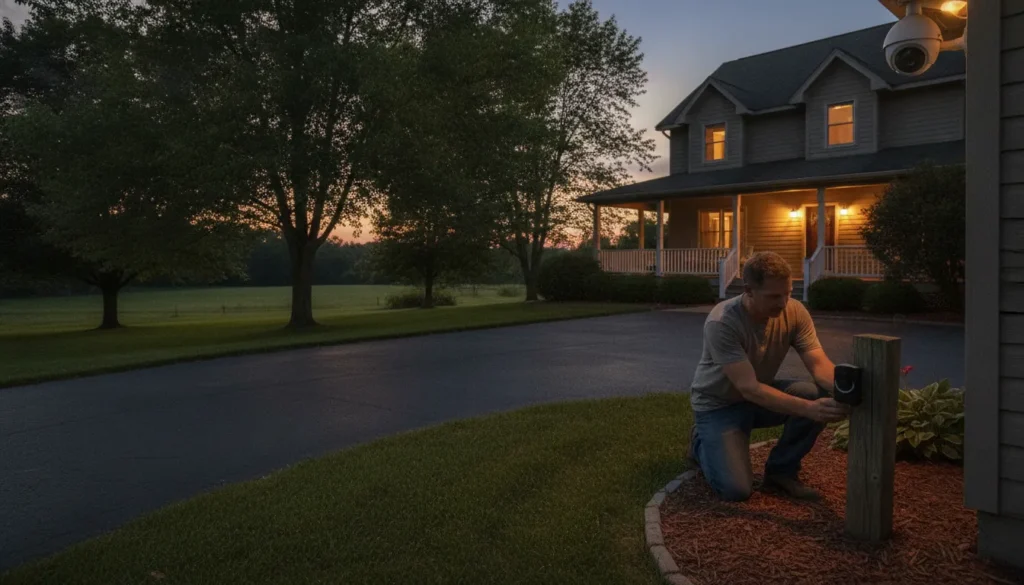
A visitor can reach the edge of your property long before someone opens a door or checks a camera feed. That gap matters on long driveways, wooded lots, vacation homes, and small commercial properties where an early alert gives you more time to respond. A driveway sensor is not a replacement for a complete security system, but it can extend your awareness beyond the walls of a building.
Want the driveway layered into a full security plan? Request a free property review to see how early-warning detection, cameras, and monitoring fit together.
A driveway alarm uses a sensor to detect activity near a driveway and send an alert to a receiver, phone, or security panel. Wireless, buried, and infrared options each balance range, visibility, weather exposure, installation effort, and cost differently. The right choice depends on what you need to detect, how far the signal must travel, and whether you want the alert connected to cameras or professional monitoring.
For South Carolina homeowners and small businesses, the best starting point is the role this early-warning layer plays in a broader security plan, including lighting, surveillance, and a clear response routine.
Why a Driveway Alarm Matters for South Carolina Homes
Most property threats begin before anyone reaches the front door, which makes the driveway an important place for early warning. In Greenville and across South Carolina, that entry point may be a short suburban drive, a long private lane, or a gravel approach across rural acreage. A driveway alarm can detect a vehicle or person crossing the property line and notify occupants before the activity reaches the home, garage, outbuilding, or other priority area.
Many break-ins are opportunistic. A person may be looking for an unlocked vehicle, an unoccupied house, or an easy path to valuable equipment. Early notice gives a homeowner more time to observe what is happening, turn on lights, secure doors, contact monitoring personnel, or call for help. It also helps distinguish a normal arrival from activity that deserves attention, particularly when a property has multiple approaches.
Good security planning starts with identifying what is most at risk, rather than installing equipment without a clear purpose. Consider the locations that matter most on your property:
- Primary entrances: the driveway, front walk, side gate, or rear access point where visitors are most likely to arrive.
- Critical assets: vehicles, detached garages, workshops, agricultural equipment, storage buildings, and delivery areas.
- Blind spots: sections hidden from the house or from existing cameras, especially around curves, tree lines, and long rural lanes.
A driveway alarm is most useful as one layer in a larger plan. Physical protection works through deterrence, detection, and delay, and a perimeter alert strengthens the detection stage. Motion-activated lighting can add a deterrence layer by creating an element of surprise when movement is detected. A light that comes on as someone approaches may discourage casual trespass, while the alarm gives occupants a separate notification.
For homeowners who want these layers coordinated with cameras, door sensors, or monitoring, a professionally designed residential security systems solution can provide a more consistent experience than isolated devices. The right setup depends on the driveway layout, property risks, and response plan, not simply on sensor range or alarm volume.
Purdue EDEN’s rural security planning guidance recommends understanding the real threat to a property before selecting protective measures. That principle applies equally to a South Carolina suburban driveway and a large rural homesite.
The Main Types of Driveway Alarm Sensors
Driveway alarm sensors differ in how they detect activity, where they are installed, and how visible they are after installation. The right choice depends on the driveway layout, the level of concealment you want, and whether alerts should connect with cameras or a broader security system. A short, open drive may work well with a wireless sensor, while a long private entrance or commercial property may benefit from buried detection or a carefully aligned beam.
Wireless Motion Sensors
Wireless motion sensors are often the simplest option for an existing home or small business. They typically mount near the driveway and communicate with a receiver, chime, app, or alarm panel. Because they use radio frequency communication, they do not require trenching or complex underground wiring, which can make installation faster and less disruptive. Placement still matters: vegetation, walls, metal structures, and the distance between the sensor and receiver can affect performance. A wireless unit is a practical starting point when you want flexible placement and the ability to move or expand the system later.
Buried Sensor Systems
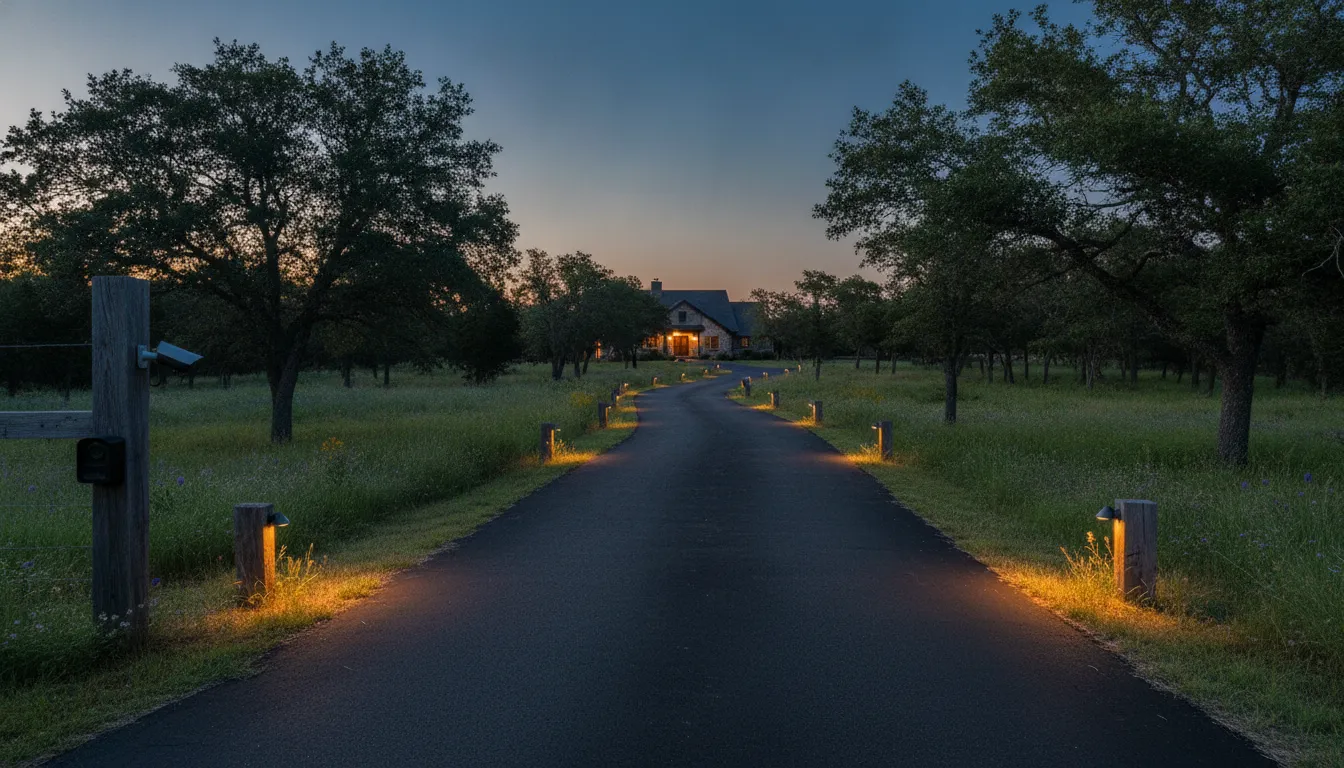
Buried sensors sit below the surface near the driveway, creating a discreet detection point that does not call attention to the security equipment. Their concealed position can also make them less vulnerable to tampering than an exposed motion detector. This approach is useful when appearance matters, when a sensor would be easy to reach, or when the property needs a more permanent installation. Installation requires planning around drainage, paving, landscaping, and utility lines, so a professional assessment is often worthwhile before excavation. The system should be positioned to detect the intended approach without creating unnecessary alerts from nearby activity.

Infrared and Beam Sensors
Infrared sensors detect changes in heat signatures, helping identify approaching people or vehicles. They can be useful where a defined detection zone is more important than concealment, though the field of view must be adjusted for the driveway and surrounding conditions. Beam sensors use a transmitter and receiver to create a line across an entrance. An alert occurs when that line is interrupted, making the design useful for a clearly defined crossing point. Solar-powered versions can reduce the need for electrical wiring in remote areas, while vehicle-detection variants are designed to focus on cars rather than every movement. The NIST alarm systems guide emphasizes matching detection technology to the security environment and system design.
Whichever sensor family you choose, integration can turn a basic chime into a more useful response. A compatible system may send alerts to a phone, trigger nearby lighting, or support driveway alarm integration with cameras and other security controls. That broader context helps you distinguish an expected arrival from activity that needs attention.
What a Driveway Alarm Costs: Options for Every Budget
Driveway alarm pricing spans a wide range. The price depends on sensor complexity, communication method, installation requirements, and integration with cameras or a larger security panel. NIST identifies these factors as key drivers of pricing, so a low-cost standalone sensor and a professionally integrated property-wide system should not be compared as if they deliver the same coverage.
The ranges below are general marketplace context, not quotes. Retail examples include consumer kits priced around $99.95, while long-range and professional systems vary based on the property, equipment, labor, and configuration. Before choosing a price point, identify the areas and assets that need protection, then match the detection method to the driveway.
| Sensor Type | Detection Method | Typical Price Range | Best For |
|---|---|---|---|
| Wireless sensor kit | Motion or PIR detection. | About $50-$150 for DIY-friendly consumer kits. | Homes wanting quick setup with minimal installation. |
| Long-range wireless kit | RF transmitter and receiver. | Roughly $100-$200. | Long driveways needing up to a mile of range, where site conditions allow. |
| Buried or surface sensor system | Vehicle-magnet detection. | Higher cost, typically including professional installation. | Discreet, permanent coverage with less visible equipment. |
| Professionally integrated system | Panel-connected sensors with cameras or monitoring. | Highest cost, based on system design and installation. | Full security integration for homes, vacation properties, or small businesses. |
What changes the final price?
A basic wireless kit can be a practical starting point when the receiver is close to the sensor and the goal is a local alert. Longer driveways may require stronger transmission, additional sensors, or a different placement strategy. Buried systems add site work, while integration can add panel programming, camera configuration, mobile alerts, and monitoring services.
For a property that sits vacant part of the year, a driveway alarm system can be more useful when it connects the first alert to cameras or remote notifications. The right investment is the one that provides dependable detection and a clear response, not simply the lowest ticket price.
Wireless systems are often easier to install because they avoid trenching and complex underground wiring, while complex or multi-zone designs may benefit from professional configuration. That distinction matters when comparing a store-bought device with a complete security solution.
DIY Installation vs Hiring a Professional Security Company
The right installation approach depends on the property, the sensor type, and how much the driveway alarm needs to work with the rest of your security plan. A simple wireless unit can be practical for a homeowner who needs one detection zone and a local alert. More involved designs require careful placement, reliable communication, and consistent configuration. NIST guidance distinguishes cost-effective plug-and-play wireless installations from complex, multi-zone, or hardwired systems where professional installation supports system integrity and reliability: NIST intrusion alarm guidance.
When DIY Makes Sense
DIY installation is often a sensible choice for a plug-and-play wireless system. There is typically no trenching or underground cable to install, so a homeowner can position the sensor, test the receiver, and adjust coverage without scheduling an installation visit. This approach works best when the driveway is straightforward, the alert can remain local, and the system does not need to coordinate with an existing panel or multiple devices.
- Pros: Lower upfront labor cost, faster setup, and flexibility to reposition a wireless sensor.
- Pros: A practical fit for one-zone residential driveways with uncomplicated coverage needs.
- Cons: Incorrect height, angle, or placement can create missed alerts or nuisance activations.
- Cons: Troubleshooting becomes the homeowner’s responsibility, especially when weather, terrain, or signal distance affects performance.
When to Call a Professional
Professional help is the stronger option when the driveway is part of a broader security design. Buried sensors, hardwired equipment, and multi-zone coverage demand more planning than a single wireless alert. A technician can also integrate the detection event with an existing alarm panel, security cameras, monitoring, or other controls. For complex or high-security configurations, NIST recommends professional installation to help ensure proper configuration and reliable operation.
- Professional advantages: Precise placement and testing for long, curved, sloped, or multi-entry driveways.
- Professional advantages: Support for code compliance, buried sensors, hardwired systems, and multi-zone coverage.
- Professional advantages: Integration with cameras and monitoring, so an alert can prompt verification rather than stand alone.
- Consideration: Installation costs more upfront, but it can reduce configuration mistakes and simplify future service.
For a commercial property, explore perimeter and driveway alarms as part of a coordinated design. Homeowners can also compare professional security systems when a basic kit no longer matches the property’s needs.
Do Driveway Alarms Detect People and Vehicles?
Yes, but the answer depends on the sensor installed. A driveway alarm can be configured to detect a person walking toward a home, a vehicle entering the drive, or anything that crosses a defined detection line. The sensor type determines what physical change triggers the alert, so choosing the right technology matters more than choosing the loudest chime.
Infrared motion sensors, often called PIR sensors, detect movement by sensing changes in heat signatures. Because people and animals give off heat, a PIR sensor can identify motion across an open approach without requiring a buried cable. NIST describes infrared sensors as highly sensitive to heat signatures, which supports their use for monitoring people and approaching vehicles: NIST’s intrusion alarm guide. Typical consumer PIR products advertise detection ranges of approximately 20 to 50 feet, depending on placement, weather, terrain, and the model.
Vehicle sensors work differently. Magnetic or vehicle-magnet sensors respond to the metal mass of a car or truck, so they are designed to alert when a vehicle reaches a specific point. Buried vehicle sensors are discreet and can be less exposed to tampering. Beam sensors create an invisible line between two points and trigger when anything interrupts it, whether that is a person, animal, bicycle, or vehicle.
- PIR or infrared: Detects movement associated with people and animals through heat changes.
- Magnetic vehicle sensor: Detects the metal mass of cars and other vehicles.
- Buried sensor: Detects vehicles discreetly beneath or beside the driveway surface, depending on the system.
- Beam sensor: Detects anything that crosses the beam between its transmitter and receiver.
- Combination wireless system: Uses different sensor types to monitor both people and vehicles.
Range has two separate meanings. The sensor may detect motion only 20 to 50 feet away, while the wireless receiver may communicate with the alert unit from roughly 300 to 400 feet in typical consumer kits. Walls, trees, slopes, interference, and installation height can reduce that practical range. For a long driveway or a property with several approach points, multiple zones or a professionally designed system may provide more dependable coverage than relying on one sensor.
Choosing the Right Driveway Alarm for Your Property
The best system starts with the property, not the product box. Walk the driveway from the public road to the house, note bends, gates, parking areas, and any locations where a vehicle or person should trigger an alert. This simple review helps you choose useful coverage instead of paying for range or features you will not use.
Start with distance. A short, visible driveway may only need a nearby sensor and receiver, while a long or winding entrance requires dependable communication across the full span. Measure the actual path, then allow for trees, slopes, buildings, and other obstructions that can weaken a wireless signal. If the receiver cannot reliably hear the sensor from the intended location, a nominal range on the packaging will not solve the problem.
Next, match the sensor to the event you want to detect. Infrared or motion sensors can identify people approaching on foot, while vehicle-focused sensors are better when you primarily need to know that a car has crossed the entrance. A beam arrangement can monitor a defined crossing point. If both vehicles and people matter, confirm that the system can support the required sensor combination without creating constant nuisance alerts.
Integration is the next decision point. A standalone chime may be enough for a simple property, but an existing security panel can coordinate driveway alerts with cameras, lighting, and monitoring. Smartphone access is especially useful when you are away. ADP’s smartphone security alerts can help you evaluate how a driveway event fits into broader remote security management.
South Carolina conditions deserve attention, too. Humidity, heavy rain, heat, and storms can challenge outdoor equipment. Look for a weather-resistant housing, protected connections, and a power plan that suits the sensor location. Solar power may help in an exposed area, but shading and extended cloudy weather still need to be considered. Finally, compare the complete cost, including batteries, trenching, installation, panel programming, and any monitoring or app requirements. Basic DIY equipment may fit a modest budget, while multi-zone or integrated systems can justify professional design and installation.
Ask these five questions before buying:
- Does the receiver cover the full driveway after accounting for obstructions?
- Do I need alerts for vehicles, people, or both?
- Can the system connect to my panel, cameras, lights, and smartphone app?
- Will the housing and power source handle local weather and seasonal conditions?
- What is the total installed cost, including setup and future maintenance?
These answers narrow the choice quickly, and the FAQ below addresses the questions homeowners ask most often before installation.
Ready to add driveway detection to your security plan? Get a free driveway and property security consultation from ADP Security Systems.
Frequently Asked Questions
Quick answers to the questions homeowners ask most before choosing driveway detection. Pair these with the checklist above to narrow the right system for your property.
Are driveway alarms worth it?
They can be a practical first-warning layer for homes, farms, and small businesses with a long approach or limited visibility. A sensor can alert you when a vehicle or person reaches the property boundary, giving you time to check cameras, turn on lights, or respond. The best value comes from matching detection to the property rather than treating one sensor as complete security.
Do driveway alarms detect people?
Many do, but detection depends on the sensor. Infrared or passive infrared equipment responds to changes in heat and movement, while magnetic sensors are designed primarily to detect vehicles or other substantial metal objects. Beam sensors can alert when anything crosses the protected path. Review the detection method before choosing a system for foot traffic, vehicles, or both. NIST explains how sensor selection affects intrusion alarm performance.
How far can a driveway alarm reach?
Range varies by the sensor’s detection area, the transmitter-to-receiver distance, terrain, building materials, vegetation, and radio interference. Measure the actual path from the proposed sensor to the receiver or security panel, rather than relying only on a package’s maximum figure. A professional can test communication at the property and identify a better receiver location if needed.
Are driveway alarms easy to install?
Plug-and-play wireless models are often suitable for DIY installation because they avoid trenching and complex underground wiring. Buried sensors, hardwired equipment, multi-zone coverage, and connections to cameras or an existing alarm panel require more planning. Professional installation can help ensure reliable placement, configuration, and system integration, especially on larger or irregular properties.
Are driveway alarms weather-resistant?
Outdoor models are commonly built for exposure, but weather resistance is not identical across products. Check the manufacturer’s rating, temperature range, drainage, battery protection, and mounting guidance before installation. Place the sensor where standing water, heavy vegetation, and direct impact are less likely, then inspect it periodically after severe weather.
How do solar driveway alarms work?
Solar-powered sensors use a small panel to charge an internal battery, so they can sit far from outlets and low-voltage wiring. They are especially practical for long driveways, gates, and rural approaches where running cable is costly. Keep the panel clear of shade and debris, and confirm the battery can carry the sensor through cloudy stretches and shorter winter days before relying on it as your only detection point.
Ready to strengthen your driveway security?
A properly selected driveway alarm can provide earlier awareness of activity near your property and help you choose the right combination of sensors, cameras, and alerts. Contact ADP Security Systems for a free driveway and property security consultation. Describe your driveway layout and the team will recommend the next practical step.