Medical Alert Systems for Couples: Dual vs Single Plans in 2026
November 5, 2026
Loading Dock Camera Features That Protect Shipments
November 6, 2026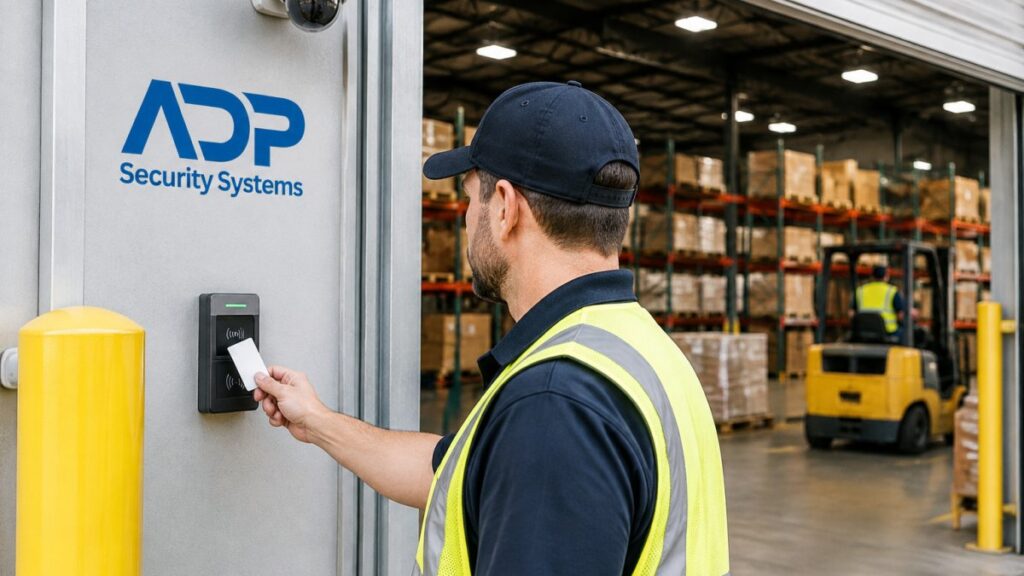
Last Updated: November 5, 2026
Quick Summary
To secure a warehouse, start with a site-security assessment that maps every entry and exit point, ranks each by risk, and checks lighting and locks. Then layer perimeter barriers, access control, cameras, and a checklist that is reviewed on a set schedule.
- Map every door, gate, window, and roof opening, including ones rarely used.
- Split security checks into daily, weekly, monthly, and quarterly tiers with named owners.
- Test alarms monthly and check camera footage at night, since most intrusions happen after dark.
- Review credentials quarterly and remove access the same day a contractor’s work ends.
- Rank perimeter fixes by risk, cost, and urgency instead of buying equipment in bulk.
Table of Contents
- Start With a Site-Security Assessment
- Build a Warehouse Security Checklist You Can Actually Follow
- Strengthen Warehouse Perimeter Security
- Set Up Warehouse Access Control Systems
- Place Warehouse Security Cameras Where Entry Happens
- Respond to an Intrusion and Preserve Evidence
- Schedule Your Security Review With ADP Security Systems
- Frequently Asked Questions
Start With a Site-Security Assessment
Most warehouses get hit through the door they forgot about. Knowing how to secure a warehouse starts with a proper site-security assessment that finds those weak spots before a thief does. It takes one walk, a notepad, and an honest look at how people really move through your building.
A common mistake is buying cameras or locks before you know what you are protecting. Start by listing every way in and out, then rank each one by risk. Your loading dock, side door, and roof hatch probably need different fixes.
A sound order is to map the openings, check the lighting, test each lock, and note where blind spots sit. For a fuller roundup of upgrades that reduce theft and control access, see best security upgrades for warehouses.
Mapping Entry and Exit Points by Shift and Zone
Entry risk changes with the clock. A dock that is busy at 7 a.m. may sit empty and dark at 11 p.m. Map your openings for each shift, not just once.
Walk each zone and record:
- Every door, gate, window, and roof opening, including ones you rarely use
- Who has a key or code and whether that access still makes sense
- Lighting and camera coverage during each shift
- Propped doors or broken latches that staff may have worked around
Keep the map simple. A marked floor plan works well, and it becomes your baseline for every later step.
Build a Warehouse Security Checklist You Can Actually Follow
A warehouse security checklist only helps if people use it. Keep it short, specific, and tied to daily work. A long binder nobody opens protects nothing. Cadence, ownership, and periodic review are what keep a checklist honest.
Start with checks that take five minutes or less:
- Confirm every exterior door latches when closed
- Check that gate and boom barriers close fully
- Verify security lighting turns on at dusk
- Review the alarm panel for open zones or faults
- Confirm visitor badges were returned at the end of the day
Assign each task to a named role and a time. Review the list monthly, and update it whenever your shifts, staff, or layout change.
Set a Cadence by Frequency, Not by Habit
Split checks into daily, weekly, monthly, and quarterly tiers so nothing depends on someone remembering. Daily checks cover doors, gates, lighting, and the alarm panel. Weekly checks cover access logs, camera image quality, and dock door operation. Monthly checks cover lock function, fence and gate hardware, and the visitor log. Quarterly checks cover credential reviews, contractor access, and a full walk of the perimeter. Put the cadence on a calendar with a named owner for each tier, and record completion so a missed check is visible rather than silent.
Test Alarms and Cameras on a Schedule
An alarm that has never been tested is an assumption, not a control. Test each zone on a monthly schedule, record the result, and log faults for repair. Check camera footage at night, not just during the day, since most intrusions happen after dark. Export a short clip from each camera monthly to confirm recording, retention, and playback work, a camera that records but cannot be played back is no evidence at all.
Watch out: a common failure is testing the alarm panel but never testing the sensors on individual doors and windows, so a dead sensor goes unnoticed until an incident.
Review Access and Measure Performance
Access reviews belong on the checklist too. Pull the list of who holds credentials for each door quarterly, compare it to current staff and contractors, and remove anyone who no longer needs access. Review after-hours entries weekly and flag any that were not scheduled.
Measure the program with a few simple numbers: unauthorized-entry attempts, alarm response time, access exceptions, camera coverage gaps, and incident rates. Track them month to month so you can see whether fixes are working rather than assuming they are. A checklist that produces numbers becomes a management tool; one that only produces checkmarks becomes paperwork.
Keep the List Short and the Records Long
The checklist should stay short enough to finish, but the records should be kept long enough to be useful. Store completed checks, alarm tests, camera exports, and access reviews in one place, and keep them long enough to support an investigation or an insurance claim. When shifts, staff, or layout change, update the list the same week, a checklist built for last year’s operation protects last year’s warehouse.
The checklist works best when each tier has a set frequency and a named owner, as summarised below.
| Tier | Covers | Example checks |
|---|---|---|
| Daily | Doors, gates, lighting, alarm panel | Doors latch, gates close, lights turn on at dusk |
| Weekly | Access logs, cameras, dock doors | Review after-hours entries, check image quality, dock operation |
| Monthly | Locks, fence hardware, visitor log | Lock function, gate hardware, visitor badges returned |
| Quarterly | Credentials, contractors, perimeter | Credential review, contractor access, full perimeter walk |
Strengthen Warehouse Perimeter Security
Perimeter security is your first line of defense when you need to secure a warehouse. It slows intruders and gives your cameras and alarms time to work.
Begin with the physical barrier. Fencing should be tall enough to deter climbing and secured at the base so it cannot be lifted.
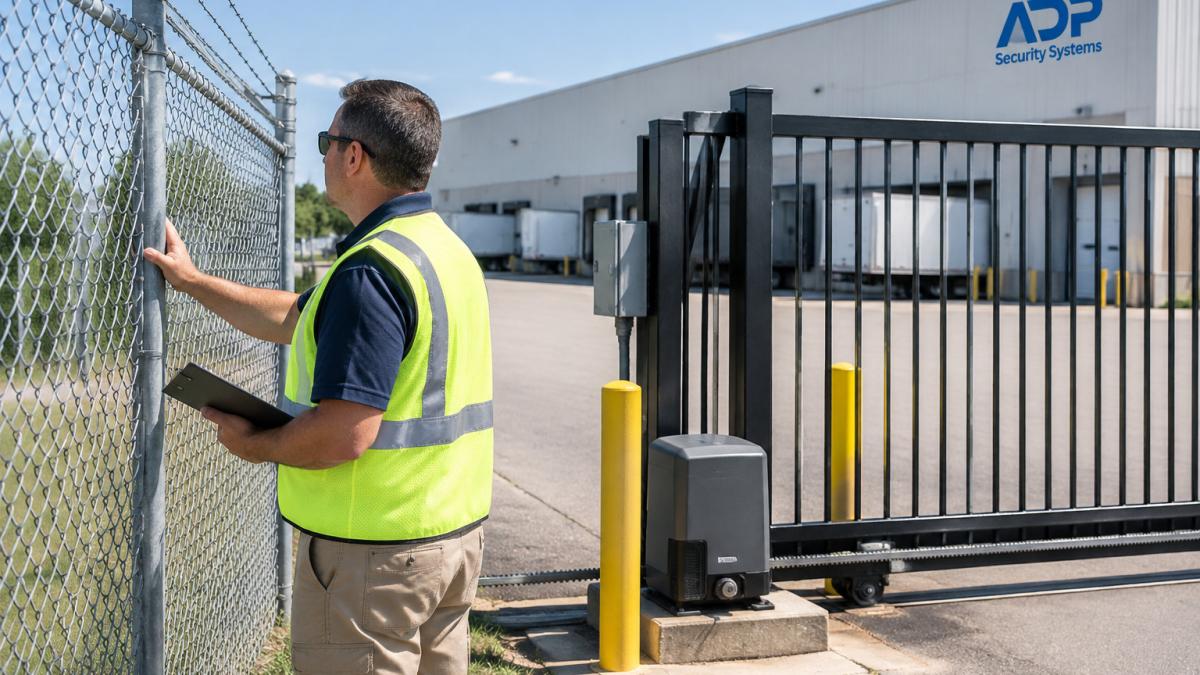
Lighting matters just as much. Light entrances, loading areas, and the fence line so that no dark corner hides an approach. Motion-activated lights can cut energy use while still deterring trespassers, but check that the sensors cover the full approach path, not just the door itself.
Secure the Dock and Yard, Not Just the Fence
The loading dock is the most-used opening in most warehouses and is often treated as an afterthought. Dock doors should close and lock when not in active use, and the dock levelers and seals should be checked so they cannot be pried. Yard gates should be closed and locked outside operating hours, and trailer parking should be inside the fence or in a lit, camera-covered area. If drivers drop trailers overnight, use kingpin locks or gladhand locks so a tractor cannot hook up and drive off.
Contractor and shared-yard access is another gap. If your yard is shared with other tenants or used by contractors, you cannot assume their access controls match yours. Require contractors to sign in, issue temporary credentials, and escort them past the dock. Review who holds yard and gate credentials quarterly, and remove access the same day a contractor’s work ends.
Get a Free Security Assessment →
Rank Perimeter Fixes by Risk, Cost, and Urgency
A perimeter has more weak points than budget, so rank fixes instead of buying in bulk. Walk the boundary and score each opening on three factors: how easy it is to reach from outside, how much it exposes if breached, and how often it is left unsecured. A rarely used rear man-door that opens onto inventory ranks higher than a front gate that is staffed all day. Fix the highest-risk openings first, then the ones that are cheapest to close, then the ones that can wait for the next budget cycle.
Perimeter security is one of several layers. Pair it with the access controls covered next.
[PAGE:1] Read about how to secure warehouse entry points with access control, cameras, alarms, and daily procedures.
Set Up Warehouse Access Control Systems
Access control decides who can enter and when. It is the core of warehouse security against unauthorized entry.
Most systems use employee access cards, keypad codes, or credentials tied to each person. Assign access by role, so a forklift driver does not need the server room. Remove access the same day someone leaves.
Access logs are valuable. They show who entered, through which door, and at what time. Review them weekly, especially for after-hours entries.
Visitor management closes another gap. Require sign-in, issue temporary badges, and escort visitors past the dock.
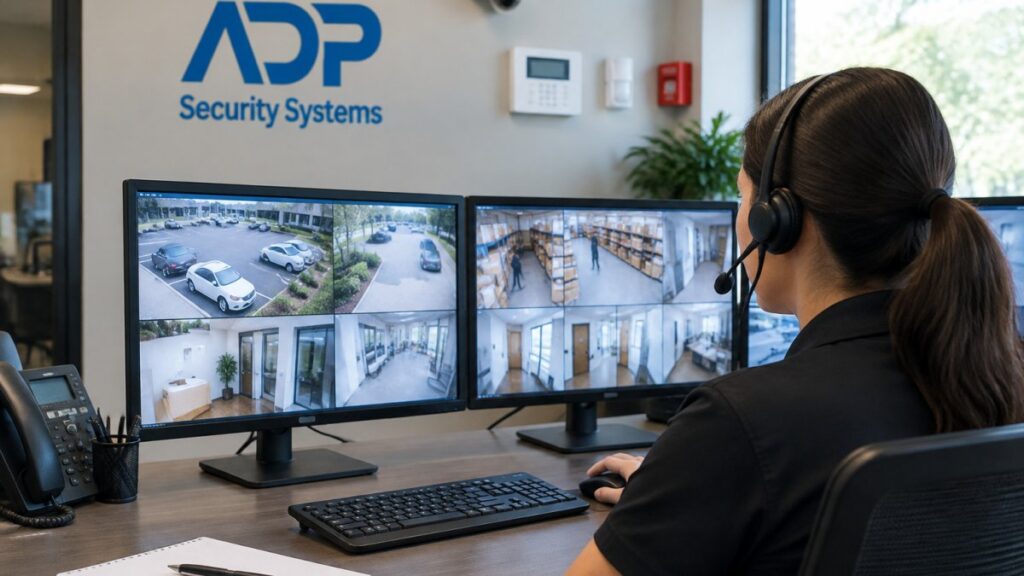
[PAGE:2] See how an integrated access control and CCTV system manages entry, monitors activity, and sends alerts.
Place Warehouse Security Cameras Where Entry Happens
Cameras only help if they capture faces, plates, and doorways clearly. Aim your coverage at the places where people and vehicles actually enter.
Focus on:
- Each exterior door and dock door, framed so faces are visible
- Gates and vehicle lanes, to capture plates
- Windows and skylights that a person could reach
- Interior corridors leading to valuable inventory
Camera footage is most useful when it can be matched to access events. See how to integrate video surveillance with access control at those same entry points. When a door opens at an unusual hour, footage can be pulled up right away. Test image quality at night, since most intrusions happen after dark.
Mount cameras high enough to resist tampering, and check the field of view monthly to catch shifted or blocked lenses.
Respond to an Intrusion and Preserve Evidence
A plan written before an incident beats improvising during one. Decide who responds, who calls police, and who protects the scene.
Follow these steps when an alarm triggers:
- Verify the alarm using camera footage or a remote check, if safe to do so
- Call law enforcement if an intrusion is confirmed
- Do not confront anyone on site
- Preserve footage and access logs by exporting them before they overwrite
- Document damage with photos and a written timeline
- Notify management and update the incident record
Evidence fades quickly. Export camera clips and logs immediately, and store copies somewhere the intruder cannot reach.
[PAGE:4] Use a commercial alarm response protocol that gives your team a clear plan to verify threats and guide responders.
Schedule Your Security Review With ADP Security Systems
Warehouse security is not a one-time project. Doors wear out, staff change, and new threats appear. Schedule a review at least once a year, and after any incident or layout change.
ADP Security Systems provides security, fire, and life safety solutions for residential and commercial properties across South Carolina. It offers expert installation of alarms, security cameras, and access control, along with 24/7 alarm monitoring and customizable maintenance schedules.
To see where your warehouse stands, request a free security assessment from ADP Security Systems. Pricing depends on your building, equipment, and monitoring needs, so contact ADP Security Systems directly for a quote.
Frequently Asked Questions
How do you secure a warehouse against unauthorized entry?
Start by identifying every entry and exit point, including loading docks, personnel doors, gates and roof openings. Then layer protections: reinforced doors and locks, controlled access credentials, perimeter fencing and gate control, security lighting, and cameras covering each opening. Pair these with alarm monitoring and written procedures for staff, visitors and contractors. Physical barriers slow intruders, while monitoring and access logs help you detect and document attempts.
What should a warehouse security checklist include?
A useful warehouse security checklist covers entry points and their locks, gate and boom barrier operation, perimeter fence condition, lighting levels at doors and the yard, camera coverage and recording status, alarm test results, key and credential inventories, and visitor sign-in procedures. Assign an owner to each item and review it on a fixed schedule, such as monthly for hardware and quarterly for procedures, so gaps are caught before they are exploited.
Where should security cameras be placed in a warehouse?
Place cameras to cover every door, dock and gate, plus the paths between parking and the building. Aim for views that capture faces and license plates at entry points, not just wide shots. Mount them high enough to resist tampering, avoid backlighting from doorways, and make sure night coverage works with your lighting. Confirm that footage is retained long enough to review incidents and that recordings are checked regularly.
How can employees help prevent unauthorized access?
Employees prevent unauthorized entry by never propping doors open, challenging unfamiliar people in restricted areas, returning access cards promptly when they leave, and reporting lost credentials immediately. Train staff on who may authorize visitors and how to escalate suspicious activity. Keep procedures short and posted at entry points so they are followed on busy shifts, not just during onboarding.