How to Test Home Security Sensors: A 2026 Guide
October 9, 2026
How Home Alarm Systems Work Explained
October 10, 2026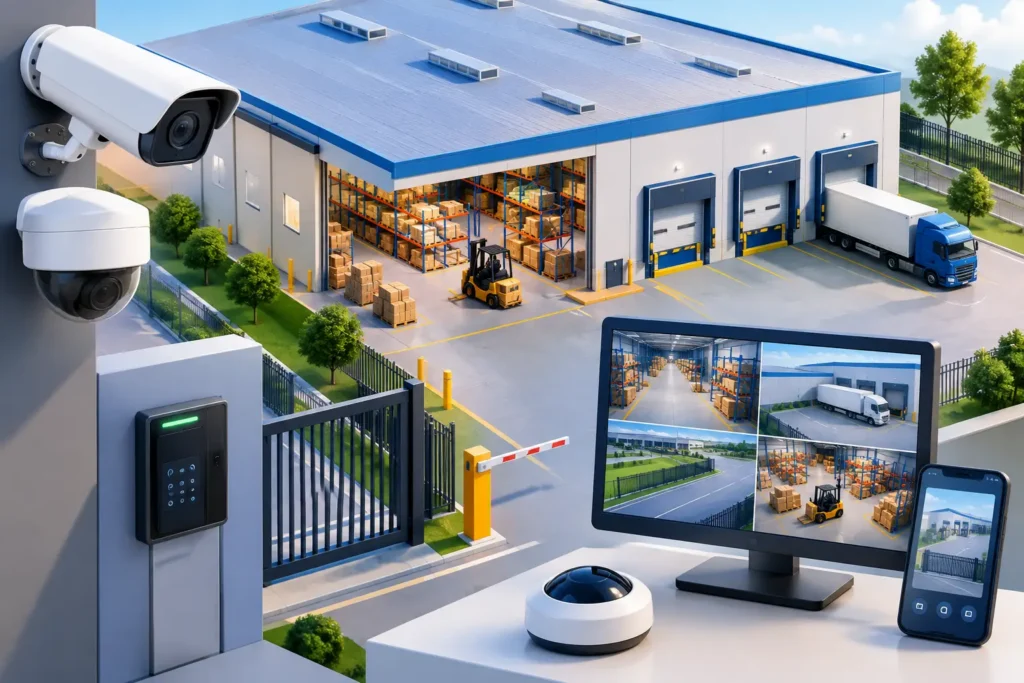
A warehouse can look secure at 5:00 p.m. and still have exposure points throughout the night: an unsecured loading dock, a side door propped open for convenience, a blind spot between storage racks, or a former employee whose access credentials still work. For facility managers weighing the best security upgrades warehouses can make, the goal is not simply adding more equipment. It is creating clear visibility, controlled movement, and a dependable response when something is wrong.
The right plan also has to fit the way your facility operates. A small distribution center with a handful of employees has different needs than a high-volume warehouse with multiple shifts, outside drivers, valuable inventory, and constant dock activity. A professional security assessment helps identify the risks that matter most before you invest in a system.
Best security upgrades for warehouses start with access control
Warehouses often have more entry points than managers realize. Employee entrances, office doors, receiving areas, mechanical rooms, gates, and loading docks all create opportunities for unauthorized access. Traditional keys provide little accountability. They can be copied, lost, or retained by someone who no longer works for the company.
Electronic access control replaces that uncertainty with a record of who entered, where they entered, and when. Employees can use credentials such as key cards, fobs, mobile access, or coded entry systems. Managers can set access schedules so a daytime employee cannot enter after hours, while supervisors or maintenance personnel retain the access they need.
Access control is especially useful for separating public, operational, and restricted areas. A delivery driver may need access to a receiving zone but not the inventory floor. An office employee may need the front entrance and administrative area but not a high-value cage. When access is assigned by role, security becomes easier to manage without slowing down legitimate work.
There is a practical trade-off. A basic single-door system may be enough for a small warehouse, while a larger operation may need networked access control across multiple buildings and gates. The key is to plan for future staffing and facility growth rather than installing a system that is already at its limit.
Use security cameras to see the full operation
Security cameras do more than document a break-in. In a warehouse setting, properly placed cameras can help investigate damaged shipments, verify deliveries, deter internal theft, monitor safety-sensitive areas, and resolve disputes about when an incident occurred.
Camera placement matters as much as camera quality. Coverage should include exterior approaches, employee and visitor entrances, loading docks, parking areas, shipping and receiving zones, inventory aisles, cash-handling points, and any area where high-value materials are stored. Cameras should be positioned to capture useful details, not merely wide views of activity.
Focus on docks, doors, and inventory transitions
Loading docks deserve special attention because inventory moves quickly and access is often shared by employees, vendors, and drivers. Cameras at dock doors can provide a record of trailer arrivals, loading activity, and after-hours movement. Interior coverage near receiving and shipping areas can help confirm that pallets or packages moved through the expected process.
For large facilities, cameras should also cover transitions between areas. Theft and loss do not always occur at the perimeter. Inventory can disappear when it moves from receiving to storage, from storage to packing, or from a secured cage to a staging area.
Modern systems can provide remote viewing from an authorized smartphone, tablet, or computer. That allows managers to check on an alert or review activity without driving to the facility. Remote access should be carefully managed, however. Use individual logins and remove access promptly when duties change.
Pair intrusion detection with 24/7 professional monitoring
Cameras provide evidence and awareness, but they do not always create an immediate response. An intrusion alarm helps protect the warehouse when it is closed or when a restricted area should be secure. Door contacts, motion detection, glass-break sensors, and perimeter protection can be selected based on the building layout and how the facility is used.
A monitored alarm adds another layer of protection. If an alarm is triggered, trained central-station operators can follow established response procedures and request emergency assistance when appropriate. This matters when a manager is asleep, away from town, or unable to see a notification right away.
Not every warehouse needs the same sensor design. A building with overhead doors, high ceilings, climate-controlled storage, or frequent overnight operations requires careful planning to reduce false alarms while maintaining meaningful coverage. Professional installation is valuable here. Equipment has to work with the facility, not create daily interruptions for the people running it.
Protect the perimeter before an intruder reaches the building
A strong warehouse security plan begins outside. Fencing, controlled vehicle gates, clear sightlines, and exterior cameras can discourage trespassing before a person reaches a door or dock. Good exterior lighting also helps employees, drivers, and responding authorities see what is happening around the property.
Lighting is often an overlooked upgrade. Dark corners near dumpsters, trailers, side entrances, and rear parking areas can become convenient hiding places. Motion-activated lighting can be a cost-conscious option in areas that do not need continuous illumination, while consistent lighting may be better around active entrances and loading zones.
Perimeter upgrades should be balanced with daily logistics. A gate that creates long delays for scheduled deliveries can lead staff to bypass security procedures. The better approach is to define vehicle and visitor processes clearly, then build the access controls around them. For example, a delivery entrance may need scheduled access and video verification, while a rarely used rear gate may remain locked except for approved personnel.
Do not overlook fire and life-safety systems
Warehouse protection is not only about theft and intrusion. Stored materials, charging equipment, machinery, electrical systems, and packaging can all increase fire risk. A commercial fire alarm system should be designed and maintained for the building’s occupancy, layout, and applicable requirements.
Fire detection, notification devices, monitoring, and scheduled testing help facility managers protect people first while supporting business continuity. A fire event can affect inventory, equipment, operations, customer commitments, and insurance requirements long after the immediate emergency has ended.
Security and fire systems should not be treated as unrelated projects. Both depend on reliable equipment, professional installation, routine service, and a response plan that employees understand. When alarms, cameras, access control, and fire protection are considered together, gaps are easier to identify.
Make security procedures part of the upgrade
Technology is most effective when employees know what to do with it. A new access control system will not solve a problem if staff members hold secure doors open for unknown visitors. Cameras cannot help much if managers do not know how long footage is retained or who is responsible for reviewing incidents.
Give employees clear expectations for visitor sign-in, badge use, lost credentials, suspicious activity, after-hours access, and alarm procedures. Keep those procedures practical. If a process adds unnecessary friction to a busy shift, workers may find shortcuts that weaken the system.
It is also wise to review security whenever operations change. New tenants, expanded storage areas, a revised shift schedule, added dock doors, or higher-value inventory can all alter a facility’s risk profile. A security plan should be able to change with the business.
Choose a partner who can support the system over time
Warehouse security equipment needs ongoing attention. Cameras may need repositioning as rack layouts change. Access permissions must be updated as employees come and go. Alarm and fire systems require testing and maintenance to remain dependable when they are needed.
For South Carolina businesses, ADP Security Systems can help evaluate those layers together, from commercial intrusion alarms and video surveillance to access control, fire alarm systems, maintenance, and 24/7 monitoring. With more than 30 years of regional experience, the focus is on a system that fits the facility rather than a one-size-fits-all package.
The best upgrade is the one that closes a real vulnerability without making warehouse operations harder to run. Start by walking the property after hours, following the path a visitor or intruder could take, and asking one practical question at each point: Can we see it, control it, and respond to it? The answers will point to the protection your facility needs most.