How to Choose Commercial Security Cameras for Business
August 14, 2026
Commercial Security Camera Systems: Your Business Guide
August 17, 2026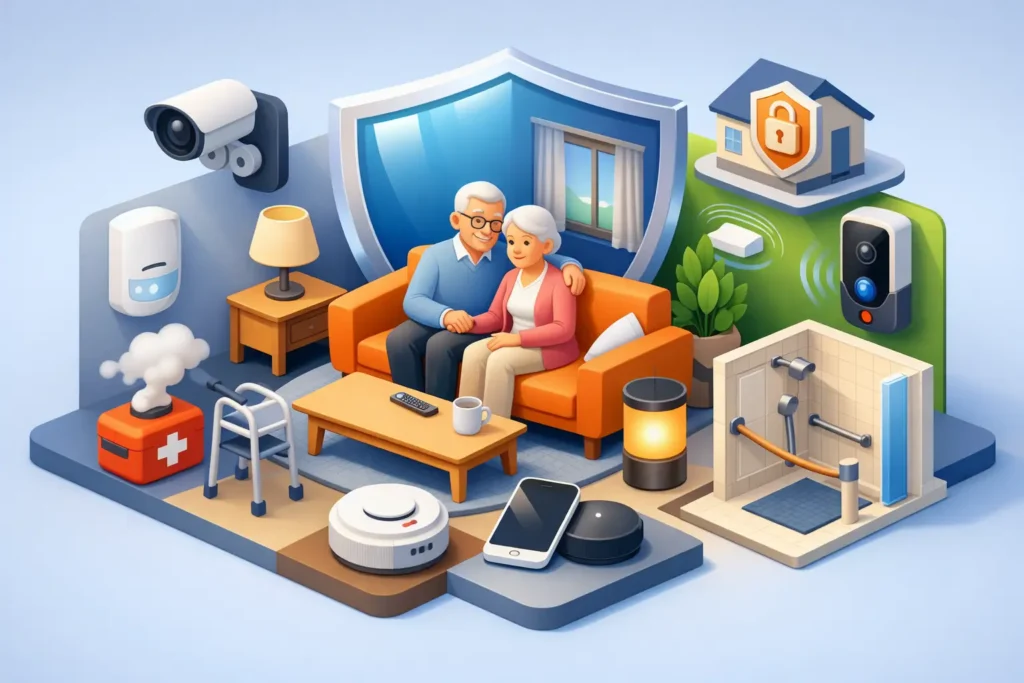
A missed call, an unfamiliar visitor at the door, or a fall in the kitchen can quickly turn an ordinary day into a family emergency. Learning how to protect elderly parents is not about taking control away from them. It is about putting dependable safeguards in place so they can continue living with confidence, support, and as much independence as possible.
For many South Carolina families, the best plan combines practical home changes, clear communication, professional monitoring, and a reliable way to request help when a loved one cannot reach a phone. The right mix depends on your parent’s health, home layout, routines, and comfort with technology.
Start With a Conversation, Not a Checklist
Safety discussions can feel personal. A parent who has managed a household for decades may hear concern as criticism, especially if the conversation begins with what they can no longer do. Start with what matters to them: staying in their own home, keeping a familiar routine, or feeling comfortable when family members are away.
Ask specific, nonjudgmental questions. Do they ever feel unsteady on the stairs? Have they received suspicious calls or mail? Is it difficult to get to the door quickly? Do they know whom to call if the smoke alarm sounds or they feel ill? Their answers will reveal more than a general question about whether they are “doing okay.”
It also helps to frame protection as a plan for everyone. A monitored security system, a medical alert device, or a scheduled check-in can reduce stress for adult children while giving an older parent a direct path to help. The goal is preparedness, not constant supervision.
How to Protect Elderly Parents From Home Hazards
Most serious risks at home are not dramatic. They are everyday conditions that become dangerous when vision, balance, mobility, hearing, or reaction time changes. Walk through the home together at the time of day when they normally move around it. Look for poor lighting, uneven flooring, loose rugs, cluttered hallways, and cords crossing walking paths.
Falls deserve special attention because they can cause a medical emergency and make a person hesitant to move freely afterward. Secure or remove loose rugs, add nonslip surfaces in bathrooms, place grab bars near toilets and showers, and make sure frequently used items are easy to reach. A sturdy chair or bench near the entry can also make it easier to remove shoes without losing balance.
Lighting is another straightforward improvement. Install bright lighting at exterior doors, stairs, driveways, and walkways. Motion-activated lights can be helpful where a switch is hard to reach, but they should be tested regularly. Keep a flashlight beside the bed and in a central location in case of a power outage.
Fire protection should be part of the same review. Make sure smoke alarms and carbon monoxide alarms are installed in appropriate locations, audible throughout the home, and tested on schedule. If hearing loss is a concern, ask a life-safety professional about notification options that do not rely on sound alone. Keep a clear path to exits and make sure your parent knows where to go if there is a fire.
Make Entry Points Easier to See and Secure
Older adults are frequently targeted by people posing as contractors, utility workers, or sales representatives. A well-lit entry, a door viewer or video doorbell, and a reliable lock give your parent time to verify who is outside without opening the door.
A professionally installed security system can add another layer of protection through door and window sensors, visible cameras, and 24/7 alarm monitoring. Smartphone access can be useful for family members, but it should support your parent rather than make them feel watched. Agree on what is monitored, who receives alerts, and when you will check in.
Plan for Medical Emergencies Before One Happens
A phone is useful only if your parent can reach it, operate it, and speak during an emergency. That is why a wearable medical alert device can be a practical safeguard for seniors who live alone, have a history of falls, or take medications that may cause dizziness.
The most effective devices are simple enough to use under stress. A one-touch SOS button can connect the wearer to trained emergency operators, while automatic fall detection may request help if a fall prevents them from pressing the button. Waterproof wearables are especially useful because bathrooms are a common place for falls. GPS and cellular connectivity can also provide reassurance when a parent is outside the home, traveling, or visiting family.
No device replaces medical care or a family support network. Fall detection can have limitations, and not every fall triggers the same motion pattern. Still, it can be a meaningful backup when seconds matter. ADP Security Systems helps families assess personal medical alert options alongside home security needs, with professional guidance rather than a one-size-fits-all recommendation.
Create a simple emergency information sheet and place it where first responders or family can find it. Include current medications, allergies, physicians, preferred hospital, emergency contacts, and any relevant medical conditions. Review it after appointments or medication changes.
Reduce Fraud Without Creating Fear
Scams directed at older adults often create urgency: a caller claims a grandchild is in trouble, a government agency demands payment, or a stranger says the home needs immediate repair. Your parent does not need to become suspicious of everyone. They need a few clear rules that make it easier to pause.
Agree that they will not provide personal information, bank details, passwords, or gift card numbers to an unsolicited caller, email sender, or visitor. Encourage them to hang up and call a known number directly if a message seems to come from a bank, doctor’s office, utility company, or government agency. Legitimate organizations do not require immediate payment through unusual methods.
Review mail and online accounts together if your parent welcomes the support. Strong, unique passwords and two-step verification can reduce account risk, but the setup should remain manageable. A complicated system that your parent cannot use safely may cause more frustration than protection. Consider a password manager only if they are comfortable with it and a trusted family member has a clear, agreed-upon role.
Build a Communication Routine That Respects Independence
Frequent contact is valuable, but it should not feel like surveillance. Set a predictable check-in schedule that fits your family. A brief morning text, an evening call, or a weekly visit may be enough for one parent and insufficient for another. The right frequency changes after a new diagnosis, hospital stay, medication adjustment, or recent fall.
During conversations, listen for small changes. Are they skipping meals because cooking feels difficult? Do they sound confused about medications? Have they stopped going to church, visiting friends, or driving to familiar places? Isolation can increase vulnerability to both health problems and fraud, so social connection is part of protection too.
Create a small circle of support rather than placing every responsibility on one person. A nearby neighbor, relative, friend, caregiver, or faith community contact can be helpful when family members live farther away. Everyone should know who has a spare key, who is authorized to make decisions, and who should be called first during an emergency.
Review the Plan as Needs Change
A safety plan is not a one-time project. Revisit it after a fall, a close call, a change in mobility, or a significant health event. Test alarms, replace device batteries as required, update emergency contacts, and confirm your parent still knows how to use any equipment in the home.
The best protection is often quiet: a clear hallway, a verified visitor, an answered check-in, or a button that brings help when a phone is out of reach. When those safeguards are chosen with your parent instead of imposed on them, they can provide something every family wants: more confidence at home and more peace of mind when you cannot be there.