Cloud Storage Versus Local Recording for Security
November 4, 2026
9 Reasons Your Home Security System Keeps False Alarming
November 5, 2026
Last Updated: November 4, 2026
Quick Summary
Fall detection is a monitoring feature that uses motion sensors and software to tell the difference between a real fall and everyday movement, then sends an automatic alert when a fall is detected. An accelerometer, gyroscope and barometric pressure sensor catch the signature of a fall, and an algorithm weighs the whole sequence of motion.
- An accelerometer measures speed and direction, a gyroscope tracks body rotation, and a barometric sensor notices height changes.
- After a fall is confirmed, a countdown of often 20 to 60 seconds lets the wearer cancel before an alert goes out.
- Cellular devices work away from home, while landline devices fail during a power or line outage.
- Wearable devices work outdoors but need charging, while ambient sensors need no wearing but cover only installed rooms.
- Charge the device at the same time daily, since a device that is charging is not being worn.
Table of Contents
- How Fall Detection Technology Works: The Basics
- What Happens After a Fall Is Detected
- Medical Alert Systems With Fall Detection: What to Look For
- Fall Detection Devices That Call Family and Monitoring Centers
- Automatic Fall Detection Devices: Wearable vs. Ambient Sensors
- Accuracy, False Alarms, and How to Troubleshoot Them
- Battery, Privacy, and Smart Home Integration
- Get a Free Security Assessment for Your Fall Detection Needs
- Frequently Asked Questions
How Fall Detection Technology Works: The Basics
Fall detection is a monitoring feature that uses motion sensors and software to tell the difference between a real fall and everyday movement, then sends an automatic alert when a fall is detected.
The core idea: a fall is a sudden, downward burst of motion followed by a change in body position, and the device is built to recognize that pattern.
Sensors That Detect a Fall
Three sensors do most of the work. An accelerometer measures speed and direction of movement. A gyroscope tracks how the body rotates. A barometric pressure sensor notices small changes in height.
Together, these sensors catch the signature of a fall:
- A sudden downward acceleration
- A rotation of the body
- A quick drop in height
Wearable devices put these sensors in a pendant or wristband. Ambient sensors mount on a wall or ceiling and watch the room instead of the person.
How Algorithms Separate a Fall From a Quick Sit
The algorithm is the brain of the system. It compares live sensor readings against known motion patterns. A fast sit into a chair looks similar to a fall at first. The difference is what happens next.
A fall usually ends with the body low to the ground and still. A sit ends with controlled movement and a return to normal activity.
What Happens After a Fall Is Detected
Detection is only half the system. The other half is the response chain, and it runs on a clock. The gap between the fall and the first human voice on the line matters more than the sensor’s accuracy rating, because a perfect detection that reaches no one is still a failed alert.
The Cancellation Window
Once the algorithm confirms a fall, the device starts a short countdown, often 20 to 60 seconds. The window exists because no algorithm is perfect. It gives the wearer time to press the help button, stand up, or say a cancel phrase before an alert goes out.
Watch out: a wearer who is dazed or in pain may not be able to reach the button or speak clearly, so the countdown should never be treated as proof the person is fine.
How the Alert Travels
When the countdown expires, the device opens a channel to the monitoring center. The path depends on the hardware:
- Cellular (4G/LTE) devices connect over the same networks a phone uses, so they work away from home and do not depend on a landline.
- Landline-based devices dial out over a home phone line, which is reliable indoors but useless during a power or line outage and does not travel.
- Wi-Fi and Bluetooth setups may route through a home network or a paired phone, which cuts monthly cost but adds a failure point if the network or phone is down.
A well-built system uses more than one path. A cellular primary with a landline or Wi-Fi backup is a common pattern, and some units fall back to a battery-backed connection if main power drops.
What the Operator Does
A trained operator answers and speaks through the device’s speaker. The operator’s job is triage, not diagnosis:
- Establish contact. Ask if the person is hurt and can respond.
- Assess. If the wearer answers and declines help, the operator logs the event and may still notify a contact depending on policy.
- Escalate. If there is no answer or the wearer asks for help, the operator calls the first emergency contact, then moves down the list.
- Dispatch. If no contact responds, or the situation sounds urgent, the operator calls emergency services and relays the address and any known medical details.
That continuous voice channel is why two-way audio matters more than a loud siren: a siren tells neighbors something is wrong, but a voice tells the operator whether to send an ambulance.
When the Wearer Cannot Respond
A fall that knocks someone unconscious or leaves them unable to speak is the case the system is really built for. The countdown expires, the operator gets no response, and escalation goes straight to contacts and emergency services.
The Weak Links
The response chain fails in predictable places:
- No cellular signal in a rural area or a basement.
- A dead battery that silently disables the device.
- An out-of-date contact list where the first three numbers are disconnected.
A monthly test call and a twice-a-year contact-list review catch most of these before a real fall does. You can see a fall response example that walks through the full sequence, from the alert to emergency help arriving.
Medical Alert Systems With Fall Detection: What to Look For
Not every medical alert system with fall detection works the same way. Before you choose one, check these features:
- Automatic detection, not just a manual help button
- Two-way voice so the wearer can talk to an operator
- Cellular and GPS options for use away from home
Bathrooms and stairs are where falls happen most, so water resistance matters more than most buyers expect. Ask how the device behaves when the wearer is out of the house, too. A system that only works at home leaves gaps.
Our team can walk you through fall detection device features so you can compare options against your needs.
Fall Detection Devices That Call Family and Monitoring Centers
Nationwide GPS and 4G wireless capability keeps the device working when the wearer travels. Family members get peace of mind, and the wearer is not dependent on a phone being within reach. If you want to know exactly how alerts reach loved ones, read how medical alerts call family.
Get a Free Security Assessment →
Automatic Fall Detection Devices: Wearable vs. Ambient Sensors
Wearable and ambient sensors solve the same problem in different ways, and the right choice depends on the person and the home.
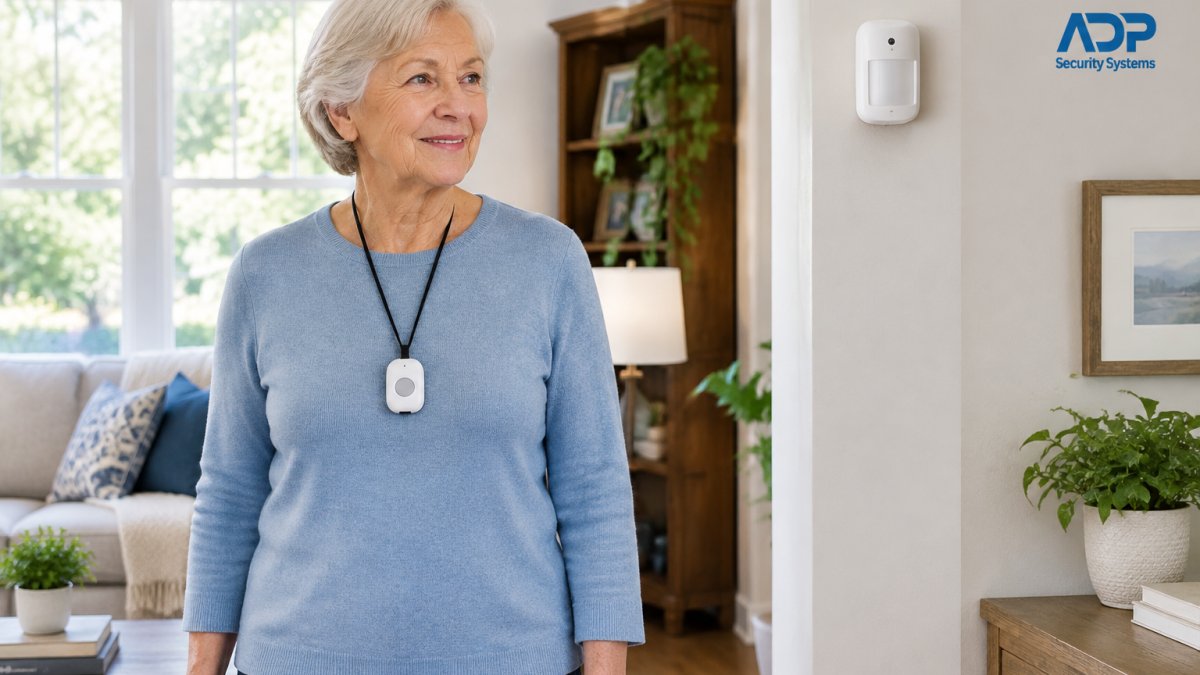
Wearable devices go where the person goes. A pendant or wristband works anywhere, including outdoors.
Ambient sensors watch a room using motion, radar, or vision-based detection. Nothing needs to be worn, which helps people who forget or refuse a device.
| Feature | Wearable Device | Ambient Sensors |
|---|---|---|
| Works outdoors | Yes | No |
| Requires wearing something | Yes | No |
| Coverage | Anywhere the wearer goes | Installed rooms only |
| Charging needed | Yes | No, usually wired |
| Privacy considerations | Minimal | Higher with cameras |
Accuracy, False Alarms, and How to Troubleshoot Them
False positives happen when the device mistakes a fast movement for a fall. Sitting down hard, dropping the device, or a bump against a wall can all trigger one.
False negatives are the bigger worry. A slow slide out of a chair may not register as a fall at all. For step-by-step fixes, see how to prevent false alarms on fall sensors.
Battery, Privacy, and Smart Home Integration
Three practical issues decide whether a system holds up after the first month: power, privacy, and how it fits the rest of the home.
Battery Life and the Maintenance Routine
Wearable fall detection devices run on rechargeable batteries, and the charging interval depends on how much the device does. A pendant that only detects falls and places calls can last several days per charge; a unit with GPS, cellular standby, and frequent location pings often needs a charge every one to three days.
A workable routine looks like this:
- Charge at the same time every day, many families pair it with a morning shower or bedtime routine so it becomes automatic.
- Check low-battery warnings weekly rather than waiting for the chirp.
- Test the device monthly with the monitoring center’s test line.
Watch out: a device that is charging is a device that is not being worn, and a fall during that window goes undetected. A second pendant or a charging dock that keeps the unit on the body reduces that gap.
Privacy: Cameras vs. Radar vs. Wearables
Privacy is the trade-off nobody puts on the spec sheet. Vision-based ambient systems use cameras to classify a fall, which means a camera in a bedroom or bathroom, the two rooms where falls are most likely and where privacy matters most.
Questions worth asking any provider:
- Where is the video or sensor data stored, on the device, in the home, or in the cloud?
- Who can view it, and is access logged?
- How long is it retained, and can it be deleted on request?
Wearable devices carry the least privacy exposure because they sense motion, not images, but they still transmit location and event data. A provider that cannot answer the storage and retention questions plainly is a provider to skip.
Smart Home Integration
Integration is where fall detection stops being a standalone gadget and becomes part of the household. Common connections include:
- Smart speakers and displays that announce an alert or let a family member check in by voice.
- Smart lighting that turns on after a fall, which helps the wearer see and signals to others that something happened.
- Smart locks that unlock for responders or family arriving after an alert.
Compatibility is uneven. Some systems expose an open API or work with major platforms; others only talk to the manufacturer’s own app. Check the specific model against the platforms already in the home before buying, and confirm whether integration requires a subscription tier. A light that turns on after a fall, or a voice alert through a speaker, can speed up response, but only if the pieces actually speak to each other.
Get a Free Security Assessment for Your Fall Detection Needs
Every household is different, and the right fall detection setup depends on the person, the layout of the home, and who is nearby to help.
ADP Security Systems has served Greenville and South Carolina for over 30 years. ADP Security Systems offers medical alert systems with 24/7 alarm monitoring, nationwide GPS and 4G wireless capabilities, and customizable maintenance schedules.
Get started with ADP Security Systems and explore medical alert systems with fall detection built around your family’s needs.
Frequently Asked Questions
How does fall detection technology work?
Fall detection devices use accelerometers, gyroscopes, and barometric pressure sensors to track sudden downward acceleration, body orientation, and impact. An algorithm analyzes those motion patterns in real time and distinguishes a fall from sitting down quickly. When a fall is confirmed, the device sends an automatic alert to a monitoring center or family contact, often with GPS location data so responders can find the person fast.
Can fall detection devices tell the difference between a fall and sitting down quickly?
Most modern devices can. The algorithm looks at the fall trajectory: a rapid drop followed by a change in body orientation and a period of stillness. Sitting down quickly usually lacks that impact signature and the post-fall stillness. Threshold sensitivity varies by device, so a hard sit or a dropped device can still trigger a false positive. That is why many systems let you cancel an alert within a short window before it escalates.
What happens after an automatic fall detection device is triggered?
The device first gives a short audible prompt so the wearer can cancel if it was a false alarm. If no response comes, it sends an automatic alert to a 24/7 monitoring center. The operator speaks through the device’s speaker, assesses the situation, and calls emergency response or a family member. GPS tracking helps locate the wearer if they are away from home.
Do medical alert systems with fall detection work if the wearer does not have a phone nearby?
Yes. Pendant and wrist-worn medical alert systems with fall detection connect through their own cellular or 4G connection, not through a paired smartphone. That means the wearer can press the button or have a fall detected even if their phone is in another room. Check that the device uses a reliable cellular network in your area and that the battery is charged, since both affect whether an alert reaches the monitoring center.
A fall can happen in seconds, and the response time is what matters most. If you are weighing options for a parent or yourself, start with a professional review instead of guessing. ADP Security Systems offers expert installation, 24/7 monitoring, and maintenance schedules that keep every sensor ready. Get started with ADP Security Systems and get a free security assessment to find the fall detection setup that fits your home.