How to Upgrade Commercial Security Systems
October 16, 2026
Why Professional Alarm Monitoring Matters: 2026 Guide
October 17, 2026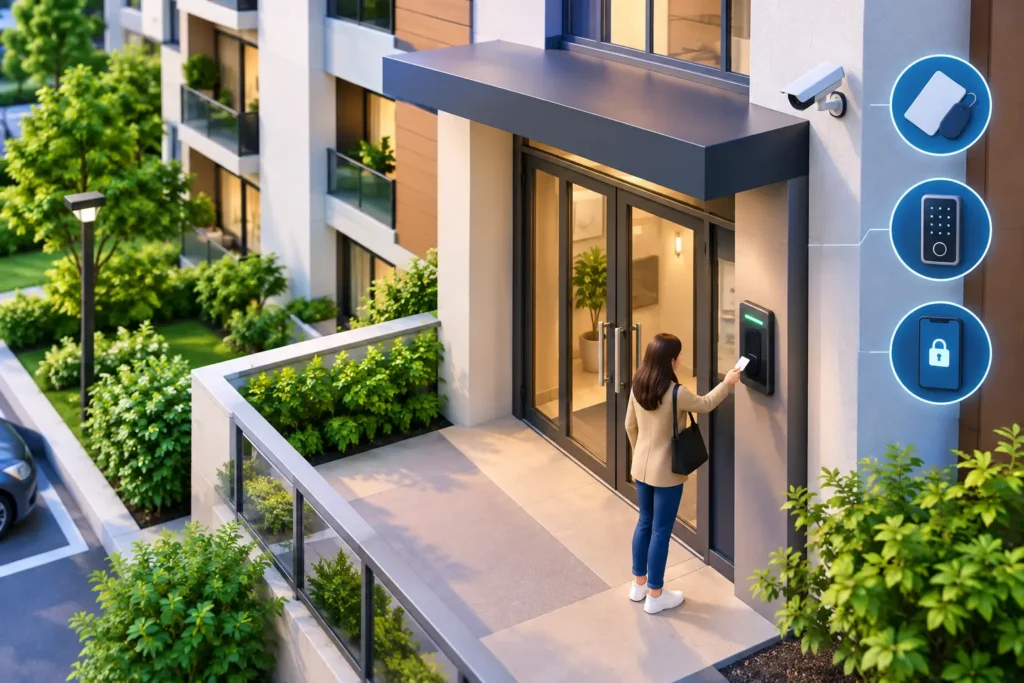
A propped-open side door can undo thousands of dollars in locks, cameras, and alarm equipment. For apartment owners and property managers, this apartment building access guide starts with a practical truth: security works when residents can enter easily, visitors are managed clearly, and restricted areas stay restricted.
Access control is not about making a community feel closed off. It is about creating a safer, more accountable property where residents know who belongs, staff can respond quickly, and managers are not left chasing lost keys after every turnover.
Start With the Building’s Real Access Risks
Every apartment property has a different risk profile. A small, owner-managed building in Easley may need controlled entry at one exterior door and a better way to secure shared storage. A larger Greenville or Spartanburg community may need managed access at gates, building entrances, amenities, leasing offices, maintenance areas, and package rooms.
Before selecting equipment, walk the property at the times it is most active and least staffed. Look at where residents, delivery drivers, vendors, contractors, and former tenants enter. Review recent incidents, including package theft, unauthorized parking, vandalism, tailgating, and doors found unsecured. The goal is to identify the gaps that affect daily operations, not simply add technology everywhere.
Pay close attention to secondary entrances. Front doors may have a receptionist, camera, or visible lock, while rear doors, stairwells, laundry rooms, and utility spaces receive far less attention. Those less visible points often deserve the clearest access rules and monitoring.
The Core of an Apartment Building Access Guide
A sound access plan separates people by where they need to go and when they need to get there. Residents should have convenient entry to their building and approved amenities. Maintenance personnel may need scheduled access to mechanical rooms or vacant units. Vendors may need limited, temporary credentials. No one should receive broad access simply because it is easier to administer.
Replace uncontrolled keys where it makes sense
Traditional keys are familiar and inexpensive, but they offer little accountability. When a key is copied, lost, or not returned at move-out, a manager cannot always know who still has it. Rekeying multiple doors can also become costly and disruptive.
Electronic credentials, including key fobs, cards, mobile credentials, or coded entry, make it easier to add, remove, and adjust access without changing hardware across the property. They can also create an activity record showing which credential opened a door and when. That record is useful when investigating a complaint, confirming a contractor arrival, or addressing a recurring door issue.
The right credential depends on the residents and the building. Fobs may be simple for a community with residents who prefer a physical credential. Mobile access can reduce the number of items residents carry, but it depends on smartphone adoption and clear support procedures. Keypads can work well at selected entrances, although shared codes should be changed regularly and should not become the only protection for sensitive areas.
Give each door a purpose
Not every door needs the same level of control. Exterior doors, gates, leasing offices, package rooms, fitness centers, pool gates, maintenance shops, and electrical rooms have different uses and different exposure.
A practical system assigns access schedules. For example, a fitness room may be available to residents from early morning through late evening, while a maintenance room remains available only to authorized staff. A cleaner or contractor can receive access for a specific date and time rather than an unrestricted credential that is easy to forget later.
This approach also helps property staff work more efficiently. Instead of meeting every vendor at a door or handing out master keys, managers can grant controlled access that matches the work order.
Plan for visitors without compromising residents
Visitors are part of apartment living. Friends, family members, caregivers, food deliveries, service providers, and prospective renters all need a reasonable way to reach the right person. The problem begins when a visitor system encourages people to share gate codes, leave doors unlatched, or buzz in anyone who asks.
A video intercom or visitor-entry system can allow residents or staff to verify a guest before releasing a door. Some properties use temporary visitor credentials or mobile passes for scheduled guests. Others rely on a staffed leasing office during business hours and a controlled intercom after hours. There is no single answer, but the process should be easy enough that residents will use it instead of bypassing it.
Package deliveries deserve their own plan. A shared package room with access records and camera coverage is often safer than leaving deliveries in an open lobby. For smaller buildings, a designated, well-lit delivery area observed by cameras may be the more practical choice.
Pair Access Control With Cameras and Good Door Hardware
Access control tells you when an authorized credential was used. Cameras can help show what happened around that event. Together, they offer better visibility than either system alone.
Camera coverage should focus on entrances, gates, mail and package areas, parking lots, common corridors where appropriate, and other shared spaces with recurring concerns. Cameras should never be positioned to record private areas such as inside apartments, bathrooms, or changing rooms. Property owners should also communicate the presence of cameras and follow applicable privacy rules.
The door itself matters just as much as the credential reader. A warped frame, weak closer, damaged latch, or poorly adjusted strike can leave a controlled door insecure. Doors should close and latch reliably every time. If residents routinely have to pull hard, push twice, or wait for a lock to engage, they will find workarounds.
For exterior and high-use doors, use commercial-grade hardware designed for the traffic level. A professional assessment can determine whether an existing door, frame, lock, and power supply can support an electronic access system or whether repairs should come first.
Protect Life Safety and Emergency Egress
Security should never prevent people from leaving during an emergency. Fire and building codes govern how exit doors, locking hardware, and access-controlled openings must operate. The exact requirements can vary by occupancy, door location, and local authority having jurisdiction.
That is why access control should be designed alongside the building’s fire and life-safety systems, not installed as an afterthought. Depending on the application, doors may need to release upon a fire alarm, allow free egress from the inside, or include specific emergency hardware. A door that protects against unauthorized entry but delays emergency exit is not an acceptable solution.
Property managers should also establish clear procedures for power outages, fire alarms, severe weather, and system faults. Staff need to know who receives alerts, who can assist residents, and how to secure the property after an event without interfering with emergency responders.
Manage Credentials as Carefully as You Manage Leases
The technology is only as effective as the process behind it. Create a written policy for issuing, replacing, and deactivating credentials. At move-in, document which fobs, cards, keys, or mobile credentials were issued. At move-out, deactivate access promptly, including amenity access and any parking or gate credentials.
Managers should also review access permissions on a routine schedule. Staff roles change, vendors rotate, and old credentials can remain active longer than intended. A quarterly review is often enough for a smaller property; larger communities or buildings with frequent contractors may need more frequent review.
Keep emergency access tightly controlled. A small number of authorized personnel may need credentials that work across multiple areas, but those credentials should be tracked and protected. Convenience is not a reason to create unaccountable master access.
Choose a System That Staff Can Actually Support
The best system is not necessarily the one with the longest feature list. A property needs equipment that fits its size, staffing model, resident expectations, and budget. It also needs a provider that can install it correctly, train staff, handle service needs, and help when a door stops working after hours.
Ask practical questions before making a decision: Can managers quickly revoke a lost fob? Can access schedules be changed without a service call? Will the system support additional doors as the property grows? How are events reviewed after an incident? What happens if the internet or power is interrupted?
For South Carolina property owners, a local security partner can be especially valuable when service is needed quickly. ADP Security Systems brings more than 30 years of regional experience to professionally installed access control, cameras, alarms, fire systems, monitoring, and ongoing support.
A well-managed entrance does more than stop unwanted entry. It helps residents feel comfortable coming home, gives staff a clearer picture of activity on the property, and turns security from a daily source of frustration into a dependable part of apartment operations.