Fire Inspection Schedule: A Practical Plan
October 27, 2026
5 Steps to Calculate Cost-Benefit Analysis of Enterprise Security Upgrades
October 27, 2026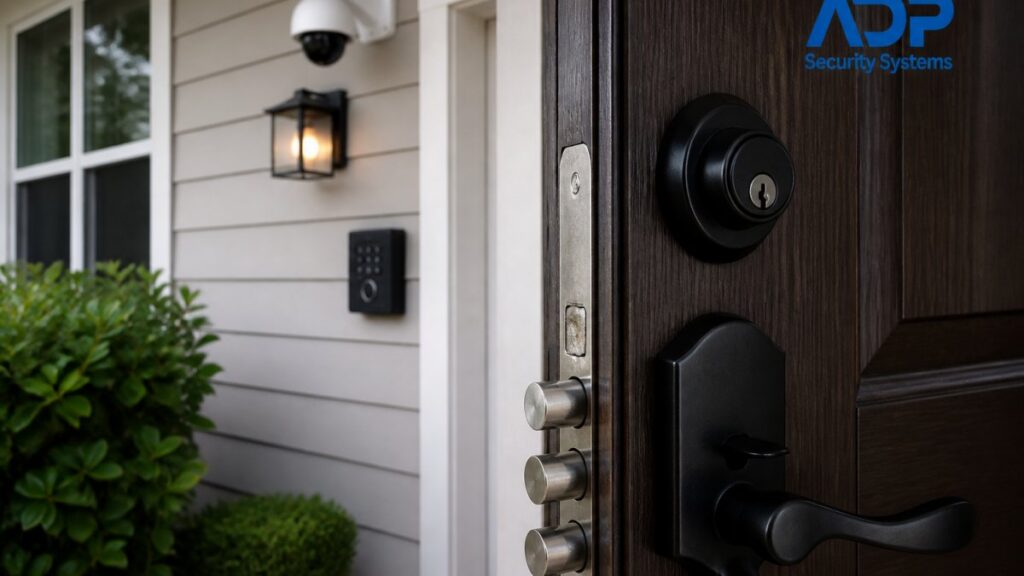
Last Updated: October 27, 2026
Quick Summary
To secure home entry points, walk the exterior and list every opening, then score each by how easily it is reached and what repairs cost. Reinforce doors with Grade 1 or Grade 2 deadbolts, longer hinge screws, and solid strike plates, and add secondary locks, sensors, and lighting to windows, sliding doors, and the garage.
- Replace short hinge screws with longer screws that bite into the framing behind the jamb.
- Choose a deadbolt with a one-inch throw and an ANSI Grade 1 or Grade 2 rating.
- Add a secondary lock or removable pin to double-hung windows so sashes cannot be slid apart.
- Treat the garage-to-house door like an exterior door with a solid core, deadbolt, and sensor.
- Test the garage door reverse mechanism monthly with a roll of paper towels.
Table of Contents
- Start With a Walk-Through of Common Home Burglary Entry Points
- Learn How to Reinforce a Front Door in Four Moves
- Window Security Measures That Hold Up to Force
- Sliding Glass Door Security: Lock, Block, and Detect
- Add Physical Barriers: Bars, Grilles, and Reinforced Glass
- Layer In Sensors, Cameras, Motion Detection, and Lighting
- Don’t Forget the Garage, Basement, and Secondary Doors
- Keep Egress and Fire Safety Intact While You Secure
- Frequently Asked Questions
Start With a Walk-Through of Common Home Burglary Entry Points
Most break-ins don’t start with a smashed window. They start with a door someone forgot to lock, a garage panel left open, or a frame that gives way under a shoulder. Learning how to secure home entry points begins with knowing which openings actually fail, and why. ADP Security Systems has served South Carolina for over 30 years.
A home entry point is any opening that lets a person in: doors, windows, sliding glass doors, garage doors, basement windows, and even dryer vents on older homes. Every one of them is a potential way in.
Map Every Accessible Opening, Including the Ones You Forget
Walk the outside of your house with a notepad and list every opening at ground level. Then check the second floor, the roof line, and the garage. Common home burglary entry points include:
- Front and back doors
- Side doors and service entrances
- Sliding glass doors
- First-floor windows
- Basement windows and bulkheads
- Garage doors and the door between garage and house
- Pet doors
- Crawl space hatches
The openings people forget are usually the ones that get used.
Score Each Entry Point by Risk and Repair Cost
Not every opening needs the same treatment. Score each one on two things: how easy it is to reach from the street, and how much it would cost to fix. A hidden back door behind a fence is lower risk than a front door facing the road. A basement window costs less to secure than a full sliding door replacement.
Write it down as a simple list, easiest-to-reach first. That list becomes your work order.
Learn How to Reinforce a Front Door in Four Moves
Here’s how to reinforce a front door in four moves.
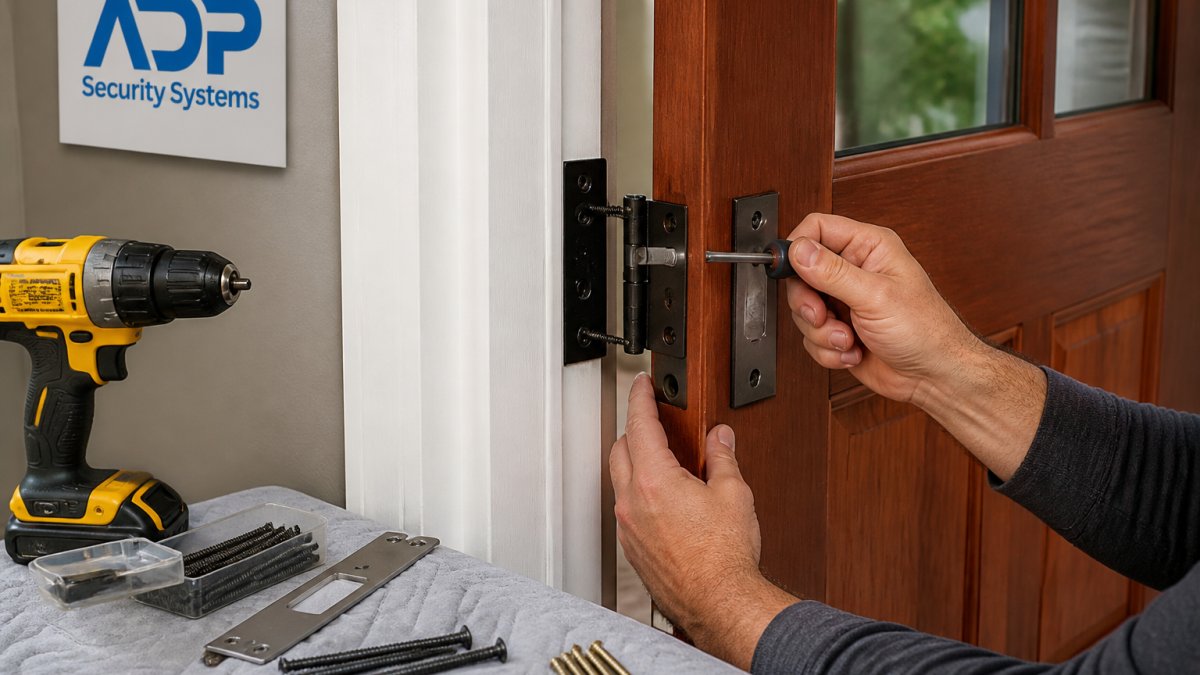
- Replace the strike plate. The strike plate is the metal piece the bolt slides into.
- Upgrade the deadbolt. Look for a bolt with a one-inch throw and an ANSI lock grade of Grade 1 or Grade 2. Grade 3 hardware is builder-grade and fails under pressure.
- Swap the hinge screws. Standard hinge screws are short. Replace them with longer screws that bite into the framing behind the jamb.
- Check the door jamb. A hollow frame splits under a kick. A reinforcement plate or a solid wood jamb resists it.
Window Security Measures That Hold Up to Force
Windows are the second most common way in, and the right fix depends on the window type, the frame material, and how the sash moves. A spring-latch lock on a double-hung window stops a casual push but not a determined one. Work through the window type first, then add layers.
Match the Fix to the Window Type
- Double-hung windows. The factory sash lock is the weak point. Add a secondary lock, a keyed sash lock or a folding window lock, or drill a pilot hole through the upper and lower sash and drop in a removable pin (a 1/4-inch eyebolt or a commercial sash pin) so the sashes cannot be slid apart. Check that the upper sash is not painted shut before you rely on it for egress.
- Casement windows. Crank the window fully closed and confirm the lock engages at the handle and the hinge side. A casement that closes but does not latch is an open window. Replace worn roto-gear operators rather than forcing the crank.
- Single- and double-pane older windows. Consider security film on the interior face of the glass. Film holds shards together after impact and buys time; it is not a substitute for a lock. On very old single-pane windows, a through-frame pin or a wooden dowel in the track adds a physical stop.
- Awning and hopper windows. These often have a single latch at the center. Add a secondary latch or a vent lock that limits opening to a few inches for ventilation without allowing a person through.
Check the Frame Before You Buy Hardware
A lock is only as strong as the frame it sits in. Vinyl frames can flex; wood frames can split; aluminum frames can be pried. Before adding hardware, open and close the window and look for gaps at the corners, loose hinges, and screws that spin without biting. If the frame is soft or cracked, repair or replace it first, otherwise a new lock pulls out under force. For sliding windows, a metal or wooden dowel cut to fit the track is the cheapest secondary block and works on any frame that is square.
Remove the Easy View
Blinds and curtains drawn at night stop a passerby from casing your rooms. A window with a clear view of a laptop on the table is an invitation. Close blinds on street-facing windows after dark and keep valuables out of sight lines from the sidewalk.
Get a Free Security Assessment →
Sliding Glass Door Security: Lock, Block, and Detect
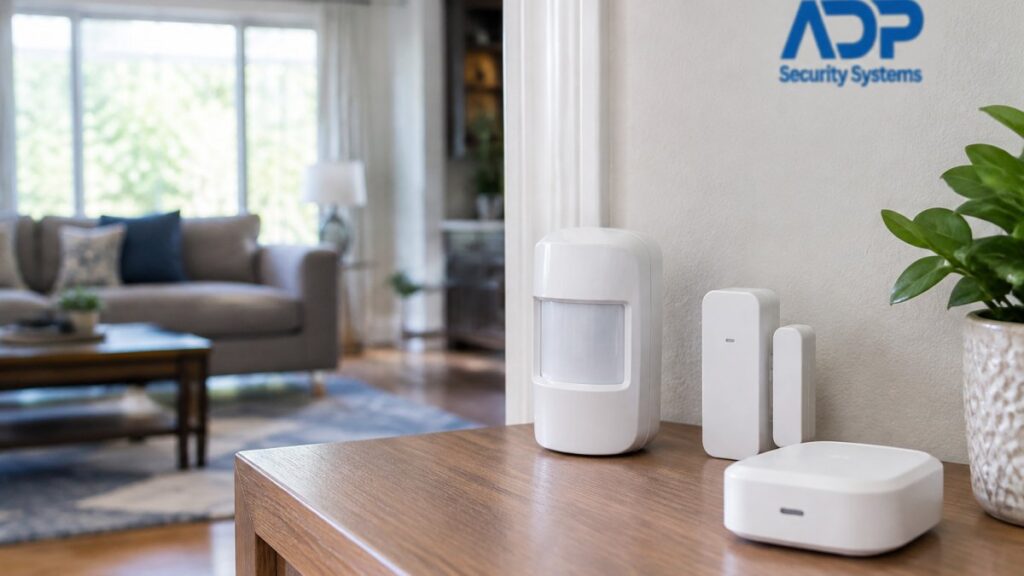
The third layer matters most. A door sensor tells you the door opened, even if you never hear it.
Add Physical Barriers: Bars, Grilles, and Reinforced Glass
A note on looks: interior-mounted grilles and decorative bars read better from the street than heavy exterior cages, and they’re easier to maintain.
Layer In Sensors, Cameras, Motion Detection, and Lighting
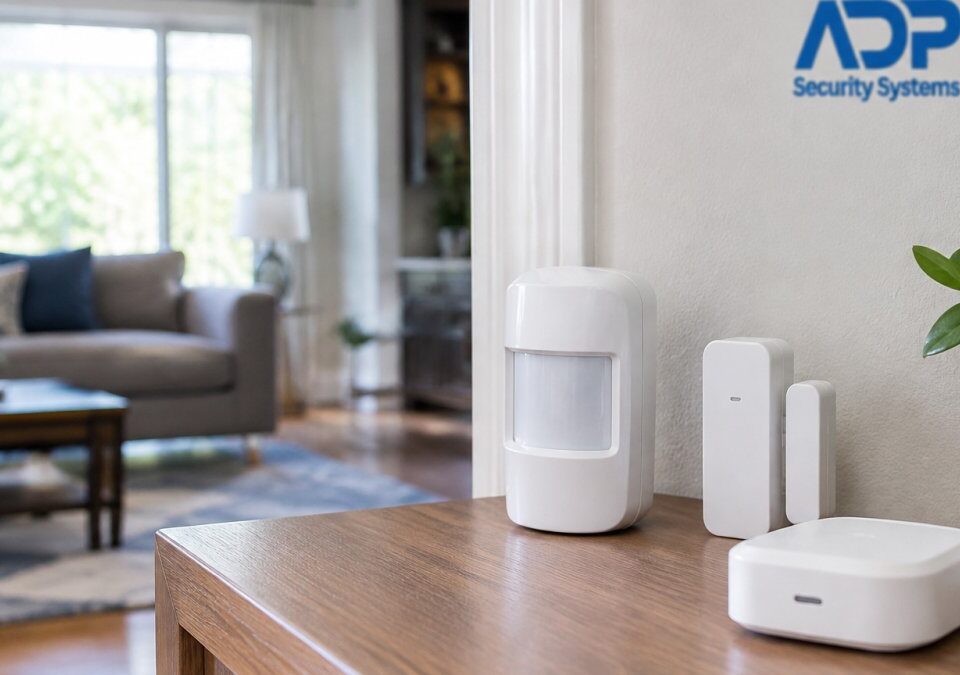
Smart locks and smart lights add control, but they don’t replace physical hardware. They work alongside it.
Where Each Device Belongs on Your Entry Points
If you’re deciding between device types, it helps to compare glass break versus motion sensors for homes and businesses before you buy. For camera positioning, our guide on security camera placement for maximum coverage walks through angles and heights. If you’re mounting cameras yourself, read what’s the best way to mount security cameras outside first. And once you add sensors, learn how to manage alarm zones so alerts stay useful instead of noisy.
Don’t Forget the Garage, Basement, and Secondary Doors
The garage is the most overlooked entry point on most homes. An attached garage gives an intruder cover, and the door between the garage and the house is often a hollow interior door with a basic lock. Treat it like an exterior door: solid core, deadbolt, and a sensor. Most practitioners find that the garage-to-house door is the single most common weak link in an otherwise well-secured home.
Audit the Secondary Openings Room by Room
Walk these spaces with the same notepad you used outside, and score each opening for reachability and repair cost:
- Garage. Check the overhead door for a working reverse mechanism and a modern rolling-code opener. Older fixed-code remotes can be cloned; if yours is older, replace the remote system or add a deadbolt to the interior door as a backup. Confirm the garage-to-house door is solid core, fits the frame, and has a deadbolt, not just a knob lock.
- Basement. Basement windows and bulkheads sit low and out of sight. Secure them with bars or grilles and a sensor. Check that the bulkhead doors latch from the inside and that the hasp is not rusted through.
- Secondary doors. A side door off the kitchen or a service door on a detached garage gets used less and checked less. That is exactly why it fails. Add a deadbolt, a strike plate with long screws, and a sensor.
- Pet doors. A pet door large enough for a child or a small adult is an entry point. Choose a model with a locking panel or a four-way lock, and mount it on a door that already has a deadbolt.
- Crawl space hatches. These are often secured with a simple latch or nothing at all. Add a hasp and padlock, or a lockable cover, and a sensor if the space is accessible from outside.
Test and Maintain What You Install
- Monthly: test the garage door reverse mechanism with a roll of paper towels; check that the garage-to-house door closes and latches without a push.
- Quarterly: test sensors on basement windows, the garage-to-house door, and any pet door; replace batteries in sensors and keypad locks.
- Annually: inspect strike plates and hinge screws for looseness, check bulkhead hasps for rust, and confirm that bars and grilles still release from the inside.
For a full picture of detection and escape planning, our guide to fire safety for homes and businesses covers early warning and exit routes. Security and fire safety aren’t competing goals. They’re the same goal.
Keep Egress and Fire Safety Intact While You Secure
- Keep at least one window in every bedroom openable from inside.
- Use quick-release latches on any security bars.
- Never chain or padlock an interior door from the outside.
- Test every exit with the lights off.
For a full picture of detection and escape planning, our guide to fire safety for homes and businesses covers early warning and exit routes. Security and fire safety aren’t competing goals. They’re the same goal.
If you’d rather have a professional assessment, ADP Security Systems offers a free security assessment. ADP Security Systems has served South Carolina for over 30 years and provides 24/7 alarm monitoring and customizable maintenance schedules. Get started with ADP Security Systems.
Frequently Asked Questions
What are the most common home burglary entry points?
The front door, back door, ground-floor windows, and sliding glass doors see the most forced and unforced entry attempts. Garage doors, basement windows, and side service doors round out the list. A walk-through that checks each of these openings, including locks, frames, and glass, shows where your weakest point sits. Most intruders look for the easiest opening, so fixing the softest one first delivers the biggest reduction in risk.
What door locks do police recommend for home entry points?
Police and security professionals generally point to ANSI Grade 1 or Grade 2 deadbolts with a one-inch bolt throw, paired with a reinforced strike plate and three-inch hinge screws. A deadbolt resists kick-ins far better than a spring-latch lock alone. Grade 1 hardware is tested for the highest residential durability. If your door frame is hollow or thin, add a reinforcement plate so the bolt has solid material to grip.
Does leaving a light on at night deter burglars?
A single steady interior light rarely stops a determined intruder, but unpredictable lighting helps. Motion-activated outdoor lights at doors, the garage, and dark side yards remove the cover intruders rely on. Smart lights on varied schedules make a house look occupied. Pair lighting with door and window sensors so any forced opening triggers an alert, which covers the gaps lighting alone cannot.
Should I use a home security system to protect entry points?
Physical hardening slows an intruder; a monitored alarm system detects and reports the attempt. Door and window sensors, motion detection, and 24/7 monitoring work together as a layered defense. Professional installation also catches compatibility issues with older wiring before they cause false alarms. A free assessment can show which entry points need hardware upgrades and which need detection coverage first.