Best Professionally Installed Home Security Systems in SC
August 11, 2026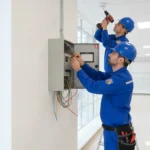
Commercial Fire Alarm System Guide for SC Businesses
August 13, 2026
A fire can turn from a small, controllable problem into a life-threatening emergency in minutes. Effective fire safety gives people the earliest possible warning, a clear way out, and dependable systems that continue working when stress is high and visibility is low.
For South Carolina homeowners and business owners, protection is not just about having a smoke alarm on the ceiling. It is about making practical decisions before an emergency happens: choosing the right detection equipment, maintaining it properly, planning for people who may need assistance, and knowing who will respond when an alarm activates.
Fire Safety Starts Before the Alarm Sounds
The best time to make decisions about a fire is long before smoke fills a hallway or a fire department arrives. Prevention reduces risk, but early detection and practiced response protect lives when prevention is not enough.
At home, common fire risks often come from cooking, heating equipment, overloaded electrical outlets, damaged cords, candles, fireplaces, and lithium-ion batteries. In a commercial setting, risks may also include commercial kitchens, machinery, electrical rooms, flammable materials, storage areas, and work performed by outside contractors.
A basic visual check can reveal issues that are easy to overlook. Keep combustibles away from heat sources, avoid running cords under rugs, make sure electrical panels remain accessible, and never block exit doors or pathways. Businesses should also keep storage from interfering with sprinkler heads, alarm devices, fire extinguishers, and marked exits.
These habits matter, but they do not replace professionally designed fire detection. A fire can begin in an unoccupied room, after business hours, or while everyone is asleep. That is why the warning system matters as much as the prevention plan.
Choose Detection That Fits the Property
Smoke alarms, heat detectors, carbon monoxide alarms, sprinkler systems, and monitored fire alarm panels serve different purposes. The right combination depends on the building, its layout, its use, and the people inside.
For homes, smoke alarms should be installed inside and outside sleeping areas and on every level of the home, including the basement. Larger homes or homes with separate wings may need additional coverage so that an alarm can be heard wherever someone is sleeping. Carbon monoxide detection is especially important near sleeping areas when a home has fuel-burning appliances, a fireplace, or an attached garage.
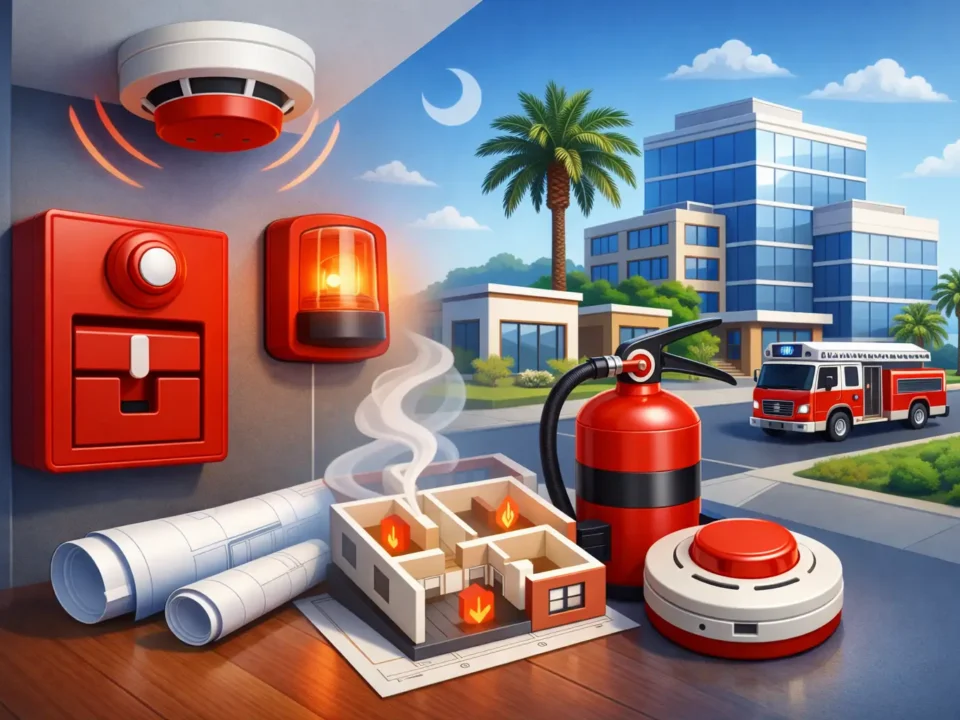
For businesses, a fire alarm system is often more complex. It may include manual pull stations, smoke and heat detectors, duct detectors, horns, strobes, sprinkler monitoring, and a control panel that communicates alarm conditions. Requirements vary based on occupancy type, square footage, local codes, and the authority having jurisdiction. A retail store, medical office, warehouse, restaurant, church, and multi-tenant property should not assume one standard setup fits every location.
Why Professional Installation Matters
An alarm device only helps if it is placed, programmed, powered, and maintained correctly. Poor placement can lead to delayed detection or frequent nuisance alarms. Frequent false alarms create another risk: people may start assuming an alarm is not real.
Professional installation begins with an assessment of the property rather than a box of equipment. An experienced provider can identify where detection is needed, account for building changes, verify system communication, and explain how the system will operate during an emergency. For commercial properties, professional service also helps owners meet inspection, testing, and documentation responsibilities.
Create an Escape Plan People Can Use
An alarm provides warning. A plan tells people what to do with that warning.
Every household should identify two ways out of each sleeping area when possible, choose an outside meeting place a safe distance from the home, and practice the plan at least twice a year. The meeting place might be a mailbox, a neighbor’s driveway, or another recognizable location away from the structure. The goal is simple: once everyone is outside, no one should go back in to search for a person, pet, phone, or valuable item.
Children, older adults, and people with mobility, hearing, vision, or medical needs may require extra planning. Assign a person who can assist them, make sure mobility devices are considered, and discuss how they will be alerted if they cannot hear a standard alarm. A plan that works for one family member may not work for everyone.
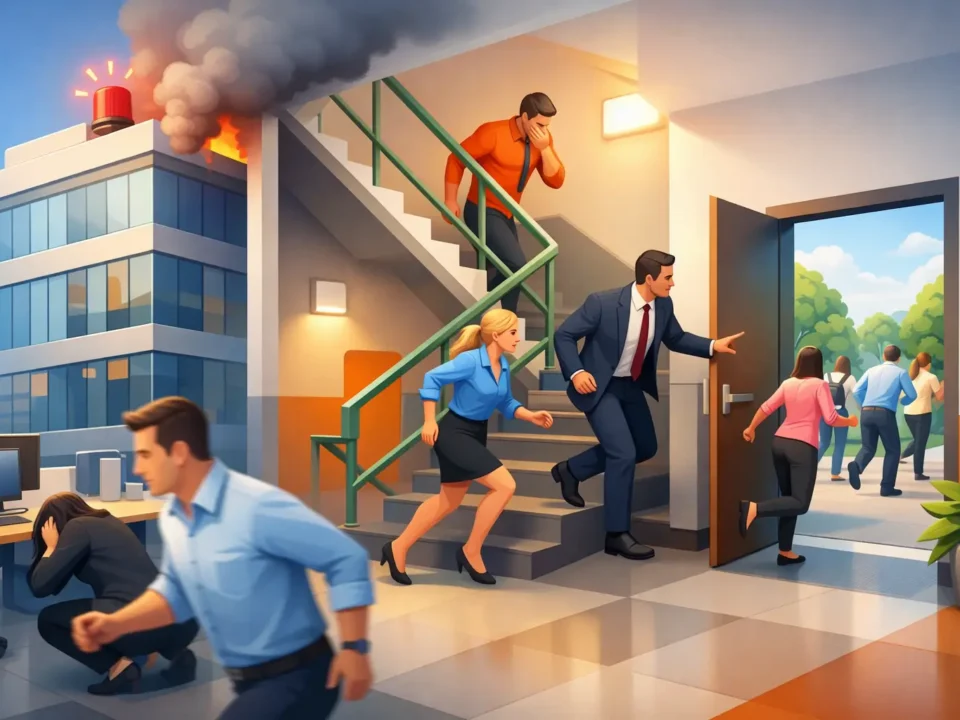
Business owners and facility managers need an evacuation plan that accounts for employees, customers, visitors, contractors, and people who may be unfamiliar with the building. Designate assembly areas, identify who will help with evacuation, and train staff not to use elevators during a fire. If your building has multiple shifts, temporary workers, or frequent public traffic, repeat training often enough that the plan remains useful.
Four details deserve special attention in any commercial fire plan:
- Keep marked exits, hallways, and stairwells clear at all times.
- Post emergency information where employees can find it quickly.
- Assign staff to account for employees and visitors at the assembly area.
- Review procedures whenever the layout, occupancy, or operations change.
A written plan sitting in a binder is not enough. People need to know where to go without stopping to search for instructions.
Maintain the Systems You Depend On
Fire protection requires ongoing attention. Batteries lose power, devices reach the end of their service life, construction can affect wiring, and business operations can change long after the original system was installed.
Homeowners should test smoke and carbon monoxide alarms regularly according to manufacturer instructions, replace batteries when required, and replace the entire device at the end of its rated life. Do not paint over alarms, remove batteries to silence nuisance alerts, or ignore a device that chirps. If cooking causes repeated alarms, the answer may be better device placement or ventilation, not disabling protection.
Commercial fire alarm systems require scheduled inspection, testing, and maintenance. This work should include more than checking whether a panel appears normal. Devices, notification appliances, batteries, communication paths, sprinkler supervisory signals, and other components may need to be tested on a defined schedule. Your fire alarm provider can help establish a maintenance plan suited to the system and applicable requirements.
Monitoring adds another layer of protection, particularly when a property is empty. If a monitored system sends an alarm signal, trained central-station operators can follow established response procedures and request emergency assistance when appropriate. That can be especially valuable for businesses after hours, vacation homes, rental properties, and households where someone may not be able to call for help quickly.
Know What to Do When Fire or Smoke Is Present
When an alarm sounds or smoke is present, act first and investigate later. Get out, stay out, and call 911 from a safe location. Even a small fire can produce dangerous smoke faster than most people expect.
If a door feels hot or smoke is coming from underneath it, do not open it. Use another exit if available. If you must move through smoke, stay low where the air may be clearer. Once outside, go to the planned meeting place and tell firefighters if someone is missing or may still be inside.
A fire extinguisher can be useful for a small, contained fire only when you have a clear exit behind you, know how to operate it, and the fire is not spreading. It is never worth risking your life to protect a building or belongings. For most people, early evacuation is the right decision.
Fire Safety Is a Long-Term Protection Decision
Fire protection should change as your property changes. A renovated home may need updated detection. A growing business may add rooms, equipment, staff, or new operations that affect its fire risk. Even a move from a traditional office layout to warehouse storage can change what is required.
ADP Security Systems helps South Carolina property owners evaluate fire alarm needs, install professionally designed systems, and maintain protection with dependable monitoring and local support. The objective is not to add equipment for its own sake. It is to create a protection plan that gives people a better chance to respond quickly when every second matters.
A reliable fire safety plan brings real peace of mind because it is built for the moment when people cannot afford confusion. Start with early warning, keep exits clear, practice the response, and make sure the systems protecting your property are ready to work.