AI Security Cameras for Restaurants: Theft Prevention Guide
July 28, 2026
Medical Alert Systems for Seniors Living Alone: A Complete Guide
July 30, 2026
A fire alarm system can look functional during a routine walkthrough and still fall short of the standards that govern its inspection, testing, and maintenance. For South Carolina business owners, compliance depends on understanding both the adopted code and the ongoing responsibilities tied to the building’s equipment, records, and inspections.
The NFPA 72 fire alarm requirements South Carolina businesses must follow cover the design, installation, inspection, testing, and maintenance of fire alarm and emergency communication systems. South Carolina adopted the 2019 edition of NFPA 72, effective January 1, 2023, and state law requires an annual professional inspection for commercial fire alarm systems.
That means compliance is not a one-time installation task. Owners and facility managers need a documented program that keeps devices operational, supports local fire marshal reviews, and addresses issues before they become safety or regulatory problems. The first step is clarifying what the state adopted and how it applies to your business.
What Are the NFPA 72 Fire Alarm Requirements in South Carolina?
NFPA 72 fire alarm requirements South Carolina businesses must follow are based on the 2019 edition of the National Fire Alarm and Signaling Code. South Carolina adopted that edition without amendments, effective January 1, 2023. For a broader explanation of how the state code affects commercial properties, review this South Carolina fire alarm code overview.
NFPA 72 is more than an equipment specification. It establishes the technical requirements for how fire alarm and emergency communication systems are designed, installed, inspected, tested, and maintained. The standard addresses the complete life cycle of a system, helping ensure that equipment performs as intended when occupants and first responders need it.
What does NFPA 72 regulate?
The standard covers the major parts of a fire alarm and signaling system, including:
- Design and installation: System layout, device placement, wiring, power supplies, and connections must match the building’s risks and approved plans.
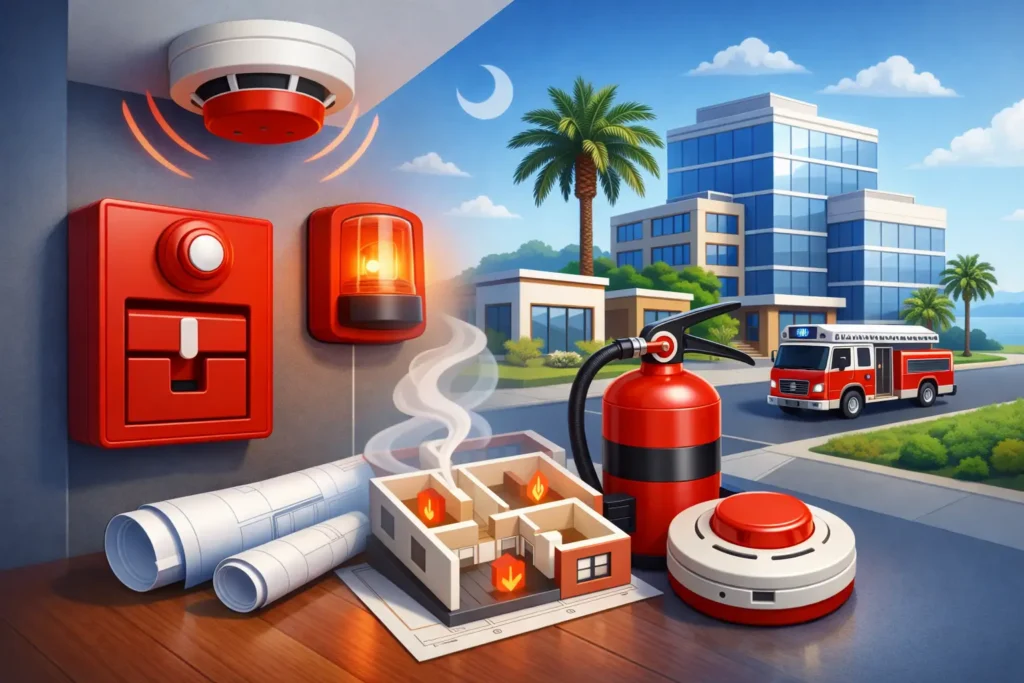
- Initiating devices: Smoke detectors, heat detectors, manual pull stations, and other devices must detect conditions and communicate them to the control system.
- Notification appliances: Horns, speakers, strobes, and other notification equipment must alert occupants appropriately.
- Control and supervising systems: Fire alarm control panels, supervising station connections, and emergency communication systems must operate as an integrated life-safety system.
- Inspection, testing, and maintenance: Owners and service providers must verify that components remain present, accessible, functional, and properly maintained.
These categories reflect NFPA 72’s coverage of initiating devices, notification appliances, control panels, supervising station systems, and emergency communications systems. See the NFPA 72 adoption and coverage reference for additional code context.
Why South Carolina adoption matters to local businesses
Adoption turns the standard into an enforceable requirement for businesses operating in South Carolina. Your local fire marshal, acting as the Authority Having Jurisdiction, evaluates fire alarm work and compliance under the rules adopted by the state and enforced locally. A system that may appear adequate visually can still have design, testing, documentation, or maintenance deficiencies.
That is why property owners should coordinate with professionals who understand both NFPA 72 and local AHJ expectations. Commercial fire alarm services can include design, installation, monitoring, inspection, and maintenance, helping businesses maintain a defensible compliance record as their facilities or systems change.
NFPA 72 Inspection Requirements for Commercial Fire Alarms in SC
South Carolina law requires a professional inspection of commercial fire alarm systems at least once each year. That obligation applies even when a system has operated without problems, and NFPA 72 Chapter 14 applies retroactively to installed systems regardless of their installation date. Owners remain responsible for inspection, testing, and maintenance records, even when a qualified contractor performs the work.
A professional inspection combines visual review with functional testing. The technician checks whether devices are present, accessible, undamaged, and unobstructed, then verifies that the system responds as designed. NFPA 72 requirements cover initiating devices, notification appliances, control panels, and supervising station equipment. Monthly owner checks are also important for identifying obvious trouble signals, damage, blocked devices, or other changes between annual service visits.
| Component | Frequency | Type |
|---|---|---|
| Fire alarm control panel | Annual | Inspection |
| Initiating devices | Annual | Test |
| Notification appliances | Annual | Test |
| Smoke detectors | Biennial, every two years | Sensitivity test |
| Backup batteries | Annual | Test |
Keep complete ITM records
Documentation should identify the equipment inspected, tests performed, deficiencies found, corrective work completed, and the service date. Insurance carriers may review inspection, testing, and maintenance records after a fire, making accurate documentation an important part of protecting a claim. Facility owners should retain reports and promptly address any failed device, impaired circuit, low battery, or communication issue.
Use this SC fire alarm inspection checklist to prepare for service, or review ADP’s commercial fire alarm services for inspection, maintenance, and monitoring support.
NFPA 72 Testing Schedule: What SC Businesses Need to Know
NFPA 72 separates visual inspection from functional testing. An inspection confirms that equipment is present, accessible, undamaged, and unobstructed. A test activates equipment to verify that it responds as designed. Both activities matter because a fire alarm system can look normal while a device, circuit, or communication path is not ready to perform.
Testing intervals can vary by device type, system design, and facility conditions. The following schedule gives South Carolina business owners a practical baseline, but the system documentation and the local Authority Having Jurisdiction should control when requirements differ.
Follow this testing sequence
- Perform a monthly owner check. Visually look for blocked or damaged devices, unusual panel messages, and changes around smoke detectors, manual pull stations, and notification appliances. With the appropriate notification process in place. Press the test button on a representative sample of devices and confirm that the fire alarm control panel receives and reports the signal correctly. Do not disable or reset a system without following the manufacturer’s instructions and your site’s emergency procedures.
- Schedule a professional annual functional test. A qualified technician should test all applicable initiating devices, notification appliances, control equipment, remote annunciators, and alarm communication equipment. Annual service is more than a panel check. It verifies that individual devices can initiate an alarm and that the signal travels through the system as intended. Keep the inspection and testing records available for the fire marshal, AHJ, insurer, or other reviewer.
- Complete smoke detector sensitivity testing every two years. Biennial sensitivity and functional testing is one of the most commonly missed NFPA 72 maintenance requirements. A detector may pass a basic functional test yet operate outside its listed sensitivity range. Sensitivity testing helps identify that hidden condition before smoke, dust, aging components, or environmental changes affect performance. Review the SC fire alarm inspection checklist for a more detailed preparation guide.
- Match the schedule to every device and the site. Do not assume one interval applies to the entire system. Smoke detectors, heat detectors, pull stations, waterflow switches, supervisory devices, notification appliances, batteries, and communication equipment may have different inspection or testing instructions. A professional can reconcile the manufacturer’s requirements, NFPA 72 provisions, system records, and local AHJ expectations into one documented schedule.
Consistent records make gaps easier to find and give facility managers a defensible history of maintenance. If a device fails, the schedule should also be updated to document the corrective action, retest, and return to service.
Essential Fire Alarm System Components Required by NFPA 72
A compliant commercial fire alarm system is more than a collection of smoke detectors. NFPA 72 addresses the major system categories, including initiating devices, notification appliances, fire alarm control panels, and supervising station systems. Each part must work with the others to detect a hazard, notify occupants, support emergency response, and communicate an alarm condition. NFPA 72 identifies these categories in Chapters 17, 18, 23, and 26.
Initiating devices detect the emergency
Initiating devices send the first signal to the system. Depending on the building and its hazards, these may include:
- Smoke detectors for detecting airborne products of combustion.
- Heat detectors for areas where smoke, dust, or changing temperatures could cause unwanted alarms.
- Manual pull stations positioned near exits so occupants can activate an alarm when they see a fire before an automatic detector responds.
Device selection and placement should reflect the building layout, occupancy, environmental conditions, and the requirements of the local Authority Having Jurisdiction.
Notification and control equipment coordinate the response
Audible and visible notification appliances, such as horns and strobes, alert occupants throughout the building. The fire alarm control panel receives signals from initiating devices, displays system conditions, activates notification appliances, and coordinates connected functions. A compliant design also includes backup power so the system can continue operating when normal electrical service is interrupted.
Many commercial systems also include an HVAC interface. When configured for the building, this connection can support smoke-control functions, such as controlling air-handling equipment during an alarm. The exact sequence depends on the building design and approved fire protection plan.
Addressable systems simplify identification and upgrades
In a conventional system, an alarm typically identifies a zone. An addressable system can identify the exact initiating device or location reporting the condition, which can help responders and facility staff act more quickly. Addressable technology also supports clearer troubleshooting and system expansion.
When an older system is obsolete or difficult to service, ADP Security Systems can develop a phased migration plan toward current addressable technology, often recommended by AHJs. ADP provides non-proprietary fire alarm installation, maintenance, inspection, and monitoring for South Carolina businesses. Explore commercial fire alarm services to discuss the right path for your facility.
24/7 Monitoring Requirements Under NFPA 72 for SC Commercial Properties
Professional monitoring is a critical part of a commercial fire alarm strategy in South Carolina. A local alarm may sound inside a building, but a monitored system also sends an alarm signal to a supervising station when an emergency occurs. That connection helps ensure a response even when the property is unoccupied or employees cannot make a call.
Central station and remote monitoring are not the same
Remote monitoring can transmit alarm signals to an off-site monitoring center. Central station monitoring adds a dedicated team of trained operators who receive and manage those signals, follow established procedures, and coordinate emergency response. When comparing providers, a property owner should ask where signals are received, how communication paths are supervised. How backup power is handled, and how the provider documents service and alarm events.
CSAA Five Diamond certification is a meaningful quality indicator for monitoring operations. It reflects rigorous training and performance expectations for central station personnel. ADP Security Systems holds this certification, giving South Carolina commercial property owners an important point of confidence when evaluating a monitoring partner.
What happens after an alarm signal?
When a smoke detector, manual pull station, or other initiating device activates, the fire alarm control panel transmits the signal to the central station. An operator receives the event, follows the account’s response procedures, and verifies the signal when the protocol allows. The operator then dispatches the fire department or other designated emergency responders. The exact sequence depends on the account plan and the type of signal, but the goal is consistent: move reliable information to the right responders without unnecessary delay.
NFPA 72 addresses supervising station alarm systems in Chapter 26, including the communication and supervision requirements that support this process. South Carolina businesses should also maintain required inspection and testing records, since monitoring does not replace routine maintenance. Weak batteries, disabled communication equipment, or untested initiating devices can undermine an otherwise active monitoring service.
For a closer comparison of service models, review ADP’s guide to monitored vs unmonitored fire alarm systems. Building owners can also use the commercial fire alarm monitoring service guide to evaluate provider credentials, response procedures, and documentation. Proper monitoring supports life safety, helps demonstrate NFPA 72 fire alarm compliance, and may matter when an insurer reviews a claim or maintenance history.
Common NFPA 72 Violations and How SC Businesses Can Avoid Them
Many fire alarm deficiencies are preventable when facility managers treat inspection, testing, and maintenance as an ongoing responsibility rather than a once-a-year appointment. Under NFPA 72 Chapter 14, the requirements apply retroactively to all installed fire alarm systems, regardless of when the equipment was installed. Building owners remain responsible for compliance even when a contractor performs the work.
Watch for overlooked equipment and access problems
Common violations in South Carolina commercial properties include:
- Expired or failed backup batteries: A panel may appear normal while its emergency power source is no longer reliable.
- Missing or obstructed manual pull stations: Storage, displays, partitions, or renovations can prevent occupants from reaching a pull station quickly.
- Blocked detection and notification devices: Shelving, new walls, suspended ceilings, or changed room layouts can interfere with smoke detectors, strobes, and sounders.
- Outdated non-addressable systems: Older conventional equipment may make it harder to identify an alarm location, source replacement parts, or meet current AHJ expectations.
- Incomplete inspection and testing records: Missing documentation can make it difficult to demonstrate that required work was completed, including annual inspection and biennial smoke detector sensitivity testing.
These gaps affect more than inspection results. OSHA penalties can reach $16,550 per serious violation for fire detection maintenance failures, according to the cited NFPA 72 guidance. Keep service reports, deficiency corrections, test results, and system changes together in an accessible compliance file.
Use an upgrade plan instead of waiting for failure
An older system does not always require an immediate full replacement. ADP Security Systems can develop a phased migration plan for upgrading outdated or obsolete equipment to addressable technology, a path often recommended by AHJs. A non-proprietary system also gives owners more control over maintenance decisions and provider choices, rather than tying service to one manufacturer.
Resolve deficiencies before the inspection
ADP technicians are familiar with NFPA standards and local Authority Having Jurisdiction requirements. Project managers can provide AHJ consultations to help Greenville and other South Carolina businesses identify documentation gaps. Address blocked devices, plan renovations, and prioritize system improvements before an inspection. Explore commercial fire alarm services to discuss a practical compliance plan.
Frequently Asked Questions
What does NFPA 72 cover for a commercial fire alarm system?
NFPA 72 sets requirements for the design, installation, inspection, testing, and maintenance of fire alarm and emergency communication systems. Its scope includes initiating devices such as smoke detectors and pull stations, notification appliances, fire alarm control panels, supervising station systems, and emergency communications. See the NFPA 72 standard overview for the covered system categories.
How often must a commercial fire alarm be inspected in South Carolina?
South Carolina law requires an annual professional inspection for commercial fire alarm systems. The inspection typically includes a visual review and functional testing of system components, along with documentation of deficiencies and corrective work. Building owners remain responsible for keeping the system compliant, even when an outside contractor performs the inspection. Requirements can vary by facility and local Authority Having Jurisdiction, so confirm the schedule with the local fire marshal.
Are smoke detectors tested more often than once a year?
Yes. In addition to routine visual checks and annual professional inspection, smoke detector sensitivity and functional testing is performed every two years as a standard maintenance interval. Sensitivity testing matters because a detector may activate during a basic test while operating outside its listed sensitivity range. Keep the test records with your fire alarm documentation so they are available for the AHJ.
Does South Carolina use the 2019 edition of NFPA 72?
South Carolina adopted the 2019 edition of NFPA 72, effective January 1, 2023, without state amendments according to the cited code summary. That adoption establishes the technical baseline, while the local fire marshal or other AHJ reviews how requirements apply to a specific building. A qualified fire alarm professional can help reconcile the adopted code, occupancy conditions, and existing system design before an inspection or renovation.
Ready to Schedule Your Fire Alarm Compliance Consultation?
A review of your commercial fire alarm system can help clarify inspection needs, testing schedules, and next steps for NFPA 72 compliance. ADP Security Systems can discuss your South Carolina business’s requirements and recommend a practical path forward. Schedule a fire alarm compliance consultation with ADP Security Systems today.