Are Medical Alert Devices Waterproof? What to Know
August 28, 2026
Keycards Versus Mobile Credentials for Business
September 1, 2026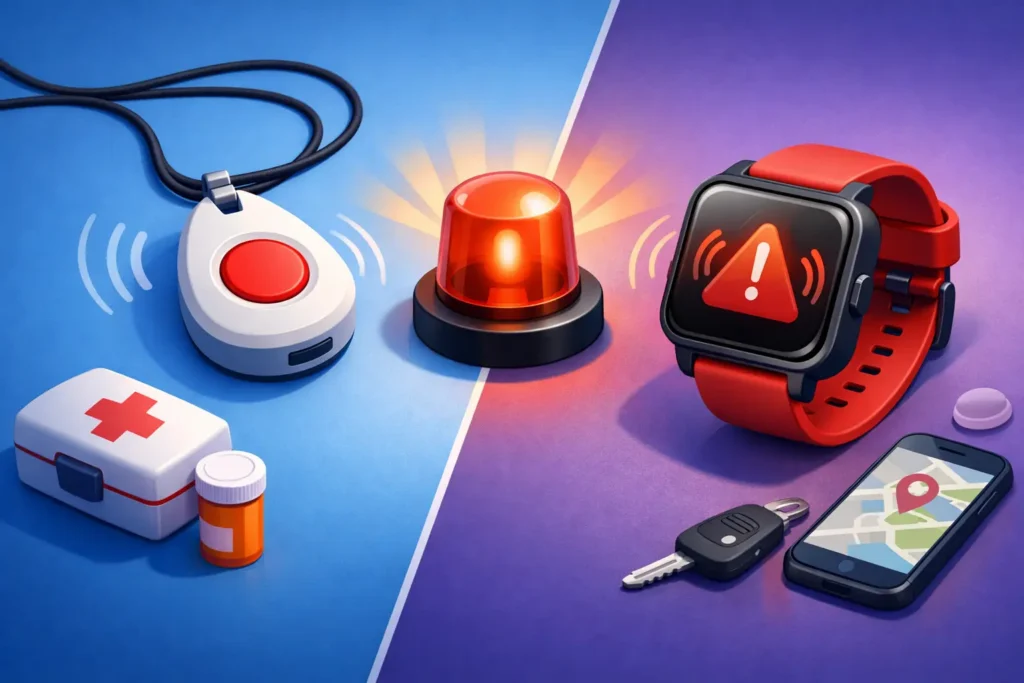
A fall in the bathroom, a sudden dizzy spell in the garden, or chest pain while running an errand can leave little time to find a phone. When families compare pendant versus smartwatch emergency alerts, the best choice is rarely about which device looks more modern. It is about which one a person will wear consistently and can use confidently when help is needed.
Both options can provide an emergency connection, but they are built around different daily habits. A traditional medical alert pendant prioritizes simple, immediate access to help. A smartwatch may combine emergency features with timekeeping, activity tracking, calls, and messages. Understanding the difference can help South Carolina families choose protection that feels practical rather than complicated.
Pendant Versus Smartwatch Emergency Alerts: What Changes?
The most meaningful difference is not the shape of the device. It is the emergency response path behind it.
A monitored medical alert pendant is designed for one purpose: to help a person summon assistance with a single press. Depending on the system, the alert can connect the wearer to a trained monitoring operator who can speak with them, contact emergency services, and notify listed family members or caregivers. Mobile devices with GPS can also help locate a wearer away from home.
A smartwatch can offer emergency calling, fall detection, location sharing, or an SOS function. Those capabilities can be valuable, particularly for an active user who already wears and charges a watch every day. However, smartwatch emergency features vary widely by model, cellular plan, phone connection, settings, and battery level. Some alerts contact 911 or selected personal contacts instead of a professional monitoring center.
That distinction matters in a stressful moment. A device should be evaluated not only by what it can do on a product page, but by what happens if the wearer is unable to explain where they are, cannot reach their phone, or does not respond after an alert.
Why a Medical Alert Pendant Remains a Strong Choice
Medical alert pendants are intentionally simple. The button is usually large, easy to locate by touch, and available without navigating a screen, entering a passcode, or remembering a sequence of steps. For someone with arthritis, vision limitations, tremors, cognitive changes, or limited comfort with technology, that simplicity can be the deciding factor.
Many pendant-style systems are waterproof or water-resistant enough for use in the shower, where falls are common. A device worn on a neck lanyard or wristband also tends to stay close during daily routines. It does not need to look like a piece of consumer technology to do its job well.
Monitoring provides a human response path
A monitored personal emergency response system adds another layer beyond the button itself. Rather than relying on a family member to notice a missed call or text, an alert can reach a trained operator who follows an established response process. If the wearer can speak, they can describe what happened. If they cannot, the operator can still follow the emergency contact plan and request help.
For families, that support can be especially reassuring when adult children live in another city, work long shifts, or cannot always answer immediately. It does not replace family involvement. It creates a dependable bridge between the moment an emergency begins and the moment help is on the way.
Fall detection can add support, with realistic expectations
Automatic fall detection is available on some pendants and smartwatches. It uses sensors to identify motion patterns that may indicate a fall, then triggers an alert if the wearer does not cancel it. This can be helpful for someone who loses consciousness or cannot press a button.
No fall detection feature can identify every fall or eliminate false alerts. A slow slide from a chair, for example, may not register the same way as a hard fall. The feature is best viewed as an added safeguard, not a substitute for wearing the device and being able to press the SOS button when possible.
When a Smartwatch May Be the Better Fit
A smartwatch may be an excellent choice for a person who is active, comfortable with technology, and already has an established charging routine. Someone who wears a watch every day may be more likely to keep it on during walks, shopping trips, fitness activities, and social outings than a pendant they perceive as medical equipment.
For a younger adult managing a health concern, or an older adult who values a discreet, multi-purpose device, a smartwatch can feel more natural. It may also offer useful day-to-day features such as medication reminders, health metrics, communication tools, and location sharing.
Still, convenience features should not distract from emergency readiness. Before relying on a smartwatch for personal safety, confirm whether its SOS feature works without a nearby phone, whether it requires a cellular plan, how emergency contacts are notified, and how often it needs charging. A watch left on a charger overnight may be unavailable during an early-morning emergency.
Battery habits are a safety consideration
A medical alert device is generally designed around long battery life and straightforward charging. Smartwatches often need frequent charging because they power screens, apps, notifications, and health-tracking sensors. For some users, that is an easy routine. For others, it becomes a point of failure.
The right question is not whether the wearer can charge a smartwatch. It is whether they will reliably have it charged and on their wrist when they need it most. A device that stays in a drawer, sits on a charger, or is removed for comfort cannot provide protection.
How to Choose Between a Pendant and a Smartwatch
Start with the person, not the technology. Consider their mobility, medical history, home environment, comfort level with devices, and typical routine. Someone who lives alone, has had recent falls, or takes medication that can cause dizziness may benefit most from a dedicated monitored pendant with fall detection. Someone who is independent, active, and highly comfortable with a smartwatch may prefer a connected watch, provided its emergency settings are configured correctly.
Coverage is another practical issue. An in-home system may be appropriate for someone who rarely leaves the house, while a mobile GPS device offers reassurance at restaurants, appointments, stores, or while traveling. A pendant is not automatically limited to the home, and a smartwatch is not automatically protected everywhere. The details of each device and service plan determine where and how it works.
Also consider the response plan. Who should be contacted after an alert? Is there a neighbor with a key? Does the person have a medical condition or medication information that responders should know? The device is only one part of a useful emergency plan. Clear instructions and current contact information make the system more effective.
Questions Worth Asking Before You Decide
Ask whether the device connects to professional monitoring or only to personal contacts and emergency services. Confirm whether the wearer can speak with an operator through the device, whether GPS location is available away from home, and whether automatic fall detection is included or optional.
It is also wise to ask about charging requirements, waterproof use, cancellation procedures for accidental alerts, and available support after installation. A personal emergency device should be easy to test, easy to wear, and supported by people who can answer questions when routines or health needs change.
For many families, a consultation helps clarify these choices. ADP Security Systems offers Smart Care medical alert options with one-touch SOS access, automatic fall detection, GPS and 4G connectivity, and waterproof wearable devices, helping customers select a setup that fits life at home and beyond it.
Choose the Device That Will Be There
The best emergency alert is the one a person will actually keep close, understand, and trust. A pendant often offers the clearest path to monitored help with minimal effort. A smartwatch can be a strong option for the right wearer, especially when it matches established habits and is properly configured.
If there is any uncertainty, lean toward the device that makes it easiest to ask for help on an ordinary day. That small decision can bring meaningful reassurance to the person wearing it and to the people who care about them.