Mobile Versus In Home Alerts: Which Fits You?
August 26, 2026
Pendant Versus Smartwatch Emergency Alerts
August 30, 2026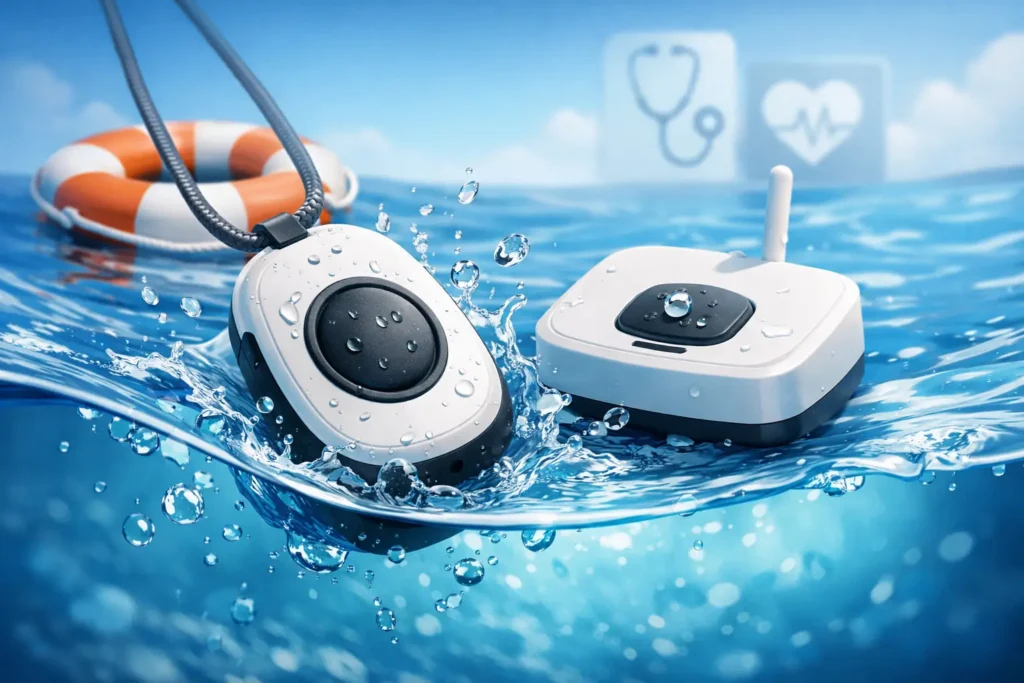
A fall in the shower, a dizzy spell while getting ready for bed, or a medical emergency during a rainy walk can happen without warning. That is why families often ask, “are medical alert devices waterproof?” The answer depends on the specific device, but a wearable medical alert system should be selected with the places and routines where protection is needed most in mind.
For many people, the bathroom is one of the highest-risk areas of the home. A device that must be removed before bathing may not be available during the very moment it is needed. Waterproof wearable options can help a person keep one-touch access to emergency assistance close by through daily routines, rather than leaving the device on a counter or bedside table.
Are Medical Alert Devices Waterproof or Water-Resistant?
The terms “waterproof” and “water-resistant” are often used interchangeably, but they do not always mean the same thing. Water-resistant generally means a device can handle limited exposure to water, such as rain, handwashing, or an accidental splash. Waterproof usually indicates a higher level of protection and may mean the device can be worn in the shower.
Still, the wording on the box is not the full story. A device may be suitable for showering but not for swimming, soaking in a bathtub, or use in a hot tub. Another may be able to withstand rain but should be removed before bathing. The manufacturer’s instructions for that exact pendant, wristband, or mobile unit should always guide use and care.
For a medical alert user, the practical question is simple: can this device stay on during the activities when I am most likely to need help? That includes bathing, moving around the home at night, walking to the mailbox, and traveling beyond the home.
Why Bathroom Protection Matters
Bathrooms combine several fall hazards in a small space. Wet flooring, smooth surfaces, low lighting, medications that affect balance, and the effort of stepping in or out of a tub can all raise the risk. A person may also be alone, without a phone nearby, when a fall or health event occurs.
A waterproof wearable medical alert device helps remove one avoidable gap in protection. Rather than remembering to put the pendant back on after a shower, the user can continue wearing it. If help is needed, a press of the SOS button can connect the person with trained emergency-response support through the monitoring service.
That convenience matters for more than comfort. Medical alert systems work best when they are worn consistently. A device sitting on a dresser cannot help someone who has fallen in another room.
What Water Exposure Can the Device Handle?
Before choosing or using a medical alert system, ask specifically what types of water exposure the wearable is designed to handle. “Waterproof” should not be treated as permission to use every component anywhere water is present.
The wearable button or pendant may be built for shower use, while its charging cradle, home base station, power cord, and wall plug are not. Those components should remain dry and be placed away from sinks, tubs, and areas where water may splash. If the wearable has a charging port or removable cover, make sure it is fully closed before use.
Heat can also be a concern. Even when a device is approved for the shower, hot tubs, saunas, and steam rooms may expose it to temperatures or moisture levels outside its intended use. Chlorinated pools and saltwater can create additional concerns for seals, buttons, and charging contacts. When in doubt, follow the product instructions or call the monitoring provider before taking the device into those environments.
A Waterproof Device Still Needs the Right Coverage
Water protection is only one part of dependable medical alert coverage. The system must also be able to connect when help is needed.
An in-home medical alert system may use a base station to communicate from around the house. It can be a strong choice for someone who spends most of their time at home and wants an easy way to speak with an emergency operator after pressing the button. Its effective range and home layout should be reviewed during installation, especially in larger homes, detached garages, or outdoor living areas.
A mobile medical alert device is designed for people who are active beyond the home. With nationwide GPS and 4G connectivity, the right mobile system can help connect a user to emergency support while shopping, visiting family, taking a walk, or traveling. Location capabilities can help responders identify where assistance is needed when the user cannot clearly explain their location.
Automatic fall detection can add another layer of protection. If the device detects a possible fall, it can initiate an alert even if the wearer is unable to press the SOS button. Fall detection is valuable, but it should not replace pressing the button whenever possible. Not every fall produces the same movement pattern, and no detection technology can guarantee that every fall will be identified.
Choosing a Medical Alert Device for Daily Life
The best device is not necessarily the one with the longest list of features. It is the one a person can wear comfortably, understand easily, and depend on during their normal routine.
Start by considering where the person spends time. Someone who primarily needs reassurance at home may prefer a simple pendant and base station. A person who drives, runs errands independently, or visits friends may benefit from a mobile GPS device. If bathroom safety is a primary concern, confirm that the wearable is approved for shower use rather than assuming all pendants provide the same protection.
Comfort deserves close attention as well. Some people prefer a neck pendant because it is easy to see and use. Others are more likely to wear a wrist device. The button should be easy to press for someone with arthritis, limited hand strength, vision changes, or reduced dexterity. A system only provides protection when the user feels comfortable keeping it on.
It is also wise to ask how emergency calls are handled. A monitored system should connect the wearer to trained operators who can assess the situation, contact emergency responders when needed, and notify designated family members or caregivers according to the service plan. Clear setup, professional installation when appropriate, and responsive local support can make the system much easier to use with confidence.
Everyday Care for Waterproof Wearables
Even a shower-safe device needs basic care. After bathing, gently dry the wearable with a soft towel. Avoid harsh cleaners, solvents, or abrasive materials that could damage the housing or seals. Check the button and casing occasionally for cracks, loose covers, or signs of damage.
Battery and charging habits are equally important. If the device is rechargeable, place it on its charger as directed and keep the charging equipment dry. If it uses a replaceable battery, respond promptly to low-battery notices. Do not wait until the system becomes inoperable to arrange service.
Users should also test the system according to the provider’s guidance. Testing confirms that the device can send an alert, that the speaker and microphone are working when applicable, and that monitoring records have the correct contact information. A move, a change in phone numbers, or a new emergency contact is a good reason to review the account.
Questions Families Should Ask Before Buying
Families are often making this decision because they want a loved one to remain independent without being isolated. A short conversation about real routines can lead to a better fit. Ask whether the device can be worn in the shower, whether it works away from home, how often it needs charging, and whether it includes fall detection.
Also ask what happens after the button is pressed. Who answers the alert? Can the user speak directly through the device? How are emergency contacts notified? What happens if the wearer cannot speak? Understanding the response process helps families choose protection based on more than device appearance.
For South Carolina families, ADP Security Systems offers Smart Care personal medical alert systems with waterproof wearable devices, one-touch SOS access, automatic fall detection, and mobile options with nationwide GPS and 4G connectivity. The goal is straightforward: help make sure a loved one has a reliable way to call for help at home and away from it.
A medical alert device should fit into everyday life so naturally that it is there when life becomes unpredictable. Choosing a wearable that can stay on through the shower, paired with dependable monitoring and the right coverage, gives families one less reason to worry when they cannot be in the room.