How Do You Choose a Fire Suppression System?
November 19, 2026
Wearable vs Stationary Medical Alerts: Which Fits Your Home?
November 20, 2026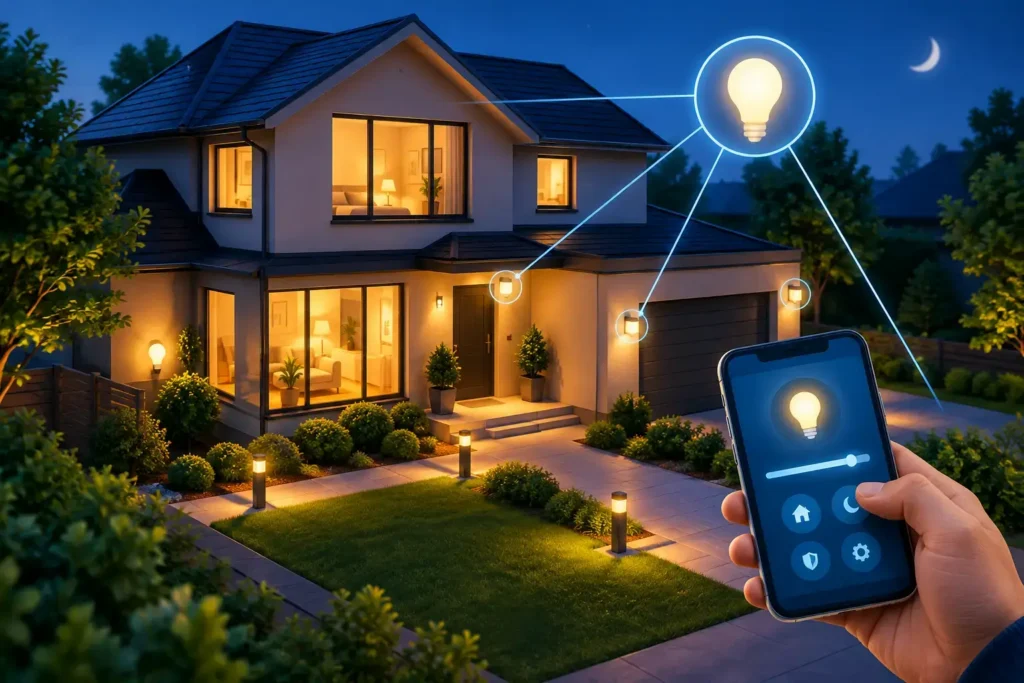
A dark driveway, an unlit entryway, and a home that looks vacant can create unnecessary concern at the end of a long day. Learning how to automate home lighting lets your house respond to your routine – turning lights on before you arrive, creating a lived-in appearance while you are away, and making nighttime movement safer for everyone under your roof.
For many South Carolina homeowners, automated lighting starts as a convenience. It quickly becomes part of a larger connected-home strategy that supports security, comfort, and energy awareness. The best setup is not necessarily the one with the most devices. It is the one that fits how your family actually lives.
Start With the Areas That Matter Most
You do not need to automate every light in the home on day one. Begin with the spaces where dependable illumination makes the biggest difference: exterior doors, the garage entry, front walkways, hallways, stairways, kitchens, and commonly used bedrooms or bathrooms.
Exterior lighting deserves priority because it affects both safety and visibility. A porch light that comes on at sunset makes it easier to find keys, greet visitors, and approach the door with confidence. Lights near a garage or side entrance can remove dark spots when you come home after work. Inside, automated pathway lighting can help children, guests, and older family members move through the home without searching for a switch in the dark.
Consider your daily patterns before choosing equipment. Do you leave before sunrise? Do teenagers arrive home before you do? Does a family member get up during the night? Are you frequently away for weekends? Clear answers make it easier to decide where automation will provide real value.
Choose the Right Type of Lighting Control
Smart bulbs, smart switches, plugs, and professionally integrated lighting controls can all automate home lighting. Each approach has a place, and the right choice depends on the fixture, the wiring, and how much control you want.
Smart bulbs are often an easy option for lamps and individual fixtures. They can be scheduled, dimmed, and sometimes adjusted for color temperature. They work well where you want flexibility, but they require the wall switch to remain on. If someone flips that switch off, the bulb cannot respond to its schedule or app commands.
Smart switches are usually a better long-term choice for permanently installed ceiling lights, porch lights, and other fixtures controlled from a wall. They preserve the familiar experience of using a physical switch while adding scheduling and remote control. Some homes need a neutral wire for installation, and older wiring can require a closer look before selecting a device.
Smart plugs are useful for table lamps, seasonal lighting, and other plug-in fixtures. They offer a straightforward way to place a lamp on a schedule without replacing the fixture itself. They are not the right answer for hardwired lights or equipment that should never be switched on remotely.
A professionally designed home automation system can bring these controls into one platform with security, cameras, locks, thermostats, and smartphone access. This route is especially useful for homeowners who want reliable operation without piecing together multiple apps and devices.
Build a Lighting Schedule Around Real Life
Schedules are the foundation of useful lighting automation. Rather than setting every light to the same fixed time, use events that match your household routine.
Sunset-based scheduling is a strong starting point for exterior lights. Because sunset shifts throughout the year, this approach avoids constant manual changes. You might have the porch, garage, and driveway lighting turn on at sunset, then turn off at a reasonable bedtime. If someone regularly arrives later, keep the entry light on longer or allow a quick smartphone adjustment.
Interior schedules should be more selective. A living room lamp can come on in the early evening to make the house feel occupied. Kitchen lighting may be helpful before the morning rush. Bedroom lights, however, should not turn on automatically at a time that could disturb someone who is sleeping.
Small adjustments matter. Dimming a hallway light overnight may provide enough guidance without creating glare. Setting lights to brighten gradually in the morning can feel more comfortable than a full-brightness switch-on. Automation should support the home, not make it feel programmed around the clock.
Use Vacation Settings Carefully
When a home is empty, predictable lighting can be almost as revealing as no lighting at all. A vacation setting should vary lights within a reasonable window rather than turn them on and off at exactly the same time every evening.
Focus on visible living areas, such as a front room or kitchen, and avoid leaving every light on all night. Exterior lighting can still follow sunset schedules, while selected indoor lamps turn on for portions of the evening. This creates a more natural occupied appearance and avoids unnecessary energy use.
Lighting is one layer of home protection, not a replacement for a monitored security system, secure locks, cameras, or good neighbor awareness. Used together, these measures can make a home better prepared when the family is away.
Add Motion and Door-Based Automation With Purpose
Motion sensors can make lighting more responsive, especially in locations where hands are often full. A light near the garage-to-house entry can turn on when you open the door. A hallway or stairway light can activate at low brightness when motion is detected overnight.
The key is placement and timing. A sensor aimed at a busy street, a pet’s usual path, or moving tree branches can trigger lights too often. In bedrooms, bright motion-triggered lights can be disruptive. For those areas, use a low dim level, a short shutoff delay, or a manual switch instead.
Door and garage sensors can also create practical rules. For example, opening the front door after sunset could turn on the entry and foyer lights for several minutes. When paired with a connected security system, these automations can help you see what is happening during an alert without needing to navigate a dark home.
Connect Lighting With Your Security System
The most valuable automations are often the ones that reduce friction during a security event or everyday arrival. When lighting, alarm controls, cameras, and smartphone notifications work from the same connected system, your home can respond in ways that make sense for the moment.
You may choose to have exterior lights turn on when the system is disarmed in the evening, or have selected lights activate if an alarm is triggered. Lighting can also support camera visibility around key access points, although outdoor cameras still need proper placement and suitable nighttime capability.
There are trade-offs. Not every security event should trigger every light in the house, particularly if that could alarm children or draw attention unnecessarily. Your automation rules should reflect your comfort level and the layout of the property. A professional assessment can identify the entrances, pathways, and vulnerable areas where connected lighting is most helpful.
ADP Security Systems can help homeowners design professionally installed security and home automation solutions that are simple to use and aligned with their household routines.
Keep Control Simple and Reliable
Automation should never leave you wondering whether a light will work. Keep manual wall controls available, and make sure key household members know how to override schedules when needed. Name devices clearly in the app, such as “Front Porch” or “Upstairs Hall,” rather than relying on generic labels.
If your lighting relies on Wi-Fi, place network equipment where it can provide dependable coverage. A weak signal at a detached garage, far bedroom, or outdoor fixture can lead to inconsistent response. It is also wise to review automations after a power outage, router replacement, or app update.
For homes with many devices, professional installation and ongoing support can be worth considering. It reduces compatibility questions, avoids complicated wiring decisions, and provides a clear point of contact if something needs service.
Make Your First Automations Useful
Start with three practical automations: exterior lights at sunset, entry lights when you arrive after dark, and low-level hallway lighting for nighttime movement. Live with those routines for a few weeks, then adjust timing and brightness based on what your family actually uses.
The goal is not a house that does everything on its own. It is a home that feels safer, more welcoming, and easier to manage when your attention is already on the people and moments that matter most.