Commercial Fire Alarm Systems in South Carolina
June 10, 2026
Fall Detection Devices for Seniors: Key Features
June 12, 2026
A monitored panel can call for help, but it cannot prove every detector works. Businesses need both because rapid response means little when a failed device never sends a signal.
Request a commercial fire alarm monitoring assessment
Fire alarm monitoring provides continuous oversight, sending alarm, trouble, and supervisory signals from a building’s panel to an off-site supervising station. When an alarm reaches that station, trained operators can follow the response plan and help notify emergency services, including when the building is empty. An inspection is different: a technician visits on a set schedule to check whether devices, panels, and communicators operate correctly and meet applicable requirements. The NFPA identifies inspection, testing, and maintenance as core parts of NFPA 72 compliance, while monitoring extends alarms beyond the installed location. A reliable commercial system needs both services because monitoring handles incoming signals, while inspections find faults that might prevent those signals from being sent.
The key question is not which service is better, but which risk each one controls and when your business depends on it. Fire alarm monitoring vs. inspection at a glance puts those roles side by side before we examine timing, compliance, and response. The path begins with a clear comparison of what each service does.
Fire alarm monitoring vs. inspection at a glance
Fire alarm monitoring and inspection serve different parts of a business’s fire safety plan. Monitoring watches for signals as they occur. Inspection checks whether system parts work as intended. Most businesses need both because neither service can replace the other.
Two distinct safety roles
Fire alarm monitoring connects the alarm panel to a supervising station. When the panel sends an alarm signal, trained staff can start the response process. This off-site link matters when a building is empty or no one can make a call.
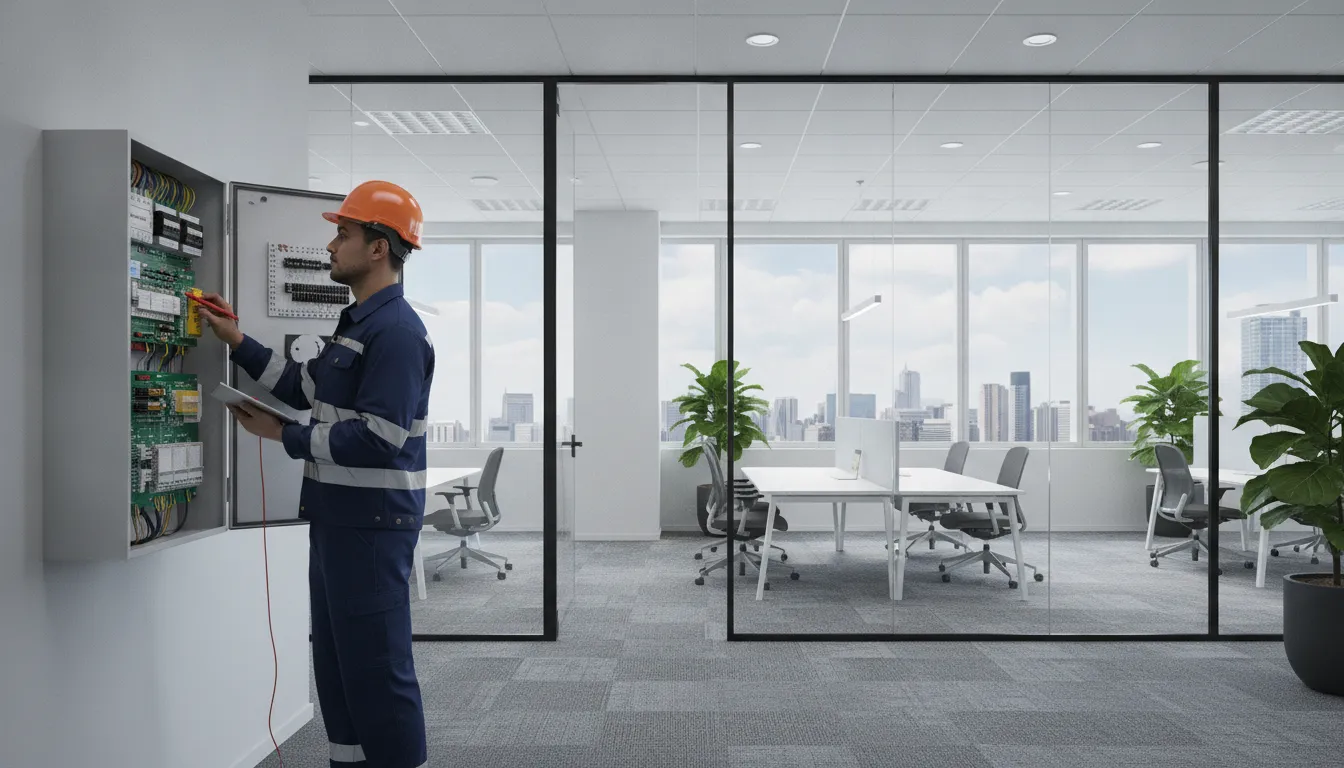
An inspection is a planned, hands-on review of the fire alarm system. A technician checks devices, the control panel, and communication equipment for proper function. NFPA 72 inspection, testing, and maintenance guidance helps shape this work.
| Comparison point | Fire alarm monitoring | Fire alarm inspection |
|---|---|---|
| Primary role | Receives and acts on panel signals | Checks system condition and function |
| Cadence | Ongoing oversight | Planned service visits |
| Work location | Supervising station | At the protected property |
| Main outcome | Starts an off-site response | Finds faults and documents test results |
| What it cannot do | Confirm every device works correctly | Watch for signals between visits |
Different schedules and outcomes
Monitoring remains active between service visits, ready to receive signals from the panel. Inspection happens on a set schedule based on the system, applicable rules, and local authority requirements. It gives owners a record of tested parts and issues that need repair.
The difference is easier to see during a fault. Monitoring may receive a trouble signal, but it cannot repair the cause. An inspection or service visit can find a failed device, damaged wire, or communication issue. It cannot keep watch after the technician leaves.
The records also serve different needs. Monitoring records show received events and how the station handled them. Inspection reports show which equipment was checked, what passed, and what needs follow-up. Facility teams can use both records to track risk and plan repairs.
Why businesses use both
A working alarm without monitoring may warn people on site but may not send an off-site notice. Monitoring depends on a system that can detect danger and send a clear signal. Regular inspection helps confirm that the equipment can perform that job.
Roles should also be clear before an alarm or fault occurs. Staff need to know who reviews inspection findings and approves repairs. They should also know who receives calls from the monitoring station. Clear contacts help each service lead to timely action.
Businesses can manage both needs through a coordinated fire safety plan. ADP Security Systems supports inspection, maintenance, installation, and monitoring for non-proprietary systems. Its commercial fire services help facility teams keep testing records, address faults, and maintain ongoing signal oversight.
How does commercial fire alarm monitoring work?
Fire alarm monitoring connects a building’s fire alarm panel with a trained monitoring center. When the panel reports an alarm, the center receives the signal and follows an established response plan. This process extends the alarm beyond the property, rather than relying only on someone nearby to hear it.
The signal-to-response sequence
A monitored system follows a set path from detection to response. The exact response depends on the signal type, site instructions, and local requirements.
-
A detector, pull station, sprinkler device, or other initiating device sends a signal to the fire alarm control panel.
-
The panel identifies the event and activates the building’s local notification devices, such as horns and strobes.
-
A communicator sends the panel’s signal to the monitoring center through the configured communication path.
-
Trained monitoring staff review the received signal and follow the site’s response instructions.
-
For a fire alarm, the center can provide off-premise notice that starts a fire department response. This role is described in NFPA 72 materials on supervising-station notification.
The monitoring center may also receive trouble or supervisory signals. These events can point to system issues or a change that needs attention. They are handled under the site’s response plan, which should list contacts and escalation steps.
Communication paths and backup planning
The communicator is the link between the fire alarm panel and the monitoring center. Common paths include cellular, internet-based, radio, or telephone connections. The right setup depends on the existing panel, local requirements, building conditions, and the need for a backup path.
Businesses should confirm how their system sends signals and what happens if its main path fails. A provider can also assess whether an existing panel can support monitoring. ADP’s guide to commercial fire alarm systems explains the equipment and planning factors behind a complete system.
Protection during nights and off-hours
Off-hours are where fire alarm monitoring differs most from a local-only alarm. A local alarm can warn people inside, but an empty building may have no one present to act. Monitoring keeps the panel connected to a supervising station when staff have left.
This continuous oversight supports a prompt, planned response without depending on an employee to discover the alarm. It does not replace required inspection, testing, or maintenance. Businesses need both active monitoring and scheduled system checks to support reliable fire protection.
Contact lists and site instructions also need regular review. Current details help monitoring staff reach the right people after a trouble or supervisory signal. For businesses with several properties, centralized fire alarm monitoring can support a consistent response plan across locations.
What happens during a fire alarm inspection?
During a fire alarm inspection, a technician checks the panel, initiating devices, notification appliances, communicators, and related records. Functional tests confirm that components operate and signals reach their intended destination. The visit also documents deficiencies that require repair or follow-up.
The inspection scope
A professional fire alarm inspection is a scheduled check of the system’s condition and function. The technician examines key parts of commercial fire alarm systems, including initiating devices, the control panel, and communicators. The goal is to find issues that could keep the system from working as intended.
The visit should cover the equipment installed at that property, not a generic checklist alone. The technician reviews how the parts work together and notes any device that needs service. Inspection, testing, and maintenance are distinct parts of the process covered by NFPA 72 fire alarm guidance.
Functional tests
Inspection looks at equipment condition, while testing checks whether devices perform their assigned jobs. A technician tests initiating devices, panels, and communicators based on the system’s needs. Smoke detectors may also receive sensitivity or function tests when those tests are due.
- Initiating devices are checked to confirm they can send a signal.
- The control panel is checked for proper operation and visible trouble conditions.
- Communicators are checked to confirm they can pass system signals.
- Smoke detector sensitivity or function is tested when required for the system.
A failed test does not always mean the entire system must be replaced. It gives the business a clear starting point for repair or maintenance. The service provider can then explain the issue, its effect on system function, and the next step.
Inspection records and monitoring
The technician documents what was inspected, what was tested, and which items did not perform as expected. The record should make open issues easy to find. It can help the facility team track repairs and discuss system needs with the local authority having jurisdiction.
An inspection is not the same as fire alarm monitoring. Inspection is a scheduled check of equipment function. Monitoring provides off-site oversight and can send alarm information to a supervising station. Businesses need both activities to support a reliable fire safety plan, but one does not replace the other.
The distinction matters after the technician leaves. A passed inspection shows how the system performed during the visit. In contrast, professional fire alarm monitoring services watch for later signals. Inspection records help the business address faults that could affect that ongoing connection.
Why Greenville businesses need both services
Fire alarm monitoring and inspections solve two different problems. Monitoring watches for signals from the panel, while an inspection checks whether the system can produce and send those signals.
A Greenville business needs both because neither service can cover the other’s role. Together, they reduce gaps between a working alarm, a received signal, and an off-site response.
Two separate safety jobs
An inspection is a scheduled check of devices, panels, and communicators. It can find a failed detector, weak connection, or reporting issue before that fault matters during an emergency.
Fire alarm monitoring provides continuous oversight after the inspection ends. When the panel sends an alarm, off-site notification can reach a supervising station and start a fire department response. This role is described in NFPA material on supervising station notification.
Monitoring cannot prove that every detector and alarm device works as intended. A panel cannot report a fire signal that a failed device never creates. Inspections find those hidden faults through hands-on checks.
Coverage between scheduled visits
An inspection records system condition at a set point in time. After that visit, a fault, power issue, or damaged connection may affect how the system works.
Monitoring helps cover that time gap by watching the panel for alarm and system signals. It does not repair faults or replace scheduled testing. Instead, it gives staff a way to respond when the panel reports a problem.
- Inspections check whether devices and communication paths work.
- Monitoring receives signals while the building is occupied or empty.
- Maintenance addresses faults found during testing or reported by the panel.
- Records show what was checked, found, and corrected.
Businesses with several sites may also use centralized fire alarm monitoring to keep signal handling consistent. Each location still needs its own inspection and maintenance plan.
Documentation and practical risk control
Inspection reports give facility managers a record of tested equipment, noted faults, and completed work. These records support follow-up maintenance and help teams answer questions from the local authority having jurisdiction.
Monitoring records serve another purpose. They show when the panel sent a signal and how the event moved through the response process. Reviewing both record sets helps reveal repeat faults and missed repairs.
The strongest plan assigns a clear job to each service. Use inspections to verify system function, monitoring to receive signals, and maintenance to correct issues. ADP’s commercial fire services bring these related tasks into one coordinated plan without treating them as interchangeable.
Ask ADP Security Systems to review your monitoring and inspection gaps
Choosing a fire alarm monitoring provider
A commercial monitoring provider should do more than receive alarm signals. The right partner should understand your building, maintain clear service records, and support the alarm equipment already in place. For Greenville and Upstate South Carolina businesses, local service access also matters when a panel needs attention.
Monitoring and service under one plan
Start by confirming exactly what the monitoring agreement covers. Ask how the provider handles alarm, trouble, and supervisory signals. You should also know who contacts your team, what records you receive, and how service issues move from the monitoring station to a technician.
Monitoring does not replace scheduled inspection or maintenance. NFPA 72 inspection, testing, and maintenance addresses the checks needed to help keep fire alarm systems dependable. A provider that offers monitoring, inspection, maintenance, and installation can help your team manage those separate needs through one service relationship.
- Confirm that monitoring runs at all hours and covers each signal type your panel sends.
- Ask how the provider documents inspections, repairs, signal tests, and open service needs.
- Check whether technicians can service the panel, communicators, initiating devices, and related equipment.
- Make sure the proposal separates monitoring fees from inspection, maintenance, and repair work.
System support without a forced replacement
A provider should assess the current system before recommending a new one. Ask whether its technicians can support both proprietary and non-proprietary equipment. Also ask what happens when an older part fails or the panel can no longer meet the site’s needs.
ADP supports proprietary and non-proprietary systems and can plan phased upgrades for outdated equipment. Its full-service offering includes non-proprietary inspection, maintenance, installation, and monitoring. Reviewing the site’s commercial fire alarm systems before choosing a monitoring plan can reveal gaps that need separate service.
Local fit and clear accountability
For a Greenville-area property, ask where technicians are based and which parts of Upstate South Carolina they serve. Confirm normal response steps, after-hours service options, and the contact responsible for your account. Clear ownership helps prevent a trouble signal or failed device from sitting unresolved.
ADP Security Systems is family-owned and based in Greenville, with more than 30 years of experience. Its commercial fire services combine monitoring with system design, installation, inspection, and maintenance. Businesses comparing providers can review ADP Commercial Fire Services to see how those services fit together.
Before signing, request a written scope for every building and panel. It should name monitored signals, testing duties, service contacts, records, exclusions, and upgrade needs. Compare that scope against your site’s risks instead of choosing on the monthly monitoring price alone.
What should you review before scheduling service?
Before scheduling service, gather a clear picture of the building, its fire alarm equipment, and the people who manage it. Good records help the service team plan the assessment and limit avoidable delays. They also help separate monitoring needs from inspection and repair needs.
System inventory and service records
Start with an inventory of the control panel, initiating devices, notification appliances, communicators, and any linked systems. Note equipment locations, model details, known faults, recent changes, and areas that are hard to reach. Include each building or site if the business manages more than one location.
Collect prior inspection reports, test results, repair invoices, monitoring agreements, permits, and system drawings when available. NFPA 72 addresses fire alarm inspection, testing, and maintenance, but the local authority may set added requirements. Ask the service provider which records they need and which local rules apply.
- Current equipment list and panel details
- Recent inspection, testing, and repair records
- Known trouble signals, false alarms, or device issues
- Floor plans, system drawings, and access notes
Contacts and response protocols
Review the contact list used for alarm signals, trouble alerts, and service calls. Confirm names, phone numbers, call order, after-hours contacts, and who can approve repairs. Remove former employees and add backup contacts before fire alarm monitoring service begins.
Write down the current response protocol for alarms, supervisory signals, and system trouble. Include who checks the site, who meets responders, and how staff report a system issue. Monitoring can extend an alarm beyond the building through off-premise notification to a supervising station, so accurate contact and response details matter.
Questions for the assessment
Prepare questions that reveal the scope of service and the condition of the current system. Ask whether existing equipment can support monitoring, what communicator options fit the site, and how the provider handles trouble signals. Also ask how inspections, repairs, testing, and monitoring will be documented.
Discuss expected access needs, service windows, staff training, fees, and steps for updating the contact list. Ask which recommendations are urgent and which can fit a phased plan. ADP’s guide to commercial fire alarm systems can help owners review basic equipment terms before the assessment.
- Can the current panel and communicator support the proposed service?
- Which signals will the monitoring station receive and act on?
- How will inspections, repairs, and account changes be recorded?
- What site access, testing notices, or staff support will be needed?
Frequently Asked Questions
Is fire alarm monitoring required by code?
Monitoring requirements depend on the building’s occupancy, fire alarm design, local code, and the authority having jurisdiction. NFPA 72 addresses fire alarm inspection, testing, and maintenance, but local officials determine which rules apply to a specific property. A qualified fire alarm provider can review the system and confirm the requirements before service begins.
How much does fire alarm monitoring cost?
Fire alarm monitoring cost varies by system size, communication method, panel compatibility, number of locations, and required service level. Installation or communicator upgrades may add an initial expense, while monitoring usually carries a recurring fee. Businesses should request a site assessment and an itemized quote that separates monitoring, equipment, inspection, maintenance, and permit-related charges.
Can I use an existing fire alarm system for monitoring?
Many existing commercial fire alarm systems can connect to a monitoring service, but compatibility must be confirmed first. A technician should assess the control panel, communicator, available signal paths, system condition, and local code requirements. Older or proprietary equipment may need a new communicator, panel upgrade, or phased replacement before reliable off-premise signaling is possible.
Does my business need both fire alarm monitoring and inspections?
Most businesses should treat monitoring and inspections as separate parts of fire safety. Monitoring watches for alarm, trouble, or supervisory signals and sends them off-site. Inspections verify that system components work correctly at scheduled intervals. Because one service does not perform the other’s function, the required combination depends on the building, system design, local code, and authority having jurisdiction.
Ready to Close the Gaps in Your Fire Safety Plan?
Waiting to compare monitoring and inspection can leave avoidable gaps in your fire safety plan and delay needed service. Starting now gives your team time to review system needs, plan the right service schedule, and address concerns before they become urgent. A clear assessment can show where continuous monitoring ends, where scheduled inspection begins, and how both should support your Greenville business.
Ready to build a clearer fire safety plan for your Greenville or Upstate South Carolina facility? Request a commercial fire alarm assessment to identify next steps and plan service around your building and operations.