Entry System Greenville: A Complete Buyer’s Guide
April 23, 2026
The Ultimate Guide to Fall Detection Devices
April 24, 2026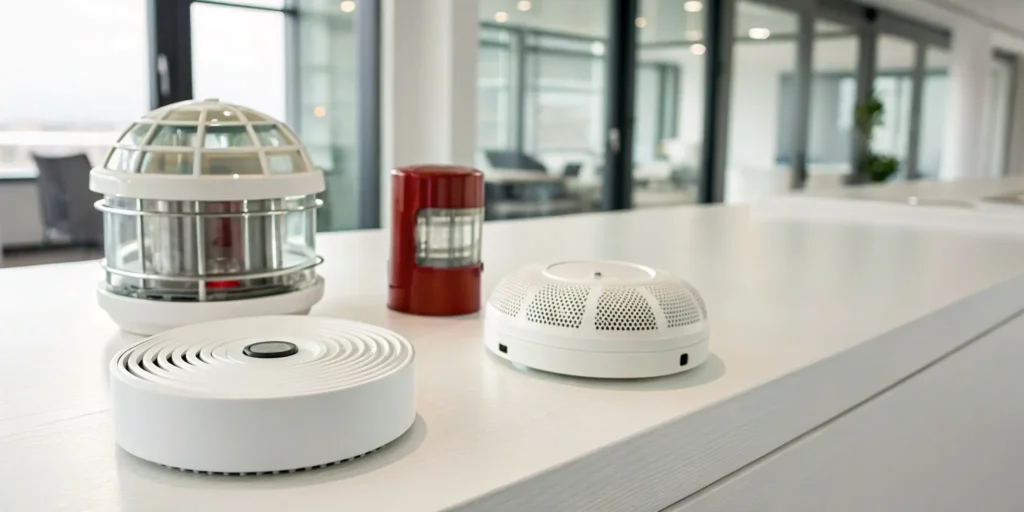
A fire alarm is one of the most important devices you’ll ever own, but we usually only think about it when it’s chirping at 3 a.m. While that sound is annoying, the real danger is a fire your alarm isn’t built to detect. Not all fires are the same. Some are fast and flaming, while others smolder for hours, filling your home with toxic smoke. Different fire alarms use different technology to sense these specific threats. Knowing the difference isn’t just a small detail—it can buy you precious seconds to get out safely. Let’s break down the types so you can protect your home effectively.
Key Takeaways
- Match the Alarm Sensor to the Fire Risk: Understand the difference between ionization alarms, which detect fast-flaming fires, and photoelectric alarms, which are better for slow, smoldering fires. For the most complete protection in your home, a dual-sensor alarm is the best choice.
- Build a Connected Safety System: A single alarm provides limited protection. True safety comes from an interconnected system where all alarms sound at once, combined with professional 24/7 monitoring that ensures emergency services are dispatched immediately.
- Prioritize Placement and Regular Maintenance: Where you install your alarms is critical, so place them on every level and inside each bedroom. Test every alarm monthly and replace the entire unit every 10 years to ensure the sensors are effective and reliable.
Why Every Second Counts: The Reality of Home Fires
When a fire starts, your top priority is getting everyone out safely. The challenge is that fires can grow incredibly fast, and the smoke they produce can become incapacitating in minutes. This small window of time is why early detection isn’t just a feature—it’s the most critical element of your home’s fire safety plan. The sound of a smoke alarm is your signal to act, giving you and your family the precious seconds needed to escape. Understanding how these devices work and what makes them effective is the first step toward building a reliable safety net for your home.
The Life-Saving Impact of Working Smoke Alarms
The data is clear: having working smoke alarms in your home cuts the risk of dying in a fire by 55%. That single statistic highlights just how essential these devices are. Think of a smoke alarm as an electronic nose, constantly sampling the air for tiny particles that are invisible to you. According to the National Institute of Standards and Technology, when the alarm senses enough of these particles, it triggers a loud alert. This early warning is designed to wake you up and give you enough time to follow your escape plan before smoke and heat make it impossible to get out.
Understanding the Risk of Smoldering Fires
Not all fires behave the same way, which is why not all smoke alarms are built the same. Some fires, like a kitchen grease fire, erupt quickly with tall flames. Other fires start slow and smolder for hours, often from an electrical short or a cigarette dropped on furniture. These smoldering fires are especially dangerous because they produce thick, toxic smoke long before any flames appear. Standard ionization alarms are great for detecting fast-flaming fires but can be slower to react to smoldering ones. For these slow-burn threats, a photoelectric alarm is much more effective. To ensure your family is protected from both types of fires, the best solution is a dual-sensor alarm that combines both technologies into one unit.
What Are the Different Types of Fire Alarms?
When you think of a fire alarm, you probably picture the small, round device on the ceiling. But what’s inside that device can vary quite a bit, and different alarms use different technologies to detect fires. Knowing the distinction is the first step toward keeping your family or business safe. The best type of alarm for a historic home in Anderson might be different from what’s needed for a bustling commercial kitchen in Greenville. Choosing the right technology isn’t just about meeting a requirement; it’s about having the most effective protection for the kinds of fire risks you might face. Understanding these options helps you build a smarter, more reliable safety plan from the ground up. Let’s break down the main types so you can make an informed decision.
Detecting Fast-Flaming Fires with Ionization Alarms
Ionization alarms are excellent at their job, which is detecting fires that flare up quickly. Think of a fire that starts with paper, wood, or flammable liquids; these create lots of flames and smaller smoke particles. According to experts at Ace Hardware, “[i]onization smoke detectors are best at finding smoke from fast-burning fires.” They work by using a tiny amount of radioactive material between two electrically charged plates, which creates a steady electrical current. When smoke enters the chamber, it disrupts this current and triggers the alarm. Because they are widely available and generally affordable, they are the most common type of smoke detector you’ll find in homes.
How They Work: Sensing Small Particles
At the end of the day, every smoke alarm is essentially a particle detector, constantly “sniffing” the air for trouble. The real magic is in how they detect different kinds of trouble. As we just covered, ionization alarms are great at sensing the super-fine particles created by a fast, flaming fire. But what about a fire that starts slow and smoky, without big flames? Those fires produce larger, denser smoke particles that require a different kind of sensor to spot them. This is where photoelectric alarms step in, using a clever method with light to catch the signs of a smoldering fire before it can erupt.
Sensing Smoky, Smoldering Fires with Photoelectric Alarms
While ionization alarms stand guard against fast flames, photoelectric alarms are designed for the opposite threat: slow, smoldering fires. These are the sneaky fires that can begin without any visible flame, like from an overheating electrical wire in the wall of an older home or a cigarette dropped on upholstery. Instead of big flames, they produce large amounts of thick, hazardous smoke. A photoelectric alarm uses a beam of light inside its chamber to detect this. According to the National Institute of Standards and Technology (NIST), when these larger smoke particles drift into the chamber, they scatter the light beam onto a sensor. This immediately triggers the alarm, giving you precious time to react before a fire has a chance to grow.
Sensing Smoldering Fires with Photoelectric Alarms
Photoelectric alarms work differently. They use a light source aimed away from a sensor inside the alarm chamber. When smoke enters, it scatters the light beam, causing some of the light to hit the sensor and sound the alarm. This technology is particularly good at sensing the large smoke particles produced by smoldering fires. These are the slow-burning fires that can fill a room with toxic smoke before you ever see a flame, like a cigarette dropped on a couch. As Ace Hardware notes, “[p]hotoelectric smoke detectors are better at finding smoke from slow-burning, smoldering fires that don’t have big flames.” They are also less likely to be triggered by steam from a shower or cooking, which is a great bonus.
How They Work: Sensing Large Particles
Think of it like a tripwire made of light. Inside the alarm, a beam of light shines away from a sensor. When the large, dense smoke particles from a smoldering fire drift into the chamber, they get in the way of that beam. These particles scatter the light, redirecting it onto the sensor and sounding the alarm. This design is what makes photoelectric alarms so good at detecting slow-burning fires from sources like upholstery or faulty wiring—the kind that can fill your home with toxic smoke while you sleep. As a bonus, this technology is less likely to be fooled by steam from the bathroom or a little smoke from the kitchen, meaning fewer frustrating false alarms for your family.
Dual-Sensor Alarms: The Best of Both Worlds?
Can’t decide between ionization and photoelectric? You don’t have to. Dual-sensor alarms give you the best of both worlds in a single device. As the name suggests, these units contain both an ionization sensor and a photoelectric sensor, giving you comprehensive protection against both fast-flaming and slow-smoldering fires. According to the safety experts at First Alert, “[d]ual Sensor smoke alarms combine both ionization and photoelectric sensors, providing broader detection capabilities for various types of fires.” For complete peace of mind in your home, especially in sleeping areas and main hallways, a dual-sensor alarm is often the recommended choice for total coverage.
Protecting Against Fire and CO with Combination Alarms
Fire isn’t the only threat in a home or business. Carbon monoxide (CO) is an invisible, odorless gas that can be deadly, and it’s produced by common fuel-burning appliances like furnaces, water heaters, and generators. A combination alarm is a smart, space-saving solution that protects you from both threats. First Alert explains that their “combination alarms that detect both smoke and carbon monoxide (CO) in one device, providing comprehensive safety for your home.” Installing one of these near bedrooms and on every level of your home ensures you’re alerted to danger, whether it’s from smoke or the silent threat of CO, all from a single, convenient unit.
Heat Detectors: A Solution for Kitchens and Garages
Ever had your smoke alarm scream at you for burning toast? Heat detectors are the perfect solution for those tricky spots like kitchens, garages, and attics where smoke, steam, or dust can trigger false alarms. Instead of sensing smoke particles, these devices are designed to respond to a rapid increase in temperature, signaling a real fire. The National Fire Protection Association (NFPA) explains that there are two main types: fixed-temperature detectors that go off when a room hits a specific high temperature, and rate-of-rise detectors that activate when the heat climbs unusually fast. While they shouldn’t replace your smoke alarms, they are an essential part of a complete fire safety strategy. Integrating a heat detector into a professionally monitored system ensures that even if a fire starts in the garage, emergency services are dispatched immediately, giving you and your family critical extra time to get to safety.
Choosing Your Fire Alarm: What Features Matter Most?
Once you know the type of sensor you need, it’s time to think about features. Modern fire alarms offer more than just a loud noise; they provide convenience, connectivity, and greater peace of mind. When you’re comparing models, here are the key features that make a real difference in protecting your home or business.
Why Interconnected Alarms Offer Superior Protection
If you live in a multi-level home or own a business, a single alarm isn’t enough. Interconnected alarms are designed to communicate with each other. When one alarm detects smoke or fire, all the alarms throughout the property will sound simultaneously. This is a critical feature because it ensures that even if a fire starts in the basement, someone in an upstairs bedroom will be alerted immediately. This network of alarms creates a web of protection, giving everyone more time to get to safety.
Get Instant Alerts with Smart Wi-Fi & Voice Notifications
Technology has made fire alarms much more user-friendly. Many new models connect to your home’s Wi-Fi and send alerts directly to your smartphone. This is perfect for when you’re at work, running errands, or on vacation. You’ll get an instant notification if an alarm is triggered, so you can call for help right away. Some smart alarms even have voice alerts that tell you the location of the danger, saying something like, “Warning: Smoke in the kitchen.” This specific information helps you react faster and more effectively during an emergency.
Hardwired vs. Battery: Which Power Source Is Best?
You have two main choices when it comes to powering your alarms: hardwired or battery-operated. Hardwired alarms connect directly to your home’s electrical system and include a battery backup in case of a power outage. They are generally considered very reliable. Battery-powered alarms are much easier to install since they don’t require any wiring, allowing you to place them anywhere. Both are great options, but your choice will depend on your home’s existing setup and your comfort level with installation.
Why a 10-Year Sealed Battery Is a Smart Choice
One of the biggest complaints about battery-powered alarms is the low-battery chirp that always seems to start in the middle of the night. Alarms with 10-year sealed batteries solve this problem. The battery is built to last for the entire lifespan of the device, which is about a decade. This means no more changing batteries every year and no more disruptive chirping. It’s a low-maintenance option that ensures your alarms are always powered and ready to protect you.
Specialized Alarms for Hearing Impairments
A standard fire alarm’s high-pitched sound is effective for many, but it isn’t a one-size-fits-all solution. For family members who are deaf or hard of hearing, a different approach is needed to ensure their safety. Specialized alarms are designed to provide alerts through senses other than hearing. These systems often include high-intensity strobe lights that flash brightly to catch your attention, as well as vibrating pads that can be placed under a mattress or pillow to wake someone from sleep. The National Fire Protection Association (NFPA) recommends alarms that use both sound and visual signals to improve safety for individuals with hearing impairments. This ensures that every person in your home, from young children to aging parents in their Upstate residence, has a reliable way to be alerted to danger, providing true peace of mind.
Key Safety Certifications
When you buy a fire alarm, you’re trusting it to save lives. That’s why safety certifications are so important. Look for a mark from a recognized testing laboratory, like UL (Underwriters Laboratories). This seal means the alarm has undergone rigorous testing to meet strict performance and safety standards. A product certification confirms that the device you’re installing is reliable and will work as expected when you need it most. For business owners in South Carolina, certified equipment is often required to meet local fire codes.
How to Choose the Right Fire Alarm for Your Needs
Choosing the right fire alarm system can feel like a big decision, but it breaks down into a few key considerations based on your specific needs. Whether you’re protecting your family at home or securing your business, the goal is the same: early, reliable detection. Let’s walk through what you need to know to make a confident choice for your property.
Protecting Your South Carolina Home
Protecting your home and family starts with having the right alarms in the right places. For total peace of mind, safety experts recommend placing smoke alarms on every floor, including the basement, inside each bedroom, and in the hallways outside sleeping areas. You can choose from different types of smoke alarms, including hardwired models that connect to your home’s electricity, simple battery-operated units, or alarms with 10-year sealed batteries for less maintenance. An interconnected system is a great option for families, as it ensures that when one alarm sounds, they all sound, giving everyone more time to get to safety.
Securing Your Upstate Business
For business owners in the Upstate, a fire alarm system is about more than just a device on the wall; it’s a critical part of protecting your employees, customers, and livelihood. Commercial systems are more complex than residential ones and require regular professional attention. Consistent fire alarm testing and maintenance are not just best practices, they are essential for ensuring your system works correctly when you need it most. Working with a licensed fire protection company guarantees that your system is maintained properly and stays compliant with local and national standards, keeping your business safe and secure.
Staying Compliant with Local Fire Codes
Navigating fire codes can seem intimidating, but it’s all about ensuring a universal standard of safety. These regulations, largely based on guidelines from the National Fire Protection Association (NFPA), are mandatory requirements for businesses to protect people and property. NFPA compliance isn’t just about checking a box; it’s about making sure your fire alarm system is designed and maintained to be effective. Adhering to these standards is one of the most important steps you can take to minimize risks, protect your team, and ensure your business is prepared for an emergency.
Landlord and Renter Responsibilities in South Carolina
When you’re renting a home in South Carolina, fire safety is a shared responsibility. It’s not just on the landlord or the tenant alone; both parties have a role to play in keeping the property safe. According to the South Carolina Residential Landlord and Tenant Act, landlords must provide a safe and habitable home, which includes installing smoke detectors and ensuring they comply with housing codes. On the other side, tenants are generally responsible for the upkeep of the alarms in their unit. The South Carolina Department of Consumer Affairs outlines that tenants should regularly test their alarms and replace batteries when needed. Clear communication is key, so if you’re a renter and notice an issue with a detector, be sure to inform your landlord right away.
Finding Financial Assistance for Fire Alarms
Everyone deserves to feel safe at home, and cost should never be a barrier to having a working fire alarm. If you need help getting alarms for your home, there are several programs available to South Carolina residents. Many local fire departments and community organizations offer assistance. For example, the American Red Cross runs a Home Fire Campaign that often provides and installs free smoke alarms for families in need. You can also look into government programs, as FEMA offers grants for fire prevention and safety initiatives that may help fund alarm installations in communities. Don’t hesitate to reach out to these resources; they exist to help you protect your family.
Professional vs. DIY: Which Installation Is Right for You?
While you might be able to install a single, battery-operated smoke detector yourself, a comprehensive fire alarm system is a different story. For hardwired, interconnected alarms in your home, and especially for any commercial system, professional installation is the way to go. Commercial fire alarm systems must meet strict safety codes, like the NFPA 72 standards, which govern everything from placement to wiring. A professional installer ensures every component is set up correctly for reliable performance and full compliance. Investing in professional installation gives you confidence that your system will work flawlessly when it matters most.
What Makes a Fire Alarm System Truly Reliable?
Choosing the right fire alarm is a great first step, but building a truly reliable system involves more than just picking a device off the shelf. A dependable fire safety plan relies on high-quality equipment, constant monitoring, and seamless integration with your other safety systems. It’s about creating a network that protects your family in Simpsonville or your business in Anderson, whether you’re there or not.
Think of it this way: a single smoke alarm is a solo instrument, but a complete system is an orchestra. Each component has to work in perfect harmony to provide real peace of mind. From professional-grade detectors that reduce false alarms to a local monitoring team that understands the Upstate, every piece plays a critical role. Let’s walk through what makes a fire alarm system truly trustworthy.
Why Professional-Grade Equipment Matters
It’s tempting to grab a few battery-powered detectors from the hardware store, but professional-grade equipment offers a different level of protection. Unlike basic consumer models, these are complicated electrical and mechanical systems designed for unwavering reliability. They undergo more rigorous testing and are built with higher-quality components to ensure they function correctly when you need them most. Professional installation also guarantees that each device is placed correctly for optimal coverage and wired properly to meet safety codes, giving you a system you can count on.
Why Local, 24/7 Monitoring Matters
A fire alarm that isn’t monitored is only helpful if someone is home to hear it. With 24/7 professional monitoring, a dedicated team is always ready to respond. When an alarm is triggered at your Greenville home or Spartanburg business, our local South Carolina-based center receives an immediate alert. We can verify the emergency and dispatch first responders in minutes, saving precious time. For business owners, having a documented schedule of fire alarm testing and maintenance can also lead to better terms with your insurance provider.
How Integrated Systems Offer Complete Protection
Your fire alarm system shouldn’t operate in a silo. True safety comes from an integrated approach where all your systems work together. We can connect your fire alarms with your security system, smart lighting, and even your HVAC system. For example, in the event of a fire, an integrated system can automatically unlock doors for a quick exit, shut down airflow to slow the spread of smoke, and trigger security cameras to give you a clear view of the situation. This comprehensive approach to fire safety ensures a faster, smarter, and more coordinated response.
Smart Fire Alarms vs. Traditional: What’s the Difference?
Traditional fire alarms are hardwired and sound a local alarm. They are incredibly reliable but depend on someone being nearby to react. Smart systems take this a step further by connecting to your Wi-Fi. These systems can send alerts directly to your phone, no matter where you are. This means you’ll know instantly if there’s a problem at home, allowing you to alert the authorities or check in on your family. At ADP Security, we combine the best of both, offering professionally monitored systems with smart features for ultimate control and peace of mind.
How to Properly Install and Maintain Your Fire Alarms
Choosing the right fire alarm is the first step, but how you install and maintain it is just as critical for your family’s safety. A perfectly good alarm won’t help if it’s in the wrong spot or has a dead battery. Proper placement ensures you get the earliest possible warning, while regular upkeep guarantees your system is ready to perform when you need it most. Think of it as a partnership: you pick the right tools, and we help you keep them working perfectly.
For both homeowners in Simpsonville and business owners in Spartanburg, a little bit of planning goes a long way. Following a few key principles for installation and creating a simple maintenance routine can make all the difference. It’s about creating a reliable safety net so you can have true peace of mind, knowing your property and the people inside are protected around the clock. Let’s walk through what you need to know to get it right.
Where to Place Fire Alarms for Maximum Safety
Where you put your smoke alarms matters immensely. The goal is to create a web of protection that covers your entire home. For maximum safety, you should install an alarm on every level, including the basement. It’s also essential to have one inside every bedroom and in the hallway directly outside of any sleeping areas. This strategic placement ensures that an alarm is close enough to wake you if a fire starts while you’re asleep. Think about the common paths smoke would travel and place your alarms there for the quickest detection.
Placement Rules for Kitchens and Bathrooms
Kitchens and bathrooms are tricky spots for smoke alarms because steam and cooking fumes can easily trigger false alarms. To avoid this, you should never install a standard smoke detector directly inside a bathroom with a shower or too close to your stove. Instead, place the alarm at least 10 feet away from cooking appliances to prevent nuisance alerts. For hallways near kitchens, this placement still provides effective coverage without the constant interruptions. While it’s crucial to have smoke alarms on every floor, for areas like the kitchen, garage, or attic, you might consider a heat detector. These alarms are designed to react to a rapid rise in temperature, not smoke, making them a perfect solution for these environments.
Tips for Sloped Ceilings and Air Vents
Homes with unique features like sloped ceilings or large air vents require a little extra thought for alarm placement. Since smoke rises, you should always install alarms on the high side of a sloped or vaulted ceiling. For stairwells, make sure the alarm is positioned where smoke can easily reach it as it travels upward. It’s also important to avoid placing detectors directly in front of air vents or near your furnace’s cold air return. According to the Yakima Fire Department, the airflow can blow smoke away from the sensor, delaying the alarm. If your ceiling has radiant heat, install the alarm on a side wall between 4 and 12 inches from the ceiling to ensure it functions correctly.
Meeting NFPA 72 Standards for Commercial Systems
If you own a business in the Upstate, your fire alarm requirements are more complex than a home system. Commercial properties must follow strict safety codes to protect employees and customers, and to stay legally compliant. These regulations, known as NFPA 72 standards, dictate everything from system design and installation to testing and maintenance. A professional installation from a team like ADP Security ensures your system is designed specifically for your space, meets all local South Carolina codes, and provides reliable protection for your assets.
Why You Should Test Your Fire Alarms Regularly
A fire alarm only works if it’s functioning correctly, which makes regular testing a non-negotiable task. For homeowners, this is as simple as pressing the “test” button on each alarm once a month to make sure the siren and power source are working. For businesses, the process is more involved. Professional fire alarm testing is often required to verify that every component, from smoke detectors to pull stations, is communicating with the main panel and the monitoring center. Scheduling these routine checks ensures your system is always ready to respond in an emergency.
How to Identify Your Alarm Type
Not sure what kind of alarm you have? You’re not alone. The easiest way to find out is to gently twist the device to detach it from its mounting bracket and check the back for a label. You should see the manufacturer’s information along with the words “ionization,” “photoelectric,” or “dual-sensor.” Ionization alarms often have a small symbol for radioactive material—a circle with three wedges—which is a clear indicator. If the label is hard to read, you can usually find the model number and search for it online to get the details. Knowing what you have is the first step to ensuring you have the right coverage. For example, if you only have ionization alarms, you might consider adding photoelectric or dual-sensor units to better protect your home from slow, smoldering fires.
How to Know When It’s Time to Replace Your Alarms
Smoke and fire alarms don’t last forever. The sensors inside them degrade over time, becoming less effective at detecting smoke. As a rule of thumb, you should replace your smoke alarms at least every 10 years. Most alarms have a manufacturing date printed on the back. If you can’t find a date or know your alarms are older than a decade, it’s time for an upgrade. Replacing them on schedule is a simple and affordable way to ensure your first line of defense against a fire is strong and reliable.
The Shorter Lifespan of Combination CO Alarms
If you have a combination smoke and carbon monoxide alarm, you need to pay closer attention to its expiration date. While a standard smoke alarm has a lifespan of 10 years, the CO sensor inside a combination unit wears out much faster. As one insurance expert points out, “if it has a built-in CO detector, you’ll need to replace it sooner.” Most CO sensors are only effective for about five to seven years. This means your all-in-one device will need to be replaced well before the 10-year mark to ensure you’re still protected from carbon monoxide. Always check the manufacturer’s guidelines and replace the entire unit based on the earlier expiration date to keep your family safe from both threats.
Essential Fire Alarm Maintenance Tips
Once your alarms are installed, a simple maintenance routine is the best way to ensure they stay reliable. These quick checks give you confidence that your system is ready to protect you day in and day out. For homeowners, these tasks are easy to manage on your own. For business owners in places like Mauldin or Clemson, regular professional maintenance is often required to stay compliant and is the surest way to know your system is functioning perfectly. Let’s cover a few key habits that will keep your fire alarms in top working order.
Annual Battery Replacement
For any alarms that aren’t hardwired or don’t have a 10-year sealed battery, you’ll need to replace the batteries regularly. A great way to remember is to change the batteries at least once a year when you change your clocks for daylight saving time. This simple habit prevents those annoying low-battery chirps and, more importantly, ensures your alarms have power when you need them. Even hardwired systems have a backup battery that needs to be checked and replaced periodically, so don’t forget about those. A fresh battery is a small price to pay for a functioning, life-saving device.
Keeping Sensors Clean
Over time, dust, cobwebs, and even cooking grease can build up on your smoke alarms, interfering with the sensors. A blocked sensor can either fail to detect smoke or trigger frustrating false alarms. To prevent this, you should gently clean your alarms on a regular basis. The easiest way to do this is to use the soft brush attachment on your vacuum cleaner to carefully remove any debris from the vents of the alarm. This simple step, performed every few months, helps ensure the sensors are clear and ready to detect real danger.
Common Fire Alarm Myths That Put You at Risk
When it comes to fire safety, what you don’t know can hurt you. Misconceptions are common, and they often create a false sense of security that can leave your home or business vulnerable. Let’s clear the air and walk through some of the most persistent myths about fire alarms so you can make sure your property and the people inside are truly protected.
Myth: A Smoke Alarm Is All You Need
A smoke alarm is an essential first line of defense, but it’s just one piece of the puzzle. Thinking a single detector is enough is like having a doorbell but no locks on your doors. A smoke alarm is designed to alert you to danger, giving you time to escape. It doesn’t do anything to control or stop the fire itself. For a more comprehensive safety plan, you should also have accessible fire extinguishers and a well-practiced escape route. True safety comes from a layered approach, not a single device.
Myth: My Small Business Is Safe Without a System
It’s easy to think your small shop or office in Mauldin doesn’t need a professional fire alarm system. You might feel like you’d notice if something went wrong. But a fire can start from faulty wiring or a small electrical short and spread rapidly, especially after you’ve locked up for the night. A professionally monitored fire alarm system is a smart investment that works around the clock to protect your inventory, equipment, and livelihood. It’s not just about meeting code; it’s about ensuring the business you’ve worked so hard to build is still there tomorrow.
Myth: I’ll See or Smell a Fire in Time
Relying on your senses to detect a fire is a dangerous gamble, especially when you’re asleep. Many fires produce toxic gases and smoke long before flames are visible, and some, like those involving carbon monoxide, are completely odorless and invisible. Modern smoke and heat detectors are engineered to sense the earliest signs of a fire, giving you and your family the critical seconds needed to get out safely. An alarm provides a reliable warning that your senses simply can’t match, ensuring you’re alerted to danger immediately, day or night.
Myth: Installation Is a One-and-Done Job
Putting up a fire alarm and forgetting about it is one of the most common mistakes people make. Fire safety is an ongoing responsibility, not a single task to check off a list. Detectors need regular attention to function correctly. Dust can clog their sensors, batteries die, and the devices themselves have a limited lifespan, typically around 10 years. You should test your alarms monthly, clean them periodically, and replace them according to the manufacturer’s guidelines. Consistent maintenance ensures your system is ready to perform when you need it most.
Troubleshooting Common Fire Alarm Issues
There’s nothing more jarring than a fire alarm going off when there’s no fire. These nuisance alarms can be frustrating, but they happen for a reason. Understanding what causes them can help you minimize the interruptions without compromising your safety. It’s all about finding the right balance.
What Causes False Alarms?
A false alarm usually means your detector is doing its job—it just got confused. Smoke detectors are designed to be sensitive enough to alert you to a real fire, but making them too sensitive would lead to constant false alarms from everyday activities. According to the National Institute of Standards and Technology (NIST), researchers are always working to find that perfect balance. An occasional false alarm from cooking smoke is annoying, but it’s better than having a detector that’s too slow to react in a real emergency. The key is to understand the common triggers so you can place your alarms strategically and keep them clean.
Common Culprits: Steam, Dust, and Vaping
Most false alarms are caused by particles in the air that the sensor mistakes for smoke. The most frequent offenders are steam from a hot shower, heavy dust kicked up during cleaning, and even the aerosol from vaping. If your alarm is placed too close to a bathroom or kitchen, it might go off more often. This is where choosing the right type of alarm helps. As experts at Ace Hardware point out, photoelectric alarms are less likely to be triggered by steam, making them a great choice for hallways near bathrooms or other high-humidity areas.
The Future of Detection: Reducing Nuisance Alarms
The good news is that fire alarm technology is constantly getting smarter. Annoying false alarms are a known issue, and engineers are actively working on solutions. Researchers are developing new detectors that are better at telling the difference between a real threat and harmless particles from cooking or dust. The goal is to create advanced sensors that can analyze the size and concentration of particles to make a more accurate judgment, according to NIST. This will help reduce nuisance alarms while ensuring your system responds quickly when there’s a genuine fire, giving you reliable protection without the constant interruptions.
Related Articles
- Commercial Fire Alarm Installation Greenville SC: A Guide
- SC Multi-Location Fire Alarm Monitoring Guide
- Addressable vs. Conventional Fire Alarms for a Warehouse
Frequently Asked Questions
I’m still confused about ionization vs. photoelectric alarms. Which one should I get for my home? It’s a common point of confusion, so you’re not alone. The simplest way to think about it is that ionization alarms are best for fast, flaming fires, while photoelectric alarms are better for slow, smoldering ones. Since you can’t predict what kind of fire might happen, the safest choice is a dual-sensor alarm. This gives you both technologies in one unit, providing the most comprehensive protection for your family.
Do I really need an alarm in every single bedroom? Yes, absolutely. Fires can produce toxic smoke that can overcome a person while they sleep, long before any flames reach the room. Having a working smoke alarm inside each bedroom, as well as in the hallway outside sleeping areas, is the best way to ensure everyone is alerted as early as possible. It’s a critical safety layer that gives you precious time to get out safely.
Is a professionally monitored system necessary, or is a smart alarm that sends alerts to my phone enough? A smart alarm that notifies your phone is a great feature, especially for knowing what’s happening when you’re away. However, a professionally monitored system adds a crucial layer of response. If you’re in a meeting, on a plane, or can’t get to your phone, a monitoring center is always there to receive the alert and dispatch emergency services for you. It’s the difference between knowing there’s a problem and having a team ready to solve it immediately.
My smoke alarm goes off whenever I cook. Is it broken? It’s probably not broken, just sensitive. This often happens with ionization alarms placed too close to the kitchen, as they can be triggered by cooking fumes or steam. You might consider moving the alarm a bit further away from the stove or replacing it with a photoelectric model, which is less prone to nuisance alarms from cooking. For the best results, a dual-sensor alarm offers great protection without being overly sensitive.
How do I know when it’s time to replace my fire alarms? Fire alarms have a firm expiration date. The sensors inside them wear out over time, making them less reliable. You should replace every smoke alarm in your home at least every 10 years, regardless of whether it’s hardwired or battery-operated. Most alarms have a manufacture date printed on the back; if you can’t find one or know it’s been over a decade, it’s time for a new one.