Automatic Fall Detection for Seniors: A 2026 Guide
October 17, 2026
Professional Monitoring Versus Self Monitoring
October 19, 2026
Table of Contents
- Why Home Security Culture Matters More Than the Gear You Buy
- How to Run a Home Security Risk Assessment Room by Room
- Your Home Security Assessment Checklist: What to Score and Why
- Building a Household Security Culture Across Every Family Member
- Home Security Best Practices That Actually Hold Up in Daily Life
- Home Security System Maintenance: The Habit Nobody Keeps
- How to Measure Behavior and Track Improvement Over Time
- Frequently Asked Questions
Last Updated: October 17, 2026
Why Home Security Culture Matters More Than the Gear You Buy
A home security culture is the set of daily habits, routines, and shared expectations a household follows to reduce break-in risk and respond to emergencies.
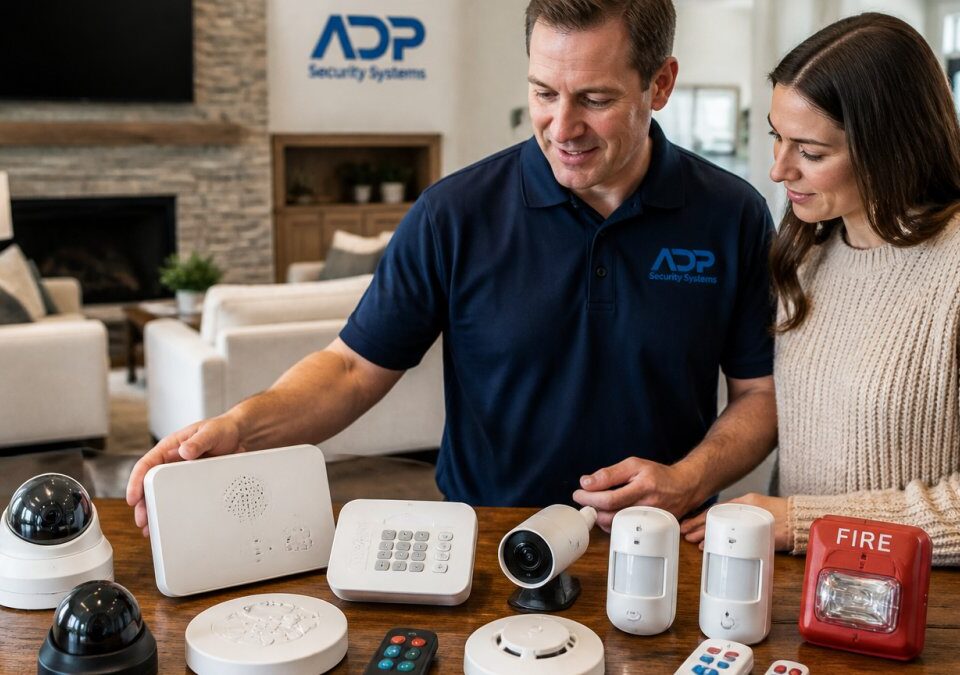
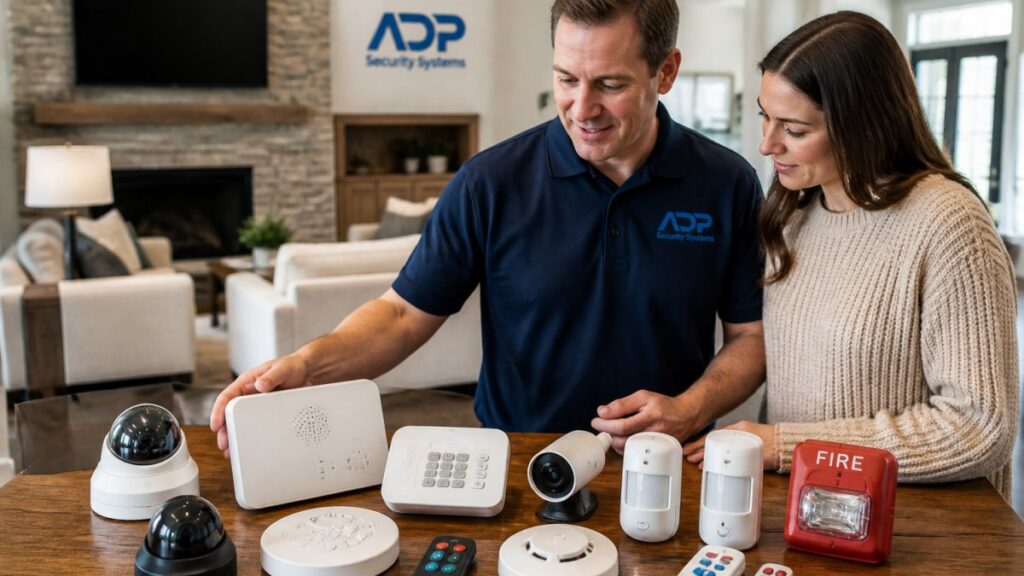
At ADP Security Systems, we have spent more than 30 years installing alarms, cameras, and access control across South Carolina homes.
Consider the basics. A deadbolt left unlocked is decoration. An alarm system disarmed and forgotten during a weekend trip does nothing at all.
The gear sets your ceiling. Your culture sets your floor.
Below, we break down how to evaluate your own home security culture, room by room, person by person, with a repeatable checklist you can run every season.
But first, here is what most guides get wrong: they treat security as a purchase, not a practice.
Equipment defines what your home can do. Culture defines what it actually does. Evaluate the second before you upgrade the first.
How to Run a Home Security Risk Assessment Room by Room
A home security risk assessment is a structured walk-through of your property that identifies weak entry points, blind spots, and habits that raise break-in risk. The goal is a written list of security gaps you can rank and fix.
Run it twice: once in daylight and once after dark. The two walks reveal different problems.
Doors, Deadbolts, and Locks
Start outside and work in. Check every exterior door for three things:
- Strike plates: A short screw is a short delay. Long screws into the frame make kicking far harder.
- Lock type: Deadbolts with a solid bolt throw beat spring latches every time.
- Spare keys: A hidden key under the mat or in a fake rock is a known hiding place burglars check first.
Changing locks after a move-in is not paranoia. You do not know who else holds a copy. The same applies after a breakup, a roommate change, or any lost key.
Windows, Entry Points, and Visibility
Windows are the second-most common entry point after doors. Walk the perimeter and ask:
- Are ground-floor windows locked, including the ones you never open?
- Do window air units or trellises give a climbable path to upper floors?
- Can a person at the street see into your home, or does overgrown landscaping create cover?
Visibility cuts both ways. Trim shrubs below window height so neighbors and passersby can see activity. Keep a porch light on a timer so the entry stays lit without you thinking about it.
Photograph each window and door from the outside. Looking at the photos later shows what a stranger sees, which is very different from what you see standing inside.
Your Home Security Assessment Checklist: What to Score and Why
A home security assessment checklist turns a vague feeling of “we should be safer” into a scored list you can act on. Score each item 1 to 5, where 1 means “not done” and 5 means “handled and habitual.”
Use this as your starting structure:
| Area | What to Score | Why It Matters |
|---|---|---|
| Exterior doors | Deadbolts, strike plates, frame strength | First target for most break-ins |
| Windows | Locks, climbable paths, sightlines | Second most common entry point |
| Lighting | Porch light, motion lights, timers | Removes cover after dark |
| Alarm system | Armed status, sensor coverage, monitoring | Detection and response |
| Valuables | Storage location, hiding places | Limits loss if entry happens |
| Occupancy cues | Mail, packages, lights, cars | Makes an empty house look lived in |
| Household habits | Lock-up routine, who checks what | The behavior layer |
Score honestly. A 5 you have not actually verified is a 1 with better marketing.
Add up your scores per area. The lowest-scoring rows are your priorities, not the ones that feel most urgent. Most households over-invest in cameras and under-invest in door hardware and routine.
Run the same checklist every season. The score becomes a security report you can compare over time.
Building a Household Security Culture Across Every Family Member
Security habits only work if everyone in the house can follow them, and one speech repeated until it stops landing does not get you there.
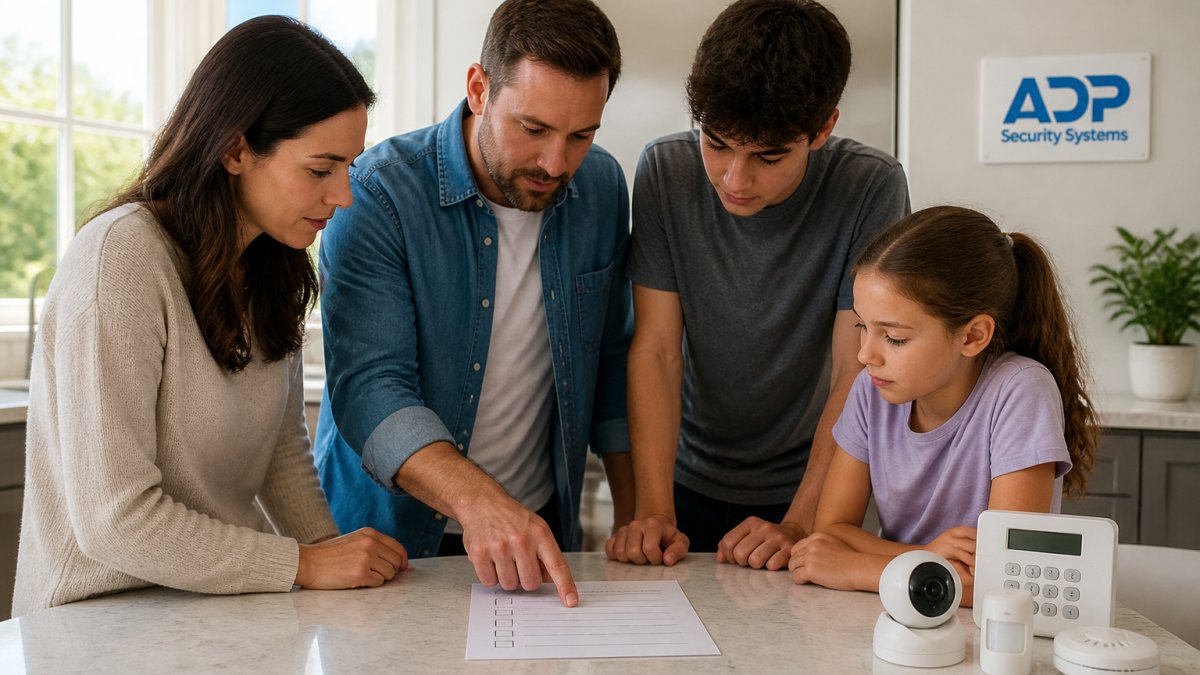
Start with a one-page household security agreement. Write down the lock-up sequence, the alarm code policy, who to call in an emergency, and where the safe room is. Post it inside a closet door or on the inside of the pantry.
Then split the work by role and by capability:
- Adults: Own the nightly lock-up sequence, the alarm codes, and the maintenance calendar. One adult should be the primary owner and one the backup, so a late shift or a trip does not leave the routine undone.
- Teenagers: Learn the alarm code, the door-check habit, and what to do if a stranger knocks or a package looks tampered with. Give them a specific job, such as checking ground-floor windows before bed, so the habit has a home.
- Children: Keep it concrete. They should know the safe room, how to call 911, and the rule that they never open the door alone. Practice the routine once a season so it is familiar rather than frightening.
- Older adults: Focus on accessibility. A deadbolt that is hard to turn, a keypad placed too high, or a camera app with tiny text will get bypassed. Choose hardware and routines that match grip strength, vision, and comfort with technology, and write down the steps in large print if needed.
- Roommates: Treat a new roommate like a new employee. Walk through the routine, change the alarm code, and add them to the written agreement. The same applies when a roommate leaves.
- Guests and sitters: Give them a written one-page routine, not a verbal handoff. Include the Wi-Fi guest network name, the alarm code they are allowed to use, and the number to call if something goes wrong.
- Caregivers: If a caregiver has regular access, decide in advance which codes and keys they hold, how those are revoked when the arrangement ends, and what they are expected to check. A caregiver who is not part of the plan becomes an unmonitored entry point.
Digital habits belong in the same conversation. Smart doorbells, connected locks, and alarm apps all need unique passwords and two-factor login. A shared family password is a security gap wearing a friendly face.
Get a Free Security Assessment →
The most common mistake is assuming everyone knows the plan. They do not.
Home Security Best Practices That Actually Hold Up in Daily Life
Most home security best practices fail for one reason: they demand attention you do not have at 11 p.m. after a long day. The practices that survive are the ones built into routine.
Start with the lock-up sequence. Pick a fixed order, say front door, back door, garage, windows, alarm. Do it the same way every night. Repetition beats willpower.
Then handle occupancy cues, which are the cheapest security you own:
- Pause mail and package delivery when you travel.
- Put interior lights on timers so the house looks active.
- Ask a neighbor to park in your driveway occasionally.
- Leave a radio or TV on a timer during longer trips.
Keep valuables out of the master bedroom closet and dresser drawer. Those are the first places a burglar looks. A safe bolted to a floor joist in an unexpected spot beats a jewelry box in the obvious room.
Posting vacation photos in real time tells the internet your house is empty. Post them after you get home. The same goes for “home alone all week” updates.
Home Security System Maintenance: The Habit Nobody Keeps
Alarm systems and cameras fail quietly. A dead sensor battery, a camera with a smudged lens, or a monitoring connection that dropped weeks ago will not announce itself.
Set a maintenance rhythm:
- Monthly: Test the alarm panel and confirm monitoring is active.
- Quarterly: Walk-test motion sensors and check camera feeds.
- Twice a year: Replace backup batteries and clean camera lenses.
- Annually: Review your full system with your provider.
Customizable maintenance schedules matter here. A household with pets, frequent guests, or a home office has different needs than a quiet retirement home. One fixed schedule for every property is how maintenance gets skipped.
If your system is older, ask whether it still fits your wiring and your habits. A partial upgrade is often smarter than a full rip-and-replace.
How to Measure Behavior and Track Improvement Over Time
You cannot manage what you do not measure, and security culture is no exception.
Run the review on a fixed cadence, once a month for a quick check and once a quarter for a full walk-through. Keep it short enough that it actually happens.
A simple monthly habit log tracks three things:
- Lock-up completion: Did the full sequence happen every night? A yes or no per night is enough.
- Alarm arming rate: How many nights was the system actually armed?
- Checklist score: Your quarterly assessment total, scored 1 to 5 per area as described earlier.
Plot them. A flat line means the culture is holding. A drop means something changed, a new roommate, a schedule shift, a broken sensor, or a routine that stopped being practical.
For a fuller review, add a short issue log. Every time someone notices a problem, such as a loose strike plate, a dead sensor battery, a package left on the porch, or a guest who was not briefed, write it down with the date and who owns the fix. Then track two indicators that matter more than any single score:
- Unresolved vulnerabilities: How many open items are older than 30 days? A growing list means the review is producing findings but not fixes.
- Time to address reported issues: How long does it take from report to resolution? A household that closes issues in a week has a working culture; one that lets them sit for a season does not.
Assign an owner to every item. A finding without an owner is a wish.
Review the numbers once a quarter and adjust the plan. If lock-up completion drops after a schedule change, change the routine rather than blaming the people.
For context on property crime patterns in your area, the FBI’s Uniform Crime Reporting data is a useful reference, and guidance from the National Crime Prevention Council reinforces the same point: prevention is behavioral as much as physical.
Measure routines, not intentions. A household that tracks lock-up completion, arming rate, and time-to-fix will spot a fading culture long before a break-in does.
Frequently Asked Questions
What does home security culture mean?
Home security culture is the set of habits, routines, and shared expectations a household follows to protect itself, separate from the equipment installed on the walls. It covers whether doors and windows actually get locked, who checks the porch light, how packages are handled, and whether everyone knows what to do when an alarm sounds. A household can own a full alarm system and still have a weak security culture if nobody follows through. Evaluating your home security culture means looking at behavior first, then matching equipment to it.
How often should you review your home security?
A full home security risk assessment once a year works for most households, with a quick walkthrough every season and after any major change such as a move, a new roommate, a renovation, or a job that shifts your daily schedule. Pair the annual review with home security system maintenance so hardware and habits get checked at the same time. Write down what you find each time. A short written record turns a one-off inspection into a repeatable review you can compare year over year.
What are common home security habits that put a household at risk?
The most frequent ones are leaving doors unlocked while home, hiding a spare key in an obvious spot, posting travel plans on social media before a trip, letting mail and packages pile up, and ignoring a beeping panel instead of fixing it. Another is treating the alarm as the whole plan and never practicing what to do when it triggers. Each of these shows up in a home security assessment checklist because they are behavior gaps, not equipment gaps, and they are usually free to fix once someone names them.
Should you hire a professional to assess your home security system?
A professional assessment is worth it when you want an outside set of eyes on entry points, lighting, alarm placement, and monitoring coverage, especially in older homes with wiring already in the walls. A technician can confirm whether existing equipment still works with current systems and flag gaps a homeowner might walk past every day. Do the household behavior review yourself first, then bring in a professional for the hardware and monitoring side. Many companies offer a free security assessment as a starting point.