Medical Pendant Feedback Families Can Trust
September 13, 2026
Cellular Versus Landline Alarms Compared
September 17, 2026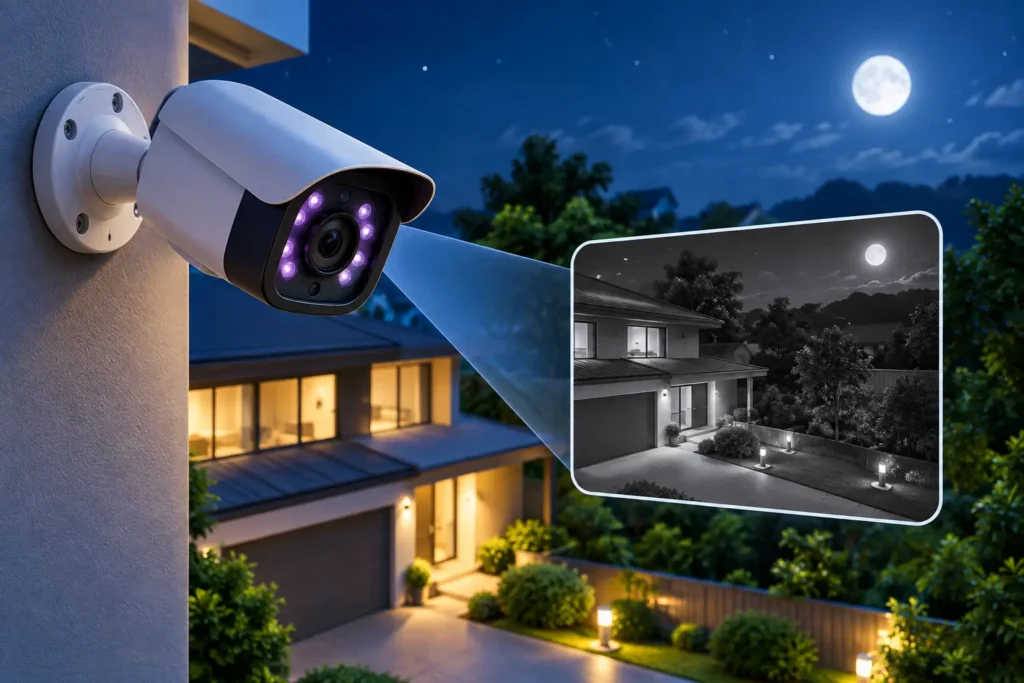
A camera that records a dark, grainy shape near your driveway may confirm that something happened. It may not tell you who was there, what they were doing, or which way they went. So, do cameras work at night? Yes, but the quality of the result depends on the camera technology, available light, installation location, and how the system is set up.
For South Carolina homeowners and business owners, nighttime coverage is often the coverage that matters most. Deliveries arrive after sunset, employees leave late, side entrances are quiet, and an attempted break-in is more likely to happen when fewer people are nearby. A properly designed security camera system can give you useful visibility during those hours. A poorly placed camera can create a false sense of security.
Do Cameras Work at Night? Yes, With the Right Technology
Most modern security cameras are built to operate around the clock. The question is not simply whether a camera can see after dark. It is whether it can capture clear enough video for the job you need it to do.
Many cameras use infrared illumination, commonly called IR or night vision. Small infrared LEDs around the lens project light that people cannot see, while the camera sensor can. When the surrounding area gets dark, the camera switches into a black-and-white night mode and uses that infrared light to create an image.
Infrared is effective for common coverage needs such as watching a porch, driveway, hallway, storage area, or fenced entry point. It can reveal motion and provide a clear view of someone moving within the camera’s intended range. The image is typically black and white because the camera is working with infrared light rather than the visible light needed for color video.
Other cameras are designed for low-light color recording. They use highly sensitive image sensors, wide apertures, built-in white light, or a combination of these features to retain more color detail at night. Color can be valuable when you need to distinguish a vehicle color, clothing, packaging, or other details. However, color night vision usually needs some amount of nearby ambient light, such as streetlights, exterior fixtures, or a camera-mounted light.
Neither option is automatically better. IR may be the right choice for discreet coverage of a dark area. Color night vision may be more useful at a well-lit customer entrance or a driveway where vehicle details matter. The best choice follows the risks at the property.
What Night Cameras Can and Cannot See
Nighttime video has limits. A camera can be functioning correctly and still produce footage that is not ideal for identification. Distance is a major factor. A wide-angle camera may show that a person approached a building, but it may not capture a usable facial image from 50 feet away.
Lighting conditions also change quickly. A vehicle’s headlights can wash out part of the image. A bright porch light directly behind a subject can turn that person into a silhouette. Heavy rain, fog, and blowing insects can reflect infrared light back toward the lens. Spiderwebs close to the camera can create distracting bright streaks that trigger motion alerts.
Windows cause another common problem. An indoor camera pointed through glass may work during the day, but its own infrared light can reflect off the window at night. The result is often a bright glare instead of a view outside. For dependable nighttime exterior coverage, the camera generally needs to be installed outside in a protected location.
It also helps to separate detection from identification. Detecting activity means seeing that someone entered an area. Identification means capturing enough detail to recognize a face, read a logo, or possibly see a license plate. A single camera may handle detection well without being positioned or configured to identify a person. Properties that need both outcomes often need more than one camera angle.
Placement Matters as Much as the Camera
A high-quality camera installed in the wrong place will not deliver the protection you expect. The goal is to capture people as they approach, not just after they have passed through an area.
For a home, that often means coverage at the front door, driveway, rear door, garage, and any less-visible side access. A camera should be mounted high enough to discourage tampering but not so high that it records only the tops of heads. At a front entry, a doorbell camera may show a visitor clearly, while a second camera can provide a broader view of the walkway and vehicles.
For a business, priorities may include customer entrances, employee doors, loading areas, cash-handling locations, inventory rooms, parking lots, and gates. Cameras near a building’s perimeter should be aimed to capture the direction a person is likely to travel. A camera overlooking a large parking lot can document activity, but additional cameras at entrances and exits may provide more useful identifying detail.
Avoid pointing cameras directly at bright lights or toward the rising or setting sun when possible. At night, place exterior lighting so it supports the camera rather than shines into the lens. A modest, properly aimed light near an entry can improve color video, help visitors feel safer, and make motion more visible without flooding the entire property with glare.
Choosing Night Coverage for Your Property
Before selecting equipment, consider what you need to know after an event. If your primary concern is knowing when someone approaches the back door, an infrared camera with reliable motion alerts may be appropriate. If you need to monitor a commercial receiving area after hours, you may need wider coverage, clearer low-light detail, and video retention that supports an investigation.
A few practical questions can guide the design:
- Which doors, paths, and outdoor areas are most vulnerable after dark?
- How far away will a person or vehicle be from the camera?
- Is there existing exterior lighting, and does it create glare?
- Do you need to recognize people, monitor activity, or both?
- Who needs access to live video and recorded clips?
Remote smartphone access can be especially useful when you are away from home, closing a business, or responding to an alert. Still, alerts should be configured carefully. A camera aimed at a busy street, a swaying tree, or an active sidewalk can produce too many notifications. Motion zones and sensitivity settings help focus attention on the areas that matter.
Night Cameras Work Best as Part of a Security Plan
Video is powerful, but a camera by itself does not stop an intrusion. For many properties, the strongest approach combines visible cameras with intrusion detection, professional alarm monitoring, secure locks, access control, and exterior lighting. Cameras provide awareness and evidence. Alarm systems can provide immediate notification when protected doors, windows, or interior areas are breached.
For commercial facilities, access control can add another useful layer by limiting who can enter specific doors and creating a record of authorized activity. When an access event, alarm signal, and camera clip can be reviewed together, a business has a clearer picture of what occurred.
For homeowners, a professionally installed system can reduce the burden of trying to manage multiple apps, blind spots, and device settings alone. ADP Security Systems helps customers throughout South Carolina assess the property, select appropriate equipment, and place cameras where they can provide meaningful coverage after dark.
Keep Night Video Clear Over Time
Night performance needs occasional attention. Clean the camera lens gently when pollen, dust, or rain spots build up. Trim landscaping that grows into the viewing area, and look for new light sources that may cause glare. If a camera begins sending frequent nighttime alerts, inspect it for insects, spiderwebs, or branches moving close to the lens.
It is also wise to review a few nighttime clips after installation and again when seasons change. A camera view that works well in winter can be blocked by summer foliage. Confirm that your recording settings retain footage for an appropriate period and that the people who need access can use the system when it counts.
The right nighttime camera setup should do more than show a shadow crossing the yard or parking lot. It should give you a clearer view of the places and moments that matter, so you can rest easier after the lights go out.