Fire Safety for South Carolina Homes and Businesses
August 12, 2026
Monitored Versus Unmonitored Alarms Compared
August 14, 2026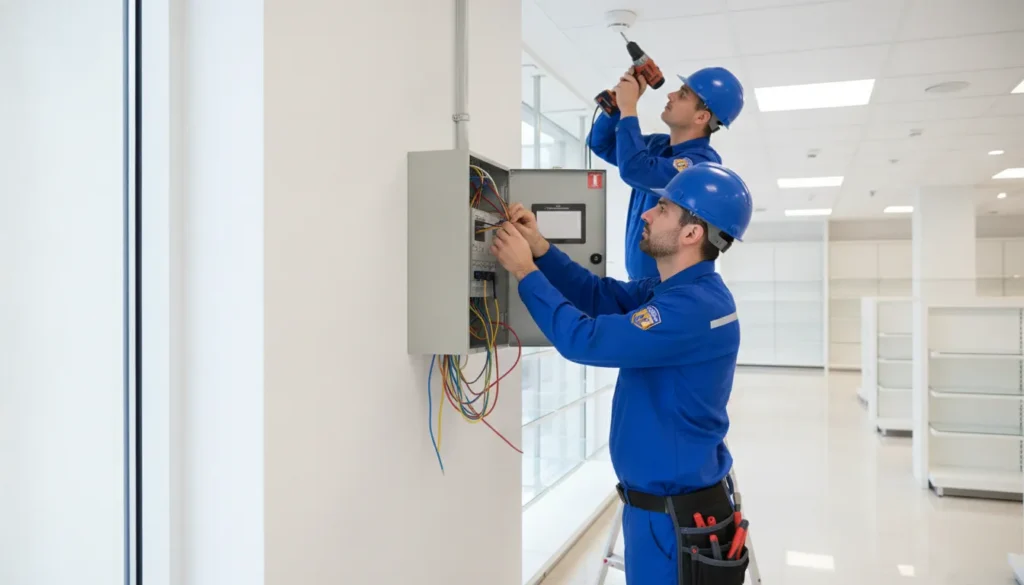
For a South Carolina business, a fire alarm is more than a collection of detectors on the ceiling. It is a life-safety system that must identify developing hazards, alert occupants, support emergency response, and remain ready through routine testing and maintenance. The right design also needs to fit the building, its occupants, and applicable code requirements.
A commercial fire alarm system combines detection, notification, control equipment, and often off-site monitoring to warn people about fire conditions and help coordinate a fast response. NFPA 72 provides the national fire alarm and signaling standard, while local requirements guide how systems are designed, installed, inspected, and maintained.
to discuss your facility’s fire alarm needs.
Understanding what these systems do, how their main categories differ, and which components your building needs makes code-compliance decisions far easier. Start with the basic role of the system, then consider how it protects your property in real operating conditions.
What Is a Commercial Fire Alarm System?
A commercial fire alarm system is an integrated life-safety network that detects signs of fire, evaluates the signal. Alerts people in the building, and communicates with other protective equipment or an off-site monitoring station. Unlike a single residential smoke alarm, it is designed around the building’s layout, occupancy, hazards, and emergency procedures.
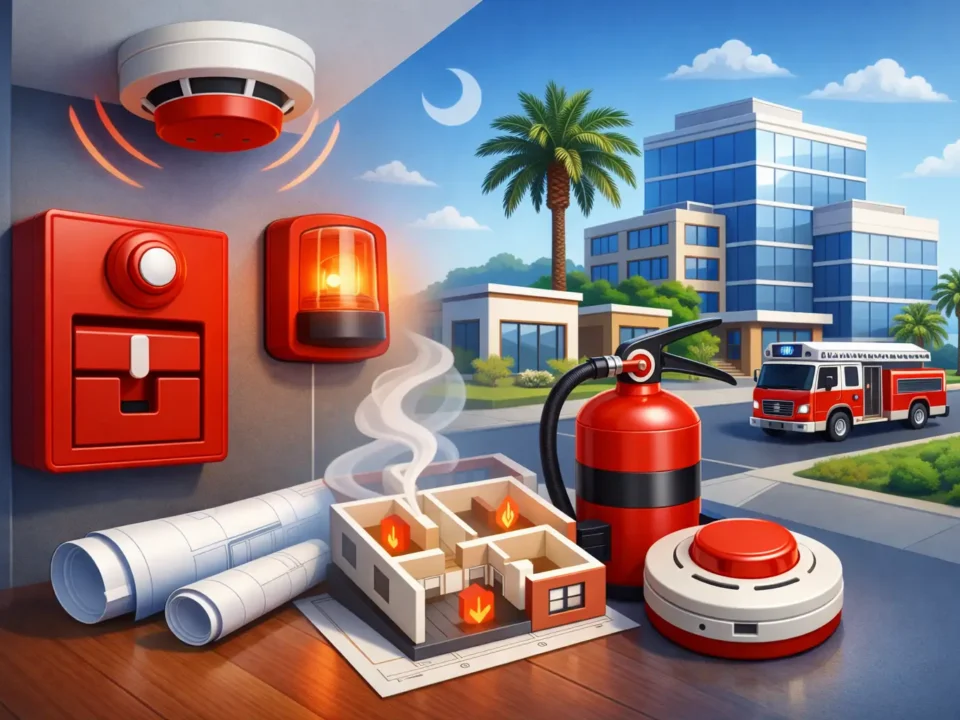
Its purpose is early action. Smoke, heat, and flame detectors identify changing conditions, while the control panel processes those signals and activates notification devices. Audible horns, speakers, strobes, and other appliances help occupants recognize an emergency and begin evacuation. The system may also signal connected fire-protection equipment, such as fire doors or suppression controls, when the design calls for that integration.
Fire detection and alarm systems are considered essential components of a building fire-protection strategy because they provide warning before a developing fire becomes more difficult to escape or control. The specific design must be reviewed against the building’s use and applicable requirements, rather than selected solely by price or device count. Building fire-protection guidance identifies detection and alarm as central parts of protecting occupants.
A compliant design follows recognized standards. NFPA 72 is the national standard for fire alarm and signaling systems, covering requirements that influence system design, installation, performance, testing, and documentation. South Carolina businesses should also account for locally adopted fire and building codes, occupancy requirements, and the authority having jurisdiction. You can review the NFPA 72 standard when evaluating a proposed system.
What does a commercial fire alarm system include?
Although each installation is different, the network typically brings together:
- Detection devices: Smoke, heat, or flame sensors identify conditions associated with a developing fire.
- A control panel: The system’s central processor receives device signals, displays status, and manages alarm outputs.
- Notification appliances: Horns, speakers, strobes, or combination devices warn occupants using sound, light, or both.
- Supervision and communication: The system reports faults and alarm events locally, with optional off-premises monitoring for a coordinated response.
Commercial fire alarm systems range from conventional designs that group devices into zones to intelligent systems that provide more detailed device-level information. Larger or more complex facilities may use networked systems to share information across multiple areas or buildings. The right category depends on the facility’s risk profile, size, layout, and response plan, not on a one-size-fits-all label.
Conventional vs Addressable Commercial Fire Alarm Systems
The right commercial fire alarm system depends on the building’s size, layout, occupancy, and operational needs. Conventional and addressable systems both connect detection devices to a control panel, but they communicate differently. That difference affects how quickly staff and responders can identify an incident, how technicians troubleshoot faults, and how easily the system can expand as a facility changes.
Conventional systems group devices into zones. When an alarm activates, the panel identifies the affected zone, such as a floor or wing, rather than naming the individual detector. This approach can be a practical fit for smaller buildings with straightforward layouts and fewer detection requirements. It may also offer a lower initial equipment cost, although the total project cost still depends on wiring, installation, code requirements, and future maintenance.
| Feature | Conventional | Addressable |
|---|---|---|
| Device identification | Identifies the zone where an alarm or fault occurs. | Pinpoints the specific detector or device reporting an alarm or fault. |
| Wiring and diagnostics | Uses zone-based circuits with more limited device-level information. | Provides device-level status and more detailed diagnostics for troubleshooting. |
| Cost | Often has a lower upfront equipment cost for simple installations. | Often costs more initially, but can provide better information and flexibility. |
| Best-fit building size | Smaller buildings with uncomplicated layouts and fewer zones. | Medium to large or complex facilities that need detailed location information. |
Addressable, or intelligent, systems assign each device its own identity. The control panel can indicate the exact location of a fire or fault, which helps occupants, facility teams, and emergency responders move more directly to the problem. More precise information can reduce response time and simplify maintenance because technicians do not have to search an entire zone to find a malfunctioning device. Intelligent systems can also support peer-to-peer networking, a useful capability for large facilities with multiple panels or interconnected areas.
Neither option is automatically best for every property. A qualified designer should evaluate the building plan, hazard profile, occupancy, expansion plans, and applicable South Carolina requirements before recommending a system. The goal is a commercial fire alarm system that provides dependable detection and clear information without adding unnecessary complexity.
Key Components of a Commercial Fire Alarm System
A dependable system is more than a collection of alarms. Each component has a defined role, and the parts must be selected, positioned, and connected for the building’s layout, occupancy, and acoustic conditions. The core pieces include the following.
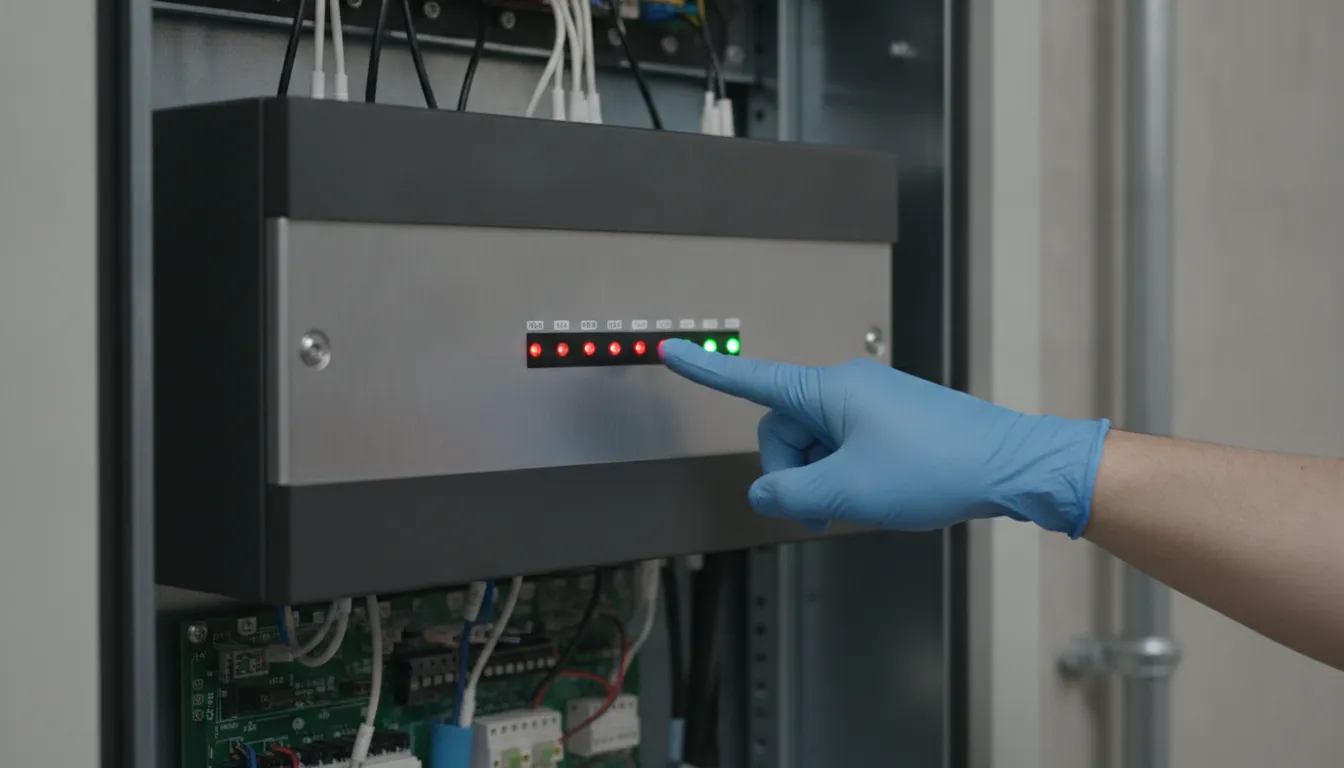
The fire alarm control panel
The control panel is the system’s brain. It receives and processes signals from initiating devices, such as smoke, heat, and carbon monoxide detectors. When a fire condition is identified, the panel evaluates the input and triggers programmed outputs, including notification appliances, building controls, and monitoring signals. It also reports certain faults, such as wiring or power problems, so they can be addressed before an emergency.
Panel capabilities vary by system type and building size. A properly designed installation makes the panel accessible to authorized personnel while protecting it from damage and providing the information responders need.
Detection devices for different hazards
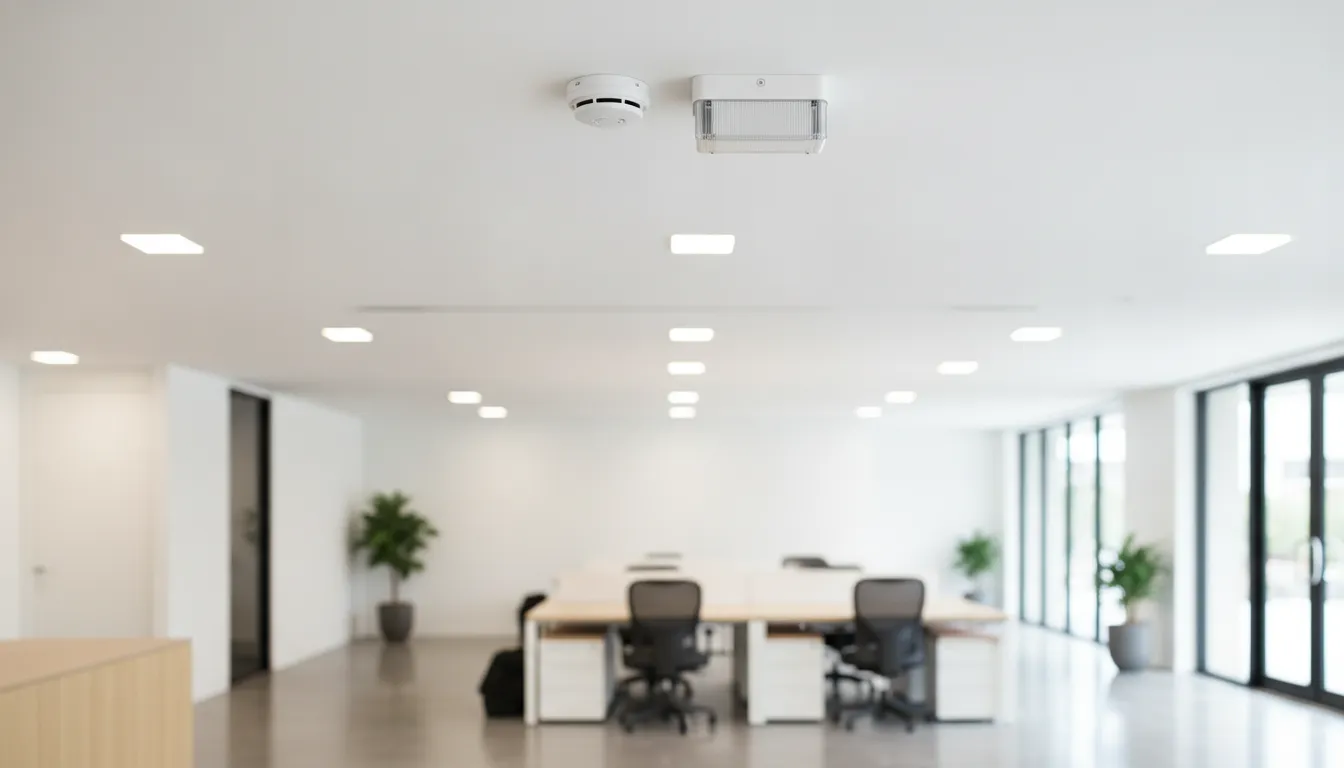
Detection devices identify conditions that may indicate a fire. Smoke, heat, and carbon monoxide detectors serve different purposes, so a commercial fire alarm system should not rely on one device type throughout every space. Device selection depends on the room’s use, ceiling height, environmental conditions, and expected fire risks.
- Smoke detectors can identify smoke during the early stages of many fires.
- Heat detectors may be appropriate where dust, steam, or other conditions could create unwanted smoke-detector alarms.
- Carbon monoxide detectors help identify a dangerous, otherwise invisible gas where the building’s risks and applicable requirements call for them.
Audio and visual notification appliances
Notification appliances tell occupants what is happening and help them respond. Horns, speakers, strobes, and combination devices provide audible and visual cues. The goal is not simply to make an alarm loud. Under NFPA 72, notification must be intelligible for the building’s acoustic environment. A noisy production area, open warehouse, office, school, or sleeping area may require different notification strategies, device placement, or sound levels.
Specialty detection for HVAC and sensitive spaces
Some areas need detection beyond standard room devices. Duct smoke detection monitors air moving through commercial HVAC systems and can help identify smoke circulating through the building’s air supply. Depending on the design, HVAC equipment may also be controlled when smoke is detected.
Aspirating smoke detection takes air samples through a pipe network and analyzes them for smoke. This approach can be useful in sensitive environments where very early warning is important, or where access, airflow, or ceiling conditions make conventional detector placement difficult.
For a closer look at commercial fire alarm systems in South Carolina, review the building-specific design and service options available from ADP Security Systems.
What Type of Fire Detection Does Your Building Need?
The right detection strategy depends on what could burn, how quickly a fire might develop, and how people use the building. A well-designed commercial fire alarm system combines detection methods instead of treating every room the same. Smoke, heat, and flame detectors each respond to different fire conditions, while carbon monoxide detection addresses a separate life-safety hazard.
Start with the building’s occupancy, ventilation, ceiling height, equipment, and response requirements. A qualified designer can then place devices where they provide useful coverage without creating unnecessary nuisance alarms.
- Smoke detectors: A practical choice for offices, corridors, classrooms, retail areas, and other spaces where a developing fire is likely to produce smoke before significant heat. Intelligent models with UL 268 certification are designed to improve detection accuracy while helping minimize false alarms. Learn more about intelligent detection technology.
- Heat detectors: Useful in locations where smoke, dust, steam, or vehicle exhaust could make smoke detection unreliable. Warehouses, kitchens, mechanical rooms, and unfinished areas may require heat-based detection, with the specific device selected for the environment.
- Carbon monoxide detection: Consider CO detection near fuel-burning equipment, parking areas, kitchens, boilers, and sleeping or care areas where occupants may be exposed to an invisible, odorless hazard. CO detection supplements fire detection rather than replacing smoke or heat devices.
- Flame detectors: Designed for high-risk areas where an open flame could develop rapidly, such as certain industrial processes, fuel-handling areas, or specialized equipment spaces. They require careful positioning and a clear view of the protected hazard.
Match detection to the occupancy and hazard
Offices and retail: Smoke detection, notification appliances, and strategically placed manual pull stations are often central to the design. Open layouts, storage rooms, and tenant improvements still need review so coverage is not interrupted by walls or changed ceiling configurations.
Restaurants: Cooking produces heat, smoke, and airborne contaminants, so device selection and placement need to account for the kitchen environment. Smoke detection may be more appropriate in adjacent areas, while heat detection and separate suppression interfaces may be considered around cooking equipment.
Warehouses: High ceilings, rack storage, dust, temperature changes, and combustible materials can affect detector performance. Heat detection, beam or specialty detection, and carefully planned zoning may be appropriate depending on the storage arrangement and fire risks.
Medical facilities: Patients may not be able to evacuate independently, making early, reliable notification especially important. Smoke detection is common, but rooms with sensitive equipment or unusual airflow may benefit from advanced designs.
When advanced detection is worth considering
Duct smoke detectors monitor air moving through HVAC systems and can identify smoke circulating through the building’s air supply. They support the broader fire strategy by helping control smoke movement, but they are not a substitute for room-level detection. Duct smoke detection is one option for commercial HVAC applications.
Aspirating smoke detection actively samples air through a pipe network, making it useful for sensitive or high-value environments where very early warning matters. Data centers, telecommunications rooms, archives, clean areas, and spaces with difficult access may justify this approach. The goal is not to install the most advanced detector everywhere. It is to select the technology that fits the hazard, occupancy, and consequences of delayed detection.
Monitoring, Inspection, and Maintenance Requirements
A commercial fire alarm system must remain ready after installation, not simply pass an acceptance test and sit untouched. Monitoring, scheduled inspection, functional testing, and documented maintenance work together to keep signals visible, equipment operational, and the building prepared for an emergency.
Use monitored off-premises signaling
Central-station monitoring: ADP provides monitoring through a UL 827 certified central station. The station supervises signals from the building when the premises are unattended, including alarm, supervisory, and trouble conditions. When an alarm signal is received, monitoring helps bridge the fire alarm system to the local fire department for rapid response. This off-premises connection adds an important layer of protection beyond relying on someone inside the building to hear an alarm and make a call. Learn more about commercial fire alarm monitoring and how monitored systems compare with unmonitored systems.
Follow the required inspection and testing schedule
Local requirements matter: Inspection and testing schedules are often established by local fire ordinances, the authority having jurisdiction, and the building’s occupancy requirements. Owners and property managers should confirm the applicable schedule for their South Carolina location rather than assuming one interval applies to every facility. Regular inspection helps identify blocked devices, damaged equipment, wiring problems, communication failures, and other conditions that can compromise performance or affect an operating permit.
- Inspection: Review the condition, placement, accessibility, and status of system components.
- Functional testing: Operate sensors, signaling appliances, and control-panel functions to confirm that inputs and outputs work as intended.
- Monitoring verification: Confirm that signals reach the supervising station and that communication paths remain active.
- Record review: Compare current results with prior service records and document any corrective work.
For a practical preparation guide, use this fire alarm inspection checklist for South Carolina property managers.
A typical service sequence looks like this:
- Read the system history and confirm the required test scope for your occupancy and jurisdiction.
- Test initiating devices, including smoke, heat, and manual pull stations across every protected zone.
- Verify notification appliances and confirm audible and visual output meets the building’s intelligibility needs.
- Confirm monitoring paths and that alarm and trouble signals reach the supervising station.
- Document results, log deficiencies and corrective actions, and retain the report with building records.
Maintain the equipment between inspections
Test the whole system: Maintenance should include functional checks of smoke and heat sensors, manual initiating devices, horns, strobes, notification circuits, and the control panel. The goal is not just to confirm that one device activates, but to verify that the complete sequence works from detection through notification and monitored communication. Battery backup power also requires periodic inspection and testing so the system can continue operating if utility power fails.
Keep compliance records: Testing reports provide evidence of system functionality, completed service, deficiencies found, and corrective actions taken. Retain these reports with the building’s fire-safety records, making them available for the authority having jurisdiction, inspections, insurance documentation, or occupancy-related reviews. Fire protection systems require regular maintenance and testing to remain functional and compliant, as noted by the San Diego Fire-Rescue Department.
Qualified technicians can identify problems before they become an emergency failure. A consistent service relationship also gives owners a clear record of what was tested, what changed, and what still needs attention.
NFPA Code Compliance for Greenville and Upstate SC
Compliance starts with the applicable code framework. A commercial fire alarm system in Greenville or elsewhere in Upstate South Carolina must be designed. Installed, tested, and maintained for the building, occupancy, and jurisdiction where it operates. NFPA 72, the National Fire Alarm and Signaling Code, provides the national standard for fire alarm and signaling system safety provisions. NFPA 72 compliance requirements are therefore a central reference during system planning and service.
NFPA 1, the Fire Code, often references NFPA 72 for fire alarm requirements within a jurisdiction’s broader fire code. That relationship matters because a property owner should not treat a fire alarm installation as a standalone equipment purchase. The system must fit the building’s life-safety strategy, local enforcement expectations, and required inspection process.
What Greenville businesses should account for
Local requirements can affect the work beyond the national standard. Fire alarm inspection and testing are commonly required by local ordinances and may be tied to continued building operation permits. Greenville-area commercial properties should maintain a clear record of inspections, testing, repairs, and certifications, especially when a property changes ownership, undergoes renovation, or changes occupancy.
- System design: Device placement, notification coverage, initiating devices, and control equipment should match the building’s layout and use.
- Installation: Components should be installed according to the approved design and applicable NFPA requirements, not simply positioned for convenience.
- Inspection and testing: Required devices and signaling functions should be checked on the schedule established by applicable codes, ordinances, and the authority having jurisdiction.
- Documentation: Keep inspection reports, testing results, service records, and corrective-action documentation available for property and fire-safety reviews.
Greenville, SC businesses also need to account for local fire-safety standards and inspection expectations. For a deeper look at the specific requirements that apply in this region, review our guide to NFPA 72 fire alarm requirements in South Carolina. ADP Security Systems provides commercial fire alarm inspection services in the Greenville area, helping property managers identify service needs before an issue becomes a compliance or operational problem.
Why certified service matters
Code compliance depends on competent service, not just compliant equipment. Fire protection systems should be serviced by certified professionals who understand regional and national standards. An unqualified modification can create coverage gaps, nuisance alarms, documentation problems, or failures during a required test.
ADP approaches compliance as an ongoing responsibility. The Greenville-based team provides commercial fire alarm design, installation, and maintenance through factory-trained technicians. That local continuity helps businesses keep the system aligned as the property changes, while supporting the inspection and documentation requirements that accompany ownership of a life-safety system.
How to Choose the Right Commercial Fire Alarm System Partner
The provider you choose affects more than the initial installation. A dependable partner helps translate your building’s occupancy, layout, equipment. And operating requirements into a commercial fire alarm system that can be inspected, maintained, and relied on when people need it most. The right company should remain accountable after the panels and devices are installed.
Start with the provider’s qualifications. Ask for clear evidence of the certifications and training that support its work. Fire protection systems should be serviced by qualified professionals who understand applicable regional and national standards. A provider should be comfortable explaining who designs the system, who performs the installation, and who handles testing, repairs, and ongoing service.
- Confirm factory-trained technicians. Factory training gives technicians a stronger foundation for installing, diagnosing, and servicing the equipment they support. Ask whether the same level of technical capability is available for future maintenance, not only for the initial project.
- Verify monitoring credentials. If your system is monitored, ask whether signals are handled through a UL 827 certified central station. UL 827 certification is an important indicator that the monitoring operation is designed for reliable supervision and emergency response.
- Look for full lifecycle capability. Design, installation, inspection support, maintenance, and repairs should work together. A provider that only installs equipment may leave property managers coordinating separate companies when a device fails or a code question arises.
- Request documentation and a service plan. Your partner should explain inspection intervals, functional testing, battery checks, reporting, and how deficiencies are corrected. Ask how service records will be delivered and retained for your property.
- Assess local experience. A regional provider is more likely to understand the practical expectations of local authorities, inspectors, property owners, and businesses operating across South Carolina.
Choose a partner that can explain its recommendations. Be cautious of proposals that list devices without explaining why their placement, detection method, notification appliances, and monitoring approach fit your building. A credible provider will discuss design assumptions, the path from an alarm signal to response, and the maintenance required to keep the system functional and compliant.
ADP Security Systems is a Greenville, South Carolina-based, family-owned provider serving the southeastern United States for more than 30 years. Its commercial fire alarm services cover design, installation, and maintenance, with work performed by factory-trained technicians and monitoring provided through a UL 827 certified central station. For a closer look at choosing the right fire alarm contractor, review the questions to ask before selecting a provider.
For a South Carolina business or property manager, that combination of technical capability, ongoing service. And regional accountability creates a stronger foundation than choosing solely on the lowest installation price. It also gives your team a clear contact when the building changes, an inspection identifies a deficiency, or service questions arise.
to review your facility’s fire alarm needs and current code obligations.
Frequently Asked Questions
What is the average cost of a commercial fire alarm system?
There is no reliable single average because cost depends on building size, occupancy, construction, existing wiring, detector locations, notification requirements, monitoring, and local approval requirements. A proper design review should account for installation, monitoring, inspection, maintenance, and future expansion rather than comparing equipment prices alone. Request a site-specific proposal after the building’s risks and code requirements are evaluated.
What are the five types of commercial fire alarm systems?
Common categories include conventional, addressable or intelligent, wireless, networked, and hybrid systems. Conventional systems group devices into zones, while addressable systems identify an individual device or location. Networked systems connect panels or facilities, and hybrid systems combine technologies. Wireless equipment can help where cabling is difficult, but the best choice depends on the building, coverage needs, reliability requirements, and approved design.
How does a commercial fire alarm system work?
Detection devices monitor conditions such as smoke, heat, or flame and send signals to the fire alarm control panel. The panel processes those inputs, activates audible and visual notification appliances, and sends an alarm or supervisory signal to the monitoring station when configured for off-premises monitoring. The system should be designed so occupants receive intelligible notification and responders can identify the affected area. NFPA 72 provides the national fire alarm and signaling code framework: NFPA 72.
What are the three types of fire alarm systems?
The broadest practical comparison is conventional, addressable, and intelligent or networked systems. Conventional designs report activity by zone, while addressable designs identify individual devices. Intelligent systems add more detailed device information and can support networking across larger facilities. These labels can overlap by manufacturer, so a qualified provider should translate the system type into actual detection, notification, monitoring, and service capabilities for your property.
Schedule a Consultation for Your South Carolina Business
A commercial fire alarm system should support your building’s layout, occupants, and compliance responsibilities. A consultation gives you a practical opportunity to discuss the right next steps for your facility with a knowledgeable security partner.