8 Pros and Cons of Wireless Security Sensors
November 22, 2026
Benefits of Unified Security Monitoring for Businesses
November 22, 2026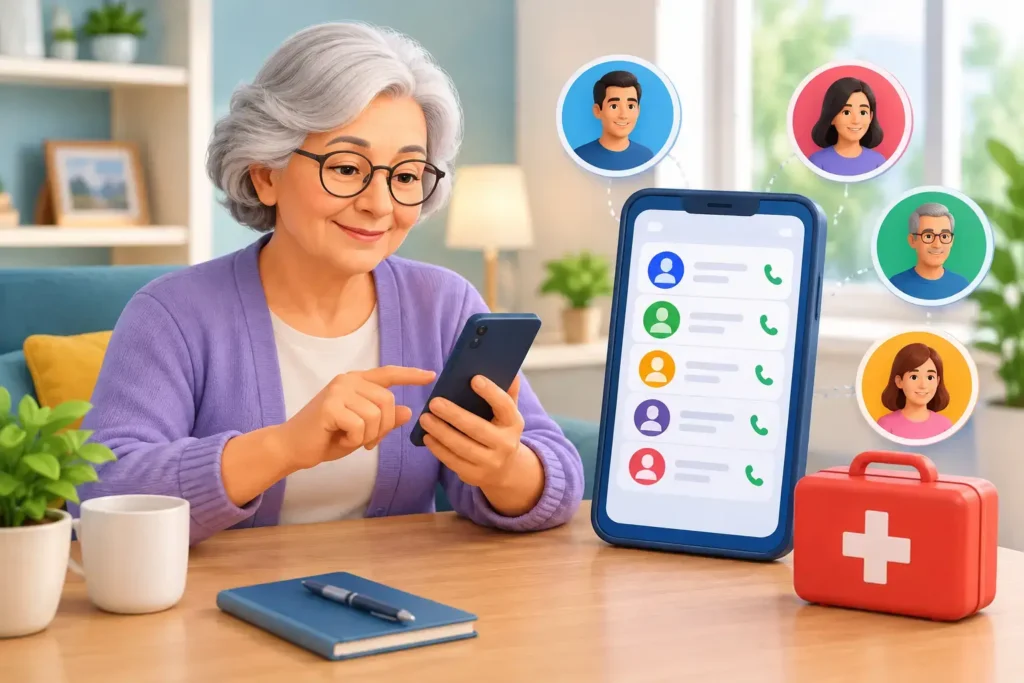
A fall in the kitchen, sudden chest pain, a medication question after hours – emergencies rarely arrive when a phone list is easy to find. The best emergency contacts seniors can keep ready are not simply names in a cell phone. They are a clear, current support plan that helps a senior, a family member, or first responders act without losing valuable time.
For older adults who live independently, the goal is not to create worry. It is to make help easier to reach. A well-prepared contact list, paired with the right medical information and a dependable way to call for assistance, can bring real reassurance to seniors and the people who care about them.
Start With 911 for Immediate Danger
Call 911 when a senior has symptoms or circumstances that may be life-threatening: chest pressure, difficulty breathing, signs of stroke, uncontrolled bleeding, loss of consciousness, a serious fall, smoke, fire, or a suspected break-in. If there is uncertainty about whether a situation is severe enough, it is generally safer to seek emergency help than to wait for a callback from a family member or doctor.
Keep the home address written beside every landline phone and in a visible location. A person experiencing confusion, pain, or panic may know their address but struggle to say it clearly. Include apartment, unit, gate, or building access details where applicable. This small step can make a meaningful difference when emergency dispatchers are trying to send help quickly.
A senior should also understand that 911 is for urgent emergencies, not routine medical advice, prescription refills, or a ride to a regular appointment. Knowing the difference helps preserve emergency resources while making sure true emergencies receive the fast response they require.
The Best Emergency Contacts for Seniors to List
A useful list combines emergency services, personal support, and medical professionals. It should be short enough to use under pressure but complete enough to cover the situations most likely to arise.
Include these essential contacts:
- 911 for police, fire, or emergency medical response.
- Two nearby personal contacts, such as an adult child, trusted neighbor, close friend, or nearby relative who can check on the home, meet responders, or provide support.
- Primary care physician and key specialists, especially a cardiologist, pulmonologist, neurologist, or other provider managing an ongoing condition.
- Preferred pharmacy, including the phone number for prescription questions or urgent refill guidance.
- Poison Control at 1-800-222-1222 for possible medication errors, accidental ingestion, or household chemical exposure.
- A medical alert monitoring center, if the senior uses a monitored personal emergency response system.
The two personal contacts should not live in the same household or rely on the same travel schedule. If one person is unavailable, working, or out of town, the second contact provides an important backup. For many South Carolina families, a trusted neighbor is particularly valuable because they can often reach the home sooner than relatives who live across town or in another county.
It also helps to name one person as the primary decision-maker and another as the backup. Family members may all want to help, but responders and medical staff need to know who can provide current information and make decisions when a senior is unable to do so.
Build a Contact Card That Works Under Stress
A list buried in a smartphone contact app is better than nothing, but it is not enough on its own. Phones run out of battery, get misplaced, or may be difficult to operate during a medical event. The most dependable approach is to keep the same information in several practical places.
Place a large-print contact card on the refrigerator, near the main phone, and in a wallet or purse. Keep another copy in a clearly marked folder near the home entrance or with medical documents. If the senior uses a smartphone, add emergency contacts to the device’s emergency information settings so they may be available from the lock screen.
Each card should include the senior’s full name, address, date of birth, primary doctor, emergency contacts, and preferred hospital. It should also identify major medical conditions, allergies, medications, mobility limitations, and communication needs. A person with hearing loss, memory concerns, diabetes, oxygen use, or a pacemaker may need responders to have this information immediately.
Avoid overcrowding the card with every health detail from the last decade. The information should be readable at a glance. A more complete medication list can be stored in the same folder, along with insurance information and copies of advance directives if the senior has them.
Keep Medical Information Current
An emergency contact plan can fail when phone numbers are outdated or medication details no longer match reality. Review the list at least twice a year, such as when clocks change in spring and fall. Review it again after a new diagnosis, hospital stay, medication change, move, or change in a caregiver’s availability.
Call the listed contacts before adding them. Ask if they are comfortable being an emergency contact and confirm the best number to use. It is also wise to explain what role they may be asked to play. One person may be able to meet an ambulance at the home, while another may be responsible for communicating with doctors or caring for a pet.
Seniors who travel between homes, spend part of the year with family, or visit a vacation property should keep location-specific information ready. A medical alert device with nationwide coverage can be especially helpful for people who want protection beyond the front door, but families should confirm how the service works in different locations and whether it includes GPS support.
Why a Medical Alert System Can Be an Essential Contact
A phone list is valuable only if a senior can reach it and make a call. That is the gap a personal medical alert system can help fill. If a fall, weakness, dizziness, or sudden illness makes it difficult to reach a phone, a wearable SOS button provides a direct way to request help.
The right system depends on the senior’s routine. A home-based device may suit someone who spends most of their time at home. A mobile device may be a better fit for an active senior who shops, visits friends, attends appointments, or travels. Automatic fall detection adds another layer of support, but it is not a replacement for pressing the button whenever help is needed. No fall detection technology identifies every fall, and false alerts can occur.
With a professionally monitored system, trained operators can communicate with the user, contact emergency services when appropriate, and notify designated family members. This is particularly reassuring for older adults who live alone, have a history of falls, or manage conditions that can worsen quickly. ADP Security Systems offers Smart Care medical alert options designed to connect seniors with emergency help at home and on the go.
Include Home Access and Safety Details
Emergency contacts should know how responders can enter the home if the senior cannot open the door. A locked door should never delay care. Families may choose a lockbox, a trusted nearby keyholder, or a monitored security solution that supports authorized access. The right choice depends on the home’s layout, the senior’s comfort level, and who is available nearby.
Make sure the primary contacts know about pets, alarm systems, gate codes, and any mobility equipment in the home. A note such as “small dog inside” or “oxygen equipment in bedroom” can help visitors and responders prepare appropriately. These details are simple, but they reduce confusion during a high-stress moment.
It is also worth considering who will handle practical needs after an ambulance leaves. Someone may need to secure the house, collect medications, contact other family members, or arrange care for a spouse or pet. Discussing these responsibilities ahead of time prevents loved ones from having to guess during an already difficult situation.
Practice the Plan Without Making It Frightening
Emergency planning should feel empowering, not alarming. Sit down with the senior and walk through a few straightforward scenarios: “What would you do if you fell in the bathroom?” “Who would you call if you smelled smoke?” “Where is your medical information?” The conversation often reveals gaps, such as a phone that is not reachable from the bedroom or a neighbor who has moved away.
Practice using the medical alert button if one is available, following the provider’s testing instructions. Encourage the senior to wear it consistently, including around the house. A waterproof device is particularly useful because bathrooms are a common location for falls.
The best contact plan is one a senior can use with confidence. Keep it visible, keep it current, and make sure help is never farther away than a phone call or one touch of a wearable button.