Security System Migration Planning Guide for 2026
October 23, 2026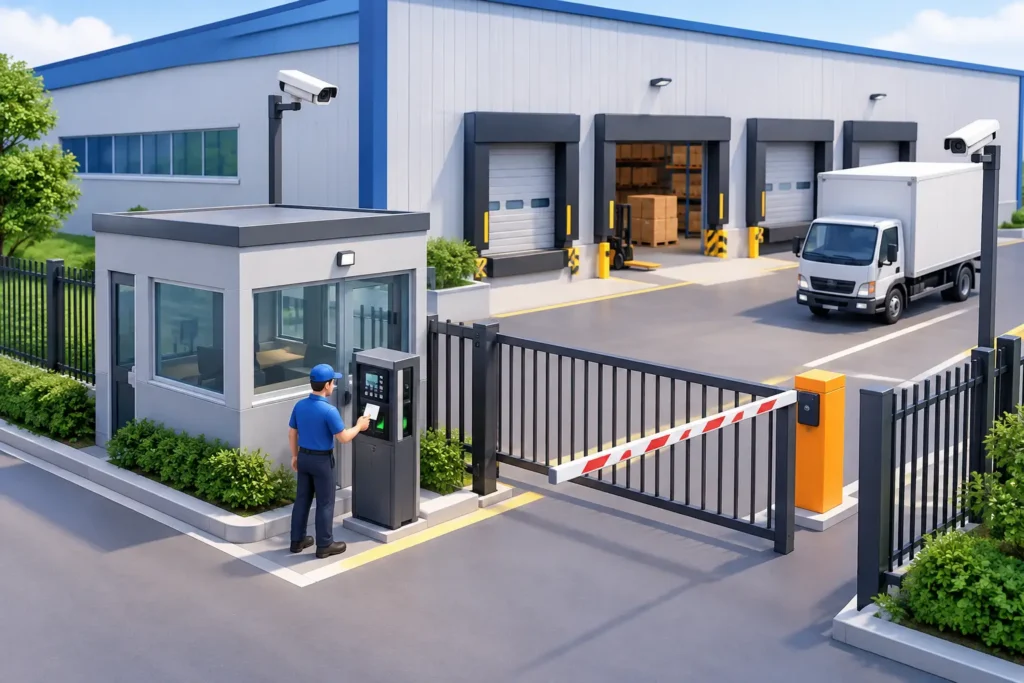
A warehouse can have strong perimeter fencing and still be vulnerable at the door. Loading docks, employee entrances, overhead doors, office-to-warehouse doors, and rear service entrances create daily opportunities for unauthorized access, theft, and safety issues. To secure warehouse entry points effectively, facility managers need more than a lock and a camera. They need layers of protection that match how people, vehicles, inventory, and deliveries actually move through the building.
The right approach should protect the operation without slowing down trusted employees or legitimate deliveries. That balance starts with a clear assessment of each entrance and the risks attached to it.
Start With the Entry Points That Matter Most
Not every warehouse door carries the same level of risk. A front office entrance may see visitors throughout the day, while a rear personnel door may be used only at shift changes. A loading dock may stay open during receiving hours but should not create a clear path to high-value inventory or sensitive areas.
Walk the property during normal operations, after hours, and during a delivery window. Look for doors that are propped open, damaged frames, poor lighting, blind spots, missing signs, and entrances where employees routinely let others in behind them. These everyday habits often create more exposure than a dramatic forced-entry attempt.
It also helps to classify entrances by purpose. Employee-only doors, visitor entrances, shipping and receiving doors, emergency exits, and restricted internal doors should not all be managed the same way. The goal is to make it easy for authorized people to enter where they belong while making exceptions visible and traceable.
Use Access Control Instead of Relying on Keys
Mechanical keys are simple, but they are difficult to manage in a busy facility. Keys can be copied, misplaced, or kept by former employees without anyone realizing it. Rekeying after a staffing change can become expensive and disruptive.
Electronic access control gives warehouse managers a better view of who enters, where they enter, and when they enter. Employees can use cards, fobs, mobile credentials, or other approved methods to open designated doors. Permissions can be assigned by job role, schedule, and area of the facility.
For example, a shipping employee may need access to the receiving area during a daytime shift but not to a server room, inventory cage, or office after hours. A supervisor may require broader access, while a temporary worker can receive limited credentials that automatically expire. When someone leaves the company, access can be removed promptly without changing every lock.
Access control is most valuable when it is planned around real workflows. Requiring several approval steps for a frequently used employee door may encourage people to prop it open. On the other hand, giving unrestricted access to every credential holder defeats the purpose. A professional assessment can identify practical access groups and schedules that support both security and productivity.
Protect Against Tailgating and Door Propping
A valid credential does not guarantee that only one authorized person enters. Tailgating occurs when someone follows an employee through a secured door without presenting their own credential. It can be intentional, or it can happen because people are trying to be courteous during a busy shift.
Clear expectations matter. Employees should understand that every person must use their own credential and that they should not hold secure doors open for unknown visitors. For higher-risk areas, access-controlled gates, turnstiles, door-position monitoring, or staffed check-in procedures may be appropriate.
Door-prop alerts are another useful safeguard. When a secured door stays open longer than the allowed time, the system can alert management or a monitoring center. This is especially helpful at side entrances and rear doors that may be out of sight from the main office.
Pair Cameras With Each Entry Strategy
Security cameras help confirm what happened at an entrance, but camera placement matters more than simply adding more devices. A camera should provide a usable view of the person approaching the door, the door itself, and the area immediately beyond it. Poorly positioned cameras may capture a hat, a forklift, or a distant figure without showing the details needed for an investigation.
At warehouse entry points, cameras are particularly useful at employee entrances, visitor doors, loading docks, gates, receiving areas, and exterior doors near high-value inventory. Interior cameras can also document movement between the warehouse floor and offices, storage cages, or restricted rooms.
Lighting should be part of the camera plan. A camera cannot provide clear after-hours footage if the entrance is poorly lit or if bright headlights create glare. Exterior lighting, properly positioned cameras, and visible signage work together to discourage unwanted activity before a person reaches the door.
Remote video access can give authorized managers a way to check activity when they are away from the facility. However, video should not become a substitute for response procedures. Someone needs to know what to do when a camera shows an after-hours visitor, a forced door, or an employee entering an area they should not access.
Secure Loading Docks Without Stopping Operations
Loading docks are often the most difficult warehouse entry points to control because they are designed for movement. Drivers arrive, trailers open, employees move between interior and exterior spaces, and inventory changes hands quickly. Leaving dock doors open is sometimes necessary, but it should be managed as an active process rather than treated as normal background activity.
Limit open dock doors to the doors needed for current deliveries or pickups. When possible, keep access from the dock area into the main warehouse or office under separate control. This creates a second layer between a person at the dock and the rest of the building.
Visitor and driver procedures should be clear and consistent. Drivers should know where to report, where they may wait, and which areas are off limits. Employees should know who is responsible for receiving visitors and checking credentials. If a delivery is unexpected, staff should have a simple method for verifying it before granting access.
Physical safeguards matter here as well. Maintained overhead doors, secure locking hardware, gate controls, bollards where vehicle impact is a concern, and clear pedestrian paths can reduce both security and safety risks. Fire code and emergency egress requirements must always be considered before changing any door, gate, or exit arrangement.
Connect Doors to Intrusion Detection and Monitoring
Access control records an authorized opening. Intrusion detection helps identify an unauthorized opening or an opening at the wrong time. Door contacts, glass-break detection, motion sensors, and alarm panels can create a stronger layer of protection for entrances after hours.
For a warehouse that operates multiple shifts, alarm schedules should reflect the actual operating calendar. A system that is armed while the night crew is working will create frustration and false alarms. A system that remains disarmed because schedules were never updated leaves the facility exposed. Regular review is especially useful after seasonal staffing changes, new operating hours, or expansions.
Professional 24/7 monitoring adds an important response layer. If an alarm activates when the facility is closed, trained operators can follow the established response plan and notify the appropriate contacts or emergency services. The plan should be kept current, with accurate call lists and instructions for different events.
ADP Security Systems helps South Carolina businesses bring access control, video surveillance, burglar alarms, fire protection, and monitoring into a coordinated plan rather than leaving each system to operate separately.
Build Procedures Around People, Not Just Equipment
The strongest equipment can be weakened by unclear routines. Warehouse employees need simple, practical guidance for opening and closing the building, admitting visitors, reporting a damaged door, responding to an alarm, and handling lost credentials.
Training should be brief enough to remember and repeated often enough to matter. New hires need it during onboarding, but long-term employees also benefit from periodic reminders. Supervisors should reinforce that reporting a propped door or unfamiliar person is part of protecting coworkers, inventory, and the business.
Maintenance also deserves attention. Test door contacts, cameras, card readers, locks, gates, and alarm communication regularly. A camera that has shifted out of position or a reader that intermittently fails can lead employees to work around the system. Scheduled maintenance finds these issues before they become a security gap.
Make Each Entrance Accountable
A warehouse does not need identical protection at every door. A small distribution center with one daytime shift may need a different setup than a large facility with round-the-clock shipping. The key is knowing which entry points are used, who should use them, and what should happen when activity falls outside normal expectations.
When every entrance has a purpose, a responsible process, and the right level of security, the warehouse is easier to manage and harder to exploit. That gives employees a safer place to work and gives business owners greater confidence that the doors protecting their operation are doing their job.