Integrating Video Surveillance With Access Control
October 14, 2026
Common Fire Safety Violations in SC Businesses
October 15, 2026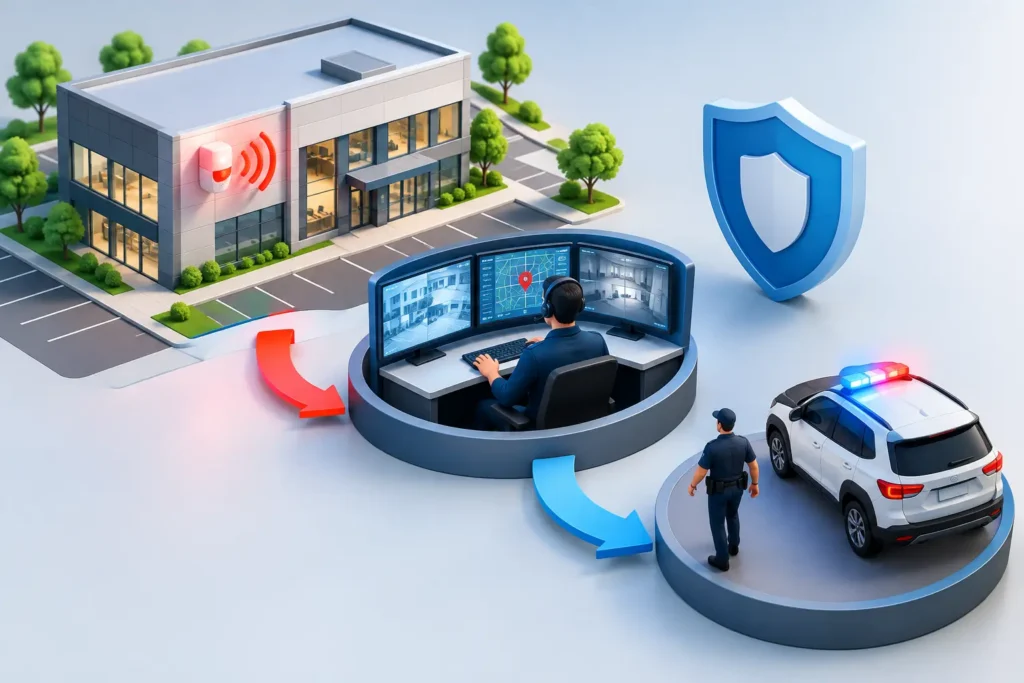
A burglar alarm activates at 2:13 a.m. at your business. The question is not simply whether the system works. It is whether everyone involved knows what happens next. A commercial alarm response protocol gives your business a defined, repeatable plan for handling an alarm without asking an employee, manager, or keyholder to make high-pressure decisions in the moment.
For South Carolina businesses, a thoughtful response plan protects more than equipment and inventory. It helps protect employees, customers, sensitive records, business continuity, and the people who may be asked to respond after hours. The right protocol connects professionally installed detection equipment, 24/7 monitoring, designated contacts, and clear internal expectations.
What Is a Commercial Alarm Response Protocol?
A commercial alarm response protocol is the set of instructions followed when an alarm signal is received. It defines how a monitoring center responds, who is contacted, when emergency services may be dispatched, and what authorized personnel should do once they receive an alert.
The protocol should cover more than an intrusion alarm. Depending on your facility, it may include burglary alarms, commercial fire alarm signals, panic buttons, environmental alerts, access-control events, and video verification procedures. Each event calls for a different response because the risks are different.
For example, an alarm at a retail store after closing may require an authorized keyholder to receive notification while law enforcement is dispatched according to the account instructions and local procedures. A fire alarm signal requires immediate life-safety action and should never be handled like a routine after-hours opening. A panic alarm may need an urgent response with limited verification to avoid increasing danger for employees.
A good protocol is specific enough to guide action, but practical enough that people can follow it at 2:13 a.m. or during a busy workday.
Why a Written Alarm Response Plan Matters
Many businesses have alarm equipment and a monitoring account, yet still rely on informal assumptions: the owner will get the call, someone will check the building, or the manager knows what to do. That approach can break down when a phone number changes, a manager is on vacation, or the first person contacted feels pressured to enter a potentially unsafe building.
A written plan reduces uncertainty. It establishes an accurate call list, clarifies each person’s responsibility, and gives employees permission to prioritize personal safety over property. It also helps prevent avoidable delays when a signal needs a prompt response.
False alarms deserve attention as well. They can disrupt operations, create unnecessary stress, and may lead to local fines or reduced confidence in the system. The answer is not to ignore signals or delay response. It is to identify recurring causes, such as a door that does not latch properly, an employee who needs additional training, a poorly placed motion detector, or an access-control schedule that no longer matches the business’s hours.
Build the Commercial Alarm Response Protocol Around Real Risks
Every site has different vulnerabilities. A medical office may need to protect patient information and controlled areas. A warehouse may need strong perimeter detection, video coverage, and procedures for late-shift employees. A school, church, restaurant, or retail location may place a higher priority on panic response and safe evacuation.
Start with a professional assessment of the property, business hours, entry points, high-value assets, employee routines, and likely emergency scenarios. This creates a response plan based on how the business actually operates rather than a generic checklist.
Keep Monitoring Information Current
Your monitoring center can only act on the information it has. Maintain a current list of authorized contacts, including primary and backup keyholders. Each contact should understand that they may receive a call at any hour and know how to identify themselves using the established verification method.
Update the list when managers leave, ownership changes, phone numbers change, or responsibilities shift. Include clear instructions for special circumstances, such as a tenant sharing a building, an office that closes for a holiday, or a contractor with temporary authorized access.
It is also wise to decide in advance who has authority to request a cancellation when an alarm is accidental. That process should be controlled. Casual cancellations can create risk if an actual emergency is mistaken for a false signal.
Define Safe Keyholder Responsibilities
A keyholder should not be expected to confront an intruder, investigate suspicious activity alone, or enter a building after an alarm without considering the situation. Their role is to receive notification, communicate accurate information, and follow the response process established for the property.
For an after-hours intrusion signal, a keyholder may be asked to meet responding authorities at a safe location or wait for direction before approaching the building. The appropriate procedure depends on the type of signal, local response practices, and what video or other verification shows. The central principle is simple: people come before property.
Give keyholders a current contact sheet, instructions for arming and disarming, the proper passcode process, and a clear escalation path if they cannot respond. At least two backup contacts are usually better than relying on one person.
Separate Fire, Panic, and Intrusion Procedures
One-size-fits-all instructions can create dangerous confusion. Your response protocol should clearly distinguish between emergency categories.
For fire alarms, employee safety and evacuation come first. Staff should understand evacuation routes, assembly locations, who accounts for employees or visitors, and who communicates with fire personnel. Commercial fire alarm systems also require appropriate inspection, testing, and maintenance to remain dependable and support code compliance.
For panic or duress events, employees need discreet, simple instructions. They should know where panic devices are located, when they may be used, and why they should avoid actions that could escalate a confrontation. The response should be reviewed with management and tailored to the workplace.
For intrusion alarms, the focus is usually on securing the facility, alerting the right people, and providing responders with useful information. Security cameras and access-control records can help clarify whether a door was opened by an authorized employee, a delivery person, or someone who should not be there.
Train Employees Before an Alarm Happens
Technology works best when people understand their role. New employees should learn basic security procedures as part of onboarding, particularly how to enter and exit the building, arm or disarm the system if authorized, avoid common false-alarm triggers, and report equipment problems.
Training does not need to be complicated. A short review of opening and closing procedures, visitor access expectations, emergency exits, and alarm contacts can prevent costly mistakes. Employees should also know that they should never share codes, prop secured doors open, or use another person’s access credential.
Run a periodic review when business hours change, a renovation affects doors or cameras, or the company adds a new manager. A protocol that sits untouched for years may no longer reflect the site or the people responsible for it.
Use Technology to Improve Information, Not Replace Judgment
Modern commercial security systems can give managers better visibility when an alarm occurs. Video surveillance may allow authorized users to review activity remotely. Access control can identify whether a credential was used at a particular door. Smartphone alerts can help designated contacts receive information quickly.
These tools are valuable, but they do not replace professional monitoring or emergency response. A grainy camera image may not tell the whole story, and a manager watching video from home should not feel obligated to investigate in person. Technology should support better decisions and faster communication, not create a false sense that a business is handling an emergency alone.
Professional installation also matters. Device placement, dependable communication paths, properly configured user permissions, and regular testing all affect whether an alarm system performs when it is needed. Scheduled maintenance helps identify issues before they become a missed signal, recurring false alarm, or interruption in coverage.
Review the Plan After Every Meaningful Event
An alarm event, even a false one, is useful information. After the situation is resolved, ask what caused the signal, whether notifications reached the right people, whether the response was safe, and whether the system or procedure needs adjustment.
A door contact may need service. A staff member may need more training. A new backup keyholder may be needed. Or the event may show that the current system needs additional coverage in a vulnerable area. Small corrections made promptly can improve protection without requiring a complete redesign.
For businesses across South Carolina, ADP Security Systems can help align professionally installed commercial security, fire, camera, access-control, monitoring, and maintenance services with the way your facility operates. The goal is not simply to receive an alarm signal. It is to have knowledgeable support and a plan your people can follow with confidence.
The best time to decide who gets the call, what information they need, and how they should respond is when the building is quiet and everyone can think clearly. A well-maintained plan gives your team that clarity when it matters most.