Camera Theft Deterrence That Protects Your Property
October 1, 2026
How Long Does Home Security Installation Take
October 5, 2026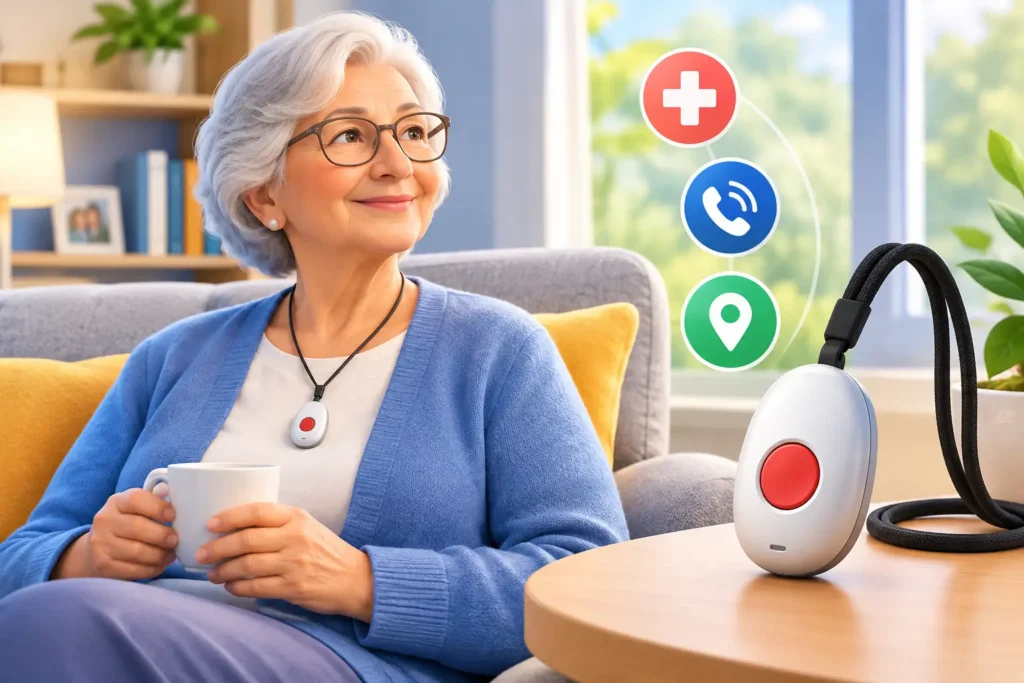
A fall in the kitchen, sudden dizziness in the yard, or a health concern while running errands can become frightening quickly when a person cannot reach a phone. Medical SOS pendants provide a simple, wearable way to request help with the press of a button, helping older adults and medically vulnerable individuals maintain more independence while giving family members greater reassurance.
For many South Carolina families, the question is not whether a loved one may need help someday. It is whether that help can be requested quickly when a phone is in another room, out of reach, or impossible to use. A professionally monitored medical alert system is designed for that exact moment.
What Medical SOS Pendants Do
A medical SOS pendant is a small wearable emergency button, usually worn around the neck or on the wrist. When the user presses the button, the device connects them with a trained monitoring professional who can assess the situation and contact emergency responders, a designated family member, or both based on the service plan and the person’s needs.
The pendant itself is intentionally straightforward. The goal is not to ask someone to navigate a screen, remember a password, or explain a complicated app while they are scared or in pain. One press starts the process of getting help.
Modern devices can work differently depending on where and how they are used. An in-home system may communicate through a base unit in the residence. A mobile medical alert pendant can use 4G cellular service, allowing the wearer to seek assistance away from home. Some options also use GPS technology to help locate a person during an emergency.
That distinction matters. Someone who rarely leaves home may be well served by an in-home solution. Someone who drives, visits friends, attends church, shops independently, or travels between family members may benefit from a mobile device with nationwide coverage.
Why a Pendant Can Be Better Than a Phone
A smartphone is useful, but it is not always a dependable emergency plan. Phones may be charging in another room, tucked into a purse, muted, or difficult to operate after a fall. During a medical event, even unlocking a phone and finding the right contact can feel like too much.
A medical pendant stays on the person. It is built around a single purpose: providing immediate access to help. Most are lightweight, easy to wear, and designed to be water-resistant or waterproof, so the user can keep protection close in places where falls often occur, including bathrooms and showers. Families should still confirm the specific water rating for the device they choose rather than assuming every pendant is suitable for every environment.
There is also an important difference between calling a relative and reaching a professional monitoring center. A family member may be driving, working, asleep, or unable to answer. A monitored system provides another layer of support when loved ones cannot respond right away.
Features That Matter Most
The best medical alert system is not necessarily the one with the longest feature list. It is the one a person will actually wear, understand, and use. For most households, the key considerations are reliability, comfort, coverage, and response support.
One-touch access to live help
The emergency button should be easy to locate and press without fine hand movement. After an alert is triggered, two-way voice communication can allow the user to speak with an operator through the device or nearby base unit. If they cannot speak, the monitoring center can still follow the established response procedure.
Automatic fall detection
Fall detection can add protection when a person is unable to press the button themselves. These devices use sensors intended to recognize certain sudden movements and impacts, then place an alert if a potentially serious fall is detected.
Fall detection is helpful, but it should not be treated as a replacement for pressing the SOS button whenever possible. No fall-detection technology can identify every fall, and certain everyday movements may occasionally trigger an alert. The right expectation is simple: it is an added safety layer, not a guarantee.
Mobile coverage and GPS location
Mobile pendants can be especially valuable for active seniors and individuals who spend time outside the home. With 4G connectivity and GPS support, the monitoring center may be able to identify a wearer’s approximate location and coordinate help when they are away from their residence.
GPS performance can vary by environment. Location information may be less precise indoors, in dense areas, or where cellular coverage is limited. Even so, it can provide responders with useful information when a person is unable to describe where they are.
Waterproof wearability
A pendant left on the nightstand offers little help during a bathroom fall. Comfortable, waterproof wearable options make it easier to keep emergency protection on throughout normal daily routines. The simpler a device is to wear, the more likely it is to be there when needed.
Who Should Consider a Medical Alert Pendant?
Medical SOS pendants are often associated with older adults living alone, but their value extends beyond that situation. A person recovering from surgery, managing heart concerns, living with diabetes, experiencing balance problems, or taking medications that increase fall risk may benefit from a reliable way to call for help.
They can also make sense for couples. If one spouse experiences an emergency, the other may not be physically able to provide the assistance needed or may be too distressed to act quickly. A monitored pendant gives the household a direct line to additional support.
For adult children, a medical alert system can help bridge the distance between regular check-in calls. It does not replace family involvement, home care, or medical advice. It does offer reassurance that a loved one has a way to reach trained help at any hour, including when family members are at work, traveling, or unavailable.
Choosing the Right Setup for Your Needs
Start with the person’s actual routine, not a one-size-fits-all product description. Consider where they spend most of their time, whether they use a cell phone comfortably, how often they leave home, and whether they are likely to wear a pendant consistently.
An in-home option may be appropriate for someone who is generally homebound and wants coverage throughout the house. A mobile device is usually a stronger choice for a person who remains active in the community. Fall detection may be worthwhile for someone with a known fall history or mobility concerns, while others may prefer a basic manual SOS button.
It is also wise to ask how the service is monitored, who handles emergency calls, what happens if the user cannot speak, and whether the equipment is professionally set up and tested. The quality of the response process matters as much as the device on the lanyard.
At ADP Security Systems, Smart Care personal medical alert systems are selected and supported with real household needs in mind. With professionally supported monitoring, one-touch SOS access, optional fall detection, and mobile GPS-enabled options, families can choose protection that fits life at home and beyond it.
A Small Device With a Meaningful Purpose
No one wants to plan around a fall or medical emergency. Yet having a plan can preserve confidence, independence, and time when every minute feels uncertain. A medical pendant is not about limiting someone’s freedom. It is about helping them keep it.
The most helpful next step is a practical conversation with your loved one: Where do you feel most vulnerable? Would you wear a pendant every day? Who should be contacted if you need help? Those answers can turn a small wearable device into a dependable part of a larger safety plan.