Benefits of Smart Home Security Systems
October 7, 2026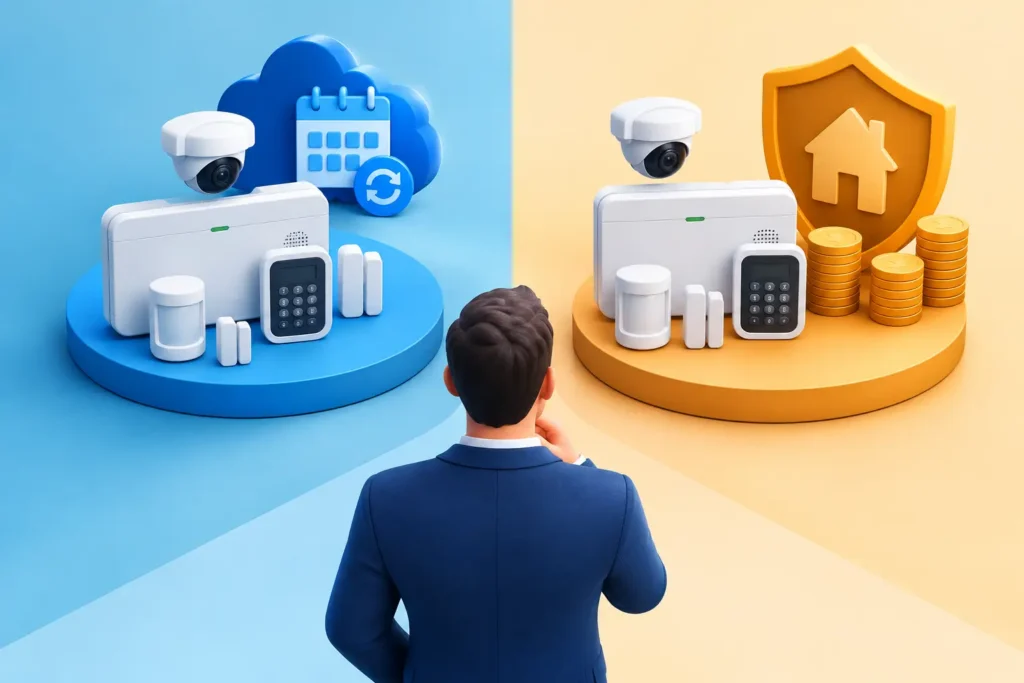
A break-in, unauthorized entry, or after-hours incident can cost far more than damaged property. It can interrupt operations, expose sensitive information, and leave employees feeling unsafe. When comparing a business alarm lease versus purchase, the right choice is not simply the option with the lowest monthly payment or smallest upfront invoice. It is the arrangement that gives your facility dependable protection without creating strain on your budget or limiting your future plans.
For South Carolina business owners and facility managers, that decision should start with a professional assessment of the building, daily operations, risk factors, and required services. An alarm system is not a standalone purchase. It is part of an ongoing protection plan that may include professional monitoring, service, maintenance, cameras, access control, and fire alarm requirements.
Business Alarm Lease Versus Purchase: The Core Difference
Purchasing a commercial alarm system generally means your business pays for the equipment and installation upfront, or finances that cost separately. Once it is paid off, the business owns the equipment, subject to any terms related to monitoring, programming, warranties, or future service.
Leasing spreads equipment costs across scheduled payments. Depending on the agreement, the lease may include some combination of equipment, installation, maintenance, monitoring, replacement coverage, or upgrade options. At the end of the term, ownership may transfer to the business, the equipment may be returned, or the agreement may renew. Those details matter.
Neither approach is automatically better. A growing retail store with limited capital may value predictable monthly costs. A long-established manufacturer in a stable facility may prefer to own a system that will serve the location for years. The practical question is how each option supports the business you operate now and the one you expect to operate later.
When Leasing May Be the Better Fit
Leasing can make professionally installed security more accessible when a business needs protection now but wants to preserve cash for inventory, payroll, expansion, or other operating priorities. Instead of absorbing a large initial cost, the company can budget for a known monthly expense.
This can be especially helpful for new businesses, businesses moving into a larger space, and organizations that need several layers of protection at once. A complete system may include intrusion detection, video surveillance, access control, monitored alarms, and, where required, fire alarm equipment. Leasing may allow the business to address essential risks without delaying protection while capital is gathered.
Leasing can also offer value when the agreement includes service provisions. Commercial systems need more than installation. Devices may need testing, batteries eventually need replacement, users may need access changes, and your business may need support after a schedule change or staffing transition. A clear service arrangement helps prevent a small issue from becoming a gap in coverage.
There is a trade-off. Monthly payments can cost more over the full term than paying upfront. Businesses should also understand how long they are committed, whether payments continue if they move or close, and what happens if they need additional devices. A low monthly price is only useful if the contract fits the expected life of the facility and business.
When Purchasing May Make More Sense
Purchasing may be a strong choice for businesses with available capital and a long-term location. Once the equipment is paid for, the business may have lower ongoing equipment costs, though professional monitoring, inspection, maintenance, repairs, and updates can still be recurring expenses.
Ownership can also provide more flexibility for organizations that want to make decisions independently about future upgrades or changes. A business that owns its equipment may feel more comfortable adding cameras, doors, or detectors over time based on operating needs. Still, compatibility matters. Adding equipment from different manufacturers or generations is not always simple, so future expansion should be part of the initial design conversation.
The main consideration is responsibility. Ownership places more of the long-term repair, replacement, and technology-update cost on the business. A control panel or camera system that works well today may eventually need updating. If the system is essential to operations, it is wise to plan for maintenance and replacement rather than treating the purchase as a one-time expense.
Look Beyond Equipment Cost
The decision should not be based on equipment price alone. A business alarm only helps when it is properly designed, installed, monitored, and supported. The lowest initial quote may leave out components or services that are central to dependable protection.
Before choosing a lease or purchase arrangement, compare the full scope of each proposal. Ask whether it includes professional installation, user training, 24/7 alarm monitoring, service calls, scheduled testing, warranty coverage, cellular communication, and future system changes. If cameras or access control are included, clarify storage, software, credentials, and remote-management costs as well.
For facilities with fire alarm obligations, the stakes are even higher. Fire alarm systems may be subject to code requirements, inspection schedules, monitoring expectations, and coordination with local authorities. The financial structure should never distract from the need for a properly designed and maintained life-safety system.
Questions to Ask Before Signing
A good security provider should explain the agreement in plain language. You should know what you are paying for, who is responsible for the equipment, and how the system will be supported after installation.
Ask these questions before making a decision:
- What is included in the installation, and what could create additional charges?
- Who owns the equipment during and after the agreement term?
- Are monitoring, maintenance, repairs, and battery replacements included or billed separately?
- What happens if the business relocates, expands, sells, or closes before the term ends?
- Can the system be upgraded, and will new devices work with the existing equipment?
- What are the cancellation, renewal, buyout, and return terms?
These questions are not merely contract details. They affect whether your business will have reliable protection through changes in staffing, operating hours, occupancy, and growth.
Match the Agreement to Your Risk and Timeline
A short-term tenant in a leased office may place a high value on portability and lower upfront cost. A medical office, warehouse, dealership, or multi-site organization may need a more customized system and a longer planning horizon. A restaurant may need intrusion protection, video coverage, and employee access management, while a property manager may need controlled access across several doors and common areas.
The right security design begins with the property itself. Where are the vulnerable entry points? Are valuable assets stored onsite? Who needs access, and when? Is there after-hours activity? Does the business need video verification, remote arming, access reports, or monitored fire protection? Once those needs are clear, the payment structure becomes easier to evaluate.
It is also worth considering the cost of under-protecting the property. Choosing fewer devices than the building requires, skipping professional monitoring, or postponing needed maintenance can create exposure that outweighs any short-term savings. Protection should be scaled to real risk, not reduced to a monthly payment target.
Dependable Support Matters After Installation
Whether you lease or purchase, choose a provider that will remain available after the equipment is installed. A security system is most valuable when someone can answer questions, respond to a service need, and help your business adjust the system as operations change.
ADP Security Systems brings more than 30 years of regional experience to commercial security and life-safety planning across South Carolina. Professional installation, ongoing support, and 24/7 monitoring by certified central-station operators can help business owners focus on running their organizations while their facilities remain connected and protected.
The better choice is the one that gives your business clear terms, appropriate coverage, and confidence that help is available when an alarm occurs. Start with a thoughtful assessment, review the complete cost over the expected term, and select a protection plan that can stand with your business as it grows.