Wearable vs Stationary Medical Alerts: Which Fits Your Home?
November 20, 2026
8 Pros and Cons of Wireless Security Sensors
November 22, 2026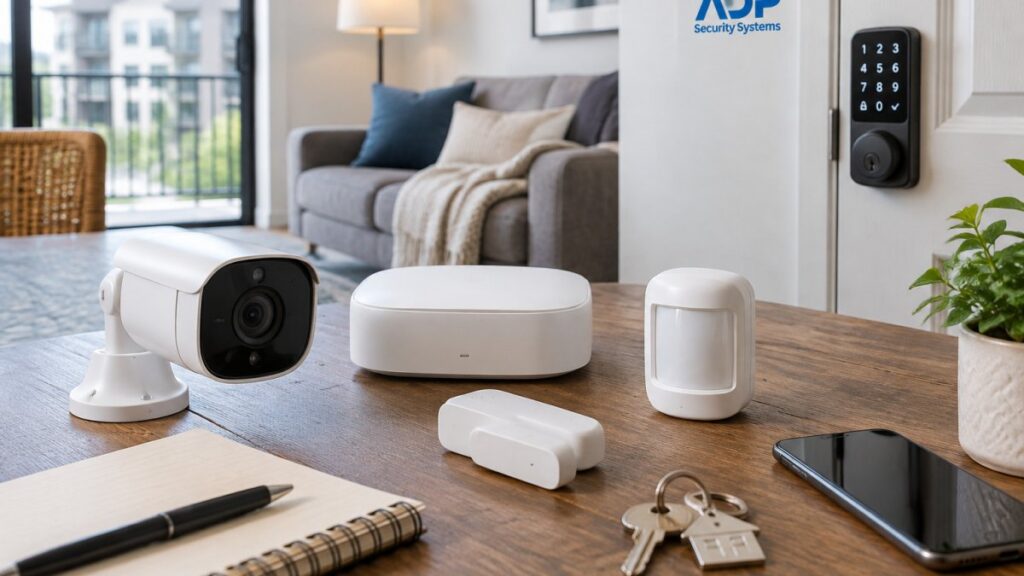
Last Updated: November 19, 2026
Quick Summary
Apartment renters need a working deadbolt and reinforced door hardware first, then window locks and sliding door bars, followed by smoke and carbon monoxide detectors, cameras and sensors, and building-level access control the property manager maintains. Match spending to actual exposure, since ground-floor units should treat every window as a door.
- Keep the existing deadbolt and add a portable lock or reinforcement plate instead of swapping hardware.
- Ground-floor units should put window locks on every accessible window and a track lock on patio doors.
- A renter alarm system should install without drilling, avoid a long contract, and move with you.
- Report building entry, gate, and lighting failures in writing and keep the record.
- Budget in order: door hardware, window and sliding door locks, cameras and sensors, then monitoring.
Table of Contents
- Start With the Door: Security Features for an Apartment Entry
- Windows and Sliding Doors: The Entry Points Renters Forget
- Apartment Safety Devices That Cover Fire, Carbon Monoxide, and Medical Emergencies
- Choosing an Alarm System for Apartment Renters: What Actually Fits a Lease
- Apartment Security Systems Do It Yourself: Cameras, Sensors, and Setup Reality
- Building Access, Lighting, and Common Areas: What the Property Manager Owns
- Your Apartment-Tour Security Checklist and Budget Plan
- Book a Free Security Assessment Before You Sign or Upgrade
- Frequently Asked Questions
Start With the Door: Security Features for an Apartment Entry
The door is where most apartment break-ins begin and the fastest place renters can improve. When we assess essential security features for apartment renters, we start at the entry because a weak door frame cancels out every camera and sensor behind it.
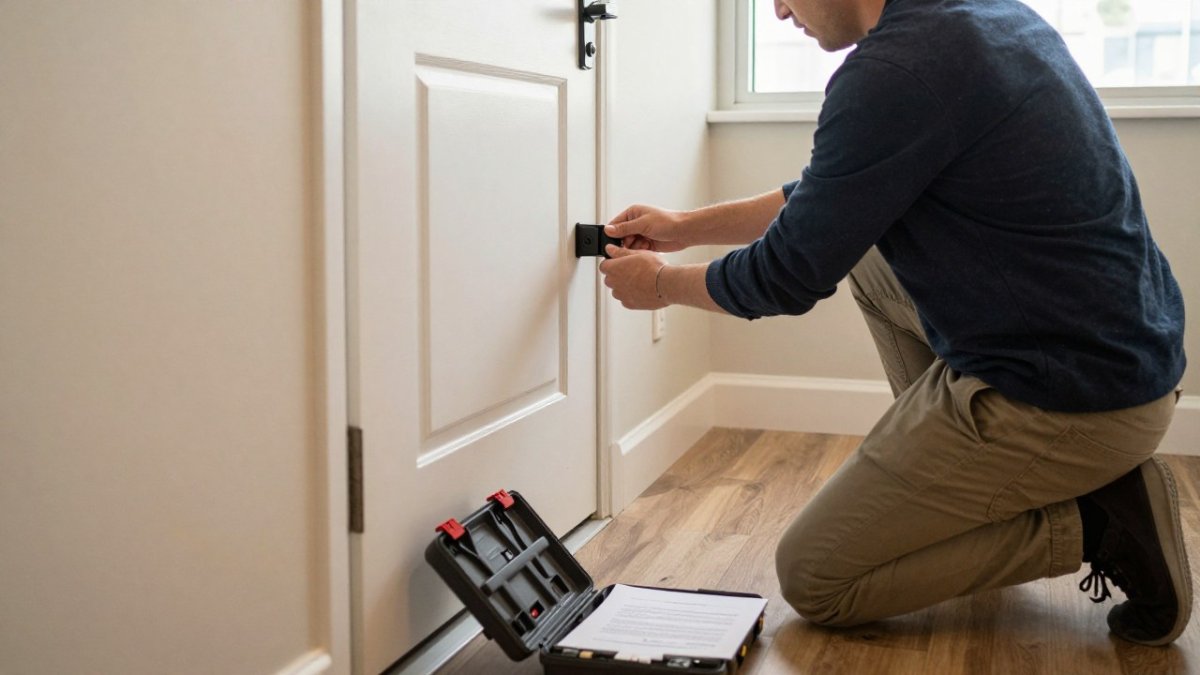
Most apartment doors arrive with a builder-grade deadbolt and short hinge screws, a starting point, not a barrier.
Deadbolts, Smart Locks, and Reinforcement That Won’t Cost Your Deposit
A deadbolt throws a solid metal bolt into the door frame and is the single most important piece of hardware on an apartment entry. The catch for renters is that replacing it usually needs landlord approval.
- Keep the existing deadbolt and add a portable door lock or a reinforcement plate that installs over the existing strike plate with the same screws.
- Ask before swapping hardware. Many leases require written approval and forbid changing locks, since the property manager needs a key.
- Upgrade the screws, not the lock. Longer hinge screws that reach the wall stud are a common, low-cost fix, but check your lease first.
If your unit has an older deadbolt and you want to know whether a smart lock will fit it, our guide to smart lock retrofit for deadbolts covers compatibility before you buy. For methods that avoid drilling entirely, see home security installation without drilling.
Watch out: a smart lock you install without approval can violate your lease and cost you the deposit, even if it makes the unit safer.
Windows and Sliding Doors: The Entry Points Renters Forget
Windows and sliding doors are the second most common way into an apartment, and renters often leave them unaddressed. Ground-floor units carry the most risk, but any window reachable from a fire escape, ledge, roof, or balcony deserves the same attention as the front door.
- Window locks that pin the sash or limit how far it opens, installed without new holes where possible.
- Sliding door bars that drop into the track and block the door from sliding, removable in seconds.
- A dowel or purpose-made track lock for sliding glass, which is cheap and leaves no marks.
Older or original windows need more care, since frames crack easily. Our guide on securing vintage windows without damaging frames walks through the options frame by frame.
Security Trade-offs by Floor and Layout
Which floor you live on changes the math, and so does your unit’s layout. Upper-floor units can often deprioritize window hardware and put that budget into the door and cameras; ground-floor units should treat every window as a door.
- Ground-floor units: Every window is an entry point. Prioritize window locks on all accessible windows, and consider cut-resistant window film or a security bar for the most exposed window. Sliding patio doors need a track lock plus a secondary bar.
- Balconies and patios: A railing is not a security barrier. The sliding door to a balcony is a primary entry point, use a track lock and a door alarm sensor, and check whether the balcony is reachable from a neighboring unit or shared stair.
- Fire escapes: A window opening onto a fire escape is effectively a ground-floor window. Keep it locked and add a sensor, but do not block the fire escape itself, which is a life-safety violation.
Renters in upper-floor units often overspend on window hardware they do not need while ground-floor renters underspend on the windows that matter most. Match spending to actual exposure.
Renter-Safe Installation Without Losing the Deposit
Drilled window locks can violate a lease, and window bars are often prohibited because they block emergency egress. Stick to removable options: tension-mounted sash locks, adhesive-mounted sensors, and track bars that lift out. If you need a permanent fix, get written approval from the property manager and keep it. Before moving out, remove adhesive mounts carefully and patch holes with color-matched spackle.
Apartment Safety Devices That Cover Fire, Carbon Monoxide, and Medical Emergencies
Smoke alarms and carbon monoxide detectors protect life, and they matter more in apartments than houses because fire or gas can travel through shared walls and vents. Security features for apartment renters that skip life safety are only half a plan.
- Smoke alarms in each bedroom and outside sleeping areas, tested with the test button
- A carbon monoxide detector if the unit has any gas appliance or attached garage
- A fire extinguisher rated for kitchen fires, stored where you can reach it
Ask the property manager who maintains the building’s alarms and detectors, and get it in writing, renters are often responsible for testing while the landlord handles replacement.
Choosing an Alarm System for Apartment Renters: What Actually Fits a Lease
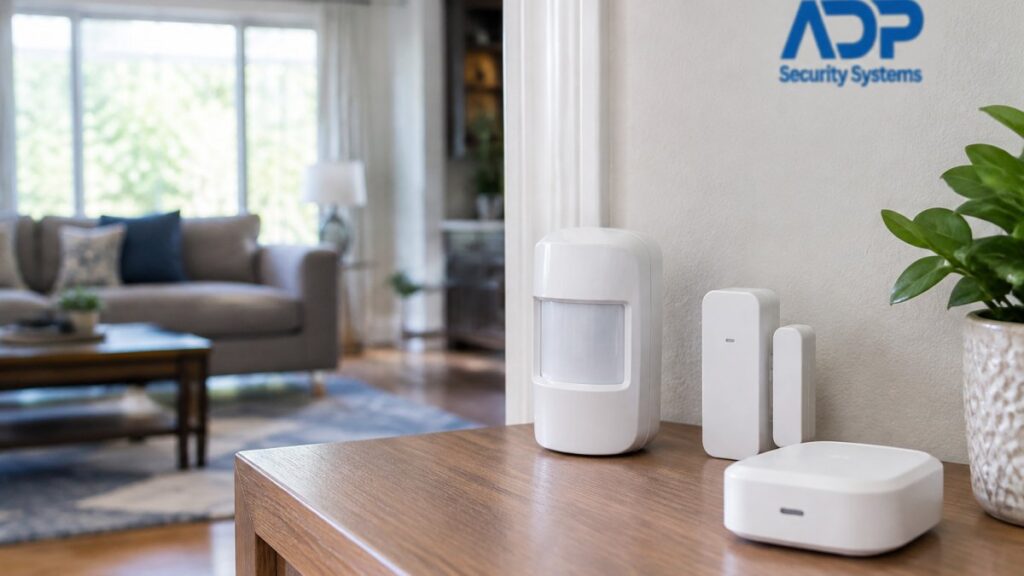
A suitable alarm system for apartment renters can be installed without drilling, avoids a long contract, and can move with you. Those three criteria help narrow the options before you compare features.
Here is how the main options stack up for a rental:
| Option | Installation | Contract | Best For |
|---|---|---|---|
| Portable DIY kit | Peel-and-place, no tools | Month-to-month or none | Renters who move often |
| Professionally monitored system | Technician install, minimal drilling | Usually multi-year | Renters who want 24/7 monitoring |
| Standalone sensors | Adhesive mount | None | Budget-first setups |
| Building-provided alarm | Already installed | None | Units with existing monitoring |
Before committing to monitoring, know what actually happens when an alarm triggers: who calls, who responds, and how fast. Our breakdown of what happens when your home security alarm goes off explains the chain from sensor to response.
Watch out: a system advertised as “no contract” can still lock you into a hardware financing plan. Read the terms before you sign.
Apartment Security Systems Do It Yourself: Cameras, Sensors, and Setup Reality
Do-it-yourself setups work well for cameras and sensors, and poorly for anything requiring wiring into the building.
- Video doorbells that mount with adhesive or replace an existing peephole
- Indoor cameras on shelves or adhesive mounts, pointed inside your unit
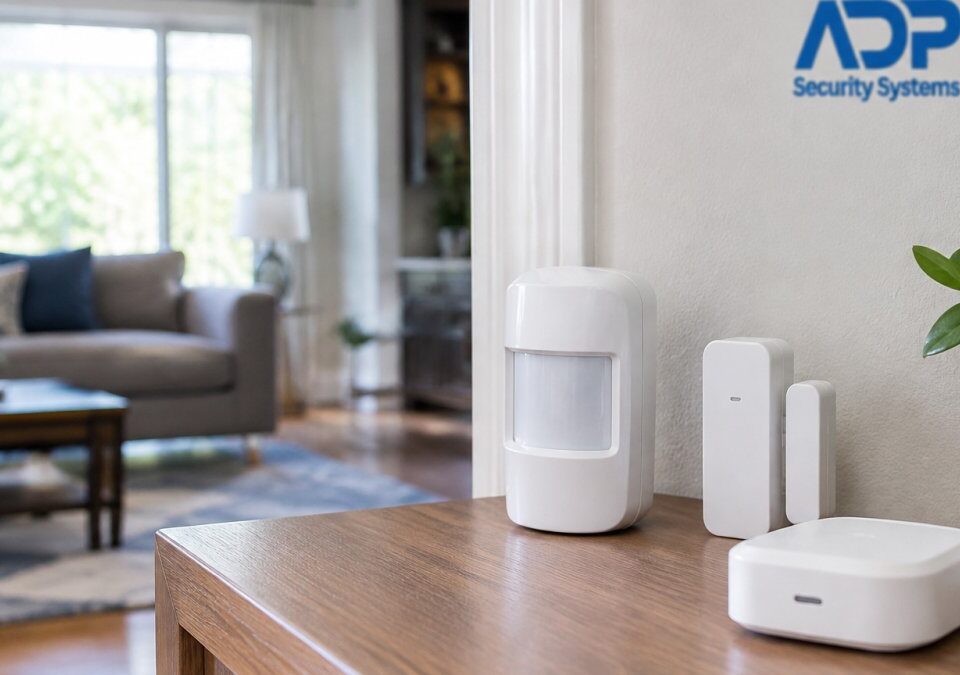
- Entry sensors on doors and windows that trigger an alert
What usually needs approval: exterior cameras, anything mounted to shared walls, and any device that taps building power or network infrastructure.
Setup reality check: most renter kits take under an hour, but Wi-Fi dead spots in older buildings can affect camera reliability. Test signal strength at the door before you buy.
Privacy, Consent, and Where Cameras Can Legally Point
Indoor cameras are yours to place. Anything capturing a shared hallway, a neighbor’s door, or a common area is a different matter and can create legal and neighbor problems fast. Point cameras inside your unit, keep them off shared space, tell guests and roommates where they are, and close blinds before testing a camera that faces a window.
Check your lease for camera language before mounting anything outside your door. Many buildings prohibit doorbell cameras in shared corridors outright.
Building Access, Lighting, and Common Areas: What the Property Manager Owns
Controlled access, gated entry, hallway lighting, and parking-area lights belong to the property manager, not the tenant. Knowing the split saves renters money and frustration: you cannot install a building entry system, but you can document when it fails and verify whether the building’s security claims hold up.
- Does the building entry door actually latch, or does it stay propped open?
- Is the gated entry working, or is the gate stuck open?
- Are hallway and parking lights on at night, and are any burned out?
Report failures in writing to the property manager and keep the record. A propped entry door undermines the locks on your unit.
How to Verify Building Security Claims
Visible equipment is not the same as effective security. A camera dome may be a dummy housing, a gate may be propped open all day, and an access reader may log entries no one reviews. Before signing a lease, ask management these questions in writing:
- Who monitors the cameras, and what is the response when an incident is reported?
- Are access logs reviewed, and how often? Who holds master keys, and is there a key-control policy?
- Is the gate or entry door on a timed schedule, and who closes it?
A common pattern is that cameras record but are not actively monitored, so they help after an incident rather than prevent one. Ask directly whether monitoring is live or recorded-only; if the answer is vague, treat the camera as a deterrent rather than a response system.
Walk the property at night before signing if you can. Lighting that looks adequate in daylight often leaves stairwells, laundry rooms, and parking areas dark. Note burned-out fixtures and ask when they were last serviced.
What Belongs to the Building vs. Your Unit
Building-level features are the landlord’s responsibility: entry doors, access control, common-area lighting, parking-lot lighting, and shared cameras. Unit-level features are yours to improve within lease limits: door hardware, window locks, and interior cameras. The split matters because renters sometimes buy equipment to compensate for building failures management should fix for free.
If the building entry does not latch, that is a maintenance request, not a shopping trip. If hallway lights are out, that is a work order.
Your Apartment-Tour Security Checklist and Budget Plan
A practical apartment-tour checklist turns a walkthrough into a security audit and takes about ten minutes per unit. Bring it to every showing and score each item honestly.
- Front door has a working deadbolt, not just a knob lock
- Door frame and strike plate are solid, no cracks or loose screws
- Hinge screws are long enough to reach the stud
For budget planning, split spending in this order: door hardware first, window and sliding door locks second, then cameras and sensors, then monitoring. If you are comparing full apartment setups, our guide to home security systems for apartments covers the options in more depth.
Book a Free Security Assessment Before You Sign or Upgrade
The hardest part of renting securely is that the unit, the lease, and the building all set limits you did not choose.
ADP Security Systems has served South Carolina for more than 30 years, offering 24/7 alarm monitoring, expert installation of security, fire, and life safety systems, and customizable maintenance schedules.
Request a free security assessment from ADP Security Systems to plan your apartment’s security.
Frequently Asked Questions
What security features should renters look for in an apartment?
Check four things before signing: a solid deadbolt with a strike plate screwed into the frame, working locks on every window and sliding door, well-lit hallways and parking, and controlled access at the building entry. Ask who handles repairs when a lock fails and get the answer in writing. Smoke alarms and carbon monoxide detectors should already be installed and tested. Anything beyond that, like cameras or an alarm system for apartment renters, is usually your choice to add.
Which renter-friendly security devices can be installed without drilling?
Portable door locks that wedge under the handle, adhesive window locks, door alarms that stick to the frame, plug-in cameras, and no-drill sensor kits all come out without damage. Confirm with your landlord first, keep every receipt, and photograph the door and walls before installation so you have a record at move-out.
Are wireless security systems a good choice for apartment renters?
Wireless systems suit rentals because they skip drilling and wiring, and most can be uninstalled and taken to your next place. Read the contract length before buying; a two-year agreement can outlast your lease.
How can I make my apartment door more secure without breaking the lease?
Start with the strike plate: if the screws are short, ask the property manager to replace them with longer ones, since that is a building repair. Add a portable door lock for nights you are home and a door alarm for when you are away. A video doorbell can work if the hallway allows it, but get written approval because it changes a shared space. Skip anything that replaces the deadbolt yourself; that is the landlord’s lock.