How Do You Choose a Medical Alert Monitoring Center?
November 16, 2026
Why Do Alarms Need Monitoring? Real Protection
November 18, 2026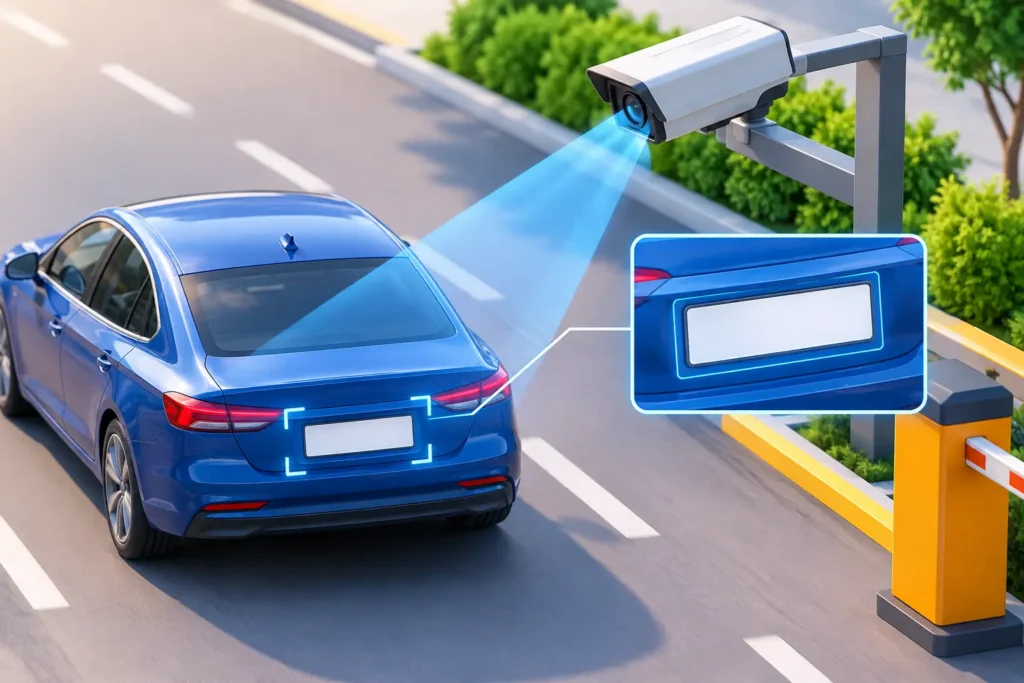
A vehicle turns through a business entrance at dusk, pauses near a loading area, then leaves before anyone can read the tag. Can cameras identify license plates clearly enough to help? Often, yes – but only when the camera, placement, lighting, and vehicle conditions work together. A general-purpose security camera may show that a car was present. Capturing a plate that can be read and used as evidence is a more specific job.
For South Carolina homes and businesses, the difference matters after vandalism, unauthorized parking, theft, gate damage, or suspicious activity. The goal is not simply more video. It is usable video that helps identify what happened and gives law enforcement or property management meaningful details to work with.
Can Cameras Identify License Plates in Real Conditions?
Cameras can identify license plates when they capture enough pixels on the plate while keeping it in focus, properly exposed, and free from motion blur. That sounds straightforward, but license plates are small targets that move quickly and often reflect headlights, sunlight, or infrared light back toward the lens.
A standard surveillance camera can sometimes provide a readable plate, particularly when a vehicle is stopped close to the camera during daylight. For example, a well-positioned camera at a residential driveway may capture a plate as a vehicle approaches slowly. At a commercial parking-lot entrance, however, vehicles may arrive from farther away, at different angles, and at varying speeds. A wide-angle overview camera alone is less likely to deliver consistent plate detail.
This is why a professionally designed system frequently uses more than one camera view. One camera can establish the vehicle’s color, make, direction of travel, and activity around the property. A separate camera, positioned for the entrance or lane, can focus on plate capture. Together, those views provide a clearer record than either camera could provide alone.
What Determines Whether a Plate Is Readable?
Camera resolution matters, but it is not the only answer. A high-resolution camera pointed over a large parking area can still spread its pixels across too much scene, leaving each license plate too small to read. Proper field of view is often more valuable than simply choosing the largest megapixel number.
Distance and camera angle
The closer a vehicle passes to the camera, the better the opportunity for clear identification. Ideally, the camera faces the plate as directly as practical. When a plate is viewed at a steep side angle or from too high above, its characters become compressed and harder to read.
For a driveway, gate, or single entrance lane, this can be planned carefully. For a broad street or open lot, clear capture becomes more difficult because vehicles may travel through many positions and lanes. A security assessment should account for where cars actually enter, turn, stop, and exit rather than where a camera is easiest to mount.
Vehicle speed and motion blur
A stopped vehicle is easier to capture than one moving at 35 miles per hour. At night, cameras often use longer exposure times to gather more light, which can make a fast-moving plate blur. Cameras designed and configured for plate capture can use settings that better freeze motion, but they need adequate light to do so.
This is one reason a camera that performs well for general after-hours monitoring may not produce the best license plate image. A system must balance motion, available lighting, and the desired area of coverage.
Lighting, glare, and nighttime conditions
Daylight can create its own challenges when a vehicle approaches from a bright background or when sun glare strikes the plate. At night, headlights can wash out a reflective plate, while very dark surroundings can hide the vehicle itself.
Good plate capture may require thoughtful exterior lighting, carefully aimed cameras, or specialized imaging features. Infrared illumination can support nighttime visibility, but reflective plates may appear overly bright if the camera is too close or settings are not adjusted correctly. Testing a camera after dark is essential. A view that looks excellent at noon may not be useful at 10 p.m.
Weather and camera maintenance
Rain, fog, pollen, insects, condensation, and a dirty camera cover can all reduce image quality. South Carolina’s heat and humidity can also make reliable exterior installation especially important. A camera needs an appropriate housing, a secure mount, and a clear line of sight that remains usable through seasonal changes.
Routine service helps protect the investment. A small shift in camera position after a storm or a lens covered in debris can turn an otherwise effective plate-capture view into an unusable recording.
License Plate Recognition Versus a Readable Video Image
There are two related but different capabilities. The first is capturing video where a person can visually read the plate. The second is automatic license plate recognition, often called LPR or ALPR, where software detects the plate and converts its characters into searchable data.
Automatic recognition can be helpful for controlled vehicle access, restricted lots, recurring unauthorized parking, or facilities that need to search for vehicles by plate number. It can reduce the time spent reviewing hours of footage. But it still depends on high-quality images. Software cannot reliably recover characters that the camera never captured.
LPR is not necessary for every property. Many homeowners and small businesses benefit more from a correctly placed security camera that records a clear driveway or entrance view. Larger facilities, gated properties, and businesses with frequent vehicle traffic may have a stronger case for purpose-built plate-recognition equipment and customized rules for alerts or searches.
Where Plate-Capture Cameras Deliver the Most Value
The best locations are usually predictable choke points – places where vehicles must slow down and pass through a limited path. Driveways, gates, employee entrances, service lanes, loading docks, and parking-lot entry points are common examples.
At a retail property, a plate-focused camera may be positioned to capture vehicles entering from the main drive while overview cameras monitor storefronts, sidewalks, and parking spaces. At a home, the priority may be a driveway approach rather than a camera aimed across the street. At a warehouse, the right location may be the truck entrance or employee lot rather than the entire perimeter.
Trying to capture every vehicle in every part of a large lot with one camera usually leads to compromise. A targeted plan gives the system a realistic task and improves the odds of capturing details when they matter.
Design Choices That Improve Results
Before installation, it helps to define what the footage must answer. Is the need to document vehicles entering after hours? Identify a car parked in a reserved space? Monitor a gate? Support investigation after an incident? The answer determines the camera type, lens, mounting height, recording settings, and whether automated recognition is appropriate.
Professional installation also addresses practical details that are easy to overlook. Cameras need stable mounting, protected wiring or dependable wireless connectivity, sufficient recording capacity, and secure remote access. If the footage must be reviewed later, the recorder needs to retain it long enough for an incident to be discovered and reported.
For commercial properties, plate capture should fit into the larger security plan. Video surveillance works best alongside intrusion detection, access control, alarm monitoring, and clear procedures for staff. If an alarm occurs, cameras can help verify activity. If an access event is questioned, vehicle footage can add useful context.
Use Cameras Responsibly
A security camera should be aimed at areas where there is a legitimate security purpose, such as your own driveway, entrances, parking areas, and building perimeter. Avoid pointing cameras into neighbors’ private spaces or areas where people reasonably expect privacy.
It is also wise to establish who can view footage, how long recordings are kept, and how footage will be shared if an incident occurs. For a business, these practices help protect employees, visitors, and the organization itself.
Clear license plate capture is possible, but dependable results come from matching the equipment and installation to the way vehicles move around your property. ADP Security Systems can help South Carolina property owners evaluate those real-world conditions and build a camera plan that supports protection when a clear answer is needed.