Remote Monitoring for Upgraded Business Security
November 15, 2026
Can Cameras Identify License Plates Reliably?
November 16, 2026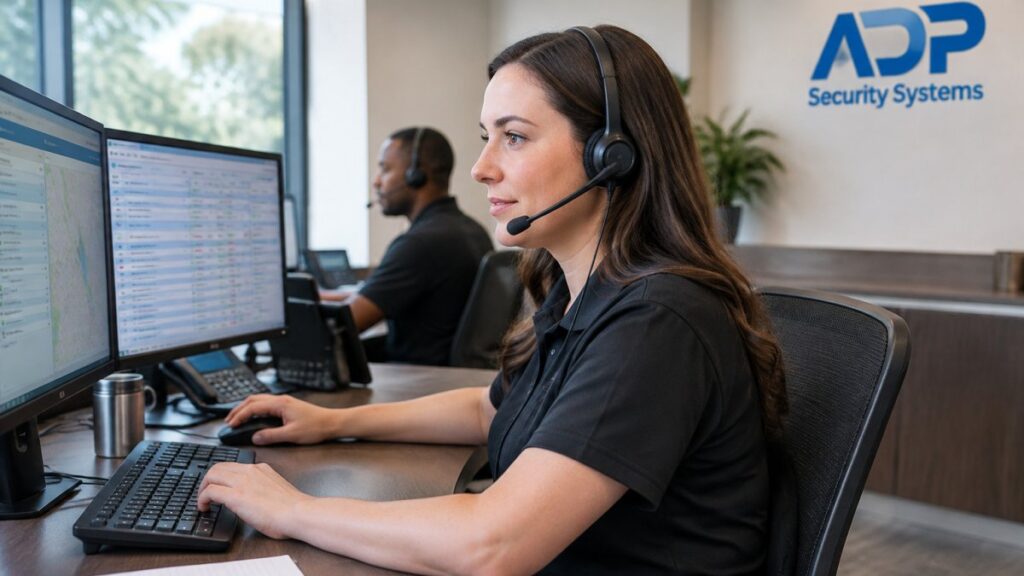
Quick Summary
Choose a medical alert monitoring center by confirming it is staffed 24/7 by trained live operators, asking which response-time interval its figure measures, and verifying any accreditation and backup power and communication procedures. The device matters less than the center, because the center’s response decides whether help arrives.
- Confirm a live operator answers every alert around the clock, including holidays and overnight.
- Ask which interval a quoted response time measures: answer, two-way contact, or dispatch.
- Request the 90th-percentile or worst-case answer time during evenings, overnight and weekends.
- Verify accreditation with the issuing body and ask about power, network and escalation backups.
- Get every fee in writing, including the total first-year cost and cancellation terms.
Table of Contents
- Why the Monitoring Center Matters More Than the Device
- Step 1: Confirm Whether the Service Is Monitored 24/7 by Trained Operators
- Step 2: Measure Medical Alert Monitoring Center Response Time
- Step 3: Check Accreditation, Operating Standards, and Backup Procedures
- Step 4: Match the Service to Fall Detection Needs for Seniors
- Step 5: Compare Monitored and Unmonitored Options Honestly
- Step 6: Review Fees, Contracts, and Options for Seniors With No Monthly Fee
- Booking a Free Security Assessment for Your Family’s Monitoring Plan
- Frequently Asked Questions
Why the Monitoring Center Matters More Than the Device
Last Updated: November 14, 2026
Most families compare medical alert devices by price, battery life and whether the pendant is waterproof. Those details matter, but the device is only the front end. When a senior presses the button, the monitoring center decides whether help arrives in minutes or never arrives at all. A pendant with a sharp design and a weak monitoring center is a poor purchase. The response is what protects someone.
Choosing a medical alert monitoring center means asking a different set of questions. Who answers the call? How quickly? What happens if the senior cannot speak? These questions are harder to answer than a spec sheet, and that is why many buyers skip them.
Step 1: Confirm Whether the Service Is Monitored 24/7 by Trained Operators
Start with the most basic question: is the service actually monitored around the clock? Some products advertise “emergency help” but route alerts to an automated voice message or to a family member’s phone. Those are not monitoring centers.
Ask the provider three things directly. Is the center staffed 24 hours a day, every day of the year? Are operators trained in emergency dispatch and in handling calls from seniors who may be confused, injured or hard to hear? And what is the process when a senior does not respond to the operator?
A common mistake is accepting a vague answer such as “we monitor around the clock.” Ask for the staffing model in plain terms. A good provider will explain it without hesitation.
Step 2: Measure Medical Alert Monitoring Center Response Time
Response time is the number that matters most, and it is the hardest to verify. Most providers will quote a single figure, often something like “under 60 seconds”, without telling you what that figure measures.

There are at least three distinct intervals in a monitored alert, and they are frequently blended into one marketing number:
- Button press to operator answer. This is the call-answering interval. It is what most providers advertise, and it is the easiest to measure because the center’s phone system logs it automatically.
- Operator answer to live voice contact with the senior. This is the two-way communication interval. It includes the operator hearing the senior, confirming the situation, and deciding whether to escalate. It is where confused, injured, or hard-of-hearing callers slow things down.
- Decision to dispatch. This is the handoff interval, the time from the operator deciding help is needed to the moment a call is placed to the local public safety answering point (PSAP) or to the listed emergency contacts. It is rarely published and is often the longest of the three.
When a provider says “our average response time is 30 seconds,” ask which of those three intervals that number describes. If the answer is vague, treat the number as a call-answering figure only, not as a promise about dispatch.
Ask about the distribution, not just the average. An average can look excellent while a small percentage of calls wait several minutes.
Ask how the center handles simultaneous alerts. A regional emergency, a storm, a wildfire, a wide power outage, can generate a burst of alerts at once.
Ask whether the figures are independently verified. Most response-time claims are self-reported. A few centers participate in third-party quality-assurance programs or publish audited metrics; most do not.
Walk through a concrete scenario. A daughter lives two hours away from her mother. Her mother presses the pendant after a fall and cannot get up. The question is not only how fast the operator picks up, but whether the operator can hear her, confirm the situation, and reach local emergency services or the listed contacts without delay.
The article breaks response time into three intervals that providers often blend into one figure.
| Interval | What it measures | Why it matters |
|---|---|---|
| Button press to operator answer | Call-answering time | Most often advertised; logged automatically |
| Operator answer to live voice contact | Two-way communication time | Slowed by confused, injured or hard-of-hearing callers |
| Decision to dispatch | Handoff to PSAP or contacts | Rarely published; often the longest interval |
Step 3: Check Accreditation, Operating Standards, and Backup Procedures
Accreditation is the closest thing the monitoring industry has to an independent quality signal, but it is widely misunderstood.
What accreditation actually covers. Accreditation reviews of monitoring centers typically look at process elements such as redundant power, backup communication paths, operator training records, and documented escalation procedures.
How to verify. Ask for the specific accreditation name and the issuing body, then check the issuer’s public listing directly.
What accreditation does not tell you. It does not tell you the center’s actual answer times, its staffing ratio overnight, its language capabilities, or how it handles a caller who cannot speak.
Backup procedures matter just as much, and are where most buyers stop asking. A monitoring center is a lifeline service, so the real question is what happens when something fails. Walk through each failure mode with the provider:
- Power failure at the center. Ask about redundant power, battery backup and generator capacity, and how long the center can run without grid power. A center that cannot describe its backup power in concrete terms is not prepared for the event that most often triggers a surge in alerts.
- Network or internet failure. Ask whether the center has multiple, physically separate communication paths (for example, redundant internet providers or diverse routing) so a single outage does not take the center offline.
- Cellular or landline failure at the senior’s home. Ask what the device does when its primary connection drops, whether it switches to a backup path, how long it takes, and whether the center is notified of the loss of signal. A device that silently loses connectivity is worse than one that reports it.
- Equipment failure. Ask what happens if the pendant or base unit stops working mid-contract, whether a replacement is shipped, how quickly, and whether monitoring continues during the gap.
- Manual escalation. Ask what the center does when it cannot reach the senior and cannot reach the first emergency contact. A documented escalation ladder, second contact, third contact, then a welfare check or dispatch, is the difference between a center that tries once and one that keeps trying.
Language access and accessibility belong in this conversation. Ask how the center handles callers who cannot speak clearly, have hearing loss, use a speech-generating device, or speak a language other than English.
Step 4: Match the Service to Fall Detection Needs for Seniors
Many people now choose a device with automatic fall detection, which triggers an alert even when the wearer cannot press a button. This is valuable for someone who loses consciousness or is too injured to act. But fall detection has limits. Readers can compare automatic fall detection options before choosing a monitoring service.
Ask the monitoring center how it handles automatic alerts. Does an operator call the senior first to confirm? How long does that call wait before escalating? If the senior does not answer, who is contacted next, and in what order?
Match the service to the senior’s actual risk. Someone who is active and alert may do well with a button-only pendant. Someone with a history of falls, balance problems or memory issues may need automatic detection plus a monitoring center with strong escalation procedures.
Step 5: Compare Monitored and Unmonitored Options Honestly
Unmonitored systems generally avoid monthly monitoring fees. Some connect only to a family phone or a text message. Those can work for a senior who lives nearby and is reachable, but they do not guarantee that anyone is watching the alert when it arrives.
Monitored services cost more each month, but they provide trained operators, defined escalation steps and a record of each alert. For a direct explanation of how monitored and unmonitored alarms differ, read our comparison. For most families of a senior who lives alone, that difference is the reason to pay for monitoring.
Be direct about the trade-off. An unmonitored system is cheaper only if someone reliable is always available to respond. If nobody is, the savings are not worth the risk. Compare the two options against the senior’s daily routine, not against the price tag alone.
Step 6: Review Fees, Contracts, and Options for Seniors With No Monthly Fee
Ask for every fee in writing before signing. Common charges include an equipment fee, an activation fee, a monthly monitoring fee and sometimes a cancellation charge. The advertised monthly price often excludes one or more of these. Request the total first-year cost and the cost after the contract ends.
Check the contract length, the cancellation policy and whether a trial period is available. A trial lets the family test response behavior before committing. Ask how the provider handles a device that stops working during the contract.
Seniors who want no monthly fee can consider an unmonitored device or a family-operated alert, but understand the trade-off described in Step 5. Qualified options exist, yet they shift the responsibility for response onto the family. Be realistic about whether that works for your situation.
Booking a Free Security Assessment for Your Family’s Monitoring Plan
Choosing a monitoring center is easier when you have a clear picture of your situation. Start by writing down the senior’s daily routine, living arrangement, mobility, and who can respond if an alert goes off. Then ask each provider the questions in this guide and compare the answers side by side.
ADP Security Systems has served South Carolina for more than 30 years, providing 24/7 alarm monitoring and GPS and 4G wireless medical alert capabilities. It installs and maintains security, fire and life safety systems and can walk you through the monitoring options that fit your family’s needs. To talk through your situation, request a Free Security Assessment today.
Frequently Asked Questions
Are medical alert monitoring centers staffed 24/7?
Reputable medical alert monitoring centers are staffed around the clock, every day of the year, so a call for help can be answered at any hour. Ask the provider whether operators are on site at all times and whether a second operator is available during peak call volume. Also ask what happens during a power or internet outage at the center, since a monitored system is only as dependable as the facility behind it. A written answer to these questions tells you more than a marketing claim.
What happens if a monitoring center cannot reach me?
A well-run monitoring center follows a set escalation protocol. Operators typically attempt voice contact through the device, then call the phone numbers on file, then notify the listed emergency contacts, and dispatch local emergency services when a response cannot be confirmed. Ask providers to describe this protocol in writing and confirm that your emergency contacts are current. Update the contact list whenever a number changes, because outdated information is one of the most common causes of delayed help.
Does Medicare pay for medical alert monitoring?
Original Medicare generally does not cover the cost of medical alert devices or monitoring services, because they are classified as convenience items rather than medical treatment. Some Medicare Advantage plans or supplemental programs may offer partial benefits, so check the specific plan documents or call the plan directly. Whatever coverage applies, compare the total monthly cost, equipment fees, and contract terms across providers before you decide. Pricing varies by provider, so request a quote from ADP Security Systems on its website.
Do medical alert systems with fall detection need a monitoring center?
Fall detection works by sensing a sudden impact and lack of movement, and it only helps if someone is alerted afterward. Without a monitoring center, the device may sound a local alarm that no one hears, particularly if the person lives alone or is unconscious. Monitored fall detection connects the alert to trained operators who can speak through the device, assess the situation, and send help. Confirm how the system responds if the wearer does not answer the call.