What’s the Best Way to Mount Security Cameras Outside?
October 27, 2026
7 Steps to Secure Home Entry Points Against Intruders
October 27, 2026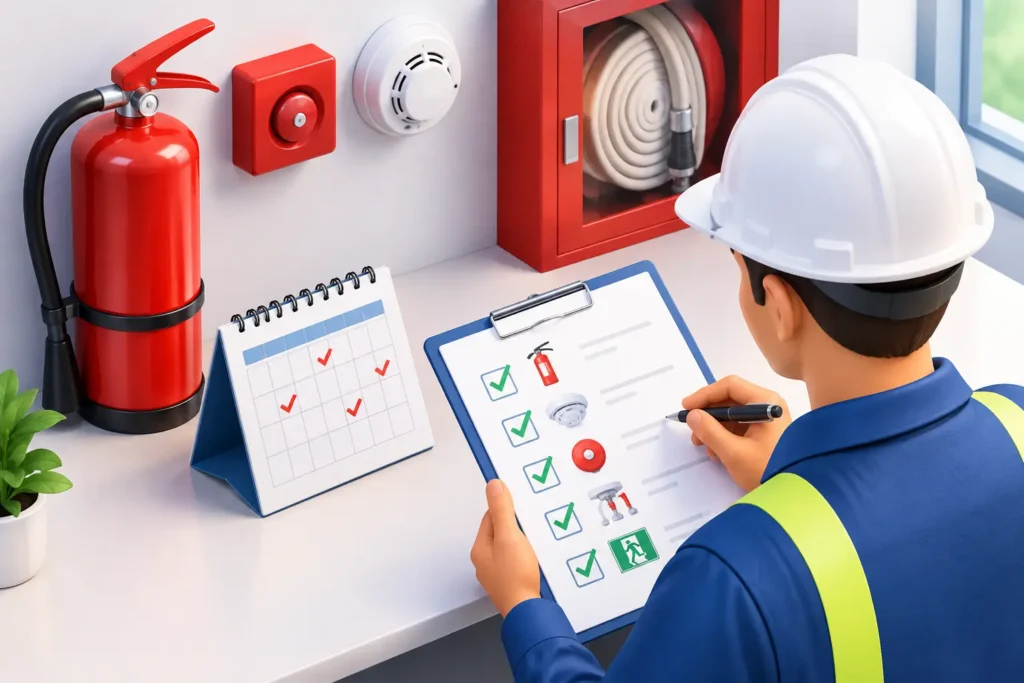
A fire alarm panel can look perfectly normal until the moment a detector fails, a backup battery weakens, or a notification device does not activate when it should. A dependable fire inspection schedule gives property owners and facility managers a practical way to find those issues early, protect occupants, and keep life-safety responsibilities from becoming a last-minute scramble.
For South Carolina businesses, the right schedule is not a one-size-fits-all checklist. Your building type, occupancy, equipment, local requirements, insurer expectations, and fire authority all influence what must be inspected, tested, documented, and serviced. The goal is straightforward: maintain a system that is ready to detect danger, alert people, and help support a fast emergency response.
Why a Fire Inspection Schedule Matters
Fire protection systems spend most of their lives waiting. That is exactly why regular attention matters. A damaged pull station, obstructed sprinkler valve, expired extinguisher, disconnected communicator, or low panel battery may not be obvious during a normal workday. During an emergency, however, each can affect how quickly people receive notice and how effectively the building responds.
A planned inspection schedule also replaces uncertainty with accountability. Instead of asking whether someone checked the fire alarm recently, management can see what was inspected, when it occurred, what needed correction, and whether the repair was completed. That record can be valuable during inspections, insurance reviews, tenant conversations, and internal safety planning.
Just as importantly, scheduled service helps prevent avoidable disruptions. A trouble signal after hours can create stress for business owners, employees, and monitoring personnel. Catching wear, contamination, corrosion, battery decline, or communication problems during routine maintenance is usually easier than reacting after a system enters trouble.
Start With Your Building and System
Before assigning dates to a calendar, identify what protection is installed and who is responsible for each part. A small office with a monitored fire alarm system has different needs than a medical facility, manufacturing operation, restaurant, multi-tenant retail center, or warehouse with sprinkler protection.
Your system may include fire alarm control panels, smoke and heat detectors, manual pull stations, horn/strobe devices, duct detectors, emergency lighting, fire extinguishers, sprinkler risers, monitoring communicators, and smoke-control components. Some items are visually checked by designated on-site personnel, while others require testing by qualified fire-alarm or fire-protection professionals.
Do not assume that every device follows the same interval. Applicable codes, the authority having jurisdiction, equipment manufacturer instructions, occupancy conditions, and your insurer may require different frequencies. A professional assessment can help turn those requirements into a workable program for your location.
Conditions That Can Change the Schedule
A clean, climate-controlled professional office generally puts less strain on detection equipment than a dusty warehouse, commercial kitchen, auto shop, or manufacturing floor. Renovations can introduce debris and wiring changes. High humidity, pests, paint overspray, frequent temperature swings, and accidental impacts can also affect equipment.
When operating conditions change, review the fire inspection schedule rather than waiting for the next annual visit. A building expansion, tenant change, new equipment installation, altered floor plan, or change in occupancy can affect device coverage and system operation.
Build a Practical Inspection Rhythm
A useful schedule divides work into simple intervals. The exact tasks and timing should be confirmed for your property, but this framework helps business owners organize responsibility.
Monthly: Look for Obvious Problems
A designated employee or facility contact can perform basic visual checks. This is not a substitute for professional testing, but it helps catch issues that should be reported promptly.
Check that the fire alarm panel shows normal status and that no trouble, supervisory, or alarm condition has been ignored. Confirm that pull stations, extinguishers, exits, and alarm devices remain visible and accessible. Look for damaged detector covers, blocked sprinkler heads, leaking pipes, construction materials near protection equipment, and signs that someone has moved or painted around a device.
If your system is professionally monitored, make sure the correct call list and keyholder information remain current. A new manager, changed phone number, or former employee still listed as a contact can slow communication when every minute matters.
Quarterly or Semiannual: Review Higher-Use Components
Many properties need recurring attention for components that are exposed to everyday conditions. Depending on the system and applicable requirements, this may include checks related to sprinkler valves, fire pump conditions, batteries, extinguishers, emergency lighting, and monitoring communications.
The key is to avoid treating a calendar interval as proof that the work was done correctly. Each visit should result in clear documentation, including deficiencies found, corrective recommendations, and confirmation when repairs are complete. A report that identifies a problem without a follow-through plan does not restore protection.
Annual: Complete Professional Testing and Service
Annual professional inspection and testing is a central part of many commercial fire protection programs. Qualified technicians can test system functions, inspect devices, evaluate batteries and power supplies, verify communication pathways, and identify equipment that needs cleaning, repair, or replacement.
This is also a good time to review the building as a whole. Have new walls, doors, shelving, machinery, or ceiling changes affected detector coverage or notification audibility? Are evacuation maps current? Do employees know how to report an emergency and where to meet outside? Equipment reliability and staff preparedness work together.
For some systems, particular components require additional testing on longer cycles. These intervals should be managed from the inspection history and confirmed against the requirements that apply to your site. Do not rely on memory or a generic online checklist for specialty equipment.
Keep Testing From Creating Confusion
Testing a monitored fire alarm system requires coordination. Before a scheduled test, notify the monitoring center and follow the established procedure for placing the account on test. This helps prevent unnecessary dispatches while technicians verify alarm, supervisory, and trouble signals.
Once testing is complete, confirm that the account has been returned to normal monitoring status. This small step is essential. A well-tested system is not fully protected if the monitoring center is unaware of a later alarm condition.
Plan service around business operations when possible. For a school, medical office, hotel, restaurant, or busy retail setting, testing may affect customers, occupants, or sensitive operations. Professional scheduling can reduce disruption while still ensuring the work is completed thoroughly.
Documentation Is Part of Fire Safety
Inspection tags, service reports, repair invoices, battery replacement records, and monitoring test confirmations should be stored where the responsible team can find them quickly. Digital records can make this easier for organizations with multiple locations or changing management teams.
Good documentation should show the date of service, equipment inspected, tests performed, deficiencies identified, corrective actions recommended, and repair status. It should also name the responsible provider and preserve any reports required by local authorities or insurance carriers.
A recurring issue deserves attention. If the same device appears on multiple reports, or the panel repeatedly shows intermittent trouble, ask why. Replacing a part may solve the problem, but recurring conditions can also point to environmental factors, wiring concerns, water intrusion, power issues, or equipment nearing the end of its service life.
Know When to Call for Service Right Away
Some concerns should not wait for the next scheduled visit. Contact your fire alarm service provider promptly if the panel displays a persistent trouble or supervisory signal, a device is damaged, a sprinkler component is leaking or obstructed, renovation work affects equipment, or a fire alarm has activated unexpectedly.
If a system or portion of a system is impaired, the building may need interim protective measures. The appropriate response depends on the nature of the impairment, the building, and applicable local direction. Notify the people who need to know, including your service provider and, when required, the proper authority or insurer. Do not silence a condition and assume the issue can wait.
Make the Schedule Easy to Follow
The best fire inspection schedule is one your team can actually maintain. Assign one internal contact to oversee records and appointments, but avoid placing all knowledge with a single employee. Keep service contacts, monitoring procedures, account information, and prior reports accessible to backup personnel.
For more than 30 years, ADP Security Systems has helped South Carolina businesses pair professionally installed fire alarm protection with scheduled maintenance and 24/7 monitoring support. A qualified provider can help identify the inspection rhythm that fits your property, equipment, and operational needs without burdening your staff with technical guesswork.
A fire inspection schedule is not paperwork for paperwork’s sake. It is a living plan that helps ensure your building is prepared long before an emergency demands it.