Smart Home Automation for Seniors: Safety and Medical Alerts
July 14, 2026
Monitored vs Unmonitored: Commercial Fire Alarm Monitoring Guide for SC Businesses
July 17, 2026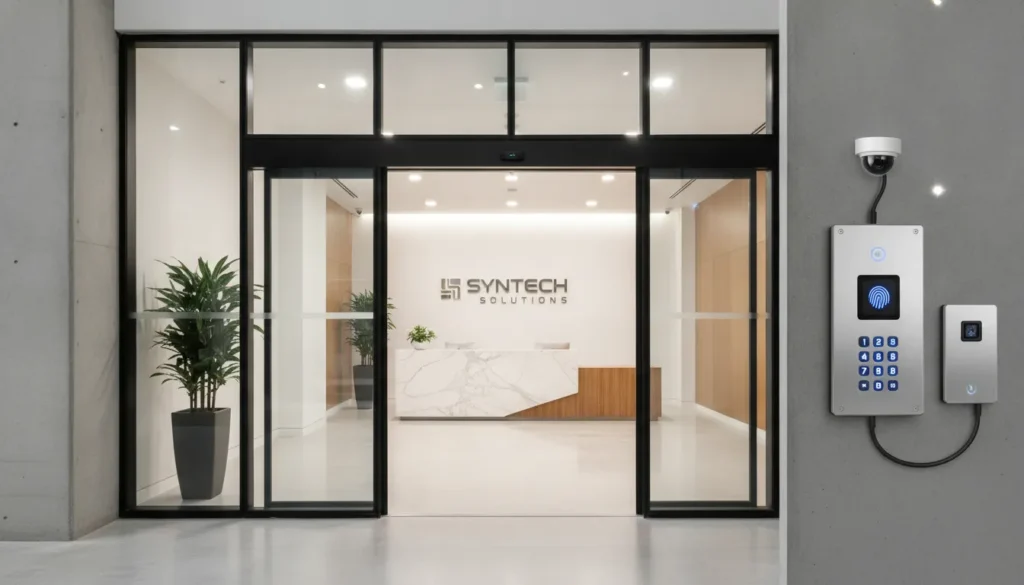
Property crimes cost U.S. firms over $17.2 billion in yearly losses. Upstate business owners must choose between metal keys and smart tech to protect their assets. This choice affects your Greenville shop’s safety and costs.
Commercial access control systems help Greenville business owners swap risky metal keys for digital tools that provide full entry logs and remote site management from a phone app. According to a report by Avigilon, property crimes cost U.S. firms over $17 billion each year, making a robust tracking system vital for your physical assets and goods. While simple locks cost less at first, they lack the entry logs needed for modern safety and are often very costly to rekey when workers leave the shop. For firms in Upstate South Carolina, moving to a keyless system removes the high price of changing locks and ensures only the right people enter your building.
Deciding to switch starts with knowing why metal keys often fail in a workplace. You must look past the low price of a lock to see the real gaps in your safety. The full picture starts with the hidden security risks of relying on physical keys.
Ready to secure your Greenville business? Call ADP Security Systems at (864) 900-4900 for a free on-site security assessment today.
What Are the Hidden Security Risks of Traditional Key Systems?
Traditional lock and key systems have protected South Carolina businesses for decades. But as property crimes cost companies about $17.2 billion each year, old locks are becoming a weak point. For a business in Greenville or the Upstate, a single metal key can create a large security gap that is hard to close.
Uncontrolled Key Duplication
The most common risk with physical keys is how easily people can copy them. Most standard keys can be duplicated at any local hardware store in minutes. You have no way to know how many copies of your office keys exist once you hand them to a staff member. This lack of control makes modern keyless entry trends more attractive for owners who need to know exactly who has access to their site.
The Danger of Lost Master Keys
A master key system is helpful for management, but it carries a high risk. If a single master key is lost or stolen, it can compromise every lock in your facility. According to security experts at Fortress GT, this risk forces a hard choice between leaving the building at risk or paying for a full rekey. For large commercial properties, the cost to rekey every door can exceed $50,000 when an employee leaves or a key goes missing.
Lack of Audit Trails
Physical keys leave no evidence trail when someone opens a door. If a theft occurs after hours, it is nearly impossible to find out which key holder entered the room. Traditional locks provide no data on the identity of the user or the time of the event. This makes internal theft cases much harder for local police to solve. In contrast, commercial access control systems log every entry attempt to give you a clear record of who was in the building and when.
Key Proliferation and Inventory Chaos
Over time, keys multiply without any control system. Employees make unauthorized copies, former staff forget to return theirs, and facility managers end up with no idea how many keys are in circulation or who holds them. For a growing business in Spartanburg or Anderson, this unchecked proliferation becomes a serious liability. A key inventory that was accurate six months ago is almost certainly outdated today. Electronic systems solve this by maintaining a live, accurate credential roster at all times.
No Time-Based Access Control
With physical keys, there is no way to restrict when a door can be opened. An employee with a key has the same access at 2 AM as they do at 2 PM. This creates unnecessary risk for businesses that operate with defined shifts or after-hours cleaning crews. Modern access control systems allow administrators to set specific schedules, automatically locking and unlocking doors based on the time of day or day of the week.
Delayed Response to Security Incidents
When a key goes missing or an employee is terminated, the response is painfully slow. The facility must locate a locksmith, order replacement cylinders, and schedule time to rekey each affected door. During that window, the building remains vulnerable. Electronic systems let you revoke credentials instantly from any device with internet access, closing the security gap in seconds instead of days.
How Commercial Access Control Systems Work
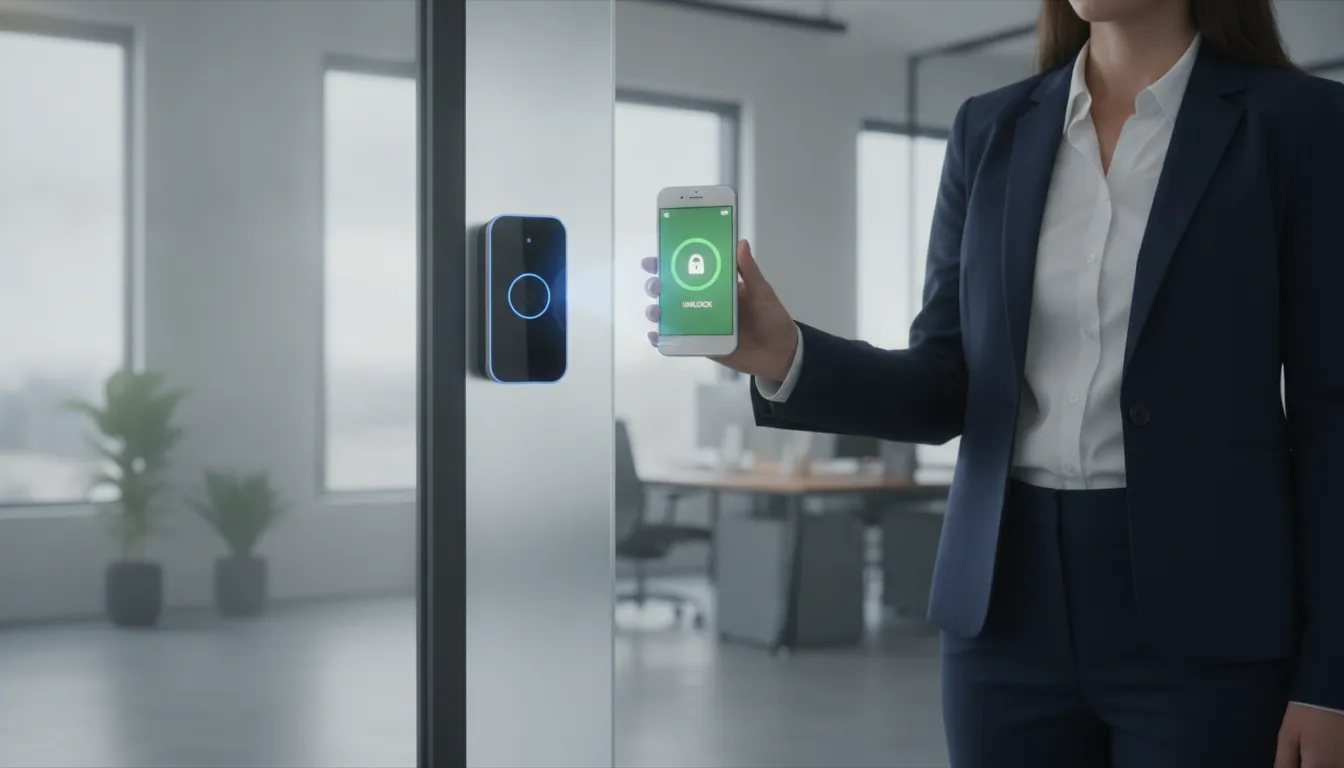
Electronic security systems replace metal keys with digital data. These systems use tech parts to manage entry into your building. Instead of a key, a user presents a card or a phone to a reader at the door. These systems are much more secure than old locks.
The Path from Card to Entry
The process starts when a person uses a digital key to gain access. These keys come in many forms. Common types include cards, fobs, PIN codes, and phone apps. Top security sites might use body scans like fingerprints. When you place a card or phone near the reader, it scans your data. The reader sends this data to a central brain called the control panel. This panel checks if your ID has the right to enter at that time. If the panel confirms the data, it sends a power signal to the door lock. The door then unlocks for a short time. This whole process takes less than a second. Business systems rely on three main parts to stay safe. The reader sits outside the door to get user info. The lock stays shut until the brain says it is safe to open. Most doors use a strong magnet or an electric latch. The brain of the system stays in a safe spot like a locked closet. These parts work as a team to let staff in while keeping others out.
Cloud vs On-Site Systems
Modern systems often use cloud tools. This lets business owners manage doors from a web browser or a phone app. You can add new users or change rules from any place. This is a big help for people who manage more than one site. Many modern companies now use mobile credentials to let staff enter with their phones. Some groups still prefer on-site servers. These keep all data inside the building. This setup works well for groups with very strict data rules, like banks or state offices. Both types must follow federal rules for door access control to keep data and people safe.
Audit Trails and Video Sync
One of the best parts of these systems is the audit trail. Every time a door opens, the system logs the event. It records the name, the time, and the door used. This log creates a clear path of entry for every room in the office. This makes it easy to find out who was in the building during a theft or a loss. You can also link these logs to your commercial security camera systems. This link lets you see a short video of the person who just used their card. It helps you know that the person with the card is the real owner. This visual check adds a strong layer of proof to your security records.
Which Type of Commercial Access Control System Is Right for Your Business?
Every business in Upstate South Carolina has different security needs. A small retail shop in Greenville might only need one card reader. A large local factory might need to track hundreds of staff across several shifts. To pick the best fit, you must first learn how to compare access control providers and the systems they offer.
Core Access Control Models
There are four main ways to manage user rights. Role-Based Access Control is the most common choice for businesses. It gives access based on a person’s job title or department. Discretionary Access Control lets the owner set rules for each user. Rule-Based Access Control uses set factors like the time of day to unlock doors. Mandatory Access Control is the most strict and is mainly used in high-security sites.
Cloud vs. On-Premise Setup
You must also choose where the system lives. On-premise systems use a local server kept inside your building. These are good for sites that need full control of their data. Cloud-based systems are easier for most local owners to use. A study by Securitas Technology showed that 20% of companies had already moved to mobile systems by early 2021. Cloud tools let you manage doors from a phone app or web browser from anywhere.
Credentials and Security Levels
The tools staff use to enter are just as important as the software. Key fobs and cards are standard, but mobile access is growing fast. For the highest security, biometric tools like fingerprint or face scans are the best choice. These systems prevent staff from sharing cards or fobs. Many owners now pair these tools with commercial security cameras to see exactly who enters the site at any time.
| System Type | Security Level | Complexity | Best Use Case | Scalability |
|---|---|---|---|---|
| Role-Based | High | Medium | Standard Office | Excellent |
| Discretionary | Medium | Low | Small Business | Limited |
| Biometric | Maximum | High | High-Value Storage | Moderate |
| Cloud-Based | High | Low | Multi-Site Shops | Very High |
What Is the True Cost of Traditional Keys vs. Access Control Systems?
When you choose a security plan for your Upstate business, you must look at the long-term price. Traditional locks often seem cheap at first. But the hidden costs of managing physical keys add up over time. Modern commercial access control systems offer a more stable path for growth and safety.
Upfront Setup and Hardware Costs
Buying standard locks usually costs less on day one. You might pay between $150 and $500 for a single lock cylinder plus labor. Electronic systems have a higher starting price. A full setup typically runs from $1,000 to $4,000 per door for hardware and setup. While this initial gap is large, the initial buy is only part of the story.
For companies in Greenville and Spartanburg, the real cost shift happens during the first few years of use. Traditional locks need physical parts for every change. Electronic systems use software to manage who can enter your building. This change in how the system works leads to big savings in the long run.
The Price of Lost Keys and Rekeying
The biggest hidden cost for key systems is rekeying. If an employee leaves or a master key is lost, you must change every lock. For a large site, this process can cost more than $50,000. Even small shops face high fees for a few locks. Electronic systems solve this because you can turn off a card or fob in seconds with no cost.
A recent report shows that property crimes cost U.S. firms over $17 billion each year. Managing keys well is a key part of stopping these losses. Most business owners find that the total cost of keys over five to seven years often exceeds the price of a digital system. This is because keys need constant upkeep, physical copies, and manual labor to track.
Local Flexibility and Monthly Terms
Many national firms force you into long contracts with high fees. This adds a big risk to your security budget. ADP Security Systems takes a different path for South Carolina owners. We offer flexible, month-to-month plans with no long-term contracts. This keeps your costs low and lets you change your system as your business grows.
You can also compare access control providers to see how local service saves you money. With no credit checks and easy terms, you can get the safety you need without a big debt. This local approach ensures you only pay for what you use while keeping your facility safe 24/7.
How Do You Choose the Right Access Control Provider in Upstate SC?
Upstate SC businesses face real security risks every day. Local crime data shows that shops and offices stay targets for theft and break-ins. Picking a partner for commercial access control systems needs more than just choosing a brand name. You need a team that knows the area and gives stable service. Choosing the wrong vendor can lead to slow help when a lock fails or a system goes offline. A local team can reach your site much faster than a national firm with no local office.
Local Care and Owner Trust
ADP Security Systems has served the Greenville area since 1995. We are a family-run firm led by OK Smith III. We offer direct owner care that big national brands cannot match. Our team knows the exact needs of firms in Upstate South Carolina. We focus on long-term bonds instead of just fast sales. This local touch means you get same-day help from people who live in your own town. You can find more tips on how to compare access control providers to see why local help matters for your safety.
UL Certified Station and Gear
Trust is the top factor for any safety tool. Our main watch station has a UL 827 cert. This means our site meets the best national rules for safety, power backup, and fast response times. We use Honeywell gear to make sure your tools last and stay easy to use. Top-grade parts lower the risk of breaks and keep repair costs low over time. The FBI notes that property crimes still hurt many U.S. firms every year. This fact makes expert watching a key part of your defense plan.
Integrated Security and Fire Systems
A single door lock is only one part of a safe office. The best results come from integrated security and fire systems. ADP joins access control with cameras, fire alarms, and break-in alerts. This joined setup lets you handle all your safety needs through one local team. We offer these perks for your business:
- No long-term contracts to sign.
- No credit checks required for service.
- Fast same-day help for any system issues.
- Direct access to the business owner.
This plan gives you full power over your safety budget without being stuck in a bad deal. For a free safety check, call us at (864) 900-4900. We help you find the best plan for your site without any pressure. Our team will walk through your building and find the right fit for your needs.
7 Key Advantages of Commercial Access Control Systems Over Traditional Locks
- Immediate credential revocation — Revoke access instantly when an employee leaves. No locksmith, no rekeying, no delay.
- Full audit trails for every entry — Every door open event logs who, when, and which door. Complete accountability for security incidents.
- Time-based scheduling and automation — Restrict access to business hours only. Doors lock and unlock automatically based on the time of day.
- No unauthorized key duplication — Digital credentials cannot be copied at a hardware store. Only authorized personnel receive access credentials.
- Remote management from anywhere — Add or remove users from any device. Manage multiple sites from a single dashboard without visiting each location.
- Integration with video surveillance — Link each access event to security camera footage for visual verification of every credential use.
- Mobile credential support — Staff enter using their smartphones via secure Bluetooth or NFC. No cards to lose, no fobs to replace.
Frequently Asked Questions
How much does a commercial access control system cost per door?
A commercial access control system typically costs between $1,500 and $3,500 per door depending on complexity. This price includes hardware like smart readers and control panels, professional installation, and cabling. Additionally, cloud-based management software usually incurs a monthly subscription fee ranging from $10 to $50 per door for cloud connectivity and maintenance.
Can an access control system work with my existing security cameras?
Yes, modern access control systems integrate seamlessly with existing IP-based security cameras and video management systems. Linking these platforms allows you to tie specific entry events, such as an unauthorized door breach or an employee badge swipe, directly to corresponding video clips. This integration significantly improves incident response times and audit trail accuracy.
What happens to a building security system if the power goes out?
When power is lost, commercial access control systems rely on backup battery power supplies to remain operational for several hours. Depending on fire safety codes, individual locks are configured to fail-safe, unlocking automatically during emergencies to allow egress. Or fail-secure, remaining locked to protect high-security areas while allowing manual exit options.
Is it hard to manage access permissions for new employees?
Managing credentials for new hires is incredibly simple with modern, cloud-based access control. Administrators can instantly issue mobile credentials or physical fobs via an intuitive online dashboard. You can easily assign specific access levels, schedule permission windows, and revoke entry rights instantly if an employee leaves, eliminating the need to physically retrieve keys.
What is a commercial access control system?
A commercial access control system is an advanced security solution designed to manage and monitor entry to business facilities. By replacing traditional keys with digital credentials such as RFID keycards, fobs, or mobile smartphones. Businesses can control access to specific doors, track entry times, and enhance overall building security through a centralized management platform.
What are the security risks of traditional master key systems?
Traditional master key systems present major security vulnerabilities because physical keys can be duplicated without authorization and lack tracking capability. If a master key is lost or stolen, the entire facility must be physically rekeyed, which is incredibly expensive. Furthermore, traditional keys cannot enforce time-based access restrictions or be revoked remotely.
What is the difference between cloud-based and on-premise access control?
Cloud-based access control stores configuration data in the cloud, allowing administrators to manage permissions and view access logs from anywhere via a web browser or app. Conversely, on-premise systems require dedicated local servers, on-site IT infrastructure, and manual software updates, making remote management more complex and increasing overall system maintenance costs.
How do mobile credentials work for commercial access control?
Mobile credentials allow users to unlock secure doors using their smartphones instead of physical keycards or fobs. The mobile app utilizes secure Bluetooth or Near Field Communication to transmit encrypted credentials to the door reader. This modern technology improves convenience, reduces key card replacement costs, and increases security through phone biometric protection features.
Ready to Upgrade Your Business Security in Upstate South Carolina?
Each day you wait is one more day your building is at risk from theft because old locks and keys are very easy to copy. You can fix this safety gap right now by switching to a modern system that gives you full control over who comes and goes. Setting up a new access plan takes very little time and will stop bad entry to keep your shop safe from a big loss.
Ready to schedule a free security assessment? Call (864) 900-4900 to talk to a security expert and get your new system started today. We are here to help you protect your local firm in the Upstate SC area.