Troubleshooting Common Home Security Connectivity Issues
November 8, 2026
What Professional Fire Alarm Inspections Cost in the US
November 9, 2026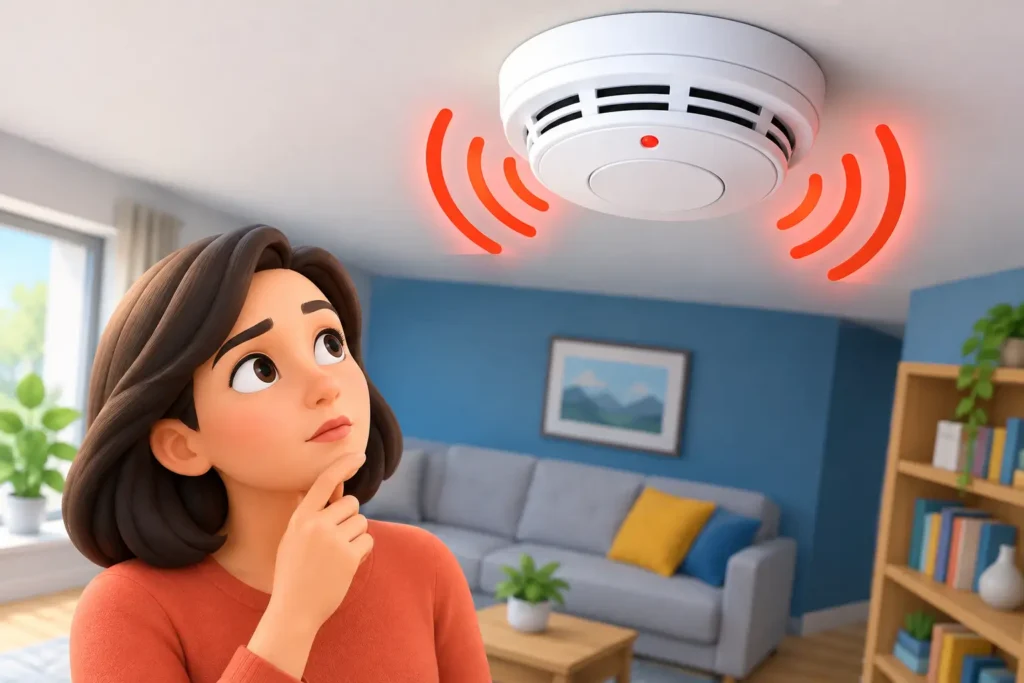
A chirp from a smoke alarm can be easy to ignore at first, especially when it happens once every minute or two. But if you are asking, “why do fire alarms chirp,” the device is usually trying to tell you it needs attention. That is different from the loud, continuous alarm that signals smoke or fire. A chirp is often a maintenance warning, but it should never be dismissed.
For South Carolina homeowners and business owners, the right response depends on the type of equipment making the sound, where it is installed, and whether there are any signs of smoke, heat, or carbon monoxide. Start with safety: if the alarm is sounding continuously, you smell smoke, see fire, or anyone feels ill, leave the building and call 911. Do not spend time troubleshooting inside a potentially dangerous space.
Why Do Fire Alarms Chirp Instead of Sounding Continuously?
Most people use “fire alarm” to describe any device on the ceiling that makes noise. In practice, it may be a battery-operated smoke alarm, a hardwired smoke detector, a carbon monoxide alarm, or part of a monitored fire alarm system. These devices use different sounds to communicate different conditions.
A continuous, urgent alarm usually indicates that smoke, heat, or carbon monoxide may be present. A short chirp at regular intervals more often points to a device condition such as a low battery, lost AC power, an expired sensor, or a wiring or communication fault.
The pattern matters. Listen for whether the sound is a single chirp, a series of beeps, or a full alarm. Check the indicator light and the manufacturer’s label on the device if it is safe to do so. Many newer alarms display a specific trouble code or use a light pattern to help identify the issue.
The Most Common Reasons Fire Alarms Chirp
A battery needs replacement
A low backup battery is the most familiar cause of chirping. Even hardwired alarms commonly use batteries so they can continue protecting the building during a power outage. When that battery weakens, the device chirps to let you know it may no longer work as intended if electrical power is interrupted.
Replace the battery with the exact type recommended by the manufacturer. Do not mix battery types, use a damaged battery, or assume a recently installed battery is good simply because it is new. A battery can lose charge in storage or fail prematurely.
After replacing it, test the alarm using its test button. If it keeps chirping, the battery may not be seated correctly, the battery compartment may be open, or another condition may be causing the warning.
The alarm has reached the end of its service life
Smoke and carbon monoxide alarms do not last forever. Many units are designed to be replaced after about 10 years, although the correct replacement schedule is determined by the manufacturer and the equipment type. Carbon monoxide sensors may have a shorter service life.
An end-of-life chirp can continue even after you install a fresh battery. Look for a manufacture date or replacement date printed on the back or side of the alarm. If the unit is at or beyond its recommended age, replace the entire device rather than trying to silence it.
This is especially important in rental properties, offices, and facilities with multiple alarms. One aging detector can create repeated nuisance chirps, but more importantly, it can leave an area without reliable fire detection.
A hardwired alarm has lost electrical power
Hardwired smoke alarms are connected to the building’s electrical system, with battery backup. A chirp may indicate that AC power has been interrupted by a tripped breaker, a loose connection, recent electrical work, or a local power outage.
Check whether lights or other electrical equipment in the area are working. If a breaker has tripped, do not repeatedly reset it without understanding why. Electrical faults deserve attention from a qualified electrician or alarm professional, particularly in a commercial building or a home with an interconnected alarm system.
Dust, insects, humidity, or temperature changes are affecting the sensor
Smoke alarms are sensitive by design. Dust buildup, small insects, steam, high humidity, aerosol sprays, and sharp temperature changes can interfere with a sensor or cause nuisance alarms. In South Carolina, seasonal humidity and unconditioned spaces can make this more common in garages, attics, laundry areas, and near kitchens or bathrooms.
If the manufacturer permits it, gently vacuum the outside vents using a soft brush attachment. Do not spray cleaners, paint, air freshener, or insect treatment into the device. Avoid relocating or covering an alarm on your own, since placement requirements exist to keep occupants protected while reducing false activations.
If a detector repeatedly reacts to ordinary cooking or shower steam, the answer may be better device placement or a different detector type, not removing protection from the area.
An interconnected system has a problem
In many homes, smoke alarms are interconnected. When one device detects a hazard, all alarms sound together. That provides earlier warning throughout the home, but it can also make troubleshooting less obvious. The chirping alarm may not be the one closest to where you hear the sound.
Walk through the property and identify each device. A failing battery or expired unit in a hallway, guest room, garage, or utility area can be the source. If several units are chirping or the alarms behave unpredictably, professional service is the safer choice.
For commercial fire alarm systems, trouble signals may come from a control panel rather than a ceiling-mounted detector. The panel could be reporting a low battery, ground fault, communication problem, supervisory condition, or device issue. Do not silence and forget a panel trouble condition. Document the message, notify the appropriate facility contact, and arrange service promptly.
What to Do When You Hear a Chirp
First, make sure the sound is not a warning of an immediate emergency. If there is smoke, fire, a carbon monoxide warning, or any uncertainty about occupant safety, evacuate and call 911.
If it is clearly a periodic chirp with no signs of danger, identify the exact device. Replace the battery if the device uses a replaceable battery and the manufacturer instructions support that step. Then press the test button to confirm the alarm operates. Some units need a reset after a battery change, which may involve holding the test button for several seconds. Follow the instructions printed on the alarm or in its manual.
Do not remove the battery and leave the device disabled. A quiet alarm that cannot detect smoke or carbon monoxide does not protect anyone. If the chirp persists after a correct battery replacement and reset, inspect the device’s age and condition. Replacement is often the right next step for an older unit.
When a Chirp Calls for Professional Help
A homeowner can often resolve a simple low-battery warning. Other situations require more than a quick battery change. Call a qualified professional when a hardwired unit has no power, interconnected alarms continue chirping, an alarm panel shows a trouble code, or you cannot identify which device is making the sound.
Businesses should take trouble conditions particularly seriously. Fire alarm equipment may be part of a required life-safety system, and a disabled device, disconnected circuit, or ignored control-panel warning can create risk for employees, customers, and the property itself. Facilities with monitored systems should follow their established notification and service procedures.
Professional maintenance also helps identify issues that are not obvious from a ceiling-level inspection, including failing backup batteries in a fire alarm panel, damaged wiring, improperly located detectors, and devices approaching replacement age. For customers across South Carolina, ADP Security Systems can help evaluate and maintain professionally installed life-safety systems so problems are addressed before protection is compromised.
Preventing the Next Chirp
The simplest prevention is a regular schedule. Test alarms monthly, replace batteries according to the manufacturer’s instructions, and note each unit’s replacement date. Keep alarms clean and unobstructed, and make sure family members or staff know the difference between a low-battery chirp and an emergency alarm.
For commercial properties, scheduled inspection and maintenance provide another layer of confidence. A documented service plan helps keep batteries, panels, detectors, pull stations, notification devices, and monitoring communications in working order.
That small chirp is not just an annoyance in the middle of the night. It is a reminder that life-safety equipment needs attention before the moment it is needed most.