How to Protect Construction Equipment on Every Jobsite
September 27, 2026
Camera Theft Deterrence That Protects Your Property
October 1, 2026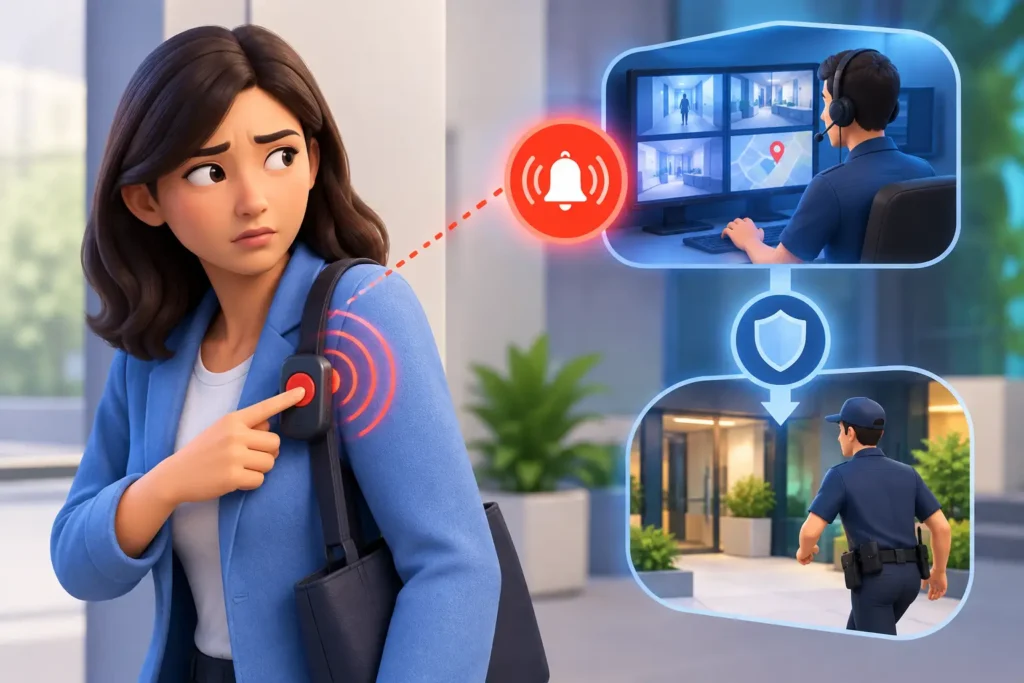
A front-desk employee notices a visitor becoming threatening. A cashier sees someone attempting to force access to a restricted area. A caregiver falls at home and cannot reach a phone. In these moments, calling for help may be unsafe, impossible, or simply too slow. Understanding what is a duress alarm helps businesses, families, and vulnerable individuals prepare for an emergency before it happens.
A duress alarm is a device or alarm function that lets a person quietly signal for immediate assistance when they are under threat, experiencing a medical emergency, or unable to safely make a normal call for help. Depending on the system, the signal can alert an on-site manager, a security team, a professional monitoring center, designated contacts, or emergency responders.
Unlike a burglar alarm, which is generally triggered by an unauthorized entry, a duress alarm is intentionally activated by a person who needs help right away. Its value is simple: it gives someone a fast, discreet way to communicate that something is wrong.
What Is a Duress Alarm Designed to Do?
The purpose of a duress alarm is to shorten the gap between an emergency and a response. The person activating it does not need to explain the situation, search for a phone, or draw attention to the fact that they are requesting help.
For a business, that can mean a silent signal from a reception desk, office, pharmacy counter, cash-handling area, or employee-only workspace. For a homeowner or older adult, it may mean pressing a wearable help button after a fall, sudden illness, or frightening encounter. In either setting, the right response plan matters as much as the device itself.
A duress signal may be silent, audible, or both. Silent activation is often preferred when a visible or audible alarm could increase risk. An audible alarm can be appropriate in other situations, such as a medical crisis where alerting nearby people is the priority. A professional security assessment helps determine which approach fits the location and likely risks.
How a Duress Alarm Works
A duress alarm usually begins with a simple activation method. This could be a fixed button under a desk, a wireless pendant, a wall-mounted button, a mobile device feature, a keypad code, or a wearable medical alert device. When activated, the system sends a distinct emergency signal through the alarm panel or connected cellular network.
What happens next depends on how the system is configured. In a monitored system, trained central-station operators receive the alarm and follow the established response procedure. That may include calling the protected location, contacting designated keyholders, dispatching emergency services when appropriate, or using other instructions set up for that account.
For a personal medical alert system, pressing the SOS button can connect the wearer with an emergency response center. Some devices also include automatic fall detection, GPS location capability, and two-way voice communication. These features can be especially valuable for seniors, people with medical conditions, and families who want reassurance when a loved one is alone or away from home.
Not every duress alarm sends police automatically. Response protocols should be tailored carefully. A false dispatch can be disruptive, while an unclear plan can delay help during a real emergency. The system should identify who is notified, what information they receive, and when emergency services should be contacted.
Silent Panic Buttons for Businesses
A fixed panic button is one of the most common commercial duress solutions. It can be placed where staff can reach it naturally without making an obvious movement, such as beneath a counter or desk. Wireless options may be useful in larger offices, schools, warehouses, healthcare settings, or locations where staff move throughout the building.
Placement deserves more thought than many owners expect. A button hidden too well may be inaccessible under stress. One located in plain sight may be difficult to use discreetly. Employees should be able to reach it quickly, but customers and visitors should not be able to trigger it accidentally.
A commercial duress alarm works best as part of a broader protection plan that may include security cameras, access control, intrusion detection, professional monitoring, and employee procedures. Cameras can provide valuable situational awareness, while access control can help limit who enters sensitive spaces. The duress alarm gives employees a direct way to request help when those preventive measures are not enough.
Personal Duress and Medical Alert Devices
For individuals, a duress alarm is often called a personal emergency response system or medical alert device. These systems are designed around one-touch access to help, often through a pendant, wristband, belt clip, or small mobile device.
At home, a wearable help button can be especially useful in bathrooms, kitchens, stairways, and bedrooms, where falls and medical events may occur. A waterproof device adds practical protection for bathing or showering, when many people do not have a phone within reach.
Mobile medical alert options extend protection beyond the home. With nationwide cellular connectivity and GPS, the monitoring center can receive location information when the wearer requests help. This can provide added confidence for seniors who remain active, adults managing health concerns, and family members who want a dependable check-in option without taking away a loved one’s independence.
Automatic fall detection can add another layer of support, but it should not be viewed as a replacement for pressing the SOS button whenever possible. Fall detection technology may not identify every fall, and it can occasionally activate during a sudden non-fall movement. The best plan combines the device’s technology with clear instructions for the wearer and family.
Who Should Consider a Duress Alarm?
Duress alarms are useful anywhere a person may need help faster than they can safely place a call. Businesses that handle cash, work with the public, keep controlled medications or valuable inventory, or maintain isolated work areas often benefit from them. Offices with reception staff, property management teams, schools, healthcare practices, banks, retail stores, and service counters may all have a reason to consider discreet emergency signaling.
They are also a practical option for homeowners. A standard intrusion alarm protects the home from unauthorized entry, but a personal emergency button addresses a different concern: the safety of the people inside. This distinction matters for households with older adults, people recovering from surgery, individuals with mobility limitations, or family members who spend time alone.
The need is not limited to a particular age or property type. It depends on the person, the environment, and the potential emergency. A thoughtful assessment is more useful than choosing equipment based on a single worst-case scenario.
Choosing the Right Duress Alarm Setup
The right system starts with the questions behind the emergency. Is the primary risk a threatening visitor, a workplace incident, a fall, a medical event, or a concern while traveling? Does the person needing help remain in one area, move throughout a facility, or leave home regularly? Is a silent alert essential, or should nearby people hear an alarm?
For businesses, also consider staff coverage, building layout, operating hours, and whether employees may work alone. A button at the front desk does little for someone in a rear office, loading area, or parking lot. In some facilities, multiple activation points and wearable devices make more sense than a single fixed button.
Monitoring is another key decision. A locally sounding device may alert people nearby, but it is limited if the building is empty or those nearby do not recognize the signal. Professional 24/7 monitoring provides a defined path to trained operators and documented response instructions. That added support is particularly meaningful after hours and during emergencies that leave staff unable to speak freely.
Professional installation also helps prevent common problems, including poor button placement, unreliable signal coverage, improperly programmed contacts, and systems employees do not know how to use. Regular testing and training should be part of the plan. Staff should know how to activate the alarm, what to do after activation when it is safe, and how to report accidental triggers.
A Small Device With a Serious Purpose
A duress alarm is not meant to create fear. It is meant to give people a dependable option when they need help and ordinary communication is not possible. Whether it is a silent panic button in a busy South Carolina business or a wearable medical alert device at home, its effectiveness comes from thoughtful setup, professional monitoring, and a response plan people can trust.
For more than 30 years, ADP Security Systems has helped South Carolina families and businesses build protection around real-life needs. The best time to decide how help will be requested is when everyone is safe, the options are clear, and the system can be designed to support the people who rely on it.