Glass Break Versus Motion Sensors for Your Home
September 19, 2026
How to Secure Vacant Property Before Trouble Starts
September 23, 2026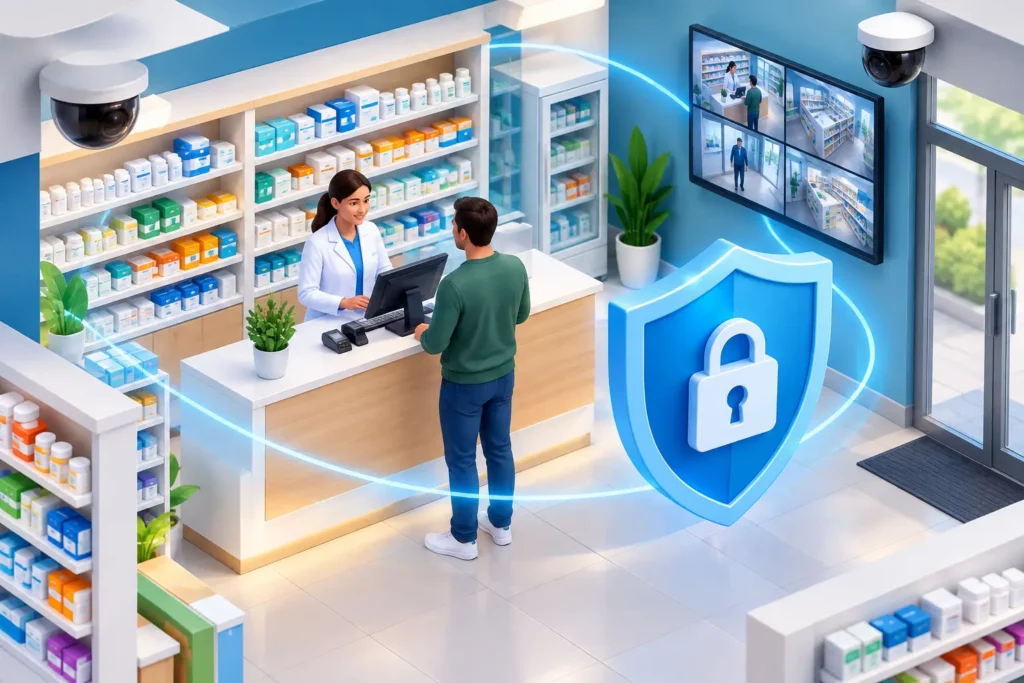
At 8:55 p.m., a pharmacy may have its doors locked, its registers counted, and its staff headed home. But prescription inventory, patient information, delivery areas, and expensive equipment remain on site. A pharmacy security example is most useful when it accounts for what happens after closing as carefully as it handles activity during a busy afternoon.
For an independent pharmacy, a chain location, or a medical office with an on-site dispensary, protection cannot depend on a single camera over the front counter. The right plan connects intrusion detection, video surveillance, controlled access, fire safety, and professional monitoring into one practical response system. It should also fit the building, staff routines, inventory procedures, and operating hours of the pharmacy itself.
A Pharmacy Security Example for a Real Storefront
Consider a neighborhood pharmacy in South Carolina. The business has a public entrance, front retail aisles, a prescription counter, a consultation room, a stockroom, a back delivery door, and a secured area for prescription inventory. It opens six days a week, receives deliveries before opening, and has pharmacists and technicians coming and going at different times.
Its main concern is not simply stopping a break-in. The owner needs to discourage theft in the retail area, limit access to sensitive spaces, document incidents clearly, know when a door is opened after hours, and make sure an alarm signal receives attention even if the owner is at home. The building also needs dependable fire alarm coverage and a system that can be maintained over time.
A tailored design might begin with professionally installed door contacts on exterior doors, motion detection in selected interior areas, and glass-break detection where storefront windows create a greater risk. When the system is armed, an unauthorized opening or movement can trigger an alarm event sent to a monitored central station. This gives the owner a path to response instead of relying on a neighbor to notice something is wrong.
The system should be configured around real operations. For example, the back delivery door may need scheduled access for approved employees, while the prescription storage area should remain restricted throughout the day. A design that is too difficult for staff to use will be bypassed. A design that is too open can leave the pharmacy exposed.
Cameras Should Answer Specific Questions
Security cameras are most valuable when each placement serves a purpose. A front-facing camera can document entries and exits. Cameras over retail aisles can help identify suspicious activity and support loss-prevention reviews. Coverage near the prescription counter can provide a record of interactions, cash-handling activity, and access to the work area.
The back entrance and delivery zone deserve equal attention. Many businesses concentrate cameras at the front of the building, even though service doors may be less visible from the street and used outside normal business hours. A well-positioned camera can show who approached the door, whether a delivery was completed, and what occurred if inventory is missing or property is damaged.
There are limits to camera coverage. Cameras should not be placed in restrooms, and owners should consider employee privacy and applicable rules when selecting locations. In consultation areas, the goal is often to cover entrances, exits, and surrounding activity rather than record private conversations or sensitive details. A professional assessment helps balance security needs with the pharmacy’s responsibility to protect patient privacy.
Remote video access can give an owner or manager useful visibility when away from the store. It is not a substitute for trained staff or a monitored alarm response, but it can help management review an event promptly. Clear images, proper lighting, reliable recording, and retention settings matter more than adding cameras without a coverage plan.
Access Control Protects the Areas That Matter Most
Traditional keys create a familiar problem: they are easy to copy, hard to track, and inconvenient to recover when an employee leaves. Electronic access control allows a pharmacy to assign credentials to specific people and spaces. A technician might have access to a staff entrance and work area during scheduled hours, while only pharmacists and designated managers can enter a secured inventory room.
That does not mean every pharmacy needs the same number of controlled doors. A smaller operation may begin with the back entrance and the most sensitive internal room. A larger facility may need access control at multiple entrances, offices, stockrooms, and medication storage areas. The right scope depends on the layout, staffing model, inventory level, and risk assessment.
Access events can also provide useful accountability. If a door is opened after hours, management can review the credential activity alongside the associated camera footage. This is less about treating employees with suspicion and more about creating clear procedures that protect staff, customers, and the business when questions arise.
Alarm Monitoring Turns a Signal Into a Response
An audible siren may deter an intruder, but it does not guarantee someone will respond. After-hours incidents can happen when an owner is asleep, traveling, or unable to look at a phone. Professional 24/7 alarm monitoring adds a human response process to the system.
When an alarm is received, trained central-station operators follow the account’s agreed response instructions. Depending on the event and plan, that may include contacting designated keyholders and notifying emergency authorities. It is a meaningful distinction: equipment identifies a problem, while monitoring helps make sure the problem is acted on.
False alarms are a legitimate concern for any business. They can disrupt operations and create avoidable costs. The answer is not to avoid an alarm system, but to install and manage it correctly. Staff should understand arming procedures, managers should keep contact lists current, and the system should be tested and serviced as recommended. Thoughtful device placement also reduces nuisance signals without weakening protection.
Do Not Separate Security From Fire Safety
A pharmacy contains electrical equipment, packaging materials, records, retail products, and areas that may be occupied by staff or customers throughout the day. Fire protection is a life-safety requirement, not an add-on to an intrusion plan.
The exact fire alarm requirements depend on the building, occupancy, local code requirements, and whether the pharmacy is part of a larger shopping center or medical complex. A professional fire-safety assessment can identify the appropriate detection, notification, monitoring, inspection, and maintenance needs for the site. If the pharmacy shares a building system, coordination with the property owner and fire alarm provider is essential.
Keeping fire and security systems maintained protects more than equipment. It helps ensure that systems perform when they are needed, supports operational continuity, and gives owners greater confidence that a growing list of responsibilities is not being ignored.
Build Procedures Around People, Not Just Devices
Even a well-designed system needs a clear daily routine. Opening and closing checklists should confirm that doors are secured, credentials are handled properly, restricted areas are locked, and the alarm is armed according to policy. Delivery procedures should establish who accepts inventory, where it is staged, and how the back entrance is supervised.
Management should also decide who can receive alarm notifications, who can access recorded video, and who is authorized to make system changes. These details often become urgent only after an employee departure, a lost credential, or an after-hours incident. Establishing them beforehand prevents confusion.
For pharmacies with limited in-house technical resources, professional installation and ongoing support are especially valuable. The business should not have to guess whether a camera is recording correctly or whether a door contact has stopped communicating. Scheduled maintenance and responsive service keep protection aligned with the way the pharmacy operates.
What a Strong Pharmacy Plan Looks Like Over Time
The best pharmacy security plan is not necessarily the one with the most devices. It is the one that covers the actual risks without making daily work harder. A small pharmacy may prioritize exterior intrusion detection, key camera views, controlled access to prescription inventory, and 24/7 monitoring. A larger location may require more detailed access permissions, broader video coverage, multiple alarm partitions, and coordination with a commercial fire alarm system.
As staffing, inventory, or operating hours change, the system should be reviewed as well. A newly added consultation room, expanded retail floor, or new delivery schedule can create gaps that did not exist at installation. ADP Security Systems brings more than 30 years of local experience to these conversations, helping South Carolina businesses match professionally installed protection to the conditions they face.
A pharmacy is built on trust. Giving that trust a practical security plan means staff can focus on serving patients, while owners have a clearer way to protect the people, inventory, and operations that keep the business moving.