Commercial Fire Alarm Monitoring: A Buyer’s Guide
March 24, 2026
The Best Alarm System: A SC Buyer’s Guide
March 26, 2026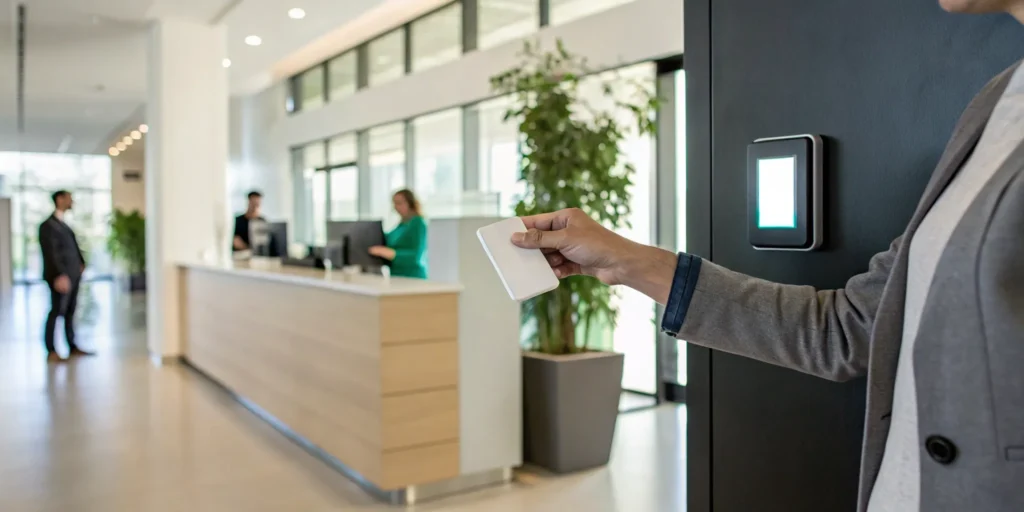
Locking up at night should bring peace of mind. But with traditional keys, you’re left wondering: Who has a copy? Are we really secure? Protecting your team and assets means controlling who enters your building and when. An employee access control system is the modern solution, swapping old locks for a digital record of every entry. When you pair this with attendance software, you get a powerful tool. A system built for access control time tracking doesn’t just tell you who opened a door; it confirms who is on-site and logs their hours automatically—linking security directly to accountability.
Key Takeaways
- Integrate access control and time tracking: Combining these functions creates a single, reliable system that links an employee’s physical entry to their digital timecard. This simple connection improves payroll accuracy, strengthens security, and simplifies your record-keeping.
- Choose features that solve specific problems: Look for capabilities that address your biggest challenges. Biometric scanners eliminate buddy punching, mobile apps offer flexibility for off-site staff, and direct payroll integration saves hours of administrative work by preventing manual data entry.
- Prepare your team for a smooth rollout: A new system’s success depends on your team’s adoption. Ensure a smooth transition by providing clear training and explaining how the technology creates a fairer, more secure workplace for everyone.
What Is Access Control with Time Tracking?
If you’re a business owner in South Carolina, you’re likely juggling a dozen tasks at once. Managing who has keys to your building and ensuring employee timesheets are accurate are two big ones that can quickly become a headache. What if you could solve both problems with a single, streamlined solution? That’s exactly what an integrated access control and time tracking system does.
Think of it this way: an access control system is your digital gatekeeper, using credentials like keycards, fobs, or even fingerprints to grant entry to authorized people. A time tracking system is your digital time clock, recording when employees start and end their shifts. When you combine them, you get a smart system that handles both security and attendance simultaneously. Instead of dealing with lost keys, forgotten punch cards, or inaccurate time logs, you have one unified platform. Combining access control systems with time clocking and attendance helps solve these common operational challenges, giving you more security and better data with less effort. It’s a modern approach that secures your property while also simplifying your administrative workload.
How an Integrated System Actually Works
The beauty of an integrated system is its simplicity. Instead of asking employees to swipe a card to get in the door and then walk over to a separate terminal to clock in, both actions happen in a single step. An employee simply presents their credential, like a keycard or fingerprint, at a reader by the door. The system verifies their identity, unlocks the door, and automatically logs their arrival time in the attendance software.
This process brings together two systems that used to be completely separate. The result is a seamless experience for your team and much cleaner data for you. Because the integrated systems use the same tools for both building entry and timekeeping, the process is automatic and far more accurate. You need fewer devices to manage, and all your critical security and attendance information is stored in one secure, centralized place.
The Essential Parts and What They Do
An integrated system has a few core parts working together to make the magic happen. First, you have the hardware, like electronic door locks and readers that scan credentials. These smart devices replace old-fashioned locks and keys, giving you a digital record of who comes and goes.
Next is the software, which acts as the system’s brain. This is where you can manage employee permissions, set schedules, and view attendance reports. Modern software often includes a range of employee management and time tracking features in one platform. The final piece is the integration with your other business tools. The best systems can automatically export employee hours, including breaks and overtime, directly to your payroll software. This direct link ensures that paychecks are calculated correctly, saving you time and preventing costly employee time tracking challenges.
Don’t Settle: Must-Have System Features
When you start looking at different access control and time tracking systems, you’ll notice they come with a wide range of features. It can feel overwhelming to sort through the options, but focusing on a few key capabilities will help you find the right fit. To get the most value for your business, it’s helpful to know which functions truly make a difference in your day-to-day operations. A great system does more than just open doors and log hours; it simplifies your workload, protects your assets, and gives you clear insights into your business.
Think of these features as the core components that will help you build a more secure and efficient workplace. The goal isn’t just to track time, but to create a seamless flow of information that strengthens security and makes administrative tasks easier. The right combination of features can transform how you manage your team and your facility. It moves you from reactive problem-solving, like dealing with a payroll dispute, to proactive management, like adjusting staff schedules based on real-time data. Let’s walk through the essentials you should have on your checklist to ensure you choose a system that grows with you.
Manage Your System from Anywhere
As a business owner, you can’t be chained to your desk. You might be meeting a client in Anderson or managing a second location in Spartanburg. A modern access control system understands this, which is why remote management is a non-negotiable feature. With a cloud-based platform, you can oversee your entire system from any computer or smartphone. If an employee forgets their keycard or a last-minute delivery arrives, you can grant access without having to drive back to the office. This capability allows you to manage access remotely and view a live log of all door activity, giving you complete visibility and control no matter where you are. It’s the kind of flexibility that provides true peace of mind.
Create Custom, Time-Based Access Rules
Your business doesn’t operate on a single schedule, so your security shouldn’t either. A key feature of a great system is the ability to create time-based access rules. This means you can decide not only who can enter a specific area, but also when. For example, you can grant your cleaning crew access only on weekends, limit office staff to business hours, and give a manager 24/7 permissions. These rules are enforced automatically, so a keycard will simply not work outside of its designated schedule. This feature gives you granular control and ensures your facility remains secure after hours. The best part is that these settings are easy to adjust, allowing you to set specific access times that adapt to your changing operational needs.
Secure Your Space with Biometric Authentication
Biometric systems use unique physical traits, like fingerprints or facial scans, to verify an employee’s identity. This is one of the most effective ways to ensure the right person is clocking in and accessing secure areas. The biggest advantage here is that it completely eliminates “buddy punching,” where one employee clocks in for a friend who is running late or absent. Because a fingerprint can’t be shared, you can trust that your time logs are 100% accurate. This technology provides a clear, indisputable record of attendance, giving you peace of mind and protecting your bottom line from time theft.
Grant Access on the Go with Mobile Credentials
If you have employees who work off-site, in the field, or from home, mobile access is a non-negotiable feature. It allows your team to clock in and out directly from their smartphones, no matter where they are. Modern systems often include GPS tracking to confirm their location and may even require a quick photo to verify their identity. This gives you the same level of security and accuracy you’d have with an on-site system but with the flexibility a modern workforce needs. It’s a perfect solution for service technicians, sales teams, or any role that isn’t tied to a single location.
Connect Seamlessly with Payroll and HR Software
Manually transferring employee hours from a time clock to your payroll software is not only tedious but also leaves a lot of room for human error. A system that integrates directly with your payroll and HR platforms is a game-changer. It automatically exports all the necessary data, including regular hours, overtime, and breaks, ensuring your paychecks are calculated correctly every time. This seamless connection saves you hours of administrative work and reduces the risk of costly payroll errors. It streamlines the entire process, freeing you up to focus on running your business.
Get Instant Insights with Real-Time Reporting
Imagine being able to see exactly who is on-site at any given moment with just a few clicks. That’s the power of real-time reporting. This feature gives you an immediate overview of attendance, allowing you to make quick staffing adjustments if someone is absent or if you have an unexpected rush of customers. Beyond daily check-ins, these analytics can reveal patterns in attendance, help you manage labor costs more effectively, and provide valuable data for making smarter business decisions. It’s an essential tool for staying agile and responsive, whether you’re managing a retail store in Greenville or a production facility in Spartanburg.
Download and Sort Activity Logs
Beyond real-time alerts, a strong system gives you the ability to look back at historical data whenever you need to. The best platforms allow you to download a complete report of all door activity into a simple file, like an Excel spreadsheet. This feature is incredibly useful for security audits or investigating an incident. Instead of guessing, you can quickly review the activity log and sort it by employee, date, or specific door to find exactly what you’re looking for. It provides a clear, factual record that can help you resolve disputes or identify security gaps, giving you a powerful tool for accountability.
Simplify Setup Across Multiple Doors
If your business has more than one entrance—like a front door, a stockroom, and a private office—managing access for each one can get complicated. A modern, integrated system simplifies this by letting you manage every entry point from a single, centralized platform. You can approve or revoke access for all doors remotely, from anywhere with an internet connection. This means you no longer have to physically go to each door to make changes. It’s a flexible approach that gives you complete control over your facility’s security, whether you’re on-site or managing things from home.
This centralized control also makes onboarding new team members much easier. When you hire a new employee, you don’t have to program their credentials at each individual door. Instead, you can easily copy their permissions across all relevant devices through the online portal. This flexibility ensures your security can scale with your business, providing a solution that meets your specific needs, whether you have two doors or twenty. It’s a system designed to grow with you, not hold you back.
Why Combine Access Control and Time Tracking?
When you merge your access control and time tracking systems, you’re doing more than just adding a new piece of tech; you’re creating a smarter, more secure, and efficient business environment. Think of it as a single source of truth for who is in your building and when they are working. This integration solves some of the most common headaches for business owners, from inaccurate time cards to unauthorized after-hours access. Instead of juggling separate systems that don’t communicate, an integrated solution provides a clear, unified picture of your daily operations. It connects the physical act of entering your facility with the digital record of starting a workday. This simple connection has a ripple effect across your entire business. It strengthens security by ensuring only authorized personnel are on-site during work hours. It improves payroll accuracy by eliminating manual data entry and the human error that comes with it. It also simplifies your administrative workload by automating record-keeping for compliance purposes. Ultimately, combining these systems gives you greater control and visibility, saving you time, reducing costly errors, and providing the peace of mind that comes from knowing your business is protected and your operations are running smoothly. It’s about moving from reactive problem-solving to proactive management.
Improve Security and Stop Unauthorized Entry
An integrated system ensures that the only people clocking in are the ones who are physically present and authorized to be there. Traditional timekeeping methods, like manual punch cards, leave room for error and can’t verify who is actually on-site. By requiring an employee to use their keycard, fob, or fingerprint to both enter the building and clock in, you create a direct link between physical presence and work time. This simple step confirms that every time-stamped entry is legitimate, instantly tightening your facility’s security and ensuring your records are always accurate.
Protecting Your Most Critical Areas
Your business has certain spaces that demand an extra layer of security. Think about your server room, the finance office with confidential files, or a storage area holding valuable inventory. An integrated access control system lets you set specific rules for these critical areas, ensuring only authorized personnel can get in. For example, you can program the system to grant your IT manager access to the server room while restricting entry for everyone else. This is essential for securing important areas where sensitive data or valuable assets are stored. This system does more than just lock a door—it creates a detailed digital log of who entered and when. This gives you a clear audit trail, adding a powerful layer of accountability that protects your most vital operations.
Put an End to Time Theft and Buddy Punching
Time theft, including the common practice of “buddy punching” where one employee clocks in for another, can quietly drain your resources. An integrated access control system makes this nearly impossible. Since employees must use their unique credential, like a fingerprint or a personal keycard, to clock in at a specific entry point, the opportunity for fraudulent punches disappears. This not only protects your bottom line by ensuring you only pay for hours actually worked but also fosters a fairer environment for your entire team. It creates a clear, indisputable record of attendance that holds everyone to the same standard.
Simplify Payroll and Ensure Every Paycheck Is Accurate
Manually calculating hours from time cards is tedious and prone to human error, which can lead to costly payroll mistakes. An integrated system automates the entire process. Employee hours, including breaks and overtime, are logged with precision and can be exported directly to your payroll software. This automation eliminates the need for manual data entry, drastically reducing the administrative burden on your staff. The result is a faster, more efficient payroll cycle with far greater accuracy, ensuring your employees are paid correctly and on time, every time.
Make Compliance and Record-Keeping Effortless
Staying compliant with labor laws requires meticulous record-keeping, which can be a major challenge for busy business owners. An integrated access control and time tracking system acts as your automated compliance partner. It generates detailed, accurate reports on employee attendance, work hours, and overtime, providing the documentation you need for audits or internal reviews. This frees up your HR team from chasing down paperwork and allows them to focus on more strategic initiatives, confident that your timekeeping records are organized, accurate, and readily available.
How to Choose the Right System for Your Business
Choosing the right security and time management system can feel overwhelming, but it doesn’t have to be. The key is to find a solution that fits your specific business needs, not a generic, one-size-fits-all product. For businesses here in the Upstate, that often means looking for a partner who understands the local landscape and can provide a system that truly works for you. An integrated system that combines access control with time tracking is more than just a convenience; it’s a modern business necessity that simplifies operations and protects your bottom line.
Look for a Partner with Proven Support
The best technology in the world won’t do you much good if you can’t get help when you need it. When you invest in a security system, you’re also investing in the company that stands behind it. Look for a local partner who offers responsive, hands-on support. If a door lock malfunctions or you have a software question, you want to talk to a real person who can solve the problem quickly, not wait on hold with a national call center. A great partner will also help get your team on board. To ensure a smooth transition, they should provide clear training and help you explain how the new technology creates a fairer, more secure workplace for everyone. This level of service is what turns a good system into a great one.
Consider the Value, Not Just the Price Tag
It’s easy to get focused on the initial cost of a new system, but it’s more important to consider the long-term value it brings to your business. The cheapest option might save you money upfront, but it could cost you more down the road in repairs, security breaches, or inaccurate payroll. A high-quality integrated system is an investment that pays for itself. It improves payroll accuracy by eliminating time theft, strengthens security by preventing unauthorized access, and simplifies your record-keeping for compliance. Think about the hours you’ll save on administrative tasks and the peace of mind you’ll gain. A reliable system protects your assets and streamlines your operations, delivering a return that far outweighs the initial price.
Ask About Hardware and Manufacturing Partners
The software may be the brains of the operation, but the hardware is the muscle. The physical components—the door locks, card readers, and biometric scanners—are what keep your facility secure day in and day out. When vetting a provider, don’t hesitate to ask about the manufacturers they partner with. Are they using equipment from trusted, industry-leading brands known for their durability and reliability? An integrated system has a few core parts working together, and the quality of the hardware like electronic door locks and readers is critical. A reputable security partner will be transparent about the products they install and confident in their performance.
Why a Local, Integrated Approach Matters
When your access control and time tracking systems work together, you streamline everything. Instead of juggling separate platforms for keycards and timesheets, you get one unified source of truth. This integration means fewer devices to manage and all your important data is stored in one secure place. Think of it: an employee’s keycard swipe not only unlocks a door but also clocks them in for their shift automatically. This simple action improves accuracy and reduces the chance of human error. Working with a local provider adds another layer of value. We understand the unique challenges South Carolina businesses face and can provide responsive, hands-on support you just can’t get from a national call center.
How ADP Security Systems Can Help
At ADP Security Systems, we specialize in creating seamless, integrated solutions for businesses right here in Greenville, Spartanburg, and Anderson. We design systems that help you manage employees, control door access, and track time effortlessly. Our goal is to help you move away from manual paperwork and outdated processes, making your operations faster and more accurate. Modern systems are built to follow important security and data privacy rules, giving you confidence that your business and employee information is protected. We’ll work with you to assess your needs and install a tailored system that secures your assets while simplifying your day-to-day management tasks.
Potential Implementation Hurdles to Watch For
Getting a new system up and running is exciting, but it helps to know what to expect. Thinking through potential hurdles ahead of time can make the transition much smoother for you and your team. Let’s walk through a few common challenges so you can create a solid plan. By anticipating these steps, you can ensure your new access control and time tracking system is a success from day one, helping you secure your Greenville business and streamline your operations without unnecessary stress.
Planning Your Budget and Understanding the Costs
It can be tempting to choose the cheapest option, but this is one of the biggest mistakes small businesses make. Relying on an outdated or inadequate system often leads to hidden costs down the road, from lost time fixing errors to security vulnerabilities. Think of your new system as an investment in efficiency and security. A reliable, modern solution will pay for itself by preventing time theft, reducing administrative work, and protecting your assets. Planning your budget around long-term value rather than just the initial price tag is key to getting the right fit for your company.
Understanding Hardware Costs
When you’re planning your budget, the hardware is where you’ll see the most direct costs. For every door you want to secure, you’ll need a few key pieces: an electronic lock, a reader for credentials like keycards or fingerprints, and the wiring to connect it all to a central panel. A good rule of thumb for budgeting is to think about the cost per door. On average, you can expect this to be between $3,000 and $5,000, which usually covers the equipment, installation, and first-year software fees. Of course, this number can change. The total will depend on how many entry points you need to secure and the type of technology you choose. For instance, a standard keycard system will be more budget-friendly, while a high-security biometric system using fingerprints can be more expensive but offers much tighter security. The key is to match the hardware to the specific security needs of each area in your facility.
How to Integrate with Your Current Software
Your new time tracking system shouldn’t operate in a silo. For it to be truly effective, it needs to communicate seamlessly with the other software you already use, especially your payroll and HR tools. When your systems are connected, you can drastically cut down on manual data entry and costly mistakes. In fact, businesses that use integrated systems report a significant reduction in payroll processing errors. Before you commit to a solution, confirm that it can easily integrate with your existing software stack to create a more efficient and accurate workflow.
Working with Your Existing Hardware
One of the biggest concerns when upgrading is the cost and hassle of replacing hardware you’ve already invested in. The good news is that you often don’t have to start from scratch. Many modern access control systems are designed to be flexible, integrating with the electronic door locks and readers you may already have. The new software essentially acts as the system’s brain, giving your existing hardware smarter capabilities and replacing the need for old-fashioned keys. This allows you to manage and approve access for every entry point remotely, all without a complete and costly hardware overhaul. It’s an efficient way to create a more secure environment while leveraging your current infrastructure.
Getting Your Team Onboard and Trained
A new tool is only as good as the team using it. A smooth rollout depends on clear communication and proper training. Your employees need to understand not just how to use the system, but why it’s being implemented. Explain how accurate time tracking benefits everyone by ensuring fair pay and simplifying payroll. When your team understands the purpose and feels confident using the new tools, you’re more likely to gain their cooperation and ensure accurate time-tracking from the start. Plan for a dedicated training session and be available to answer questions as they come up.
Handling the Technical Side of Setup
The technical side of implementation can feel daunting, but you don’t have to handle it alone. A professional installation is critical for making sure your access control and time tracking components work together perfectly. This isn’t just about plugging things in; it’s about creating a cohesive system that enhances both security and accountability. Properly integrating access control with time and attendance systems ensures that only authorized personnel can enter your facility and that their time is logged accurately from the moment they arrive. Working with a local expert like ADP Security Systems removes the guesswork and guarantees a secure, professional setup.
Myths About Access Control and Time Tracking, Busted
When you’re considering new technology for your business, it’s easy to get tangled up in hearsay and misconceptions. Integrated access control and time tracking systems are powerful tools, but they’re also surrounded by a few persistent myths. These outdated ideas can stop business owners from adopting a solution that could save them time, money, and a lot of headaches.
Let’s clear the air and look at some of the most common myths. Understanding the reality behind these systems is the first step toward making a confident, informed decision for your company. From employee privacy to the implementation process, we’ll separate the facts from the fiction so you can see how this technology truly works and what it can do for your Upstate business.
Myth: Time Tracking Invades Employee Privacy
It’s understandable why some employees might feel that time tracking is a form of micromanagement. The reality, however, is that modern systems are designed to ensure fairness and accuracy, not to watch over everyone’s shoulder. The goal isn’t to track every minute of an employee’s day but to create a clear, unbiased record of work hours. This protects both the employee and the employer. It guarantees that staff are paid correctly for their time, especially for any overtime, and it provides a transparent system for managing schedules and payroll. It’s about building trust through accurate data, not eroding it through suspicion.
Myth: All Systems Are Basically the Same
Thinking that any time clock or app can do the job is a common mistake. A simple punch clock can’t offer the security and data of an integrated access control system. Modern solutions go far beyond just logging hours. They can use biometrics to prevent buddy punching, allow for mobile clock-ins for off-site staff, and integrate directly with your payroll software to eliminate manual data entry. This automation is what truly saves time and prevents costly errors. For a small business where every hour counts, the difference between a basic timer and a smart, integrated system is significant for both security and profitability.
Myth: Implementation Is Too Complicated
The thought of installing a new tech system can feel overwhelming, especially when you’re busy running your business. Many owners worry about a long, complicated setup that disrupts operations. While this might be true if you go it alone, working with a professional partner changes everything. A local expert can handle the entire process, from assessing your Greenville facility’s needs to installing the hardware and integrating the software with your existing tools. They also provide the necessary training for you and your team, ensuring a smooth transition. Careful planning and expert installation make the process straightforward, not stressful.
Myth: The Benefits Only Help the Employer
This is one of the biggest misconceptions. While business owners certainly benefit from reduced time theft and streamlined payroll, employees gain a lot, too. An automated system ensures they are always paid accurately and on time, eliminating any potential for payroll disputes. It provides a transparent record of their hours worked, including any overtime they’ve earned. This technology also empowers employees by giving them easy access to their schedules and time-off requests. Plus, the access control component creates a safer work environment for everyone. When a system fosters fairness, transparency, and security, it’s a win for the entire team.
How to Stay Compliant and Cut Costs
For any small business owner in South Carolina, managing employee hours is about more than just getting payroll right. It’s about staying compliant with labor laws and finding efficiencies that protect your bottom line. An integrated access control and time tracking system does both, turning a daily task into a powerful tool for your business. It helps you create a fair, transparent workplace while also uncovering savings you might be missing.
Stay Compliant Automatically with Labor Laws
Manually tracking hours on paper or in spreadsheets can be a recipe for trouble. It’s easy to make mistakes, and those small errors can lead to big compliance headaches. By using reliable time tracking software, you create an accurate, indisputable record of when employees clock in and out. This automated process ensures you’re correctly tracking hours, breaks, and overtime, which helps you adhere to labor laws and reduces your risk of facing wage and hour disputes. It’s a straightforward way to build a system that’s fair for everyone and gives you one less thing to worry about.
Cut Down on Payroll Errors and Admin Tasks
Let’s be honest, payroll can be a time-consuming chore. An integrated system can dramatically lighten that load. Automated time tracking tools can export employee hours directly to your payroll software, making sure every paycheck is calculated correctly. This simple connection eliminates manual data entry, which is often where mistakes happen. In fact, businesses that use integrated systems have seen a significant drop in payroll processing errors. This means fewer corrections, happier employees, and more time for you to focus on running your business instead of getting stuck in administrative tasks.
How Better Efficiency Leads to Long-Term Savings
Beyond preventing errors, accurate time tracking gives you valuable insights into how your business operates. When you have clear data on where your team’s hours are going, you can make smarter decisions about how to assign tasks and manage projects. This information helps you see which activities are taking the most time, allowing you to adjust workflows and allocate resources more effectively. Better project planning and improved efficiency lead to real, long-term savings. It’s not just about tracking time; it’s about understanding it and using that knowledge to grow your business.
Choosing the Right Access Control Method
Once you decide to integrate access control with time tracking, the next step is picking the right method for your team. There isn’t a single best answer; the ideal choice depends on your business size, security needs, and daily operations. Do you manage an office in Greenville with set hours, or do you have a team of technicians serving clients all over the Upstate? Thinking through your workflow will help you find the perfect fit. Let’s look at the three most common options: classic card-based systems, high-accuracy biometrics, and flexible mobile apps.
Card-Based Systems: The Go-To for Simple Security
Card-based systems are a familiar and reliable choice for many businesses. Employees receive a key card, fob, or badge that they swipe or tap on a reader to unlock doors. When you connect this to your time tracking software, employees can use their access cards to enter the building and automatically clock in for their shift. This method is straightforward to manage, making it easy to issue new cards to new hires or deactivate lost ones without changing any locks.
While these systems are cost-effective and user-friendly, they have one main drawback: cards can be lost, stolen, or intentionally shared. This can lead to “buddy punching,” where one employee clocks in for an absent colleague, creating payroll inaccuracies.
Including RFID and Magnetic Stripe Options
When you explore card-based systems, you’ll find two main technologies: magnetic stripe and RFID. Magnetic stripe cards are the familiar swipe-style cards, much like an old hotel key or credit card. They’re a reliable and budget-friendly choice that has been trusted for years. On the other hand, RFID (Radio-Frequency Identification) uses a small chip inside a card or fob that your team can just tap on a reader. This tap-and-go method is quicker and feels more modern, making it a very user-friendly experience. While both can be set up to log employee hours accurately, it’s helpful to know that RFID systems are typically seen as more secure and durable for long-term use.
Biometric Systems for Top-Tier Accuracy
If your top priority is eliminating time theft and ensuring only authorized individuals can access your facility, biometric systems are the gold standard. These systems use unique biological traits to verify identity, such as a fingerprint, handprint, or facial scan. Because these identifiers can’t be forgotten, lost, or shared, you can be certain that the person clocking in is exactly who they claim to be. Using an employee’s unique fingerprint is one of the most effective ways to get accurate time tracking.
The primary benefits are unmatched security and payroll accuracy. However, the initial investment for biometric hardware is typically higher than for card readers. It’s also important to have a clear company policy explaining how this data is stored and used to maintain transparency with your team.
Mobile Access: The Key to Ultimate Flexibility
For businesses with remote employees, field staff, or a hybrid work model, mobile access control offers incredible convenience. This method turns an employee’s smartphone into their key and time clock. Using a secure app, team members can unlock doors and log their hours from anywhere. Many of these apps include features that add another layer of accountability, allowing employees to clock in and out from any location with GPS verification and even photo checks to confirm their identity.
This approach is perfect for modern workforces, as it eliminates the need for physical cards or fobs. The main consideration is that it relies on employees having a compatible smartphone and ensuring their device is charged and connected.
Keypads and PIN Codes for Simple Entry
Keypads offer a straightforward and highly reliable way to manage access without the need for physical cards or fobs. Think of it as a digital key that’s unique to each employee. Team members simply enter their personal identification number (PIN) on a keypad at the door to gain entry, and the system instantly logs their arrival, clocking them in for their shift. This method is incredibly convenient because there’s nothing for employees to lose or forget. When managed correctly, keypad entry systems provide a great balance of security and simplicity, making them a popular choice for businesses that want an effective, low-maintenance solution.
The real strength of a keypad system lies in its ease of management. From a central dashboard, you can assign, update, or revoke PINs in seconds, which is perfect for handling employee turnover without the hassle of collecting keys. By giving each person a unique code, you also create a clear audit trail, improving accountability. Of course, the main consideration is that PINs can be shared. That’s why it’s important to follow PIN-code best practices and educate your team on keeping their codes confidential. For many businesses in the Upstate, this simple and effective method provides all the security and control they need.
Your Checklist for Choosing and Implementing a System
Choosing and setting up a new access control and time tracking system can feel like a huge project, but breaking it down into clear steps makes it manageable. A thoughtful approach ensures you get a solution that not only secures your building but also simplifies your operations. By focusing on your specific needs and planning ahead, you can make the transition smooth for everyone involved. Here are four key practices to guide you.
First, Figure Out What Your Business Really Needs
Before you even look at different systems, take a step back and define what you need to accomplish. How many employees do you have? How many doors or entry points need to be secured? Are you trying to solve issues with time theft, or is your main goal to comply with labor laws and streamline payroll? Make a list of your must-haves versus your nice-to-haves. This initial assessment is your roadmap. It prevents you from overspending on features you don’t need or, worse, choosing a system that doesn’t solve your core problems. A clear understanding of your goals will make every other decision much easier.
Look for Tech That’s Easy to Use and Grows with You
The most advanced system in the world is useless if your team finds it too complicated to use. Look for a solution with an intuitive interface for both your employees clocking in and your managers running reports. An important part of this is choosing a system that works for your team and your budget. The technology should also be scalable, meaning it can grow with your business. You might only have ten employees today, but if you plan to expand, you need a system that can easily accommodate new staff and locations without requiring a complete overhaul. This foresight saves you time and money down the road.
Create a Plan for a Seamless Integration
Your access control and time tracking system shouldn’t operate in a silo. For maximum efficiency, it needs to communicate with your other business software, especially payroll and HR platforms. A seamless system integration automates data transfer, which reduces manual entry and the risk of human error. This automation ensures consistency across your operations, improving both security and efficiency. When evaluating options, ask potential providers how their system connects with the tools you already use. A local partner can be invaluable here, helping you map out the technical details and ensure all your software works together harmoniously.
Set Clear Security Rules from Day One
Technology is only one part of the equation; people and policies are the other. Once you’ve chosen a system, create and communicate clear protocols for its use. What is the process if an employee loses their keycard or forgets their PIN? How will you handle edits for missed punches? It’s also important to explain the “why” behind the new system. Clear communication about how accurate time tracking benefits everyone by ensuring fair pay and a secure workplace can help get your team on board. When employees understand the purpose and the rules, they are far more likely to use the system correctly and consistently.
Ready to Find Your Perfect Integrated Solution?
Choosing the right system for your business means looking for more than just a time clock or a key card reader. The goal is to find a solution that brings both functions together smoothly, creating a single, reliable platform for security and workforce management. When your access control and time and attendance systems are integrated, they create a single source of truth for your business. This approach combines security, efficiency, and accountability, making the process of tracking who is on-site and when they clocked in both automatic and accurate. Instead of juggling separate platforms and manually cross-referencing data, you get one streamlined system that secures your building while simplifying payroll.
This kind of integration is especially important for small and mid-sized businesses that need to secure their operations and protect sensitive data without a dedicated IT department. By connecting these functions, you ensure that only authorized employees can enter your facility, and their work hours are logged precisely from the moment they badge in. This simple action eliminates manual entry errors and gives you a clear, reliable record of attendance. That data is crucial for running accurate payroll, maintaining compliance with labor laws, and gaining insights into your team’s productivity.
Why a Local, Integrated Approach Matters
Partnering with a local security provider here in South Carolina means you get a solution tailored to your specific needs, not a one-size-fits-all box. A local expert understands the challenges and opportunities for businesses in communities like Greenville, Spartanburg, and Anderson. We can provide an on-site assessment to recommend the right combination of hardware and software for your space. Plus, when you need installation, training, or support, you’re not calling a national hotline; you’re working with a dedicated team of neighbors who are invested in your success and can be there when you need them.
How ADP Security Systems Can Help
At ADP Security Systems, we specialize in designing and installing integrated access control and time tracking solutions for businesses across the Upstate. We’ll sit down with you to understand your workflow, security concerns, and budget. From there, we create a custom plan that gives you complete control over who enters your building and provides flawless timekeeping data. Our professional technicians handle the entire installation process, ensuring your system works perfectly with your existing infrastructure. We’re here to provide the technology and local support you need to protect your assets and manage your team effectively.
Related Articles
- Biometric Access Installation in SC: A Complete Guide
- Commercial Security For Your Business – ADP Security
Frequently Asked Questions
Is an integrated system like this affordable for a small business? Absolutely. While it’s true that these systems are an investment, they often pay for themselves by eliminating time theft, reducing costly payroll errors, and saving hours of administrative work. Think of it less as an expense and more as a tool that protects your bottom line. There are scalable options available, so you can find a solution that fits your current budget and grows with your company.
My employees are worried about privacy. How does this system affect that? That’s a completely valid concern, and it’s one that modern systems are designed to address. The goal isn’t to monitor your team’s every move but to create a fair and accurate record of work hours. This transparency actually protects employees by ensuring they are paid correctly for all their time, including overtime. The system simply logs entry and exit times, which builds trust by providing a clear, unbiased record for everyone.
What’s the main advantage of combining these systems instead of using two separate ones? The biggest advantage is simplicity and accuracy. When the systems are separate, you’re often left manually transferring data from a time clock to your payroll software, which opens the door for human error. An integrated system automates this entire process. An employee’s keycard swipe or fingerprint scan both unlocks the door and clocks them in, creating a single, error-free record and saving you a significant amount of administrative time.
How do I choose between keycards, biometrics, and mobile apps? The best choice really depends on your specific business. Card-based systems are a reliable and cost-effective option for many office environments. If your top priority is eliminating “buddy punching” and ensuring maximum accuracy, biometric systems using fingerprints are the most secure choice. For teams that work in the field or remotely, mobile apps offer the flexibility they need while still providing GPS verification for accountability.
How much work is involved in getting one of these systems installed? It’s much more straightforward than you might think, especially when you work with a professional installer. A local expert can handle everything from the initial assessment of your building to the physical installation and software setup. They will also make sure the system integrates smoothly with your existing payroll tools and provide training for you and your team, ensuring a seamless transition without disrupting your business.