What Is a Biometric Access System? A Business Guide
March 17, 2026
The Essential Guide to Lockdown Systems for Schools
March 19, 2026
You have enough on your plate as a business owner without adding property crime to the list. Protecting your livelihood means creating a secure environment where your employees feel safe and your assets are protected, day and night. A commercial security system is your silent partner, always on watch even when you can’t be. It’s not just about reacting to a break-in; it’s about preventing incidents, ensuring a swift emergency response, and giving you control from anywhere. Here, we’ll cover the essential features every business needs to build a comprehensive and reliable security plan.
Key Takeaways
- Build a complete safety net: A truly effective system goes beyond basic door alarms. Combine intrusion detection with fire monitoring, remote mobile control, and panic buttons to create comprehensive protection for your property, inventory, and people.
- View security as a business asset: A professional alarm system is an investment, not just an expense. It actively protects you from costly losses, can lead to lower insurance premiums, and fosters a safer environment that builds trust with your team.
- Choose your local partner carefully: The company you hire is just as important as the equipment they install. Prioritize a licensed, Greenville-area provider with a strong local reputation and transparent contracts to ensure you receive reliable, long-term support.
What Should Your Commercial Security System Include?
When you’re looking for a commercial alarm system, it’s easy to get overwhelmed by the options. The truth is, the best system is one that’s tailored to your specific business, whether you run a retail shop in downtown Greenville or a warehouse in Spartanburg. A one-size-fits-all approach just doesn’t work. The goal is to create layers of security that work together to protect your property, your inventory, and most importantly, your people.
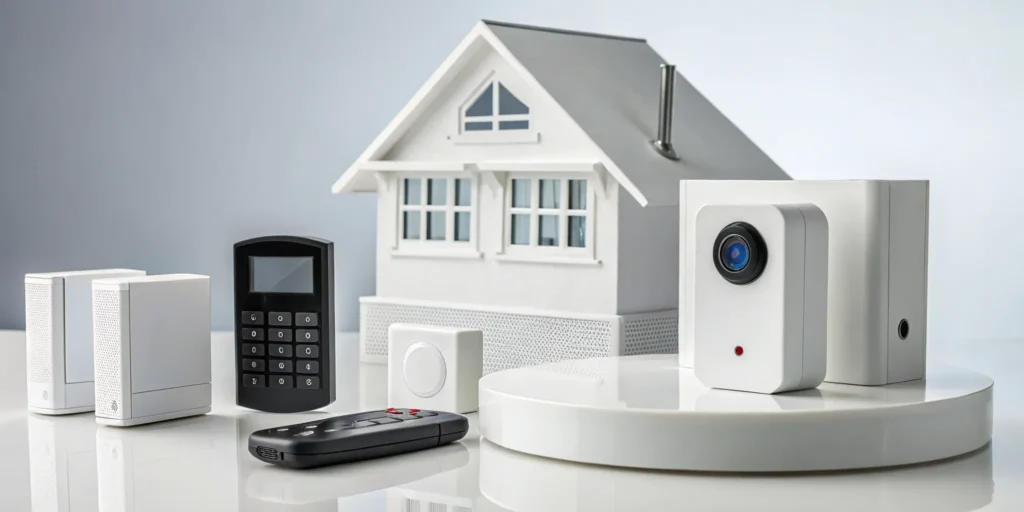
A truly effective system goes beyond just making a loud noise when a door opens. It should be a smart, responsive network that gives you control and peace of mind. Think of it as a complete ecosystem designed to detect threats, alert the right people, and give you the tools to manage it all, even when you’re not there. From the perimeter of your property to the inside of your office, every potential vulnerability should be covered. Let’s walk through the essential features that form the foundation of a solid business security plan.
Understanding the Core Components: Alarms vs. Access Control
Let’s start by breaking down the two main pillars of a commercial security plan: alarm systems and access control. Think of your alarm system as your first line of defense against external threats. Its primary job is to detect unauthorized entry—like a broken window or a forced door—and immediately alert you and the authorities. This is absolutely critical for after-hours protection, ensuring your Greenville business is monitored even when you’re at home. A reliable alarm system doesn’t just react to a break-in; it ensures a swift response, which can make all the difference in minimizing potential losses and damage to your property.
While an alarm system protects your business from the outside, access control manages security from the inside. This type of system determines who can enter specific areas of your building and when. Instead of traditional keys, employees might use keycards, fobs, or even their smartphones to gain entry to the main door, a server room, or an inventory closet. This gives you a clear record of who went where and when, which is invaluable for protecting sensitive information or high-value assets. It’s a proactive way to manage employee and visitor access and reduce the risk of internal theft.
The most effective security strategies don’t force you to choose between alarms and access control—they integrate them. When these systems work together, they create powerful layers of protection. For example, you can program your system to automatically lock all doors managed by access control the moment the alarm is set. This combination ensures that your property, your inventory, and most importantly, your people are protected from every angle. It’s about building a complete safety net that deters threats and actively manages your business environment.
Detect Motion Inside and Out
Think of motion and perimeter detection as your first line of defense. These features are designed to spot unauthorized activity before an intruder gets very far. Motion detectors are placed in key areas inside your building, like hallways, main offices, or stockrooms. They use technology like passive infrared (PIR) to sense body heat and movement, triggering an alarm when an unexpected presence is detected after hours.
This is a core component of any intrusion detection strategy. By monitoring entry points and open spaces, these sensors ensure that no movement goes unnoticed. They are essential for protecting your assets when your business is closed, giving you confidence that your property is secure around the clock.
Secure Every Entry Point
While motion detectors cover the open spaces, you also need to secure every potential entry point. That’s where door, window, and glass break sensors come in. Door and window sensors work simply: they consist of two parts that form a magnetic connection. When the door or window is opened, the connection breaks, and the alarm is triggered. They are your most fundamental tool for securing the perimeter.
Glass break sensors add another critical layer of protection. These devices have tiny microphones that are tuned to the specific acoustic frequency of shattering glass. If an intruder tries to bypass a door or window sensor by breaking the glass, this sensor will catch it immediately. Together, these sensors ensure that every door and window is a monitored checkpoint.
Get Eyes on Your Business, 24/7
An alarm that just makes a loud noise can scare off an amateur, but it doesn’t guarantee help will arrive. That’s why 24/7 professional monitoring is non-negotiable for any serious business. When a sensor is triggered, a signal is instantly sent to a central monitoring station staffed by trained security professionals. They will verify the alarm and, if necessary, dispatch the police or fire department to your Greenville business immediately.
This service ensures a fast emergency response, whether you’re on-site or miles away. It’s the difference between simply detecting a problem and actively solving it. Professional monitoring safeguards your people and property, ensuring that a real person is always ready to respond to any threat, day or night.
Continuous vs. Motion-Activated Recording
When it comes to your business’s video surveillance, you have two main options for how your cameras record footage: continuously or only when motion is detected. Continuous, or 24/7, recording does exactly what it sounds like—it captures everything, all the time. This method provides a complete, uninterrupted timeline of activity on your property. If an incident occurs, you can see exactly what happened before, during, and after, leaving no room for guesswork. This approach ensures you can conduct a complete review of events and catch details that a motion-only system might miss.
On the other hand, motion-activated recording only saves footage when the camera detects movement. The main advantage here is that it saves a significant amount of digital storage space and makes it much faster to find important clips. Instead of scrubbing through hours of uneventful footage, you can jump directly to the action. The downside, however, is the risk of missing something critical. A slow-to-trigger sensor or a clever intruder could result in a recording that starts too late, leaving you with a gap in your security coverage right when you need it most.
For most businesses, the ideal solution is a system that does both. Modern surveillance systems can record 24/7 while simultaneously flagging moments where motion occurs. This gives you the peace of mind that comes with a complete, uninterrupted recording and the convenience of easily finding specific events. You get a comprehensive security net without having to manually search for the moments that matter, ensuring your business is protected around the clock.
Manage Your Security from Anywhere
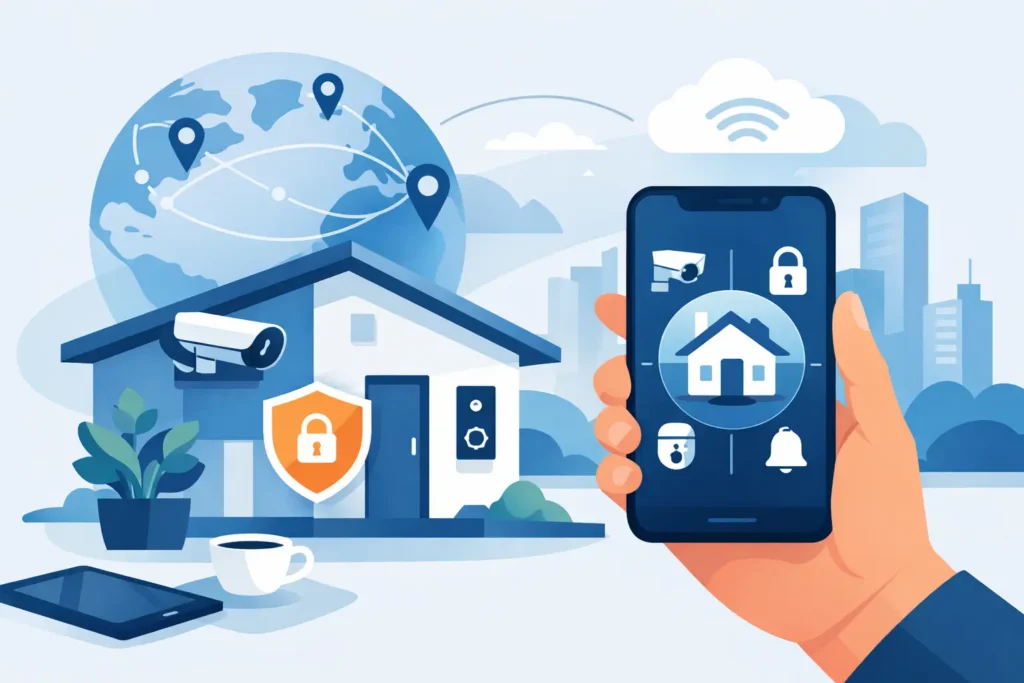
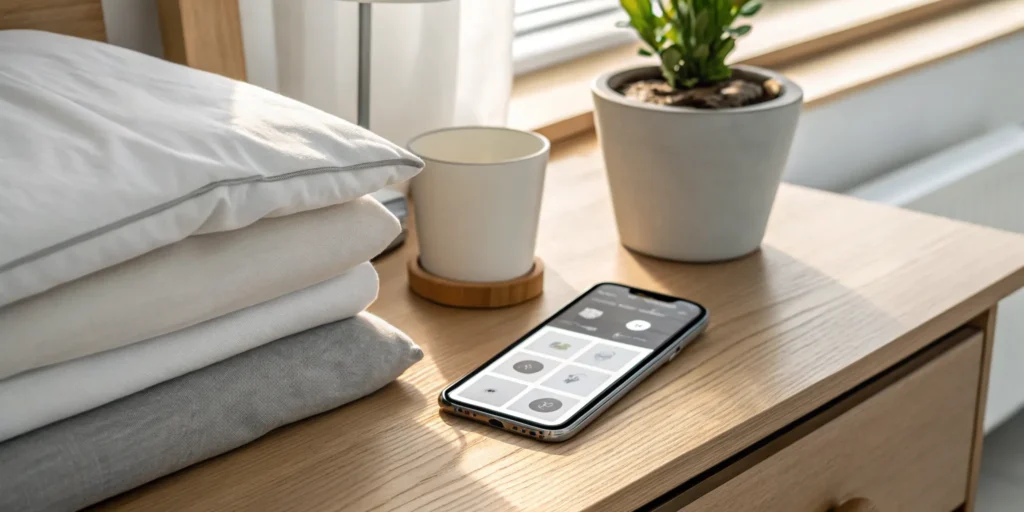
In today’s connected world, you should have full control over your security system right from your smartphone. Remote access allows you to arm or disarm your system, check the status of your sensors, and view live camera feeds from anywhere with an internet connection. You can also receive instant alerts on your phone for any system activity, like when the first employee arrives in the morning or if an alarm is triggered.
This feature gives you incredible flexibility and peace of mind. If you forget to arm the system when leaving for the day, you can do it from your car. If you need to grant temporary access to a vendor, you can disarm and re-arm the system without giving out a permanent code. It transforms your alarm from a passive system into an active management tool.
Smart Automation for Effortless Protection
Remote control is powerful, but smart automation takes it a step further by making your security system work for you, without you having to lift a finger. This is where you can create custom rules that tell your system what to do based on specific events. For example, you can program the system to automatically arm itself every night at closing time or to turn off all the lights when the last person locks the main door. This isn’t just about security; it’s about creating a smarter, more efficient business environment. By integrating smart technology, you can also manage thermostats and other appliances, ensuring you’re not wasting energy when the building is empty. It’s this level of intelligent automation that transforms your security system from a reactive tool into a proactive partner in your daily operations.
Panic Buttons for Immediate Help
The safety of your employees and customers is paramount. Instant panic buttons, also known as hold-up alarms, provide a discreet way for your team to signal for help during an emergency. These buttons can be installed in fixed locations, like under a cashier’s counter, or can be mobile devices carried by employees. When pressed, a silent alarm is sent directly to the central monitoring station.
This allows your staff to request immediate police dispatch without alerting a potential aggressor and escalating a dangerous situation. It’s a vital feature for retail stores, banks, and any business that deals with the public. Providing this tool shows your team that their safety is a top priority and ensures they can get support during a crisis.
Beyond Burglars: Fire and Environmental Alerts
A comprehensive security system protects your business from more than just crime. Integrating fire and environmental monitoring is one of the smartest investments you can make. This includes monitored smoke and heat detectors that can alert the fire department at the first sign of a fire, which is critical for meeting local fire safety standards. This is especially important when your building is unoccupied.
Beyond fire, environmental sensors can detect other threats like water leaks from a burst pipe, extreme temperature changes in a server room, or the presence of carbon monoxide. These alerts can help you prevent catastrophic damage to your inventory and equipment, saving you from costly repairs and downtime. It’s about protecting your entire business operation, not just from break-ins.
Advanced Features to Consider
Once you have the foundational elements in place, you can explore advanced features that make your system even more robust. These technologies are designed to outsmart clever intruders and ensure that when you need help, it arrives as quickly as possible. They add powerful layers of verification and resilience, turning a standard alarm into a high-tech security solution that actively works to protect your business from sophisticated threats. It’s about moving from a reactive system to a proactive one that anticipates potential vulnerabilities and closes them before they can be exploited. Let’s look at a couple of key features that can make a significant difference in your security plan.
Video Verification for Faster Police Response
False alarms are a major headache for business owners and law enforcement alike. Video verification is a smart solution that cuts through the noise. When a sensor is triggered, this feature allows our central monitoring station to immediately access a short video clip from the corresponding camera. This lets our trained professionals visually confirm if there is a real intruder on your property. Having this ability to verify the alarm means that when we call the police, we can report a crime in progress, which often leads to a much faster and higher-priority response. It’s a simple but incredibly effective way to ensure real emergencies get the attention they deserve.
“Crash-and-Smash” Protection
Experienced burglars know that the main control panel is the brain of your security system, and they’ll try to disable it as soon as they get inside. “Crash-and-smash” protection is designed to defeat this tactic. With this technology, the system sends an alert to the monitoring station the instant an entry point is breached—before the standard entry delay timer even finishes. This means that even if an intruder rushes in and destroys the panel, the signal has already been sent. It ensures that an attempt to disable the system still results in a call for help, giving you a critical safeguard against a common break-in strategy.
Don’t Overlook Cybersecurity
Your security system is a powerful, connected device, and just like your computers and network, it needs to be protected from digital threats. A cyberattack could potentially disarm your system or expose sensitive information, creating a backdoor for criminals. Securing your system against these risks is just as important as protecting your physical entry points. A few simple, proactive steps can make a huge difference in keeping your security network locked down and working only for you. It’s not about becoming a tech expert; it’s about practicing good digital hygiene to keep your business safe from all angles.
Protecting Your System from Digital Threats
Start with the basics: use strong, unique passwords for your security system’s mobile app and online accounts. A password manager can help you create and store complex credentials so you don’t have to remember them all. It’s also wise to manage user access carefully. Give each employee their own code and delete it immediately if they leave your company. For an even more secure setup, you can consider wired security systems, which are less vulnerable to wireless hacking attempts. Working with a professional installer like us at ADP Security ensures your system is configured with these best practices from day one, giving you a secure foundation.
How a Security System Safeguards Your Greenville Business
A commercial alarm system does more than just make a loud noise. It’s an active security partner for your Greenville business, working around the clock to protect your property, your people, and your bottom line. From the moment it’s installed, a professional system creates layers of protection that address risks from multiple angles. It’s not just about reacting to a break-in; it’s about preventing incidents before they happen, ensuring a swift response when they do, and even offering financial perks. Let’s look at the specific ways an alarm system serves as a vital asset for your company.
Stop Intruders Before They Start
The most effective security measure is the one that stops a crime from ever taking place. A visible security system, complete with window decals and outdoor cameras, sends a clear message to potential intruders: this business is protected and not an easy target. Most burglars are looking for a quick and simple score. Research shows that the majority of convicted burglars would seek a different target if they saw an alarm system. By making your business a harder target, you significantly reduce the chances of a break-in, protecting your inventory and preventing costly damage and downtime.
The Numbers Don’t Lie: Understanding the Risk
It’s easy to think a break-in is something that happens to other businesses, but the reality is that property crime is a common and costly threat. Understanding the real-world risks helps you make informed decisions about protecting your investment. The statistics aren’t meant to be scary; they’re meant to be a clear-eyed look at why proactive security is so important for businesses of all sizes, from a small shop in Easley to a larger office in Spartanburg. When you see the data, the value of a reliable security system becomes crystal clear, shifting from a “nice-to-have” to an essential part of your business plan.
National Crime Statistics for Businesses
The threat to commercial properties is significant and widespread. In a single recent year, there were over 42,000 office burglaries reported across the country. It’s not just break-ins, either; nearly 60% of small businesses have reported issues with theft or shoplifting. Even an act of vandalism can set a company back by an average of $3,370 per incident. These numbers show that security isn’t a luxury—it’s a fundamental need. A single event can disrupt your operations, impact your revenue, and create a sense of unease for both your employees and customers. These are the exact scenarios that a well-planned office security system is designed to prevent.
The Financial Impact of a Single Incident
The cost of a break-in goes far beyond the value of what was stolen. You also have to account for repairing damage to doors and windows, replacing equipment, and the potential for lost revenue while your business is closed for repairs. However, a professional security system is an investment that pays for itself in multiple ways. Many insurance providers offer lower premiums for businesses with monitored alarm systems. It also helps protect against false claims, like fraudulent slip-and-fall lawsuits, by providing video evidence. Furthermore, modern systems with video verification can drastically reduce costly false alarm fines from local police departments, ensuring that emergency services are only dispatched when there’s a real threat.
Get Help Faster in an Emergency
When an alarm is triggered at your business, every second counts. A standalone alarm that only makes noise relies on a neighbor or passerby to call for help. A professionally monitored system, however, is connected to a central station 24/7. The moment a sensor is tripped, trained professionals are alerted. They can verify the emergency and dispatch police or firefighters immediately, ensuring help is on the way much faster. This rapid emergency response is critical for minimizing losses from theft, vandalism, or fire, giving you confidence that your business is protected even when you’re not there.
Save Money on Your Business Insurance
Did you know that your security system can actually save you money? Insurance providers view businesses with professionally monitored alarm systems as a lower risk. Because your property is less likely to be targeted for theft and is better equipped to handle emergencies like fires, insurers often offer significant discounts on business insurance premiums. This financial benefit makes a security system a smart investment. By reducing the likelihood of a claim, you not only protect your assets but also improve your company’s financial health, making it a sound decision for any business owner.
Create a Safe Space for Staff and Customers
Your business’s greatest asset is its people. A comprehensive security system helps ensure the safety of your employees and customers. Features like discreet panic buttons allow your team to signal for help instantly and silently during an emergency, such as a robbery or a threatening situation. This immediate connection to a central monitoring station provides invaluable support and peace of mind. Creating a secure environment shows your team that you value their well-being, which can improve morale and make your business a safer place for everyone who walks through the door.
Safeguard Your Inventory and Assets
From computers and specialized equipment to customer data and retail products, your business is filled with valuable assets. A commercial alarm system is your first line of defense against theft. Door and window sensors, glass break detectors, and motion sensors work together to create a secure perimeter, immediately alerting you and the monitoring center to any unauthorized entry. This helps stop thieves before they can steal your products, equipment, or sensitive business information. Protecting your physical and intellectual property is essential for maintaining operations and safeguarding your hard-earned success.
Reducing Employee Theft and False Claims
While we often focus on outside threats, a security system is also a powerful tool for protecting your business from within. It helps address internal issues like employee theft and fraudulent customer claims. The simple presence of security cameras and monitored alarms creates a culture of accountability, discouraging dishonest behavior before it starts. Should an issue arise, such as a discrepancy at the cash register or a questionable workers’ comp claim, you have a clear, unbiased record of events. This evidence is invaluable for resolving disputes quickly and fairly. It also serves as crucial protection against false liability claims, like a staged slip-and-fall incident, which can save your Greenville business from expensive legal fees and potential lawsuits.
Tailoring Security to Your Industry
The security needs of a boutique on Main Street in Greenville are completely different from those of a sprawling warehouse in Spartanburg. Every industry faces its own unique set of risks, compliance requirements, and operational challenges. That’s why a generic, out-of-the-box alarm system rarely provides the level of protection your business deserves. A truly effective security strategy is one that’s designed with your specific industry in mind, addressing your most critical vulnerabilities head-on. Whether you’re protecting sensitive customer data, high-value inventory, or the well-being of your team, your security system should be a custom-fit solution. Let’s explore how security needs change across different sectors and what features are most important for each.
Retail Stores
For retail businesses, security is a balancing act between creating a welcoming environment for customers and protecting your store from theft. Your system needs to address multiple risks, from shoplifting and employee theft to after-hours break-ins. Video surveillance is essential, with cameras positioned to monitor entrances, exits, and all point-of-sale (POS) terminals. Door sensors and glass break detectors secure your storefront when you’re closed, while discreet panic buttons give your cashiers a direct line to help in an emergency. These tools work together to protect your inventory, your cash, and your employees, ensuring your store remains a safe place to shop and work.
Meeting PCI DSS Compliance
If your store accepts credit cards, you need to follow the Payment Card Industry Data Security Standard (PCI DSS). These rules are designed to protect sensitive cardholder data from fraud. While much of PCI DSS focuses on digital security, it also includes requirements for physical security. For example, you must restrict physical access to any systems that handle card data. This is where security features like video cameras monitoring payment areas and access control on your server room or back office can help you meet compliance and safeguard your customers’ information.
Offices
In an office environment, your most valuable assets are often your data and equipment. Security here is less about stopping shoplifters and more about controlling access and protecting intellectual property. An access control system is fundamental, allowing you to issue key cards or fobs that restrict entry to the building or sensitive areas like server rooms and executive offices. This also creates a digital log of who enters and when. After-hours intrusion detection, including motion sensors and door contacts, ensures the building is secure when empty. These measures protect your physical assets and sensitive information from unauthorized access, both internally and externally.
Warehouses
Warehouses and industrial facilities in the Upstate present a unique security challenge due to their large size and valuable, often palletized, inventory. Your primary goal is to secure a massive perimeter and monitor huge open spaces. A comprehensive plan should include outdoor cameras and perimeter detection to spot intruders before they even reach the building. Inside, specialized motion detectors designed for large areas can cover the warehouse floor, while sensors on loading dock doors are critical. It’s also wise to integrate environmental monitoring to protect against non-criminal threats like fire or flooding, which could destroy your inventory and disrupt your entire operation.
Medical and Healthcare Facilities
Security in medical and healthcare settings is governed by strict regulations designed to protect patients, staff, and highly sensitive information. The system must be robust enough to prevent unauthorized access to patient records, pharmaceutical storage, and restricted labs. Access control is crucial for ensuring only authorized personnel can enter these areas. Panic buttons are also vital for staff who may face unpredictable situations in waiting rooms or patient areas. A well-designed system helps you maintain a safe environment for everyone while also meeting the industry’s demanding compliance standards, which is a top priority for any healthcare provider.
Meeting HIPAA Compliance Rules
The Health Insurance Portability and Accountability Act (HIPAA) requires healthcare providers to protect sensitive patient information. The HIPAA Security Rule specifically outlines the physical safeguards needed to control access to facilities and equipment where this data is stored. An access control system provides an electronic audit trail, showing who accessed secure areas and when. Video surveillance can also serve as a deterrent and a tool for incident investigation. By implementing these physical security measures, you add a critical layer to your overall HIPAA compliance strategy, helping protect your patients’ privacy and your practice’s reputation.
What’s the Real Cost of a Commercial Security System?
When you’re running a business, every dollar counts. Thinking about the cost of a commercial alarm system is a critical step, but it’s helpful to frame it as an investment rather than an expense. The price for securing your Greenville business isn’t a single number; it’s a combination of upfront equipment costs, installation fees, and ongoing monitoring services. The total depends entirely on your specific needs.
A small boutique in Greer will have a different security profile than a large warehouse in Spartanburg. The good news is that modern security systems are scalable, allowing you to build a solution that fits your budget and protects what matters most. Let’s break down the typical costs so you can plan effectively and make a smart investment in your company’s safety and future.
Your Initial Investment: Equipment and Setup
Your initial investment covers the physical hardware and the professional setup required to get your system running. For most small to mid-sized businesses in the Upstate, you can expect the upfront cost for a business security system to range from $500 to $2,500. This price includes the essential components like the main control panel, door and window sensors, motion detectors, and keypads.
While DIY options exist, professional installation is the best way to ensure every sensor is placed correctly and the entire system communicates without a hitch. A professional setup by a local expert guarantees your system is reliable from day one, giving you confidence that your business is truly protected when you lock up for the night.
Understanding Ongoing Monitoring Fees
Beyond the initial setup, you’ll have a recurring monthly fee for professional monitoring. This is the service that keeps a constant watch over your business, 24/7. In the Greenville area, you can generally expect monitoring fees to be between $30 and $60 per month. This fee ensures that if a sensor is triggered, a team of trained professionals at a central monitoring station is immediately alerted.
They will verify the alarm and, if necessary, dispatch the appropriate emergency services, whether it’s the Greenville police or the local fire department. This small monthly fee is what provides true peace of mind, knowing that an expert is always ready to respond, even when you can’t.
Planning for Maintenance and Upgrades
It’s also wise to plan for the long-term health of your security system. While today’s systems are incredibly durable, you should ask about maintenance plans or warranties to cover any potential service needs down the road. This prevents unexpected costs and keeps your system in top working order.
Additionally, think about your business’s future. As you grow, your security needs may change. You might expand your facility, add more inventory, or want to integrate newer technology. A good security partner will offer systems that can scale with you, allowing you to easily add more cameras, sensors, or features like access control as your budget and needs evolve.
What Factors Influence the Final Cost?
The final price tag on a commercial alarm system is tailored to your unique situation. Several key factors will influence your total cost. The size and layout of your property are the biggest drivers; a larger facility with multiple entry points will naturally require more sensors and cameras than a small, single-room office.
The type of equipment you choose also plays a major role. A basic intrusion detection system will cost less than a fully integrated solution that includes high-definition video surveillance, fire alarms, and access control. The complexity of the installation can also affect the price, as some buildings may require more intricate wiring. Because of these variables, the overall cost of a commercial security system is best determined with a custom quote.
Typical Costs by Business Size
To give you a clearer picture, let’s talk numbers. For a small business, a basic but effective security system typically costs between $500 and $2,000 for the initial equipment and installation. For a more comprehensive setup or a larger space, the average cost for installation and equipment generally falls between $1,500 and $3,000. This investment covers the essential hardware that forms the backbone of your security. The final price depends on factors like the number of sensors you need and the complexity of your layout, but these figures provide a solid starting point for your budget planning.
Leasing vs. Owning Your Equipment
One of the first decisions you’ll make is whether to lease or buy your security equipment. Leasing can seem attractive because it lowers your upfront cost, but it’s important to look at the bigger picture. Leasing often locks you into inflexible, long-term contracts that can make it difficult to upgrade your technology or switch providers if you’re unhappy with the service. Buying your equipment outright gives you complete ownership and freedom. You choose the components you want and aren’t tied to a single service provider, giving you more control over your security investment in the long run.
Planning for Additional Costs: Permits and Fines
Beyond the main system, there are a few other costs to keep in mind. Most municipalities, including many here in the Upstate, require you to have an alarm permit to operate your system, which often needs to be renewed annually. Another potential expense is the fine for false alarms. These can add up quickly and become a frustrating drain on your budget. To avoid this, consider a system with video-verified monitoring. This technology allows the monitoring station to confirm a real threat before dispatching police, drastically reducing false alarms and ensuring a faster response when you truly need it.
Is a Security System a Good Investment?
Instead of viewing a security system as a cost, consider the return on investment (ROI). The most obvious return is preventing a devastating loss from theft, vandalism, or fire. The value of the assets, inventory, and equipment you protect often far exceeds the cost of the alarm system itself. Many business insurance providers also offer significant discounts for properties with professionally monitored security systems, which can help offset the monthly fees.
Beyond the financial aspect, the investment provides a safer environment for your employees and customers, which builds trust and morale. Ultimately, the peace of mind that comes from knowing your livelihood is protected is invaluable.
How to Find the Right Security Partner in Greenville
Selecting a security system for your business is a big decision, but choosing the right company to install and monitor it is even more critical. When you’re looking for a security partner, you’re looking for more than just equipment. You need a team you can rely on for years to come. Choosing the best security company in Greenville isn’t just about alarms; it’s about building a relationship based on trust, technology, and genuine local expertise. A great partner will take the time to understand your specific security needs and design a system that protects your assets, your team, and your peace of mind.
Key Qualities of a Great Local Provider
A local security provider brings a level of understanding that a national chain simply can’t match. They know Greenville’s neighborhoods, understand the specific challenges local businesses face, and are invested in the community’s well-being. Look for a company with a long-standing reputation in the Upstate. Check their online reviews, but also ask for references from other local businesses. A great partner will have a proven track record of reliability and excellent customer service right here in our area. They should be able to provide swift, on-site support when you need it most, not leave you waiting for a technician dispatched from hours away.
Should You Choose a Local or National Company?
When you choose a local security company, you’re often getting a more personalized experience. Instead of navigating a large call center, you can speak directly with a team that knows you and your system. Local providers tend to be more flexible, offering customized solutions that fit your business’s unique layout and needs. While national companies might have brand recognition, they often provide one-size-fits-all packages and can be slower to respond to service calls. A local partner is your neighbor, committed to protecting the businesses that make our community thrive and offering a level of accountability you can count on.
DIY vs. Professional Installation: What’s Right for Your Business?
While do-it-yourself security kits are tempting for their lower upfront cost, they introduce a level of risk that most businesses can’t afford. For your livelihood, hiring experts is the most reliable path forward. Professional installation ensures that every sensor is placed in the optimal location and that the entire system communicates flawlessly from day one. A small mistake in a DIY setup—like a poorly aimed motion detector or a sensor with a weak signal—can create a critical vulnerability. Fixing these mistakes later often costs more than the initial savings. More importantly, for many commercial properties in South Carolina, professional installation isn’t just a recommendation; it’s a requirement for insurance policies and local code compliance.
Why Licenses and Certifications Matter
Never hire a security company without verifying their credentials. Proper licensing and certification are non-negotiable, as they prove the company meets strict industry and state standards. In South Carolina, alarm businesses must be licensed, so you should always ask for proof. You can easily verify a company’s status with the South Carolina Department of Labor, Licensing and Regulation. Certifications from organizations like the Electronic Security Association (ESA) also show that technicians have received advanced, up-to-date training. A professional company will be proud to share these qualifications with you.
Questions to Ask About Response Times
When an alarm goes off, every second counts. Ask any potential security partner about their central monitoring station and its average response time. This is the time it takes for a monitoring professional to react to a signal and contact you or the authorities. Find out if their monitoring station is UL-Listed, which indicates it meets high standards for security and reliability. Having your system professionally monitored not only ensures a fast emergency response but can also help you secure discounts on your business insurance premiums, adding another layer of financial protection.
Don’t Skip the Fine Print: Contracts and Warranties
Before you sign any agreement, make sure you understand every detail. A trustworthy partner will be transparent about all costs and terms. Ask clear questions: What is the upfront cost for equipment and installation? What exactly do the monthly monitoring fees cover? Is the equipment leased or purchased? You should also clarify the contract length, cancellation policy, and what kind of warranty is included for both parts and labor. A clear, straightforward contract protects you and ensures there are no hidden fees or surprises down the road. It’s the foundation of a strong, long-term security partnership.
Understanding Common Contract Lengths
Let’s talk about the contract, because it’s a key part of your decision. Most professional security providers require an agreement for their monitoring services, and it’s helpful to know what to expect. While they can vary, most alarm monitoring contracts last for about 36 months, or three years. Some companies may offer shorter terms or ask for a five-year commitment. This structure often allows the security company to offer you high-quality equipment at a lower upfront cost, spreading their investment over the life of the agreement. It’s a trade-off: you get a more affordable initial setup in exchange for a longer-term partnership. The most important thing is to find a term that aligns with your business plan and to work with a provider who is transparent about all your options.
Related Articles
- Commercial Security For Your Business – ADP Security
- Commercial Fire Services For Businesses – ADP Security
Frequently Asked Questions
Is professional monitoring really necessary if I can get alerts on my phone? Getting alerts on your phone is a great feature for staying informed, but it doesn’t replace professional monitoring. Think of it this way: if an alarm goes off in the middle of the night, are you prepared to assess the situation and contact the authorities immediately? A professional monitoring center is staffed 24/7 by trained experts whose only job is to respond to alarms. They verify the threat and dispatch emergency services right away, ensuring help arrives as fast as possible, whether you’re asleep, in a meeting, or out of town.
My business is small. Do I need more than just basic door and window sensors? While door and window sensors are an essential starting point, relying on them alone can leave you with security gaps. A determined intruder might break a window instead of opening it, which is where a glass break sensor becomes critical. Likewise, motion detectors provide a crucial second layer of defense, catching any unauthorized movement inside your space if the perimeter is somehow bypassed. A complete system, even for a small shop, creates a more reliable safety net.
What happens to my alarm system if the power or internet goes out? This is a fantastic question and a key reason to choose a professional-grade system. Reputable commercial alarms are built with multiple safeguards. They include a battery backup that keeps the system powered on during an electrical outage. They also use a dedicated cellular connection to communicate with the monitoring station, so even if your internet line is cut or the service goes down, your system can still send an emergency signal.
Will my employees find a professional system difficult to use? Not at all. Modern security systems are designed with the user in mind. They typically feature intuitive keypads and simple mobile apps that make arming and disarming the system straightforward. You can assign unique codes to each employee, which makes it easy to track who is coming and going. A quality security partner will also provide thorough training for you and your team to make sure everyone feels confident using it from day one.
Why should I choose a local Greenville company over a well-known national brand? Choosing a local security partner means you’re getting a team that is invested in our community. A local provider understands the specific security challenges businesses face in the Upstate. You get faster, more personal service because the technicians are your neighbors, not contractors dispatched from a faraway hub. This often leads to more customized solutions and a direct relationship with a team that knows you and your system personally.