Why Do Fire Alarms Chirp? What the Beep Means
November 8, 2026
Hidden Costs of Wireless Home Security: 2026 Guide
November 10, 2026
Last Updated: November 7, 2026
Quick Summary
A professional fire alarm inspection cost depends mainly on building size, device count, system type, and how much testing is required. Providers should give an itemized quote separating labor, testing, and reporting, since vague lump-sum figures make bids hard to compare. Under NFPA 72, the inspection checks detectors, pull stations, notification appliances, and the control panel.
- Building size and device count are the two biggest drivers of price.
- Ask each provider for an itemized quote covering labor, testing, and reporting.
- Addressable systems can be faster to verify than conventional zone-by-zone systems.
- Repairs, monitoring, reinspection, commissioning, and certification are often billed separately.
- Request written quotes from at least three providers and compare them line by line.
Table of Contents
- What a Professional Fire Alarm Inspection Costs
- Commercial Fire Alarm Inspection Cost by Building Size and Device Count
- How System Type and Complexity Change the Price
- Fire Alarm Inspection Duration and Technician Labor Time
- Using a Fire Alarm Inspection Cost Calculator to Estimate Your Quote
- What a Fire Alarm Inspection Checklist Covers and What Is Excluded
- Getting an Accurate Quote and Booking Your Next Inspection
- Frequently Asked Questions
What a Professional Fire Alarm Inspection Costs
Most property owners who ask about the cost of professional fire alarm system inspection want a number before they commit. The honest answer is that pricing depends on the size of the system, the number of devices, and how much testing the building requires. A clear picture of what drives the price makes the quote far easier to evaluate.
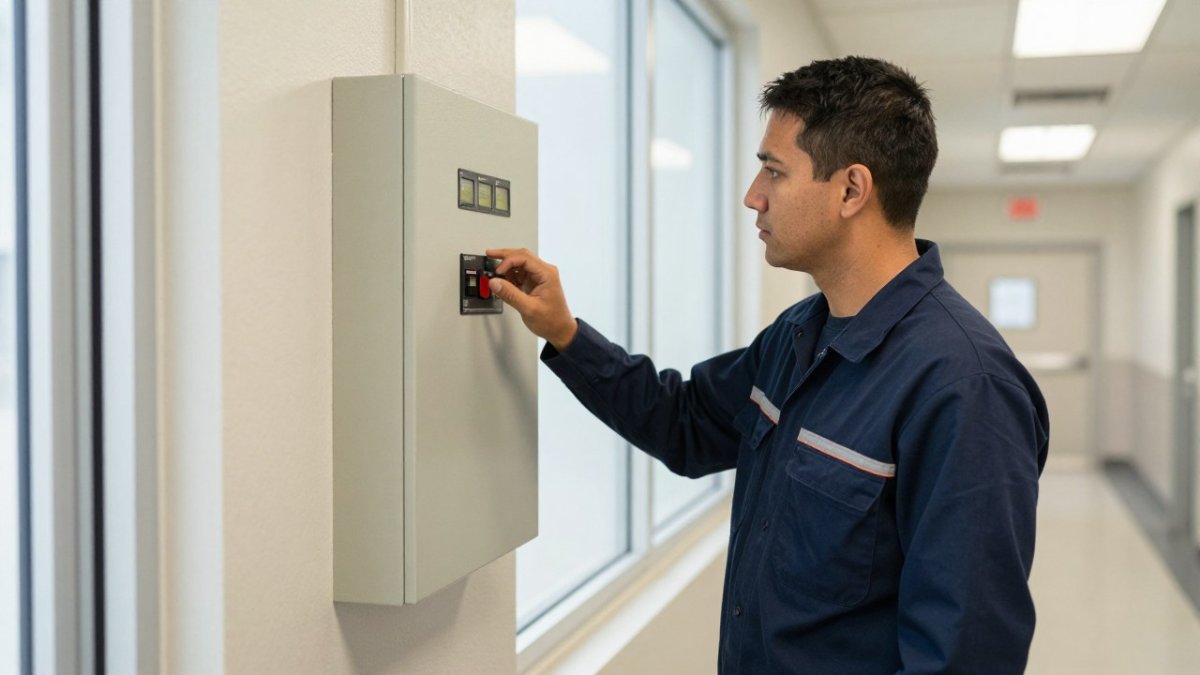
A fire alarm inspection is a hands-on check of the system’s devices, panel, and notification appliances. Technicians verify that smoke and heat detectors respond, that pull stations and horns or strobes operate, and that the control panel reports correctly. The inspection is also the starting point for documenting system readiness. A fire alarm system must be inspected and tested under NFPA 72, the National Fire Alarm and Signaling Code, and that standard shapes what a compliant visit includes.
We recommend asking every provider for an itemized quote that separates labor, testing, and reporting. Vague lump-sum numbers make comparison nearly impossible.
Commercial Fire Alarm Inspection Cost by Building Size and Device Count
Building size and device count are the two biggest drivers of price, but the way a provider turns those inputs into a number is what separates a fair quote from a vague one. Commercial inspections are often priced in different ways, and each provider’s structure should be confirmed in writing. A small office with a handful of detectors takes far less technician time than a multi-story facility with hundreds of field devices, and labor scales roughly with the number of devices tested, not with square footage alone.
A useful way to read a quote is to divide the total by the device count and compare the implied per-device rate across bids. If one provider is far below the others, check whether it is counting notification appliances, pull stations, and duct detectors the same way, or whether it is pricing only initiating devices. Ask each provider how it prices by device count, whether a minimum service charge applies to small jobs, and whether travel time is included or added.
Quotes for a commercial building typically break a total into components such as labor, device testing, any minimum service charge, travel, and reporting. Ask each provider to show how its own quote is structured.
Commercial systems often involve more zones, more notification circuits, and more coordination with building access, and a facility that requires escorting or work around occupied tenants may add time that a per-device estimate does not capture. Watch out: a quote that lists only a lump sum and a device count, with no labor hours, travel, or reporting lines, cannot be compared fairly against an itemized bid, so ask for the breakdown before you sign.
How System Type and Complexity Change the Price
Conventional and addressable systems are inspected differently. An addressable panel reports the status of individual devices, which lets a technician pinpoint faults quickly, while a conventional system requires zone-by-zone testing. Complex systems with multiple panels, networked annunciators, or specialized suppression interfaces take longer to verify.
Older systems can add time too. When a panel is obsolete or documentation is missing, tracing circuits and confirming programming may take longer. Plan for that possibility before you request the quote.
Fire Alarm Inspection Duration and Technician Labor Time
Inspection time varies with the system. Inspection time varies with the system, and larger facilities can take considerably longer, especially when testing involves access to occupied spaces. Monitored and unmonitored setups also change the service scope, so compare them in the commercial fire alarm monitoring guide for SC businesses. Ask that the estimated hours appear on the quote.
Scheduling can also affect cost, so confirm the timing and rate before booking.
Using a Fire Alarm Inspection Cost Calculator to Estimate Your Quote
A general fire alarm inspection cost calculator can give a rough starting point, but it cannot replace a site assessment. Treat any estimate as a range to test against actual bids rather than as a budget figure.
Keep the inputs consistent across providers so the comparison is fair. If one quote includes testing and reporting and another does not, the lower number may simply be incomplete.
What a Fire Alarm Inspection Checklist Covers and What Is Excluded
A thorough inspection generally covers the control panel, initiating devices such as smoke and heat detectors, manual pull stations, notification appliances, and the documentation that records the results. Ask any provider for a copy of its checklist before the visit so you know what is included, and confirm that results are documented in a format your insurer or the authority having jurisdiction accepts.
Exclusions matter as much as inclusions, and this is where price comparisons most often go wrong. Inspection quotes may not cover every item, so confirm the scope in writing before you compare bids. Items that are often billed separately include:
- Repairs and replacement devices: failed detectors, damaged pull stations, or faulty wiring found during testing may be quoted as corrective work.
- Monitoring: ongoing monitoring is typically a separate service arrangement.
- Reinspection: a return visit after repairs or a failed test may carry a new charge.
- Commissioning: verifying a new or modified system may be a distinct scope from routine inspection.
- Certification: any certificate or compliance letter may carry its own fee.
Watch out: a low inspection price that excludes testing or reporting can leave you paying more later for the work the inspection was supposed to document, so separate inspection and testing from repairs, monitoring, reinspection, commissioning, and certification before you treat two quotes as equivalent.
Inclusions and exclusions both shape what a quote covers, so compare the items below before comparing prices.
| Item | Typically included or billed separately | Note |
|---|---|---|
| Control panel, detectors, pull stations, notification appliances | Included in inspection | Ask for the provider’s checklist before the visit |
| Failed devices or faulty wiring | Billed separately as repairs | Quoted as corrective work |
| Ongoing monitoring | Billed separately | Typically a separate service arrangement |
| Return visit after failed test | Billed separately | May carry a new charge |
| Commissioning new or modified system | Distinct scope | Confirm it is not part of routine inspection |
| Certificate or compliance letter | Billed separately | May carry its own fee |
Getting an Accurate Quote and Booking Your Next Inspection
Request written quotes from at least three providers and compare them line by line. Confirm labor hours, device counts, what is excluded, and whether a minimum charge applies. Ask about qualifications and whether the provider documents results in a format your insurer or local authority accepts.
ADP Security Systems serves commercial and residential properties across South Carolina. Pricing depends on your building, so contact us for a current estimate. You can book a fire alarm inspection with our team and review the South Carolina NFPA 72 compliance checklist before your visit. For recurring service, our fire inspection schedule guide can help you plan ahead.
Ready to get a clear, itemized quote for your property? Get a Free Security Assessment with ADP Security Systems and see exactly what your inspection covers.
Frequently Asked Questions
How much does it cost to test a fire alarm system?
Costs depend on the number of devices, building size and system type, so there is no single flat rate. Because rates and scopes differ between providers, the most reliable figure comes from a written quote based on your actual system. Contact ADP Security Systems for a quote tailored to your property.
How often should a fire alarm system be inspected?
Most fire alarm systems require inspection and testing at least annually, and some components such as detectors and batteries may need more frequent checks under applicable codes. Requirements can also be set by the local authority having jurisdiction, so confirm the schedule that applies to your building. Keeping a written inspection report helps demonstrate compliance during an audit or insurance review.
What is included in a commercial fire alarm inspection?
A commercial inspection generally covers the control panel, initiating devices such as smoke and heat detectors, manual pull stations, and notification appliances like horns and strobes. Scope can vary, so ask for a written list of what the quote covers and what is billed separately.
Can repairs or replacement parts increase the inspection cost?
Yes. An inspection quote usually covers only testing and documentation. If the technician finds failed devices, wiring faults or outdated panels, repairs and replacement parts are priced separately. Requesting a detailed report of deficiencies before approving work lets you compare repair estimates and plan the budget in advance.